
You open your eyes and the first thing you notice is that your mouth feels like sandpaper. Your tongue is sticky, your throat is parched, and no amount of water seems to fix it fast enough. If you wake up with dry mouth every single morning, you already know how uncomfortable it is. What you might not know is why it keeps happening.
Waking up with dry mouth is more than just an annoyance. Saliva plays a critical role in protecting your teeth, fighting bacteria, and keeping the tissues in your mouth healthy. When your mouth is consistently dry overnight, it creates conditions that increase your risk of cavities, bad breath, gum disease, and oral infections. Understanding what is causing it is the first step to actually fixing it.
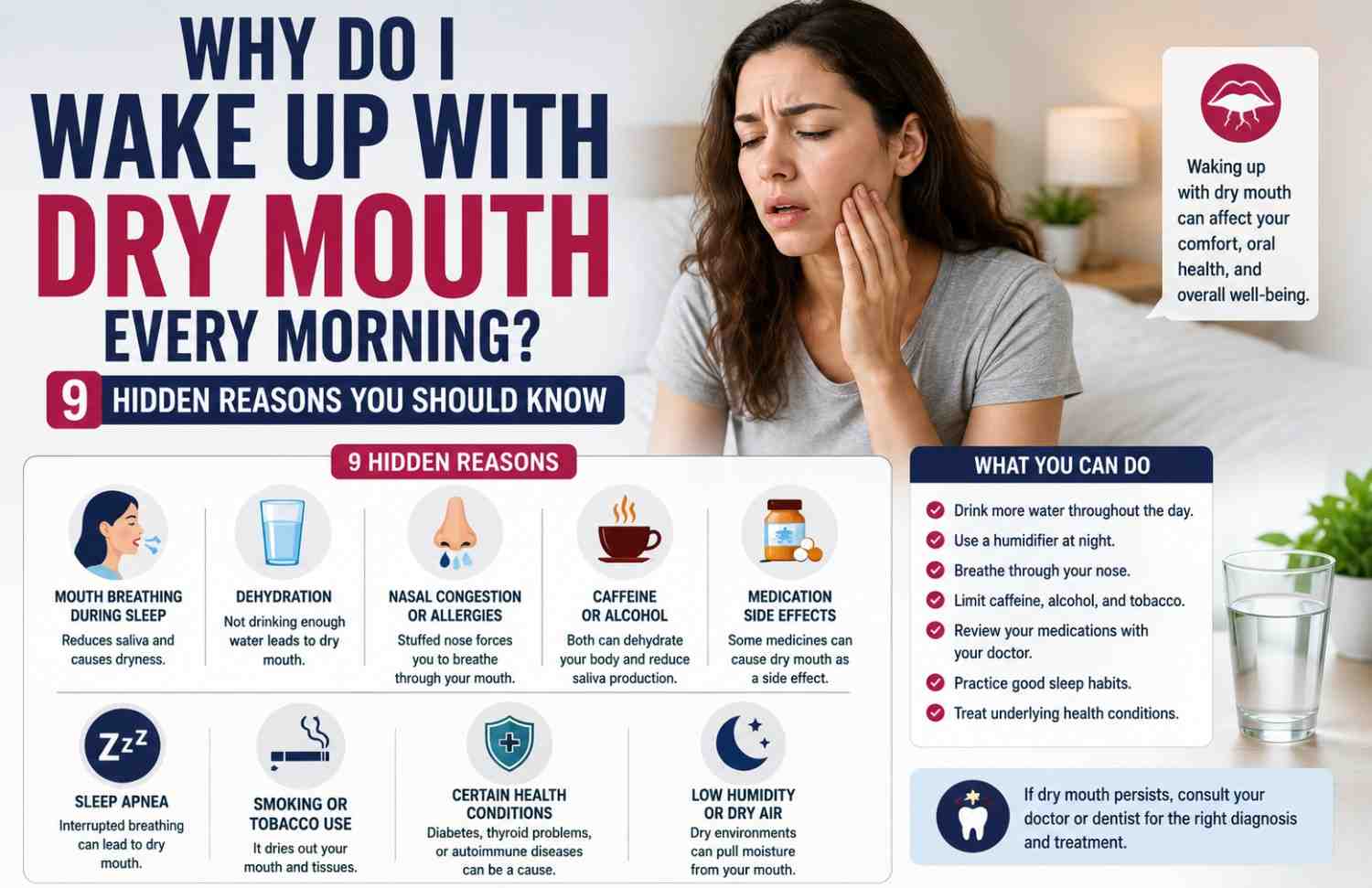
Here are nine of the most common hidden reasons you wake up with dry mouth every morning and what each one means for your health.
1. You Are Breathing Through Your Mouth at Night
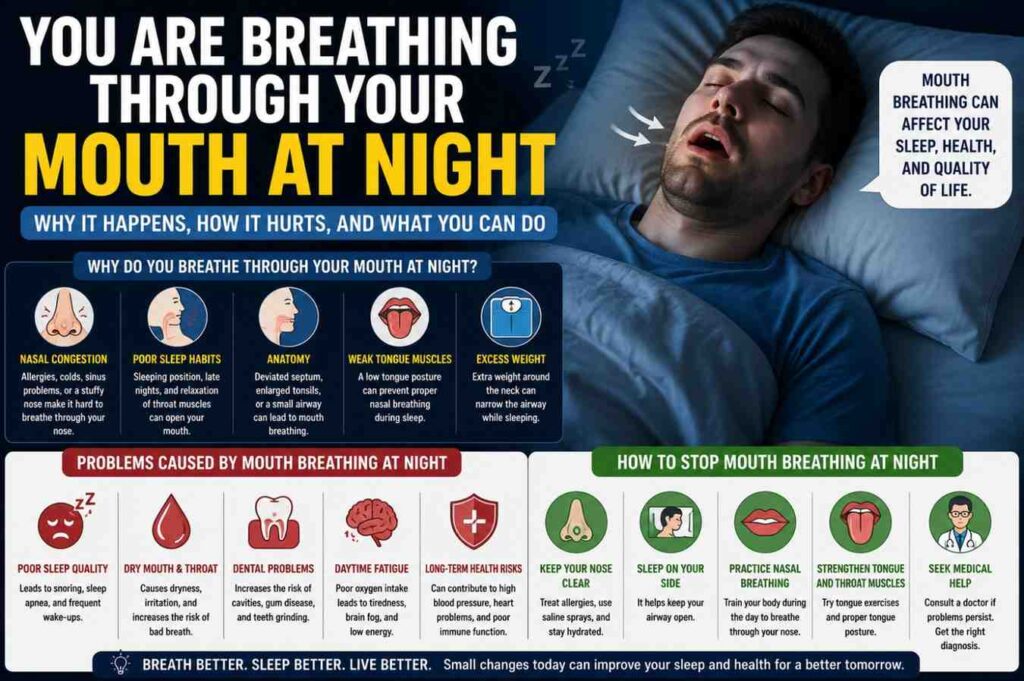
This is the single most common reason people wake up with dry mouth, and it is something most people do not even realize they are doing. When you breathe through your mouth during sleep, the constant airflow evaporates the saliva in your mouth much faster than your salivary glands can replace it. By the time you wake up, your mouth is completely dried out.
Mouth breathing during sleep is often caused by nasal congestion from allergies, a deviated septum, chronic sinus issues, or simply sleeping in a position that allows your jaw to fall open. Some people are habitual mouth breathers who have been doing it for years without connecting it to their morning dry mouth.
If you consistently wake up with dry mouth and you also snore, have a stuffy nose most nights, or your partner has noticed your mouth hanging open while you sleep, nighttime mouth breathing is almost certainly the cause. Nasal strips, a humidifier, treating underlying congestion, or mouth taping used carefully can all help redirect breathing back through the nose.
2. Sleep Apnea Is Drying Out Your Mouth
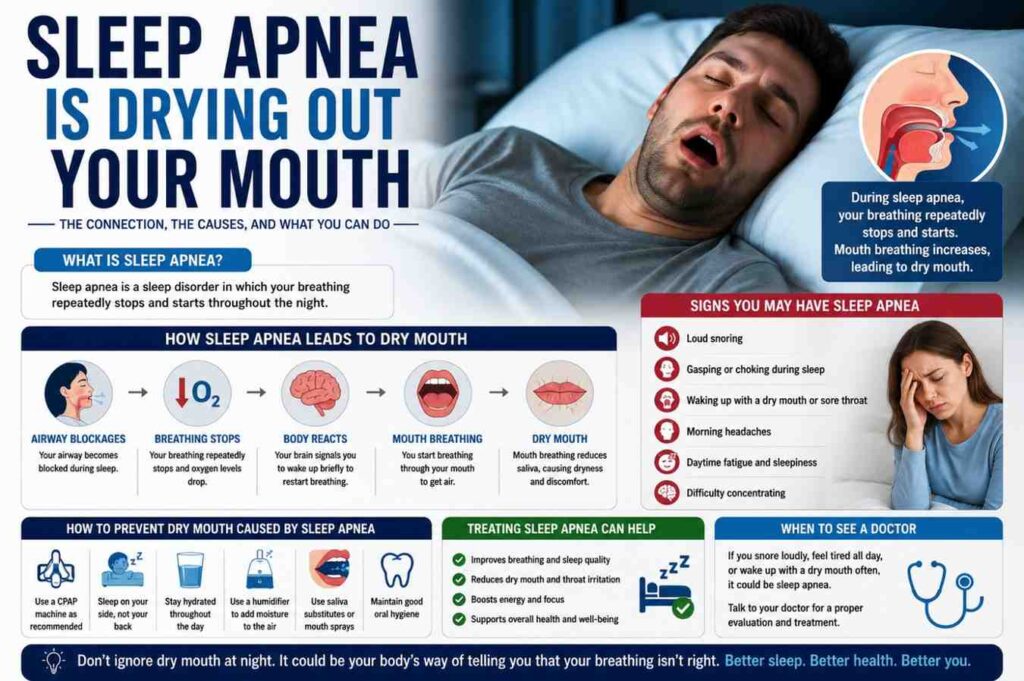
Sleep apnea and waking up with dry mouth go hand in hand. When your airway collapses during sleep apnea episodes, your body instinctively opens your mouth to try to restore airflow. This switches your breathing from nasal to oral, which dries out your mouth significantly over the course of the night.
Dry mouth is actually one of the most reliable self-reported symptoms of obstructive sleep apnea, and many people who wake up with dry mouth every morning and also feel exhausted despite a full night of sleep have undiagnosed sleep apnea. Other signs include loud snoring, waking up with a headache, and struggling to stay awake during the day.
If you suspect sleep apnea may be behind why you wake up with dry mouth, bring it up with your doctor. A sleep study can confirm the diagnosis, and treating the apnea with a CPAP machine typically resolves the morning dry mouth very quickly alongside the other symptoms.
3. Your Medications Are Reducing Saliva Production
This is one of the most overlooked causes of waking up with dry mouth, and the list of medications that cause it is longer than most people expect. Dry mouth, medically called xerostomia, is one of the most common side effects across multiple drug categories. Antihistamines, antidepressants, blood pressure medications, diuretics, antianxiety medications, muscle relaxants, and bladder control drugs are among the most frequently implicated.
If you started a new medication around the same time you began to wake up with dry mouth regularly, that wake up with dry mouth pattern and your medication are almost certainly connected. The timing matters a lot here. Many people never make this connection because they assume their medication and their dry mouth are unrelated.
Talk to your prescribing doctor about whether dry mouth is a known side effect of your medication. In some cases an alternative with fewer oral side effects is available. In others, adjusting the timing of your dose or managing the symptoms with saliva substitutes and increased hydration is the most practical approach.
4. Dehydration Going Into Sleep
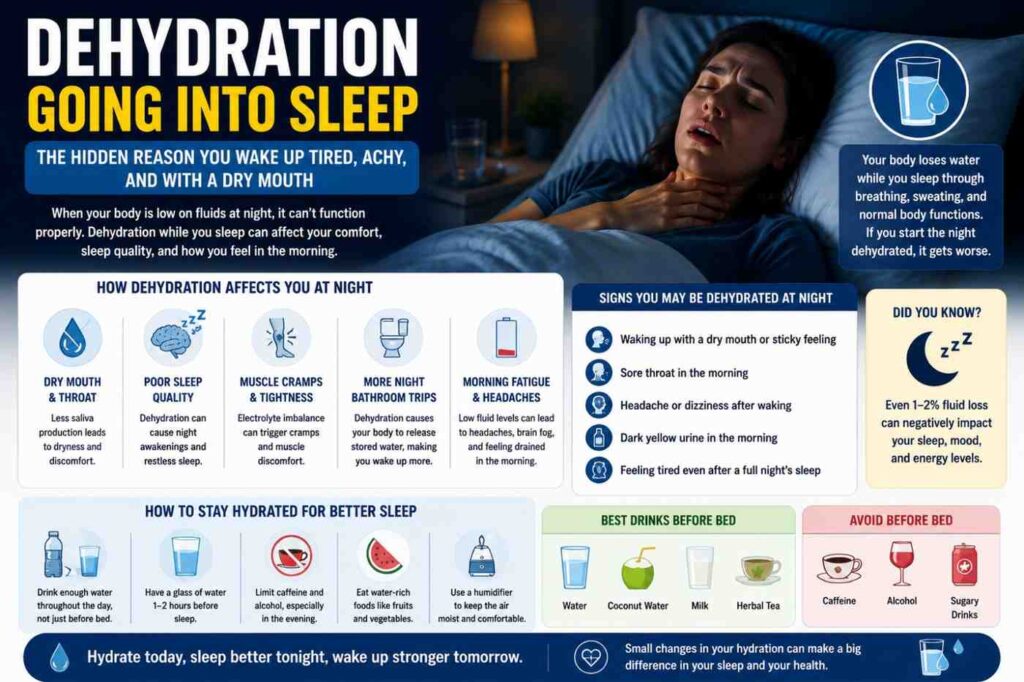
If you are not drinking enough water during the day, you are going to wake up with dry mouth in the morning, and that wake up with dry mouth feeling will be significantly worse than it needs to be. Your body loses water continuously through breathing, sweating, and urination even while you sleep, and if your fluid levels going into sleep are already low, you will be significantly more dehydrated by the time you wake up.
Alcohol and caffeine consumed in the evening make this worse because both have diuretic effects that increase fluid loss overnight. A glass of wine or a late afternoon coffee that you barely thought about can meaningfully reduce your hydration level by the time your head hits the pillow.
The fix here is consistent hydration throughout the day rather than trying to drink a large amount right before bed. Keeping a glass of water on your nightstand and drinking it first thing when you open your eyes can also help manage the dryness in the short term while you work on overall hydration habits.
5. Alcohol Before Bed
Even if you are generally well hydrated, drinking alcohol in the evening is a very reliable way to wake up with dry mouth. Alcohol suppresses the production of antidiuretic hormone, which is the hormone your body uses to retain water overnight. When that hormone is suppressed, your kidneys excrete more water than usual and you wake up dehydrated and dry mouthed even if you drank plenty of water during the day.
Alcohol also relaxes the muscles of the throat and jaw, which increases the likelihood of mouth breathing during sleep and compounds the drying effect on your mouth. This combination of increased water loss and increased mouth breathing is why even one or two drinks in the evening can reliably cause you to wake up with dry mouth the next morning.
Cutting back on evening alcohol or moving your last drink to earlier in the evening can noticeably reduce morning dry mouth within just a few days of making the change.
6. Diabetes and Blood Sugar Issues
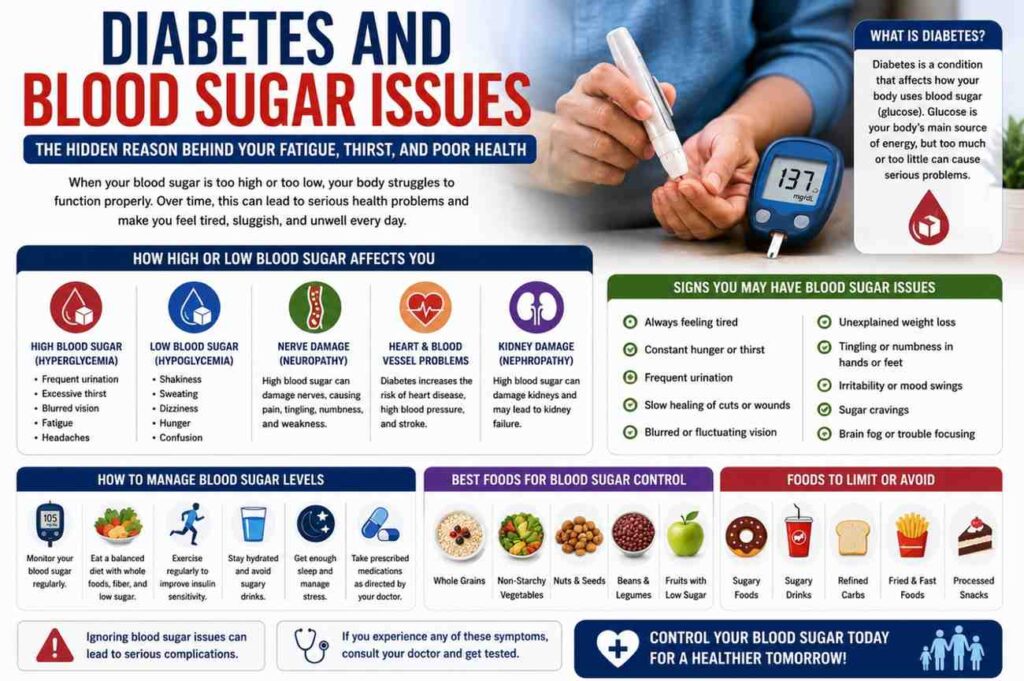
Waking up with dry mouth is a recognized symptom of both diagnosed and undiagnosed diabetes. When blood sugar levels are elevated, your kidneys work overtime to filter the excess glucose, pulling large amounts of water into the urine in the process. This increased urination leads to dehydration, which directly causes dry mouth that is often most noticeable in the morning after hours of no fluid intake.
People with undiagnosed type 2 diabetes or prediabetes frequently report waking up with dry mouth, increased thirst throughout the day, frequent urination, and persistent fatigue. If you notice that your dry mouth comes with these other symptoms, it is worth asking your doctor to check your fasting blood sugar and A1C levels.
For people with known diabetes, consistently elevated blood sugar levels despite medication suggest that management needs adjustment, and morning dry mouth can be one of the signs that blood sugar control has slipped.
7. Autoimmune Conditions Like Sjogren’s Syndrome
Sjogren’s syndrome is an autoimmune condition that specifically targets the glands that produce moisture in the body, including the salivary glands. It is far more common than most people realize, affecting an estimated four million Americans, and the majority of them are women. The hallmark symptoms are severely dry eyes and a persistently dry mouth that is often most pronounced in the morning.
People with Sjogren’s syndrome wake up with dry mouth so severe that it can be difficult to swallow, speak, or even open their lips without discomfort. The dryness typically persists throughout the day rather than resolving after morning hydration the way simpler causes of dry mouth do.
Sjogren’s is also associated with fatigue, joint pain, and in some cases involvement of the kidneys, lungs, and nervous system. If you wake up with dry mouth that is severe and persistent and also have chronically dry eyes, mention both symptoms to your doctor. A rheumatologist can evaluate for Sjogren’s and other autoimmune conditions.
8. Aging and Hormonal Changes

Saliva production naturally decreases with age, which is one reason that people wake up with dry mouth more frequently as they get older, and why the wake up with dry mouth experience tends to become more pronounced after 50. This decline is gradual and is influenced by hormonal changes, particularly the reduction in estrogen that occurs during menopause. Lower estrogen levels affect the mucous membranes throughout the body including those in the mouth, reducing their ability to stay moist.
Older adults are also more likely to take multiple medications, many of which independently reduce saliva production, and the combined effect of aging, hormonal changes, and polypharmacy can make morning dry mouth a significant and persistent issue.
While age-related salivary decline cannot be fully reversed, staying well hydrated, avoiding alcohol and caffeine before bed, using a humidifier in the bedroom, and speaking with a dentist about saliva-stimulating products can all meaningfully reduce how severe the dry mouth feels when you wake up.
9. Anxiety and Stress
Chronic anxiety has a direct physiological effect on saliva production. The fight-or-flight response activated by anxiety and stress suppresses the parasympathetic nervous system, which is responsible for stimulating saliva flow. When your body is in a low-level stress state, saliva production slows down, and if anxiety is affecting your sleep quality, the combination of poor sleep and reduced saliva production can leave you consistently wake up with dry mouth morning after morning.
Many people notice that their morning dry mouth is noticeably worse during stressful periods in their life and improves when things settle down. If you are dealing with significant ongoing anxiety and you also wake up with dry mouth, the two are likely connected through this nervous system pathway.
Addressing the underlying anxiety through therapy, stress management practices, or medical treatment when appropriate can improve not just your sleep but also the salivary symptoms that come with chronic stress.
What You Can Do About Morning Dry Mouth
When you wake up with dry mouth the right approach depends on the cause, but there are several steps that help regardless of what is driving your symptoms. Run a humidifier in your bedroom to add moisture to the air you breathe overnight. Stay consistently hydrated throughout the day and keep water on your nightstand. Breathe through your nose rather than your mouth by addressing nasal congestion before bed. Avoid alcohol and caffeine in the hours before sleep. Brush with a fluoride toothpaste and use an alcohol-free mouthwash since alcohol-based mouthwashes worsen dry mouth.
If you wake up with dry mouth every morning and it is not improving with these changes, or if it is accompanied by other symptoms like excessive thirst, fatigue, or severe dryness in your eyes, bring it up with your doctor or dentist. Most causes of morning dry mouth are very treatable once properly identified, and your mouth and your overall health will both be better for it.