

You slept eight hours. Maybe even nine. You did not stay up late, you did not wake up a dozen times, and yet here you are in the middle of the afternoon barely able to keep your eyes open. If you are feeling sleepy all day despite getting what should be a full night of sleep, something is off and your body is trying to tell you something important.
Feeling sleepy all day is not just inconvenient. It affects your focus, your mood, your productivity, and over time it can affect your health in ways that go well beyond being tired. The good news is that in most cases there is a specific, identifiable reason behind it, and once you know what is causing it, you can actually do something about it.
Here are ten of the most common hidden reasons you are feeling sleepy all day even after a full night of sleep.
1. Your Sleep Quality Is Poor Even If the Hours Look Fine

This is the most important distinction most people miss. There is a significant difference between time spent in bed and actual restorative sleep. You can spend eight or nine hours horizontal and still wake up exhausted if your sleep quality is poor.
Deep sleep and REM sleep are the stages where your brain consolidates memories, your body repairs tissue, and your hormones reset for the next day. If something is repeatedly pulling you out of these stages, even briefly and even without you remembering it, you are not getting the restoration your body needs. Frequent micro-arousals from noise, light, temperature changes, or breathing issues can fragment your sleep enough to leave you feeling sleepy all day without ever causing a full wake-up you would remember.
Tracking your sleep with a wearable device or simply paying attention to how refreshed you feel versus how many hours you slept can help you identify whether quality rather than quantity is the issue.
2. You Have Undiagnosed Sleep Apnea

Sleep apnea is one of the most common and most underdiagnosed causes of feeling sleepy all day in American adults. It is estimated that over 80 percent of people with moderate to severe sleep apnea have never been diagnosed. The condition causes your airway to collapse partially or fully during sleep, triggering brief pauses in breathing that jolt your brain awake just enough to restore normal breathing without you ever being consciously aware of it.
A person with untreated sleep apnea can experience dozens or even hundreds of these micro-arousals every single night. The result is that no matter how many hours they spend in bed, they wake up unrefreshed and spend the entire day feeling sleepy all day long with no obvious explanation.
Other signs of sleep apnea include loud snoring, waking up with a dry mouth or headache, and a bed partner noticing you stop breathing momentarily during the night. If this sounds familiar, a sleep study can confirm the diagnosis and a CPAP machine can completely transform how you feel within days of starting treatment.
3. You Are Dealing With Chronic Stress or Anxiety
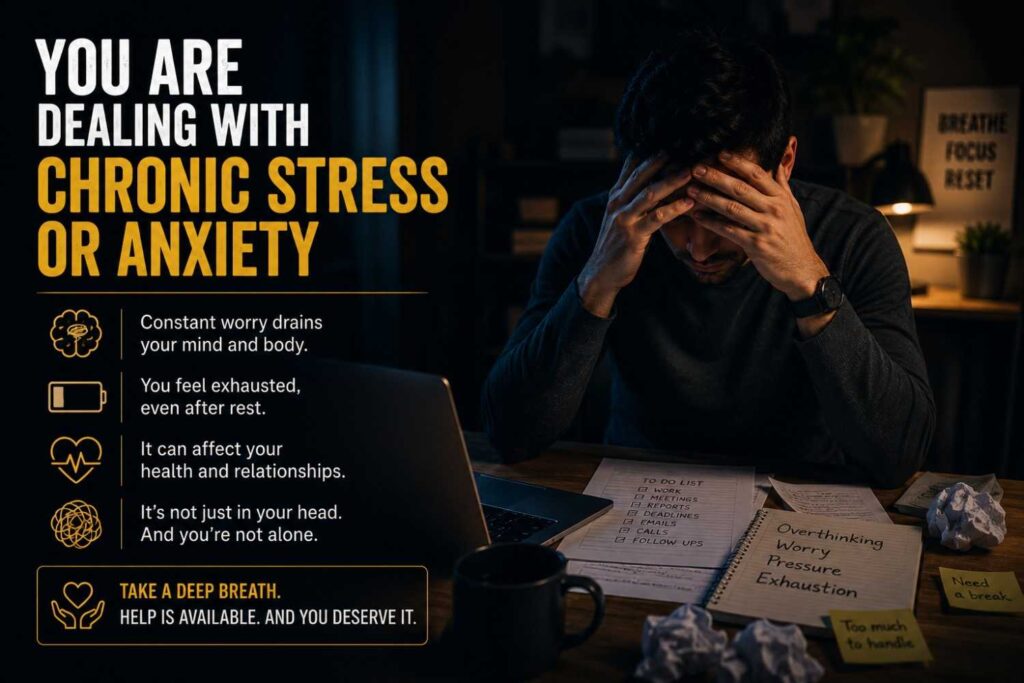
Most people associate stress with difficulty falling asleep, but chronic stress also causes feeling sleepy all day even when sleep quantity looks adequate. When your nervous system is stuck in a low-level alert state from ongoing stress or anxiety, your sleep becomes lighter and more fragmented. Your brain never fully switches off, which means you never get the depth of sleep your body needs to feel genuinely restored.
Cortisol, the primary stress hormone, is supposed to be low at night and rise gradually in the morning to help you wake up. In people with chronic stress, cortisol patterns get disrupted. It may stay elevated at night, preventing deep sleep, and then be depleted in the morning when you actually need it to feel alert. The result is feeling sleepy all day while also feeling wired and unable to wind down at night.
Addressing the underlying stress rather than just trying to sleep more is the most effective intervention here.
4. You Are Mildly Dehydrated
Dehydration is one of the most overlooked and most easily fixed reasons for feeling sleepy all day. Even mild dehydration, as little as one to two percent of your body weight in fluid loss, is enough to reduce blood volume, lower blood pressure, and decrease oxygen delivery to the brain. The result is fatigue, difficulty concentrating, and a persistent sleepy feeling that no amount of caffeine seems to fix for long.
Most people start their day already mildly dehydrated because they have gone seven or more hours without drinking anything overnight. If your first fluid of the day is coffee, which has a mild diuretic effect, you may be compounding the dehydration before you have even had a chance to rehydrate.
Try drinking 16 ounces of water first thing in the morning before coffee and maintaining consistent hydration throughout the day. A lot of people find that this alone makes a noticeable difference in afternoon energy levels within a few days.
5. Your Diet Is Working Against Your Energy Levels

What you eat has a direct and powerful effect on how alert or how sleepy you feel throughout the day. A diet heavy in refined carbohydrates and sugar causes repeated blood sugar spikes and crashes that show up as waves of energy followed by crushing fatigue. The post-lunch slump that so many people experience is largely a blood sugar crash driven by a high-carb midday meal.
Feeling sleepy all day is significantly more common in people whose diets are low in protein, rich in processed foods, and light on vegetables and whole grains. Protein and fiber slow glucose absorption and keep blood sugar stable, which translates to more consistent energy throughout the day. Iron-rich foods support oxygen transport. B vitamins drive the cellular energy production processes your brain and body run on.
If your diet is mostly convenience food, fast food, and snacks, your energy levels are paying the price regardless of how much sleep you are getting.
6. You Have an Underactive Thyroid
Hypothyroidism, or an underactive thyroid, is one of the most common medical causes of feeling sleepy all day and one of the most frequently missed. Your thyroid gland controls your metabolism, and when it is not producing enough hormone, every system in your body slows down including your brain, your muscles, and your ability to feel alert and energetic.
People with hypothyroidism commonly describe feeling sleepy all day no matter how much rest they get, along with persistent fatigue, unexplained weight gain, sensitivity to cold, constipation, dry skin, and brain fog. These symptoms often develop so gradually that people adapt to them and assume they are just getting older or dealing with stress.
A TSH blood test can check your thyroid function in minutes. If hypothyroidism is the cause of your daytime sleepiness, treatment with thyroid hormone replacement is straightforward and typically produces a dramatic improvement in energy levels within a few weeks.
7. You Are Iron Deficient or Anemic
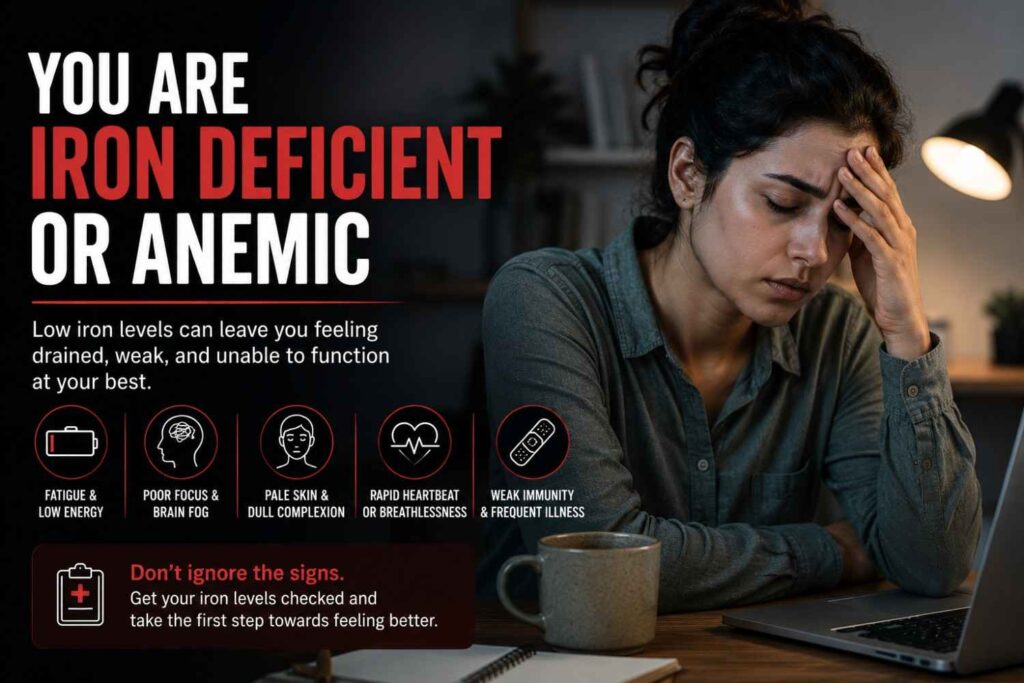
Iron deficiency is the most common nutritional deficiency in the United States, and fatigue and daytime sleepiness are its most recognizable symptoms. Iron is essential for producing hemoglobin, the protein in red blood cells that carries oxygen from your lungs to every cell in your body. When iron levels are low, your tissues and brain receive less oxygen than they need, and the result is persistent tiredness and feeling sleepy all day even after adequate sleep.
Women are at significantly higher risk for iron deficiency than men due to monthly blood loss through menstruation. Vegetarians and vegans, people with gastrointestinal conditions that affect nutrient absorption, and frequent blood donors are also at elevated risk.
A simple blood test checking ferritin and serum iron levels can confirm whether deficiency is contributing to your daytime fatigue. Iron supplementation and dietary changes can make a meaningful difference in energy levels relatively quickly once the deficiency is identified and addressed.
8. You Are Vitamin D Deficient
Vitamin D deficiency is extraordinarily common in the United States, with estimates suggesting that over 40 percent of American adults have insufficient levels. One of the most consistent and least discussed symptoms of vitamin D deficiency is persistent fatigue and feeling sleepy all day regardless of how much sleep you get.
Vitamin D receptors are present in brain regions that regulate sleep and wakefulness, and low vitamin D levels appear to disrupt the signaling that maintains alertness during the day. People who work indoors, live in northern states with limited year-round sun exposure, have darker skin tones, or are overweight are at particularly high risk for deficiency.
A blood test measuring your 25-hydroxyvitamin D level can confirm whether deficiency is an issue. Supplementation with vitamin D3, typically combined with vitamin K2 for optimal absorption, can improve energy levels noticeably over several weeks in people who are deficient.
9. You Are Drinking Too Much Caffeine
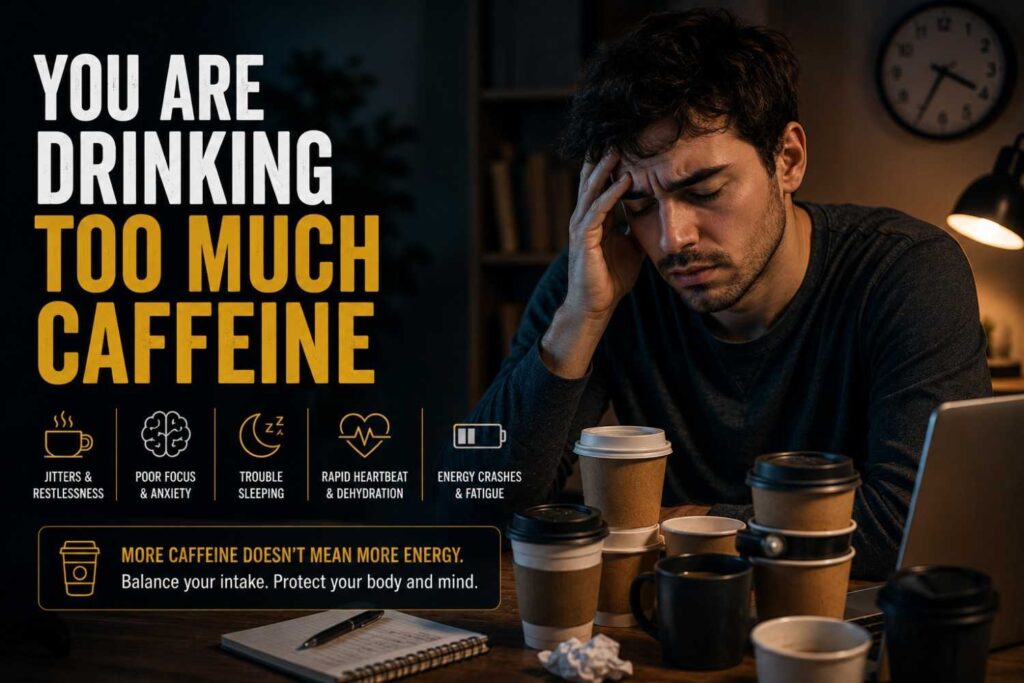
This one sounds counterintuitive, but high caffeine intake is a very real contributor to feeling sleepy all day for many people. Caffeine works by blocking adenosine receptors in the brain. Adenosine is the chemical that builds up throughout the day and makes you feel sleepy. When caffeine wears off, all that blocked adenosine floods back in at once, causing a pronounced energy crash that is often worse than the original fatigue.
People who drink multiple cups of coffee throughout the day to stay alert are often caught in a cycle where the caffeine is masking fatigue temporarily while simultaneously disrupting the quality of their nighttime sleep, which then causes more fatigue the next day, which drives more caffeine consumption. Caffeine consumed even six hours before bed has been shown in research to reduce total sleep time and suppress deep sleep stages.
Gradually reducing caffeine intake and cutting off consumption by early afternoon can break this cycle, though the first week of reduction often feels worse before it gets better.
10. You May Have Narcolepsy or Idiopathic Hypersomnia
If you have addressed sleep quality, ruled out medical conditions, optimized your nutrition and hydration, and you are still feeling sleepy all day no matter what you do, a sleep disorder like narcolepsy or idiopathic hypersomnia may be involved. These conditions are less common than sleep apnea but are significantly underdiagnosed because they are less well known and their symptoms overlap with many other causes of daytime fatigue.
Narcolepsy causes overwhelming daytime sleepiness and in some cases sudden muscle weakness triggered by strong emotions, a symptom called cataplexy. Idiopathic hypersomnia causes excessive daytime sleepiness and prolonged nighttime sleep without the restorative effect that normal sleep provides. People with this condition can sleep ten or twelve hours and still wake up feeling like they barely slept.
Both conditions are diagnosable through a formal sleep study and are treatable with medication and lifestyle adjustments. If your daytime sleepiness is severe, persistent, and unresponsive to the changes above, a referral to a sleep specialist is the right next step.
What You Can Do Right Now
Start with the simplest and most common causes. Drink more water. Improve your diet. Cut your caffeine off earlier in the day. Check your sleep environment for light and temperature issues. If you snore or your partner has mentioned you stop breathing during sleep, get evaluated for sleep apnea.
If those changes do not move the needle after two to three weeks, ask your doctor to run a basic blood panel checking thyroid function, iron and ferritin levels, vitamin D, and blood sugar. These four tests alone can identify the most common medical reasons for feeling sleepy all day and point you toward the right treatment.
You should not have to drag yourself through every single day. Feeling sleepy all day is a signal, not a personality trait, and most of the time it has a real answer.