
Semaglutide causing hair loss is one of the most searched and least talked about side effects of GLP-1 weight loss treatment. If you have been on semaglutide or any other GLP-1 medication and started noticing more hair in the shower drain or on your pillow, you are not imagining it. A lot of people going through this feel confused because no one warned them about it, and the internet either says it is totally normal or completely ignores the question. The truth is somewhere in between, and it is worth understanding what is actually happening to your body before you panic.
This article breaks down exactly why semaglutide causing hair loss happens, how serious it really is, what you can do about it, and when it might make sense to talk to a provider who actually knows about this stuff.
Is Semaglutide Actually Causing Your Hair Loss?

Technically, the hair loss most people experience on semaglutide is not caused directly by the drug itself. It is caused by something called telogen effluvium, which is a temporary form of hair shedding that happens when your body goes through significant physical stress. Losing weight quickly, eating less than you normally would, and the metabolic changes that come with GLP-1 medications all count as physical stress, even if you feel great on the surface.
Telogen effluvium basically pushes more hair follicles into the resting phase at the same time. Normally, only about 10 to 15 percent of your hair is resting at any given moment. When something disrupts your system, whether that is rapid weight loss, surgery, illness, or even emotional stress, that number can jump much higher. Then, two to four months later, all that resting hair falls out at once.
So when someone starts semaglutide in January, loses weight quickly, and then notices a lot of hair shedding in March or April, the timing makes sense. The medication did not poison the hair follicles. The rapid change in the body triggered a response that your scalp is only now catching up to.
How Common Is This and Should You Be Worried?
Hair shedding during or after GLP-1 treatment is more common than the official literature suggests. Clinical trials for semaglutide did report semaglutide hair loss as a side effect in a notable percentage of participants, but anecdotally, far more people in online communities and weight loss forums report it. The good news is that in the vast majority of cases, the shedding slows down and stops on its own, usually within six to nine months.
The cases where hair loss becomes a longer-term issue usually involve ongoing nutritional deficiencies, continuing to lose weight at a very aggressive pace without proper protein intake, or underlying conditions that were already affecting hair health before the medication started. If you are six months in and the shedding is still very heavy, that is when you should dig a little deeper.
The Protein and Nutrition Connection Nobody Talks About Enough

One of the biggest reasons GLP-1 hair loss is worse than it needs to be is that people are simply not eating enough protein. Semaglutide and tirzepatide suppress appetite significantly. That is kind of the point. But when people eat much less overall, they often do not pay enough attention to whether they are hitting their protein targets, and protein is what hair is literally made of.
Most nutrition experts working with GLP-1 patients recommend getting at least 80 to 100 grams of protein per day, and some suggest even higher amounts depending on body weight. When you are eating less overall, getting that protein requires being intentional. Things like Greek yogurt, eggs, cottage cheese, chicken, fish, and protein shakes can help fill the gap without requiring a huge amount of volume.
Deficiencies in iron, biotin, zinc, and vitamin D can also contribute to hair shedding, and these are more likely when you are eating a restricted diet. A basic blood panel can tell you if any of these are low, and supplementing where needed can make a real difference over time.
What You Can Actually Do About It
The first thing to accept is that some shedding during rapid weight loss is largely unavoidable. Your body is changing fast, and the scalp reacts to that. But there are real things you can do to minimize the impact and help your hair recover faster.
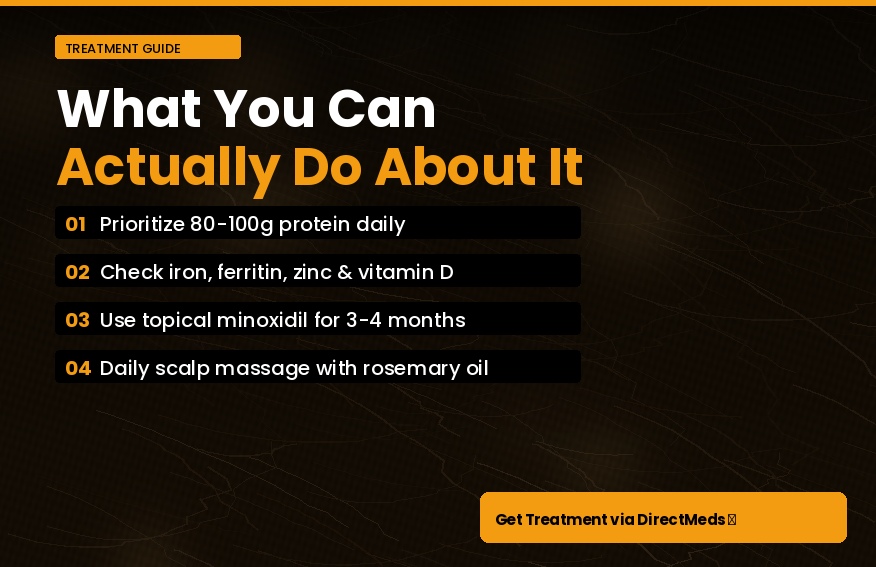
Prioritizing protein at every meal is probably the single most important thing. Even on a suppressed appetite, try to make sure that the food you do eat is dense with protein and nutrients rather than empty calories. Second, consider getting a blood test to check iron, ferritin, zinc, B12, and vitamin D levels. If any of these are low, work with your doctor on a supplement plan.
For topical support, minoxidil is the most well-studied option available without a prescription. It works by stimulating blood flow to the scalp and extending the growth phase of hair follicles. It takes three to four months to show results, but many people find it genuinely helpful, especially when used consistently. There are also newer options like topical finasteride for men and certain prescription treatments for women that a dermatologist or telehealth provider can discuss with you.
Scalp massage is underrated. Even five to ten minutes a day of gentle scalp massage can improve circulation and may support hair follicle health. Some people combine this with rosemary oil, which has shown surprisingly decent results in a few small studies comparing it to minoxidil.
Getting Help Through a Telehealth Provider Like DirectMeds
One of the more practical options for people already using GLP-1 medications through an online platform is to address the hair thinning concern through the same provider. DirectMeds is a telehealth platform that offers GLP-1 weight loss medications including semaglutide and tirzepatide, and they also have hair loss treatments available as part of their wellness offerings.
The convenience factor is real. If you are already managing your weight loss medication through an online consultation model, being able to bring up hair thinning in the same conversation and potentially get a prescription treatment shipped to your door removes a lot of friction. You are not starting over with a new doctor, explaining your whole situation again, or waiting weeks for an in-person dermatology appointment.
That said, as with any telehealth platform, it is worth reading the fine print on subscription terms and cancellation policies before committing. Some users have reported billing confusion with multi-month plans, so understanding exactly what you are signing up for upfront saves potential headaches later.
When to See a Doctor About Hair Thinning on GLP-1
Most people do not need to see a specialist for the typical hair shedding that comes with rapid weight loss and GLP-1 medications. It tends to resolve on its own as the body adjusts. But there are situations where getting a professional opinion makes sense.
If the hair loss is patchy rather than diffuse, that could suggest a different condition like alopecia areata, which needs a different approach entirely. If you are seeing significant scalp irritation, itching, or redness alongside the shedding, that also warrants a closer look. And if you are more than eight months into treatment and still losing hair at a rate that feels alarming, a dermatologist can do a proper scalp assessment and run tests that go deeper than a basic blood panel.
Thyroid issues can also contribute to hair loss and are more common than most people realize. If your thyroid levels have not been checked recently, it is worth adding that to your next bloodwork.
Frequently Asked Questions

Will my hair grow back after stopping semaglutide?
In most cases, yes. Semaglutide hair loss caused by telogen effluvium is typically a temporary condition. Once your body stabilizes and your weight loss slows to a more moderate pace, the hair growth cycle usually returns to normal. Most people see improvement within six to twelve months.
Does tirzepatide cause more hair loss than semaglutide?
Both medications can trigger hair shedding through the same mechanism, rapid weight loss and the physical stress it puts on the body. There is not strong evidence that one causes significantly more hair loss than the other. The rate of weight loss and your nutritional intake during treatment are more important factors.
Should I stop taking GLP-1 medication because of hair loss?
Probably not, unless the hair loss is extreme or connected to another medical issue. The benefits of GLP-1 treatment for weight loss and metabolic health are significant for many people, and stopping because of temporary shedding may not be necessary. Talk to your prescribing provider before making any changes.
Can I use minoxidil while on semaglutide?
Yes, topical minoxidil is generally considered safe to use alongside GLP-1 medications. There are no known interactions between the two. However, it is always a good idea to mention any new treatments to your provider so they have a full picture of what you are using.
The Bottom Line
Semaglutide causing hair loss is real, it is more common than the clinical packaging suggests, and it makes complete sense given what your body is going through. The good news is that it is almost always temporary, and there are concrete steps you can take to minimize it and support your hair health during treatment.
Focus on your protein intake, check your nutrient levels, consider topical treatments if the shedding is bothering you, and give your body time to adjust. If you are managing your GLP-1 prescription through a telehealth provider, use that access to bring up the conversation rather than sitting with the worry alone.
Your hair and your health can both come out the other side of this in good shape. It just takes a bit of patience and the right information.