
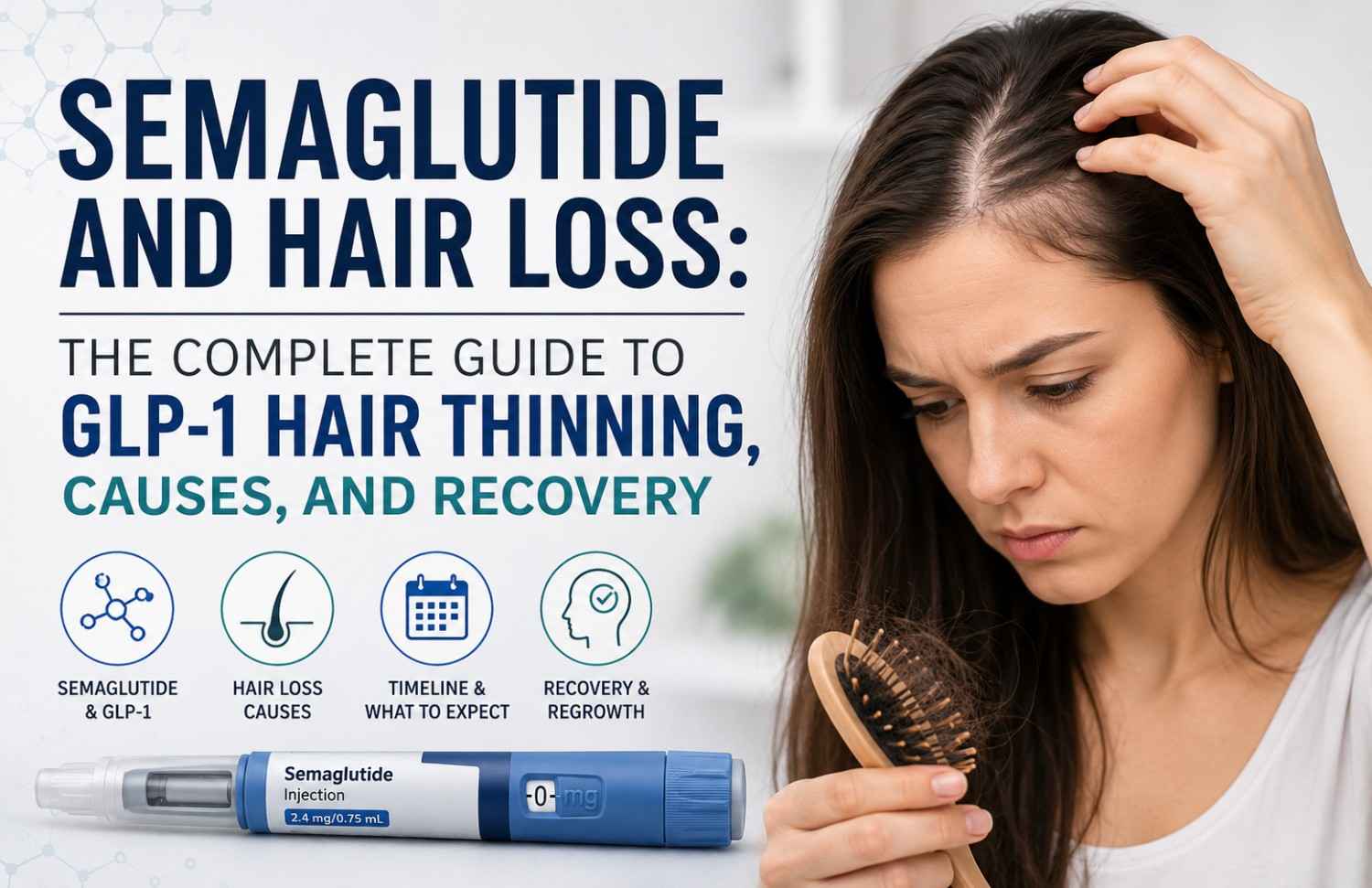
If you started semaglutide (Ozempic, Wegovy) or tirzepatide (Mounjaro, Zepbound) and noticed more hair falling out in the shower, on your pillow, or while brushing, you are not alone — and you are not imagining it. Hair thinning is one of the most commonly reported side effects among GLP-1 users, yet it remains one of the least discussed topics in clinical settings.
This comprehensive pillar guide covers everything you need to know: why semaglutide causes hair loss, the science behind telogen effluvium, nutritional strategies to minimize shedding, proven treatments, and when to seek professional help. Whether you are just starting GLP-1 therapy or months in and dealing with noticeable thinning, this guide has answers.
Section 1: What Is Semaglutide and How Does It Work?
Semaglutide is a glucagon-like peptide-1 (GLP-1) receptor agonist originally developed to manage Type 2 diabetes. It mimics a gut hormone that regulates blood sugar, slows gastric emptying, and significantly suppresses appetite. The FDA-approved weight loss version, Wegovy, delivers higher doses than Ozempic (the diabetes version) and is prescribed specifically for chronic weight management.
Popular GLP-1 Medications in 2026
| Semaglutide | Ozempic (diabetes) / Wegovy (weight loss) | Weekly injection |
| Tirzepatide | Mounjaro (diabetes) / Zepbound (weight loss) | Weekly injection |
| Liraglutide | Victoza / Saxenda | Daily injection |
| Oral Semaglutide | Rybelsus | Daily tablet |
Section 2: Does Semaglutide Directly Cause Hair Loss?
Technically, semaglutide does not directly damage hair follicles. However, the rapid weight loss and reduced caloric intake it causes trigger a well-documented condition called telogen effluvium — a temporary but often alarming form of diffuse hair shedding.
What Is Telogen Effluvium?

Hair grows in cycles: anagen (active growth), catagen (transition), and telogen (resting/shedding). Normally, about 10-15% of hair is in the telogen phase at any time. When your body experiences significant physical stress — rapid weight loss, caloric restriction, surgery, major illness, or hormonal shifts — a large number of hair follicles are prematurely pushed into the telogen phase simultaneously.
The result: two to four months after the triggering event, a significant amount of hair sheds all at once. This explains the classic pattern — you start semaglutide in January, lose weight rapidly, and then notice alarming hair shedding in March or April.
Key Triggers of Telogen Effluvium on GLP-1 Medications
- Rapid weight loss (losing more than 1-2 lbs per week consistently)
- Severe caloric restriction reducing overall nutrient intake
- Protein deficiency — hair is made almost entirely of keratin (protein)
- Micronutrient deficiencies: iron, ferritin, zinc, biotin, vitamin D, B12
- Metabolic stress from rapid body composition changes
- Underlying thyroid issues unmasked or worsened during weight loss
Section 3: How Common Is GLP-1 Hair Loss?
Clinical trial data for semaglutide (STEP trials) did report hair loss as a side effect in a notable percentage of participants. However, anecdotal reports from online GLP-1 communities, Reddit forums, and patient support groups suggest the actual incidence is significantly higher than clinical numbers reflect — likely because mild-to-moderate shedding often goes unreported in trials.
The good news: for the overwhelming majority of people, GLP-1-related hair shedding is temporary. Most users see shedding slow down and stop within 6-9 months as the body adapts to the new weight set point and caloric intake stabilizes.
Section 4: The Protein and Nutrition Connection
This is the single most impactful factor you can control. GLP-1 medications dramatically suppress appetite, which means many users unknowingly eat far less protein than their body needs to maintain hair, muscle, and overall health.
How Much Protein Do You Need on Semaglutide?

- General minimum: 80-100g of protein per day
- Active individuals or those losing weight aggressively: 100-130g per day
- Rule of thumb: 0.7-1g of protein per pound of target body weight
- Protein should come FIRST at every meal before eating carbohydrates or fats
Best High-Protein Foods for GLP-1 Users
- Greek yogurt (17-20g per cup) — easy on suppressed appetite
- Cottage cheese (25g per cup) — versatile, high-volume protein
- Eggs (6g per egg) — nutrient-dense whole food
- Chicken breast (31g per 100g) — lean, adaptable
- Salmon (25g per 100g) — protein plus omega-3s for scalp health
- Protein shakes — efficient way to hit targets without eating large volumes
- Edamame and tofu — strong plant-based options
Critical Micronutrients for Hair Health
- Iron & Ferritin: Low ferritin (stored iron) is one of the most common causes of hair shedding in women. Target ferritin above 70 ng/mL for optimal hair health.
- Zinc: Supports hair follicle function and protein synthesis. Deficiency directly linked to hair loss.
- Biotin (B7): Required for keratin production. Deficiency is rare but worsens with restricted diets.
- Vitamin D: Deficiency is extremely common and strongly linked to hair thinning and telogen effluvium.
- B12: Critical for red blood cell production. Deficiency leads to poor oxygen delivery to follicles.
Action step: Ask your doctor for a comprehensive blood panel including CBC, ferritin (not just hemoglobin), zinc, vitamin D (25-OH), and B12. These are not routinely checked but are directly relevant to GLP-1-related hair loss.
Section 5: What You Can Actually Do About It — Treatment Options
1. Minoxidil (Topical)
Minoxidil is the most well-researched over-the-counter hair loss treatment available. It works by increasing blood flow to the scalp, prolonging the anagen (growth) phase of hair follicles, and stimulating dormant follicles. Available as a foam (5%) or liquid solution (2% women / 5% men). Consistent daily use is required — it takes 3-4 months to see visible results and must be continued for benefits to persist.
2. Finasteride / Dutasteride (Prescription — Men)
Oral finasteride (1mg daily) and dutasteride work by blocking DHT, a hormone that shrinks hair follicles. Most effective for androgenetic alopecia (pattern baldness) in men. Topical finasteride is also now available and has fewer systemic side effects than the oral version.
3. Spironolactone (Prescription — Women)
An anti-androgen often prescribed off-label for female hair loss. Particularly useful for women with hormonal hair thinning. Usually prescribed at 50-200mg/day alongside regular potassium monitoring.
4. Scalp Massage
Regular scalp massage (5-10 minutes daily) improves blood circulation to hair follicles and may increase hair thickness over time. A small but rigorous study showed daily 4-minute standardized scalp massage increased hair shaft thickness after 24 weeks. Use fingertips in circular motion or a silicone scalp massager tool.
5. Rosemary Oil
A 2023 clinical study published in the journal Skinmed compared rosemary oil to 2% minoxidil in individuals with androgenetic alopecia and found comparable results at 6 months with less scalp itching. Dilute rosemary essential oil in a carrier oil (jojoba, coconut) and apply to scalp 2-3x weekly.
6. Low-Level Laser Therapy (LLLT)
FDA-cleared devices like laser combs, helmets, and caps use red light (630-670nm) to stimulate cellular energy in hair follicles. Multiple clinical studies support modest improvements in hair density. Best used as an adjunct to other treatments rather than standalone.
Section 6: Telehealth Options for GLP-1 Hair Loss
One of the most convenient developments for people already using GLP-1 medications through telehealth platforms is the ability to address hair loss through the same provider. Platforms like DirectMeds offer both GLP-1 weight loss prescriptions and hair loss treatment options under one umbrella.
The practical advantage: if you are already in the telehealth ecosystem managing your semaglutide or tirzepatide prescription, bringing up hair thinning in the same consultation is far easier than booking a separate dermatology appointment. Treatments can be prescribed and shipped directly without in-person visits.
Important note: Always review subscription and cancellation terms carefully on any telehealth platform before committing to a multi-month plan. Understanding the billing model upfront prevents issues down the line.
Section 7: When to See a Doctor — Warning Signs
Most GLP-1-related hair shedding resolves on its own and does not require specialist intervention. However, these situations warrant a professional evaluation:
- Patchy hair loss rather than diffuse shedding — may indicate alopecia areata (autoimmune) requiring different treatment
- Shedding that continues beyond 8-9 months with no signs of slowing
- Scalp inflammation, itching, redness, or scaling alongside hair loss
- Sudden onset of hair loss with no significant dietary changes — could indicate thyroid dysfunction
- Hair loss accompanied by fatigue, cold intolerance, weight gain despite GLP-1 — thyroid panel needed urgently
- Visible scalp exposure or bald patches developing
A dermatologist can perform a trichoscopy (dermoscopy of the scalp), pull test, and comprehensive bloodwork to differentiate between telogen effluvium, androgenetic alopecia, alopecia areata, and other causes.
Section 8: Frequently Asked Questions (FAQ)

Will my hair grow back after stopping semaglutide?
In most cases, yes. Telogen effluvium caused by GLP-1-induced weight loss is temporary. Once your body weight stabilizes and nutritional intake normalizes, the hair growth cycle typically returns to normal within 6-12 months. Hair regrowth is usually full, though it may take 18-24 months to regain complete previous density.
Does tirzepatide cause more hair loss than semaglutide?
Both medications trigger the same mechanism — physical stress from rapid weight loss leading to telogen effluvium. Current evidence does not strongly support one causing significantly more hair loss than the other. The rate of weight loss, your baseline nutritional status, and protein intake during treatment are more influential factors.
Should I stop taking semaglutide because of hair loss?
Generally, no — unless the hair loss is extreme, persistent beyond 9 months, or linked to a separate medical issue. Discontinuing GLP-1 medication solely due to temporary shedding may not be warranted given the significant metabolic benefits. Always consult your prescribing provider before making any changes to your medication.
Can I use minoxidil while on semaglutide?
Yes. Topical minoxidil has no known interactions with semaglutide, tirzepatide, or other GLP-1 medications. It is considered safe to use concurrently. Always inform your provider of all treatments you are using so they maintain a complete picture of your regimen.
How much protein should I eat to prevent GLP-1 hair loss?
Most nutrition specialists working with GLP-1 patients recommend a minimum of 80-100g of protein per day, with some suggesting up to 1g per pound of target body weight for those in active weight loss phases. Prioritize protein at every meal, especially breakfast, when appetite tends to be relatively higher.
Does biotin help with semaglutide hair loss?
Biotin is beneficial if you have an actual biotin deficiency, which is more common on restricted diets. However, biotin supplementation has not been shown to improve hair loss in people with normal biotin levels. Get your biotin levels checked before supplementing. Focus primarily on protein, iron, ferritin, vitamin D, and zinc — these have stronger evidence for GLP-1-related hair shedding.
Is hair loss from Ozempic different from hair loss from Wegovy?
The active ingredient is identical (semaglutide) — the difference is the dose. Wegovy delivers higher doses for weight loss while Ozempic delivers lower doses for diabetes management. Because Wegovy typically produces faster and more significant weight loss, telogen effluvium may be more pronounced. The mechanism and management are the same.
Section 9: Supporting Topics to Explore (Topic Cluster)
This pillar article is the hub of a broader content cluster. Link internally to these supporting articles to build topical authority:
- Best protein supplements for GLP-1 users (product roundup)
- Semaglutide vs tirzepatide: complete comparison guide
- Minoxidil for women: does it work and how to use it
- Telogen effluvium: causes, timeline, and recovery
- Iron deficiency and hair loss: the ferritin connection
- GLP-1 side effects: complete guide (nausea, fatigue, hair loss)
- Best telehealth platforms for semaglutide prescriptions in 2026
- Scalp massage for hair loss: what the research actually says
- Rosemary oil for hair growth: evidence-based review
- How to slow down weight loss on semaglutide without stopping it
The Bottom Line
Hair loss on semaglutide or other GLP-1 medications is real, more common than officially reported, and makes complete physiological sense given what your body is experiencing during rapid weight loss. The encouraging reality is that it is almost always temporary — driven by telogen effluvium rather than permanent follicle damage.
The most impactful steps: prioritize protein at every meal, get a comprehensive blood panel to identify and correct any nutrient deficiencies, consider topical minoxidil if shedding is significant, and give your body time to adapt. If you are managing your GLP-1 medication through a telehealth provider, use that access to address hair concerns proactively.
Your weight loss journey and your hair health are not mutually exclusive. With the right nutritional approach and appropriate treatment, most people come through GLP-1 therapy with their health, their results, and their hair intact.