

If you started taking semaglutide and noticed more hair in your shower drain or on your hairbrush, you are not imagining things. Semaglutide hair loss is a real and documented side effect that many people experience, especially in the first few months of treatment. The good news is that most people who go through this do recover, and their hair grows back. But understanding why it happens, how long it lasts, and what you can do to support recovery makes a significant difference in how you navigate this experience.
This article covers everything you need to know about hair loss and semaglutide, from the root causes to the recovery timeline and practical steps that actually help.
Can Semaglutide Cause Hair Loss?

Yes, semaglutide can cause hair loss, and it is more common than many people expect. Clinical trials for semaglutide, marketed under brand names like Ozempic and Wegovy, did report hair loss as a side effect. In the STEP trials for Wegovy, which is the higher-dose version approved for weight management, around 3% of participants reported hair loss compared to about 1% in the placebo group. Those numbers might seem small, but for the people experiencing it, the shedding can feel alarming and deeply distressing.
Does semaglutide cause hair loss directly through some chemical mechanism? Not exactly. The hair loss is generally not caused by the drug itself acting on hair follicles. Instead, it is driven by the rapid weight loss that semaglutide produces, along with the significant calorie reduction that typically accompanies treatment. The body responds to this kind of physiological stress in a very specific way, and hair loss is one of the most visible signs of that response.
So if you are asking whether semaglutide hair loss is something to worry about, the honest answer is that it is worth paying attention to, but it is rarely a sign of something dangerous. It is your body telling you that it has been through a significant change, and it needs time and support to recalibrate.
Why Hair Loss Happens on Semaglutide
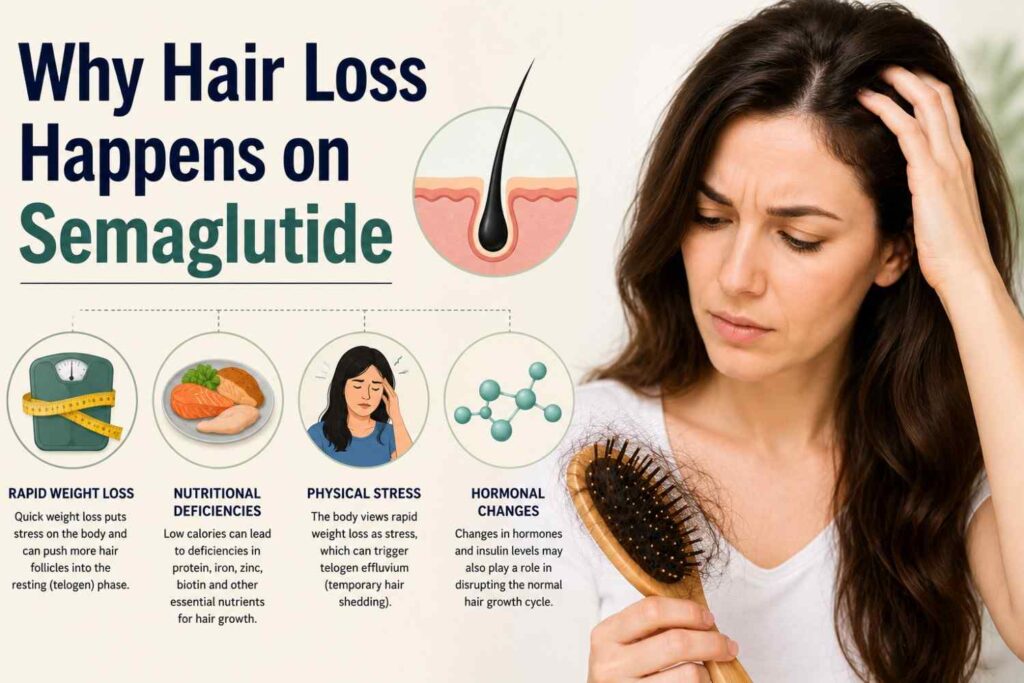
To understand why semaglutide hair thinning happens, you need to understand a condition called telogen effluvium. This is a form of temporary hair loss that occurs when the body experiences significant physical or emotional stress. Under normal circumstances, about 85 to 90 percent of your hair is actively growing at any given time, while the remaining 10 to 15 percent is in a resting phase called the telogen phase, waiting to shed naturally. When the body goes through a major stressor, such as rapid weight loss, a large number of hair follicles simultaneously enter the telogen phase early. About two to three months later, all that hair starts falling out at once.
With semaglutide, the stressor is usually a combination of factors. Rapid caloric restriction reduces the nutrients available to the body, and hair follicles are among the first structures to feel that deficit because hair growth is not essential for survival. Protein deficiency plays a particularly significant role, since hair is made almost entirely of a protein called keratin. When protein intake drops, the body redirects what little is available toward vital organs, and hair production slows or stops entirely.
Micronutrient deficiencies also contribute to semaglutide hair thinning. Iron, zinc, biotin, and B vitamins are all critical for healthy hair growth, and people on calorie-restricted diets frequently become deficient in one or more of these nutrients without realizing it. On top of that, the psychological stress of going through a major body transformation can itself trigger or worsen telogen effluvium. Hair loss and semaglutide are therefore connected through a chain of physiological events rather than a direct drug-to-follicle relationship.
Is Semaglutide Hair Loss Permanent or Reversible?
This is the question most people are desperate to have answered, and the answer is genuinely encouraging. Semaglutide hair loss is almost always reversible. Because the underlying cause is telogen effluvium rather than permanent follicle damage, the follicles themselves remain intact and fully capable of producing new hair. Once the triggering stress is removed or managed, the follicles cycle back into the growth phase and hair begins to regrow.
The important distinction to understand here is that semaglutide hair loss recovery is not about regrowing hair from scratch. Your follicles never died. They simply paused. When conditions become more favorable, meaning your nutrition improves, your weight stabilizes, and your body adjusts to the medication, the follicles resume their normal activity. Most people see noticeable regrowth within six to twelve months of the shedding phase.
There are rare cases where hair loss becomes more prolonged, typically when nutritional deficiencies are severe and left unaddressed, or when another underlying condition such as thyroid disease or androgenetic alopecia is also present. This is why it is worth having a conversation with your doctor if the shedding is significant or if regrowth does not begin within a reasonable timeframe. But for the vast majority of people, semaglutide hair loss recovery is simply a matter of time and proper care.
How Long Does Recovery Take?
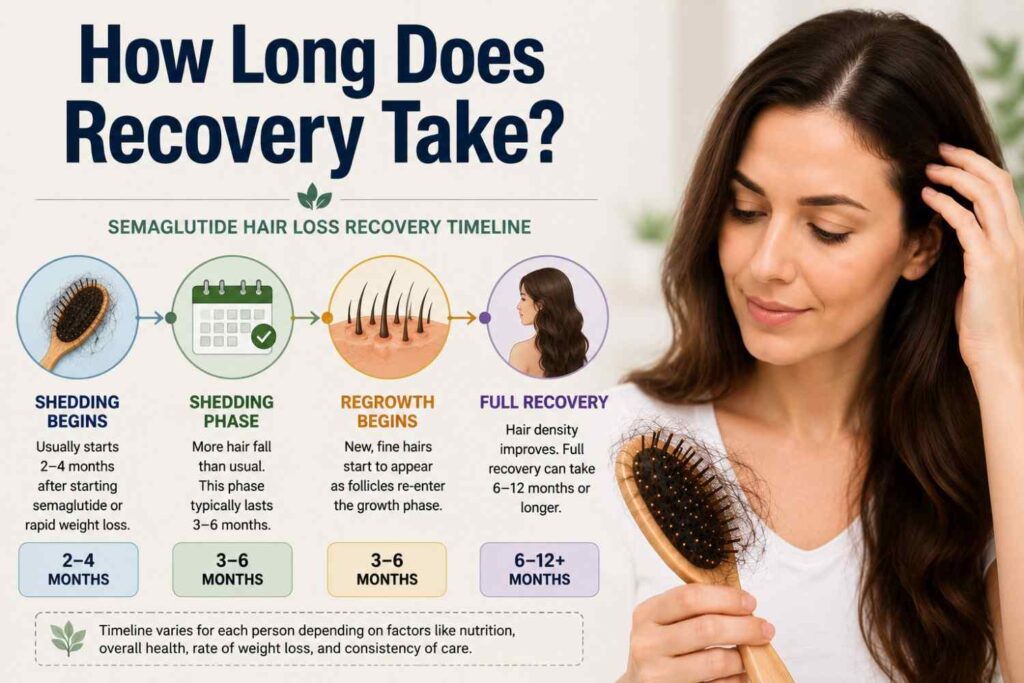
The timeline for semaglutide hair loss recovery follows a fairly predictable pattern, though individual experiences vary based on factors like nutrition, overall health, and how quickly the weight loss occurred. Most people begin noticing shedding around two to four months after starting semaglutide or after a period of significant calorie restriction. This is because telogen effluvium has a delay built into it. The follicles shift to the resting phase immediately after the stressor, but the actual shedding happens weeks to months later when those resting hairs finally release.
The shedding phase typically lasts between three and six months. During this time, you might notice more hair on your pillow, in the shower, or on your brush than you are used to. It can feel alarming, but this phase does come to an end. Once the shedding slows, regrowth gradually begins. You will likely notice fine, short hairs appearing first, particularly around the hairline and temples. Full recovery, where your hair returns to its previous density and texture, generally takes anywhere from six months to a full year after the shedding stops.
If you are actively working on improving your protein intake and addressing nutritional gaps, you may find that your semaglutide hair loss recovery moves along faster. People who continue to severely restrict their eating throughout treatment tend to have longer or more pronounced hair loss phases. Stabilizing your weight and ensuring adequate nutrition are the two most powerful things you can do to support the recovery process.
Tips to Support Hair Regrowth
While time is the most important factor in recovering from semaglutide hair thinning, there are several evidence-backed steps you can take to create the best possible conditions for regrowth. The most impactful change you can make is ensuring that you are eating enough protein. Most adults need between 0.7 and 1 gram of protein per pound of body weight daily, and people experiencing hair loss may benefit from staying at the higher end of that range. Lean meats, eggs, Greek yogurt, legumes, and fish are all excellent sources that can be incorporated into a calorie-conscious diet without undermining your weight management goals.
Getting your nutrient levels checked is another important step. A simple blood panel can reveal deficiencies in iron, ferritin, zinc, vitamin D, and B12, all of which are commonly linked to hair loss. If deficiencies are found, targeted supplementation under medical supervision can meaningfully speed up semaglutide hair loss recovery. A general hair, skin, and nails supplement containing biotin, silica, and collagen can also provide additional support, though supplements work best when combined with a nutritionally complete diet rather than as a replacement for one.
Scalp health matters more than most people realize. Gentle scalp massage for a few minutes each day increases blood circulation to the follicles and has been shown in small studies to modestly improve hair density over time. Using mild, sulfate-free shampoos reduces unnecessary follicle stress. Some people also find topical minoxidil helpful during the shedding phase, and while it does not address the underlying cause, it can stimulate the follicles and shorten the recovery timeline. This is a conversation worth having with a dermatologist if the hair loss is significantly affecting your confidence or quality of life.
When to Talk to a Doctor
Not all hair loss during semaglutide treatment is telogen effluvium, and it is important to recognize when a medical evaluation is warranted. You should speak with your doctor if you are losing hair in patches rather than experiencing diffuse overall thinning, if the shedding is extremely heavy and does not slow down after six months, or if you notice other symptoms alongside the hair loss such as fatigue, cold sensitivity, or changes in your skin and nails. These could indicate a thyroid issue, autoimmune condition, or another underlying problem that needs to be addressed separately from your semaglutide treatment.
It is also worth checking in with your prescribing physician if you suspect your calorie intake has dropped too low. Semaglutide is very effective at suppressing appetite, and some people find that they are eating far less than they realize. While this drives weight loss, it can also accelerate nutritional deficiencies that worsen hair loss. Your doctor may recommend adjusting your dose or working with a registered dietitian to ensure you are meeting your baseline nutritional needs even while in a caloric deficit.
A dermatologist who specializes in hair loss can also be an invaluable resource. They can perform a thorough assessment, rule out other causes of hair thinning, and create a targeted treatment plan if needed. You do not have to wait until things get severe to seek that kind of help. Early intervention almost always leads to better and faster outcomes.
Frequently Asked Questions
Does semaglutide cause hair loss in everyone who takes it?
No, semaglutide does not cause hair loss in everyone. Clinical trial data suggests that roughly 3% of people taking higher-dose semaglutide for weight management experience noticeable hair shedding. The risk appears to be higher in people who lose weight very quickly, eat too little protein, or develop nutritional deficiencies during treatment. Many people take semaglutide without any significant change to their hair at all.
Is semaglutide hair loss reversible?
Yes, semaglutide hair loss is reversible in the vast majority of cases. The type of hair loss associated with semaglutide, known as telogen effluvium, does not permanently damage the hair follicles. Once the underlying nutritional and physiological stressors are addressed and the body adjusts to the medication, the follicles resume normal growth and hair density gradually returns.
How long does semaglutide hair loss last?
The shedding phase typically lasts between three and six months. After that, regrowth begins, and most people see their hair return to close to its original density within six to twelve months. The total experience from the start of shedding to full recovery is usually somewhere between nine and eighteen months, though this varies based on individual factors like nutrition and overall health.
What can I do to stop semaglutide hair thinning?
While you cannot always prevent telogen effluvium entirely, you can significantly reduce its severity by prioritizing protein intake, addressing micronutrient deficiencies, and avoiding overly aggressive calorie restriction. Eating enough protein every day and getting blood work done to identify any deficiencies are the two most effective strategies for minimizing semaglutide hair thinning and supporting faster recovery.
Should I stop taking semaglutide if my hair is falling out?
In most cases, stopping semaglutide is not necessary just because of hair loss. The shedding is usually temporary and improves on its own as the body adjusts. However, you should discuss the situation with your prescribing doctor before making any changes to your medication. They can help determine whether the hair loss is directly related to the drug, the rapid weight loss, or another underlying condition, and advise you on the best course of action based on your overall health picture.
Can minoxidil help with semaglutide hair loss recovery?
Topical minoxidil can help support semaglutide hair loss recovery by stimulating the hair follicles and potentially shortening the duration of the shedding phase. It does not address the root cause, which is usually nutritional stress from rapid weight loss, but it can be a useful tool in combination with dietary improvements and proper supplementation. A dermatologist can help you decide whether minoxidil is appropriate for your specific situation.
Is hair loss from semaglutide different from regular hair loss?
Yes, hair loss and semaglutide tend to be associated with telogen effluvium, which is diffuse shedding across the entire scalp rather than the patterned thinning seen in androgenetic alopecia or the patchy loss of alopecia areata. Telogen effluvium is also temporary by nature, whereas other forms of hair loss can be progressive or permanent. If your hair loss looks patchy or follows a specific pattern rather than general thinning, it is worth seeing a dermatologist to rule out other conditions.
When will I see new hair growth after semaglutide hair loss?
Most people begin to notice the first signs of regrowth, typically fine short hairs around the hairline and temples, within three to six months after the shedding slows down. Full regrowth to your previous hair density can take up to a year or more. Keeping up with good nutrition, managing stress, and being consistent with any recommended supplements or topical treatments will give you the best chance of a smooth and complete semaglutide hair loss recovery.