
If you have diabetes, you already know that what you eat matters a lot. But knowing exactly which foods to avoid with diabetes can feel confusing, especially when some of the worst offenders look perfectly healthy on the surface.
The truth is, certain everyday foods can send your blood sugar soaring within minutes. And the scary part? Many people with diabetes are eating these foods daily without realizing the damage they’re causing.
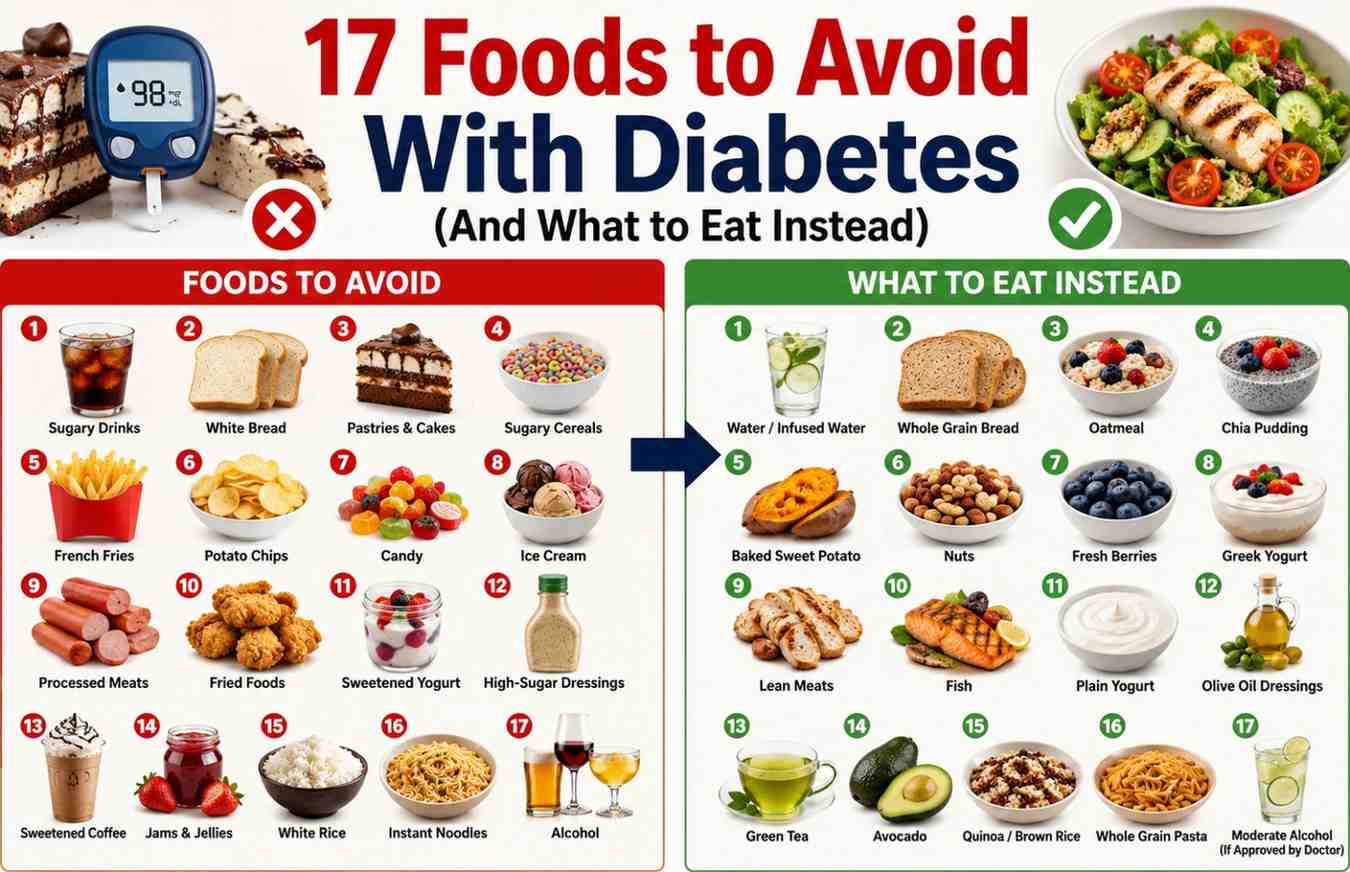
In this article, we’ll walk you through 17 foods to avoid with diabetes, explain why each one is harmful, and give you a better alternative for every single one. No complicated science, just practical advice you can use starting today.
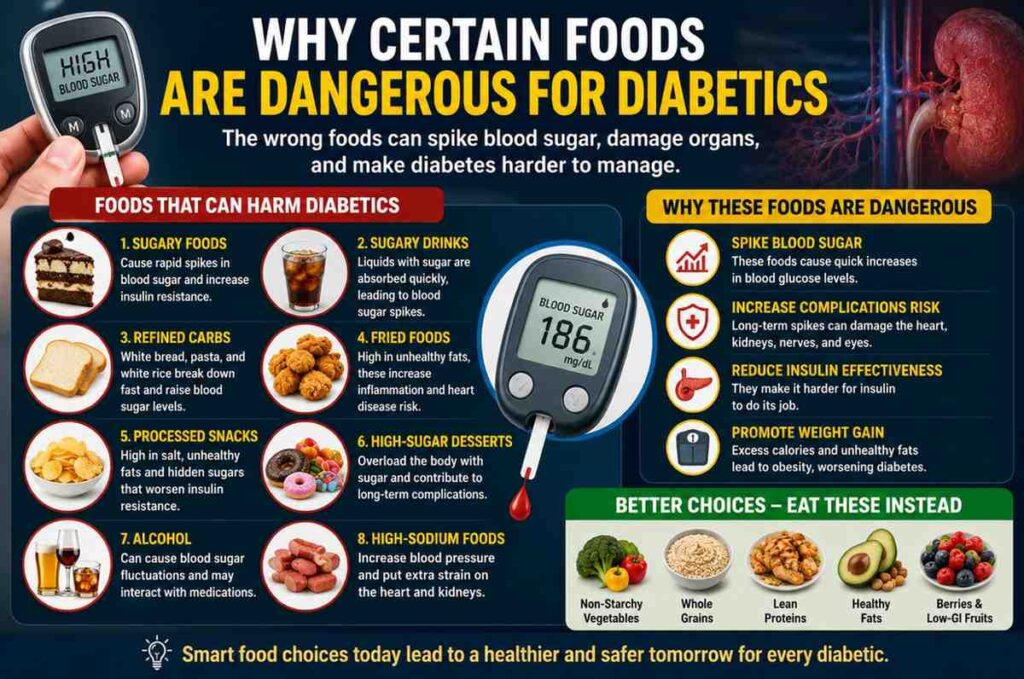
Why Certain Foods Are Dangerous for Diabetics
Before we jump into the list, it helps to understand the basic idea behind blood sugar spikes.
When you eat carbohydrates, your body breaks them down into glucose. That glucose enters your bloodstream. In people with diabetes, the body either doesn’t produce enough insulin or can’t use it properly so that glucose stays in the blood longer than it should.
Over time, repeated blood sugar spikes damage blood vessels, nerves, kidneys, and eyes. This is why the American Diabetes Association strongly recommends paying close attention to what goes on your plate.
The foods on this list are either high in sugar, refined carbohydrates, unhealthy fats, or a combination of all three. Each one can make blood sugar management significantly harder.
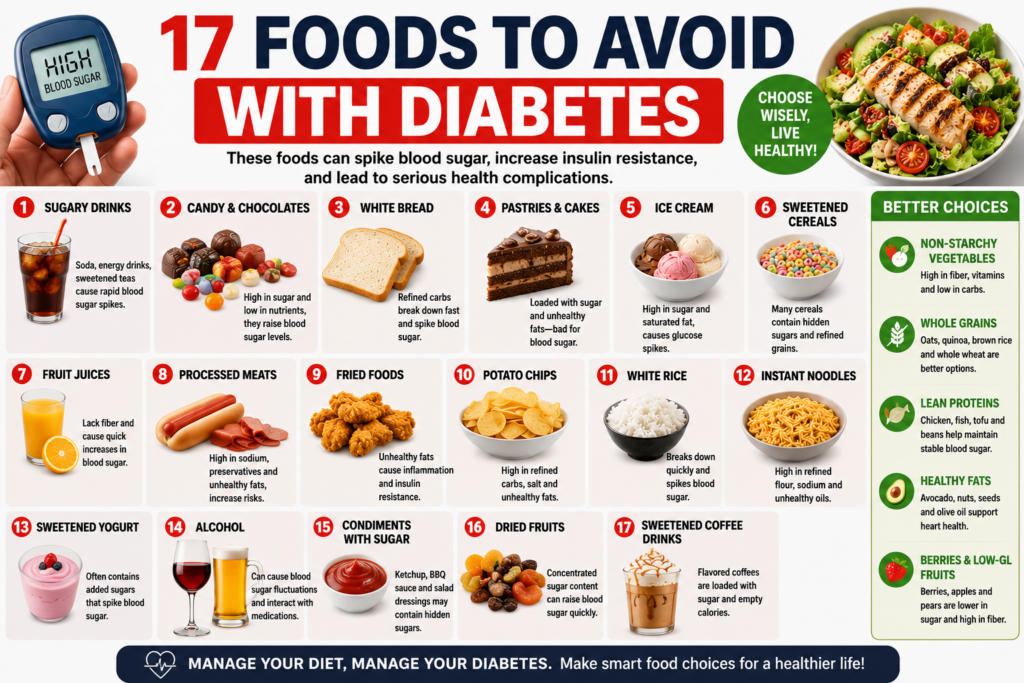
17 Foods to Avoid With Diabetes
1. White Bread
White bread is made from refined flour, which has been stripped of fiber and nutrients. Without fiber to slow things down, it hits your bloodstream fast and causes a rapid glucose spike.
A single slice of white bread has a glycemic index (GI) of around 70 which is considered high. For someone managing diabetes, this is a problem.
Eat this instead: 100% whole grain bread or sourdough bread. These digest more slowly and have a much lower impact on blood sugar.
2. Sugary Breakfast Cereals
Most breakfast cereals even the ones marketed as “healthy” or “whole grain” are loaded with added sugar. Some popular cereals contain 12–15 grams of sugar per serving. Before you’ve even left the house in the morning, your blood sugar has already taken a hit.
Eat this instead: Plain oatmeal (not the instant flavored kind), or eggs with vegetables. Both give you lasting energy without the glucose crash.
3. Flavored Yogurt
Regular plain yogurt is actually quite good for people with diabetes. The problem is flavored yogurt. Most fruit-flavored yogurts contain 20–30 grams of sugar per small cup roughly the same as a candy bar.
The “low-fat” label makes people think it’s healthy, but food companies replace fat with sugar to keep the taste appealing.
Eat this instead: Plain Greek yogurt with fresh berries. You control the sweetness, and you get protein and probiotics without the sugar bomb.
4. White Rice
White rice is another refined carbohydrate that digests quickly and raises blood sugar fast. A cup of cooked white rice has a GI of around 72 very similar to white bread.
Studies have actually shown that people who eat white rice regularly have a higher risk of developing type 2 diabetes. For those who already have it, frequent consumption makes blood sugar harder to control.
Eat this instead: Brown rice, cauliflower rice, or quinoa. All three have more fiber and a lower glycemic impact.
5. Fruit Juice
This one surprises a lot of people. Fruit is healthy, right? Yes whole fruit is. But fruit juice is a different story.
When you juice a fruit, you remove the fiber. What you’re left with is concentrated natural sugar that hits your bloodstream almost as fast as soda. A small 8-ounce glass of orange juice contains about 26 grams of sugar with very little fiber to slow absorption.
Eat this instead: Eat the whole fruit. The fiber in whole fruit slows sugar absorption and keeps blood glucose levels more stable.
6. Soda and Sugary Drinks
This one is no surprise, but it’s worth saying clearly. Regular soda is one of the worst things a person with diabetes can drink. A single 12-ounce can of cola has around 39 grams of sugar that’s nearly 10 teaspoons.
Diet soda is not much better either. Research suggests artificial sweeteners may still affect insulin response and gut health over time.
Drink this instead: Water, sparkling water, or unsweetened herbal tea. If you need flavor, add a slice of lemon or cucumber.
7. Dried Fruits
Dried fruits seem like a healthy snack, and in small amounts, they can be okay for some people. But the issue is concentration. When you dry a fruit, the water is removed and all the sugar gets packed into a much smaller volume.
A quarter cup of raisins contains about 29 grams of sugar. Most people don’t stop at a quarter cup.
Eat this instead: Fresh berries, especially blueberries, strawberries, and raspberries. They’re lower in sugar and high in antioxidants.
8. French Fries
Potatoes themselves are a high-GI food. Frying them in oil makes things worse. French fries are high in refined carbs, unhealthy trans fats, and sodium a triple threat for anyone with diabetes.
On top of blood sugar spikes, regular fries consumption is also linked to weight gain and increased inflammation, both of which make diabetes harder to manage.
Eat this instead: Oven-baked sweet potato fries with a drizzle of olive oil. Sweet potatoes have more fiber and a lower glycemic impact.
9. Flavored Coffee Drinks
A plain black coffee has almost no carbohydrates. But the fancy drinks from coffee shops mochas, frappuccinos, caramel lattes are essentially desserts in a cup.
A medium-sized caramel frappuccino can contain 50–60 grams of sugar. That’s more than most people’s entire daily recommended sugar intake in one drink.
Drink this instead: Plain black coffee, or coffee with a splash of unsweetened almond milk. Add a small amount of cinnamon for natural sweetness cinnamon has also been studied for its potential blood sugar benefits.
10. White Pasta
Just like white bread and white rice, white pasta is made from refined flour. It digests quickly and causes blood sugar to spike. A large portion of pasta which is easy to eat at a restaurant can contain 70–80 grams of carbohydrates.
Eat this instead: Whole wheat pasta, chickpea pasta, or zucchini noodles. These options have more fiber and a lower glycemic index.
11. Packaged Snack Foods
Chips, crackers, pretzels, and other packaged snacks are made with refined flour, added salt, and often hydrogenated oils. They’re designed to be addictive easy to keep eating without feeling full.
Most of these snacks have very little fiber, which means they digest quickly and cause blood sugar to spike fast.
Eat this instead: A small handful of raw nuts, sliced vegetables with hummus, or a boiled egg. These options provide protein and healthy fats that help stabilize blood sugar.
12. Honey and Maple Syrup
Many people with diabetes switch from regular sugar to honey or maple syrup thinking it’s a healthier option. And while these natural sweeteners do contain some antioxidants and minerals, they still raise blood sugar significantly.
Honey actually has a slightly higher glycemic index than table sugar. Your body doesn’t know the difference.
Use this instead: Small amounts of stevia or monk fruit sweetener. Both have minimal impact on blood sugar levels.
13. Full-Fat Dairy (in large amounts)
Full-fat dairy products like heavy cream, full-fat cheese, and butter are high in saturated fat. While they don’t directly spike blood sugar, research shows that high saturated fat intake can increase insulin resistance over time making it harder for your body to manage glucose.
Choose this instead: Low-fat dairy options, or plant-based alternatives like unsweetened almond milk or oat milk (in moderation).
14. Alcohol
Alcohol affects blood sugar in unpredictable ways. Beer and sweet wines are high in carbohydrates and can raise blood sugar quickly. Meanwhile, spirits can cause dangerous drops in blood sugar especially if you’re taking insulin or certain diabetes medications.
Beyond blood sugar, alcohol also impairs your judgment, making it easier to make poor food choices while drinking.
Choose this instead: If you do drink, opt for dry red wine in small amounts. Always drink with food, and consult your doctor about what’s safe for your specific situation.
15. Processed Meats
Hot dogs, sausages, bacon, and deli meats are high in sodium and saturated fat. Regular consumption of processed meats is linked to increased risk of heart disease which is already a major complication risk for people with diabetes.
Studies have also shown associations between processed meat consumption and higher risk of developing type 2 diabetes.
Eat this instead: Grilled chicken breast, fish like salmon or sardines, or legumes like lentils and black beans as protein sources.
16. Store-Bought Baked Goods
Muffins, cookies, cakes, and pastries from the store are usually made with white flour, loads of sugar, and artificial preservatives. Even “reduced sugar” versions often contain other sweeteners that can still affect blood sugar.
One large store-bought muffin can contain 50–60 grams of carbohydrates. That’s a significant portion of a day’s carb budget in one snack.
Eat this instead: Homemade baked goods using almond flour or coconut flour, sweetened with stevia. You control every ingredient.
17. Energy Drinks
Energy drinks are a double problem they usually contain large amounts of sugar AND caffeine. The sugar spikes blood glucose, while caffeine can also raise blood sugar by triggering stress hormones like cortisol and adrenaline.
A single energy drink can contain 25–40 grams of sugar. Some larger cans have even more.
Drink this instead: Water with a squeeze of lemon, or green tea for a natural, mild caffeine boost without the sugar spike.
A Simple Rule to Follow
If you’re feeling overwhelmed by this list, here’s one rule that makes things much easier:
The less processed a food is, the safer it generally is for blood sugar.
Whole foods vegetables, lean proteins, nuts, seeds, whole grains, and fresh fruits in moderation are your best friends when managing diabetes. They come with natural fiber, vitamins, and minerals that your body can actually use.
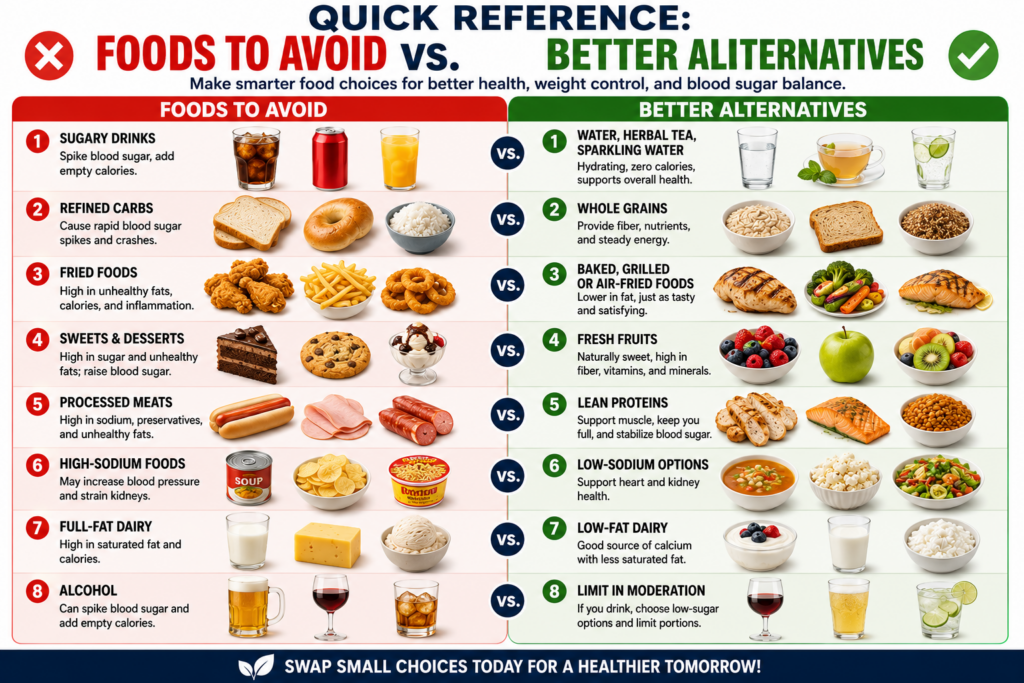
Quick Reference: Foods to Avoid vs. Better Alternatives
| Avoid This | Eat/Drink This Instead |
|---|---|
| White bread | 100% whole grain or sourdough |
| Sugary cereal | Plain oatmeal or eggs |
| Flavored yogurt | Plain Greek yogurt |
| White rice | Brown rice or cauliflower rice |
| Fruit juice | Whole fresh fruit |
| Soda | Water or herbal tea |
| Dried fruit | Fresh berries |
| French fries | Baked sweet potato |
| Fancy coffee drinks | Black coffee |
| White pasta | Whole wheat or chickpea pasta |
| Packaged snacks | Nuts or veggies with hummus |
| Honey/maple syrup | Stevia or monk fruit |
| Processed meats | Grilled chicken or fish |
| Store-bought baked goods | Homemade almond flour recipes |
| Energy drinks | Water or green tea |
Final Thoughts
Managing diabetes through diet isn’t about starving yourself or giving up everything you enjoy. It’s about making smarter swaps and understanding which foods to avoid with diabetes so you can protect your health long-term.
Start small. Pick two or three items from this list and swap them out this week. Once those feel normal, tackle a few more. Over time, these small changes add up to significantly better blood sugar control and a healthier, more energetic life.
If you’re unsure about your specific dietary needs, always talk to your doctor or a registered dietitian who specializes in diabetes care.