
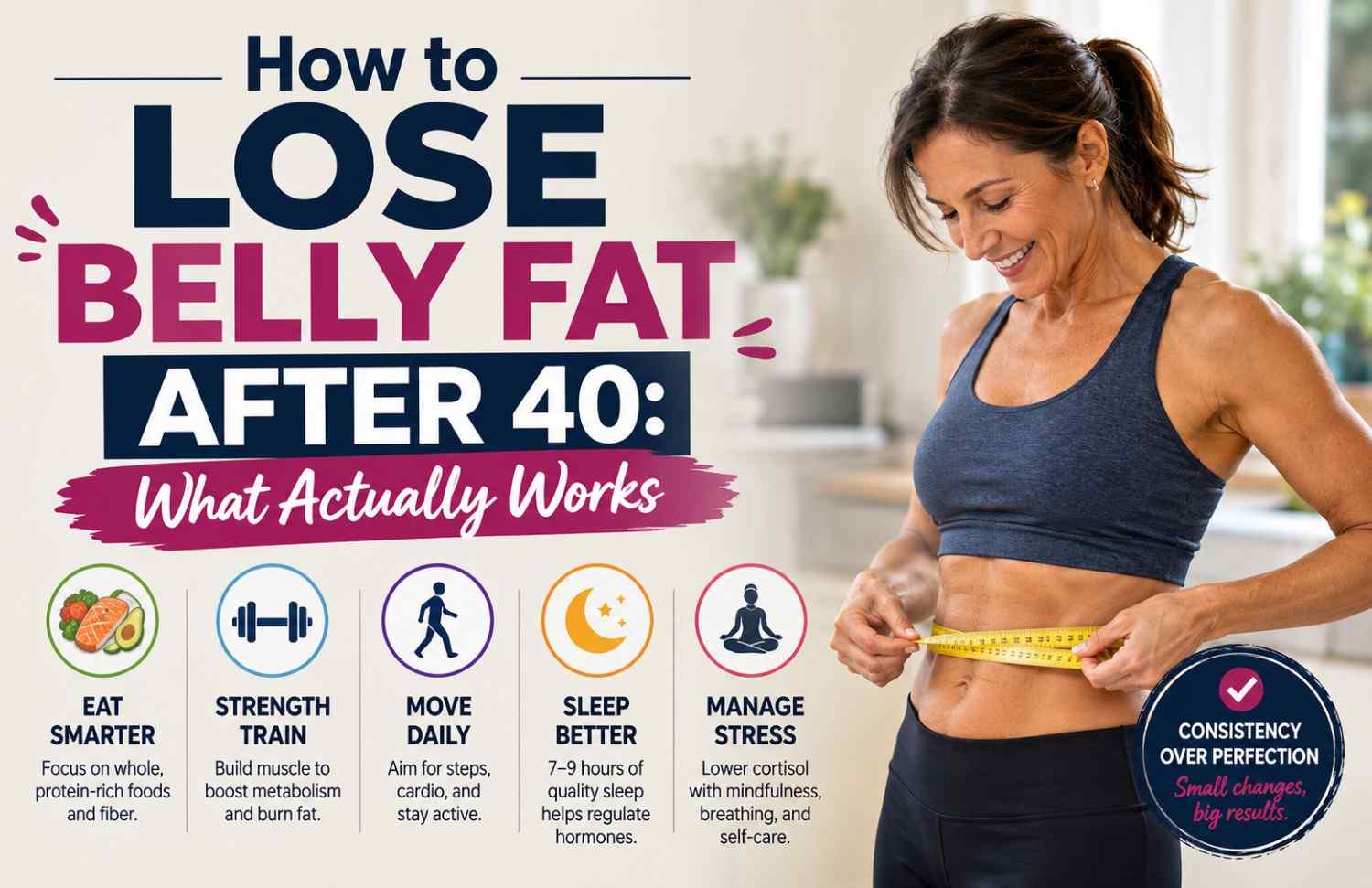
I remember talking to a friend who turned 42 last year. She told me she had not changed her diet at all, was actually eating less than before, and still her waistline kept expanding. She was frustrated and confused. If you are in your 40s and feeling the same way, I want you to know you are not making it up. Something really does change in your body Belly Fat after 40, and once you understand what it is, you can actually do something about it.
This is not another generic weight loss article. This is specifically about what happens to your body in your 40s and what you can do that actually moves the needle.
Why Belly Fat Gets Stubborn After 40
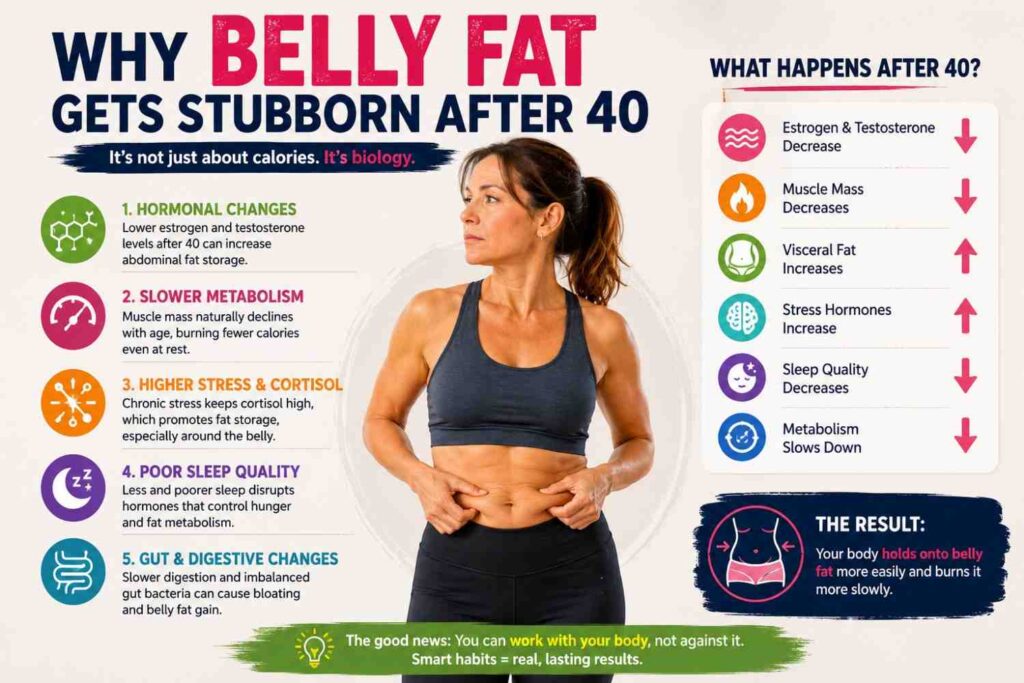
The honest answer is that multiple things go wrong at the same time. It is not just one issue you can fix with a single diet change. Your hormones shift, your metabolism slows, your stress accumulates and your sleep suffers. All of these feed into each other.
Your Hormones Are Working Against You
In women, the transition toward menopause starts as early as the late 30s. Estrogen levels drop and the body responds by redistributing fat storage. Instead of storing fat on the hips and thighs, it starts going to the belly. This is not vanity. It is biology.
In men, testosterone naturally declines from around age 35 onward. Lower testosterone makes it easier to store fat and harder to hold onto muscle. The result looks the same: more fat gathering around the midsection.
Your Metabolism Is Not What It Used to Be
Your resting metabolic rate, which is the number of calories your body burns just to stay alive, goes down with age. A big part of this is muscle loss. Muscle is metabolically expensive tissue. It burns calories even when you are doing nothing. When you lose muscle, you burn fewer calories around the clock, and it becomes much easier to gain fat even without eating more.
Chronic Stress Sends Fat to Your Belly
Cortisol is the hormone your body releases under stress. In small amounts it is useful. But when stress becomes a constant background noise in your life, cortisol stays elevated and one of its main effects is to push fat storage toward the abdominal area. Most people in their 40s are dealing with more stress than they were in their 20s. Careers, kids, aging parents, financial pressure. The belly fat is partly a physical record of that stress.
Sleep Problems Make Everything Worse
Sleep quality tends to decline with age. When you sleep less or sleep poorly, your body produces more of the hunger hormone ghrelin and less of the fullness hormone leptin. You wake up already behind on willpower, craving carbohydrates and sugar. And on top of that, poor sleep raises cortisol, which sends you right back to the previous problem. It becomes a cycle that is hard to break.
What Actually Works
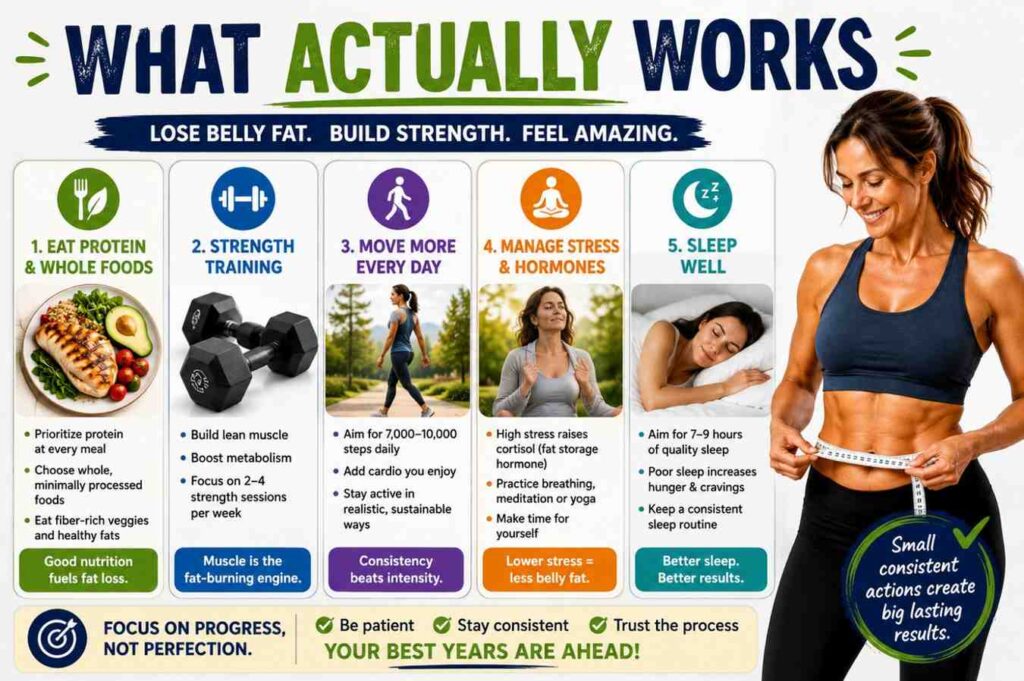
Now that you understand the root causes, here is what actually addresses them. These are not shortcuts. They are shifts that work with the changes happening in your body instead of ignoring them.
1. Eat More Protein Than You Think You Need
Most people over 40 are undereating protein significantly. This is a problem because protein does several things at once. It preserves the muscle mass you have, which keeps your metabolism from dropping further. It keeps you fuller for longer, which reduces mindless snacking. And it has a higher thermic effect, meaning your body burns more calories just digesting it compared to carbohydrates or fat.
A practical target is somewhere between 0.7 and 1 gram of protein per pound of bodyweight per day. Eggs, chicken, fish, Greek yogurt, cottage cheese and legumes are all good sources. Try to get protein at every meal rather than loading it all into dinner.
2. Lift Weights More Than You Run
This one surprises a lot of people. The instinct when you want to lose belly fat is to go running or get on the treadmill. And while cardio has benefits, it is not the most effective strategy for belly fat specifically at this stage of life.
Strength training builds and maintains muscle, which raises your resting metabolic rate. Research consistently shows that resistance training is better than cardio at reducing visceral fat, the deep belly fat that accumulates around your organs. You do not need to become a powerlifter. Three or four sessions per week of compound movements like squats, deadlifts, rows and presses will do more for your belly than daily jogging.
3. Take Cortisol Seriously
I know this sounds abstract, but managing stress is not a soft lifestyle recommendation. It is a direct intervention on one of the main hormonal drivers of belly fat. Ten minutes of deep breathing in the morning, a daily walk outside, cutting caffeine after early afternoon and learning to protect your time and energy all have measurable effects on cortisol levels over time. None of these take a lot of effort individually, but together they shift your hormonal environment in a meaningful way.
4. Fix Your Sleep Before You Fix Your Diet
If I could give someone over 40 only one piece of advice for losing belly fat, it would probably be to fix their sleep first. A study published in the journal Sleep found that adults sleeping under six hours per night accumulated significantly more abdominal fat over a five year period compared to those sleeping seven to eight hours.
Going to bed and waking up at the same time every day, even on weekends, is the single most effective sleep intervention. Keeping your bedroom cool and dark helps. Avoiding screens in the hour before bed helps. And contrary to what many people believe, alcohol makes sleep worse overall even if it makes you fall asleep faster.
5. Cut Refined Carbs, Not All Carbs
You do not need to go on a ketogenic diet to lose belly fat. But refined carbohydrates, white bread, pasta, pastries, sugary drinks, packaged snacks, spike your insulin repeatedly throughout the day. High insulin promotes fat storage, particularly in the belly. Swapping these out for fiber-rich whole foods like oats, sweet potatoes, lentils and vegetables makes a real difference without requiring extreme restriction. Fruit is fine. Berries especially.
6. Walk Every Day Without Making It Complicated
Walking gets underestimated because it does not feel intense. But a 30 to 45 minute brisk walk does something that intense exercise sometimes cannot: it lowers cortisol rather than raising it. It also improves insulin sensitivity, which directly helps with belly fat storage. Aiming for somewhere between 8,000 and 10,000 steps per day is a realistic goal for most people. Walking after a meal is particularly useful for blunting blood sugar spikes.
7. Create a Calorie Deficit Without Starving Yourself
You do still need to consume fewer calories than you burn. There is no way around the basic energy equation. But the size of the deficit matters a lot after 40. Aggressive calorie restriction causes muscle loss, slows your metabolism and raises cortisol. A deficit of 300 to 500 calories per day is enough to lose fat at a steady pace without triggering those negative responses. Tracking what you eat for even two weeks tends to reveal patterns that most people are genuinely surprised by.
What Does Not Work After 40
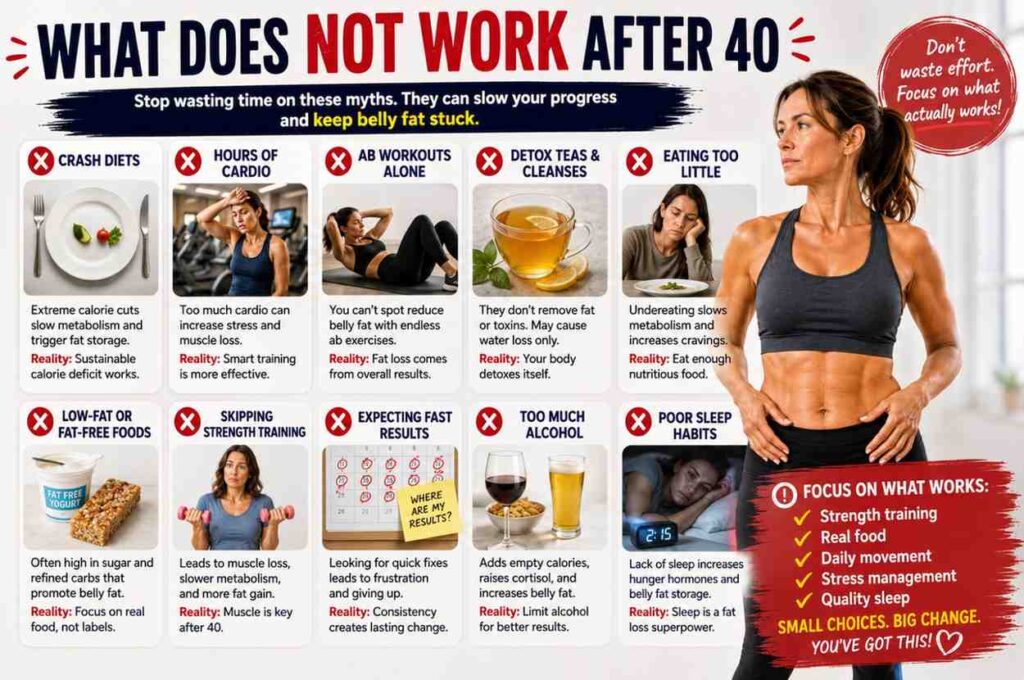
Crash diets might produce quick results on the scale but most of that weight is water and muscle, not fat. You end up lighter but with less muscle and a slower metabolism, which makes regaining the weight almost inevitable.
Juice cleanses and detox programs spike blood sugar and strip the protein your muscles need to maintain themselves. They are not dangerous in the short term but they do not address any of the real causes of belly fat either.
Doing hundreds of crunches is not how spot reduction works. You cannot choose where your body burns fat from through exercise targeting. Ab exercises build the muscles underneath but they will not burn the fat on top.
Cutting out all dietary fat is an old approach that has not aged well. Healthy fats from sources like avocado, olive oil and nuts actually support hormone production, including the hormones that help regulate fat storage and appetite.
A Weekly Structure to Start With
| Day | Focus |
|---|---|
| Monday | Strength training (30 min) + 8,000 steps |
| Tuesday | 45 min walk + high protein meals throughout the day |
| Wednesday | Strength training (30 min) + 10 min breathing or stress reset |
| Thursday | 45 min walk + early bedtime focus |
| Friday | Strength training (30 min) + 8,000 steps |
| Saturday | Light activity, yoga or a long walk, no pressure |
| Sunday | Meal prep for the week + sleep routine reset |
How Long Before You See a Difference
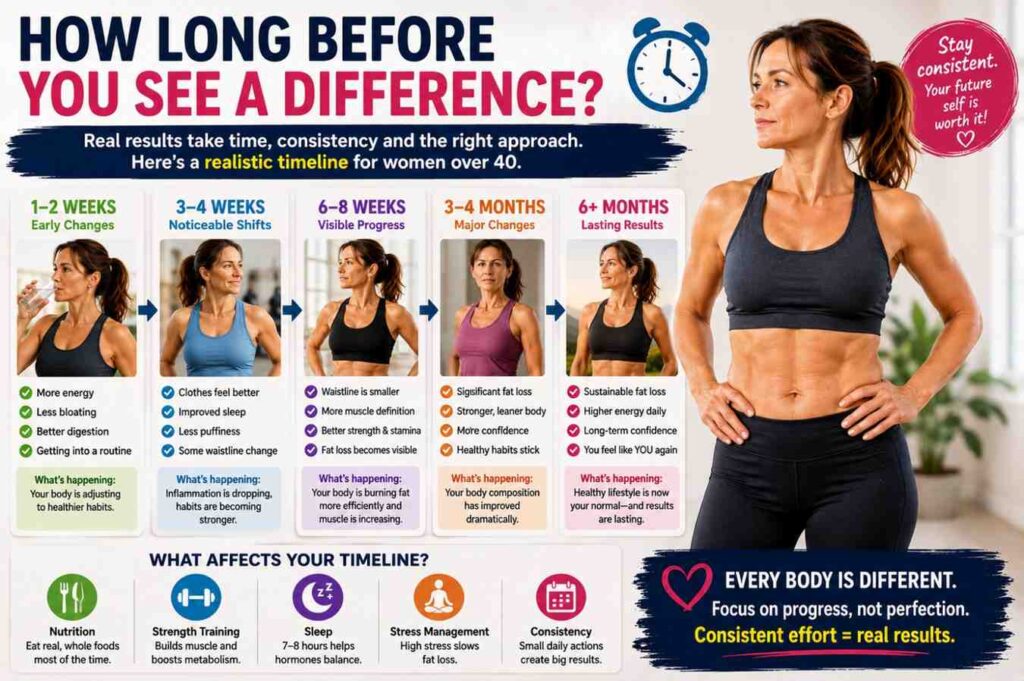
Results vary by person but most people following this approach consistently report a rough pattern like this:
2 to 4 weeksLess bloating, more energy during the day, reduced afternoon cravings
6 to 8 weeksVisible change in belly size, clothes fitting differently around the waist
3 to 6 monthsMeaningful, lasting fat loss that stays off because the underlying habits have changed
The thing that separates people who succeed from people who do not is rarely the plan. It is consistency over weeks and months, even when progress feels slow.
The Bottom Line
Belly fat after 40 is a hormonal problem as much as it is a diet problem. Eating less and running more is the old playbook and it does not work as well at this age. What does work is building muscle, managing cortisol, sleeping properly, eating enough protein and keeping a moderate calorie deficit over time.
Your body has changed. The approach needs to change with it.