
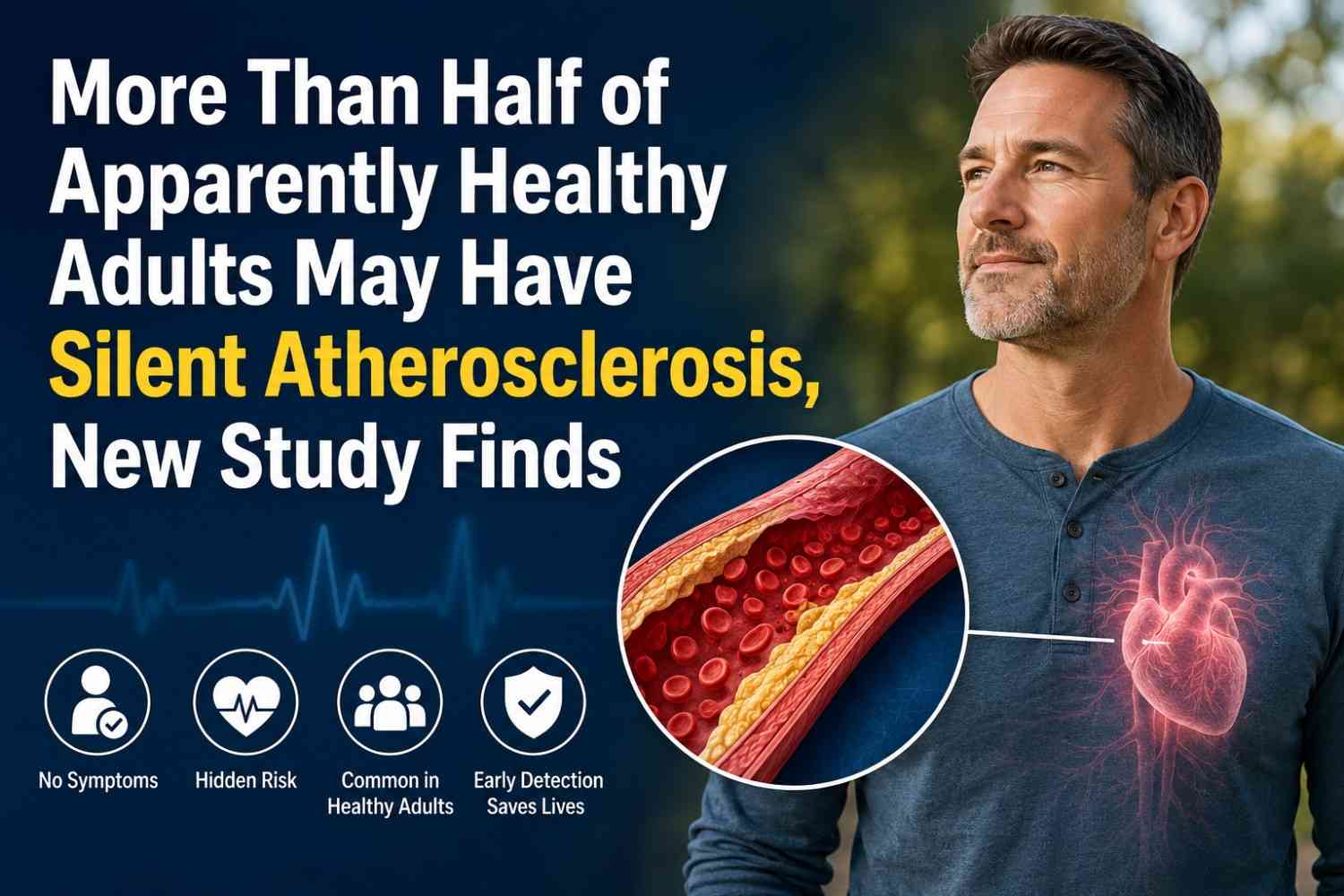
If you have been told your cholesterol is normal, your blood pressure is fine, and your heart health looks good on paper, you might assume your arteries are clear. A growing body of research is challenging that assumption in a significant way. Studies using advanced imaging technology are finding that silent atherosclerosis, which is the buildup of plaque in the arteries without any obvious symptoms, is far more widespread among apparently healthy adults than previously understood. In some studies, more than half of people who would be considered low risk by conventional screening measures already have detectable arterial plaque when their arteries are actually examined directly.
This is not a reason to panic. But it is a reason to pay attention, to understand what silent atherosclerosis actually is, and to take the lifestyle factors that influence it seriously even when your annual checkup looks perfectly fine.
What Is Silent Atherosclerosis?
Silent atherosclerosis is the accumulation of fatty deposits, calcium, inflammatory cells, and cellular debris within the walls of the arteries in people who have no symptoms and who may not have traditional risk factors that would flag them for concern. The word silent refers to the fact that atherosclerosis produces no pain, no warning signs, and no symptoms in its early and intermediate stages. It progresses quietly over decades, gradually narrowing and stiffening the arteries, and the first symptom a person experiences may be a heart attack or stroke.
Brain Fog After Eating: What It Means and When to Worry
Atherosclerosis begins with damage to the inner lining of the artery wall, called the endothelium, followed by the infiltration of LDL cholesterol particles into the damaged area. The immune system responds to this infiltration with inflammation, and over time a plaque builds up within the artery wall. In its early stages this plaque does not narrow the artery significantly and produces no blood flow restriction. In its later stages it can rupture suddenly, triggering a blood clot that blocks the artery entirely and causes a heart attack or stroke with virtually no warning.
The danger of silent atherosclerosis is precisely its silence. People feel well, their routine labs look acceptable, and there is no signal that anything is wrong until the disease reaches a critical point.
What the Research Is Finding
Several large studies using coronary artery calcium scoring, carotid intima-media thickness measurements, and whole-body MRI imaging have produced findings that are reshaping how cardiologists think about cardiovascular risk in people who appear healthy by conventional measures.
The PESA study, conducted in Spain and following thousands of middle-aged adults who were employees of a bank with no known cardiovascular disease, found that more than half of the participants had detectable atherosclerotic plaques on imaging despite having no symptoms and many having no traditional risk factors. The plaques were found not just in the coronary arteries supplying the heart but also in the carotid arteries of the neck, the femoral arteries of the legs, and the aorta, suggesting that silent atherosclerosis is often a systemic process affecting multiple arterial beds simultaneously.
Other research has found that coronary artery calcium scores, which measure the amount of calcified plaque in the coronary arteries, are elevated in a significant proportion of adults who would be classified as low cardiovascular risk by standard guidelines. A coronary artery calcium score above zero in someone who appears healthy by conventional metrics is a powerful independent predictor of future cardiovascular events that traditional risk calculators significantly underestimate.
Why Conventional Risk Assessment Misses Silent Atherosclerosis
The standard tools used to assess cardiovascular risk in clinical practice, including the pooled cohort equations used to calculate ten-year cardiovascular event risk, were designed using population-level data and provide estimates based on traditional risk factors including age, sex, blood pressure, cholesterol levels, diabetes status, and smoking history. These tools are useful for identifying high-risk individuals and guiding treatment decisions, but they have meaningful limitations when it comes to detecting silent atherosclerosis in people who fall into the low or intermediate risk categories.
A 55-year-old man with normal blood pressure, normal cholesterol, no diabetes, and no smoking history might be told his ten-year cardiovascular risk is less than five percent and that no treatment is needed. But if an imaging study were performed, he might be found to have significant silent atherosclerosis in multiple arterial beds that the risk calculator never captured because the calculator is based on risk factors rather than on direct evidence of disease.
This is one of the central arguments for expanding the use of coronary artery calcium scoring and other imaging-based assessments in people who appear to be at low or intermediate risk by conventional measures. The presence of silent atherosclerosis on imaging fundamentally changes the conversation about prevention and treatment in a way that laboratory values alone cannot.
Risk Factors That Contribute to Silent Atherosclerosis
While silent atherosclerosis can develop in the absence of traditional risk factors, most cases are associated with at least some identifiable contributors that accelerate plaque development. Understanding these factors helps explain why preventive lifestyle changes matter so much even for people who feel perfectly well.
Dietary patterns high in refined carbohydrates, added sugar, and ultra-processed foods promote the insulin resistance, inflammation, and dyslipidemia that accelerate silent atherosclerosis. Chronic low-grade inflammation from any source, including poor sleep, chronic stress, sedentary behavior, excess body fat particularly visceral fat, and gut dysbiosis, contributes to endothelial dysfunction and plaque progression. Elevated small dense LDL particles, which are more atherogenic than standard LDL but not always captured by routine cholesterol panels, drive plaque formation in people whose standard cholesterol numbers look normal.
Blood pressure that is in the high-normal range rather than classically hypertensive still places meaningful stress on artery walls over time. Insulin resistance, even before it progresses to prediabetes or diabetes, promotes the inflammatory and metabolic environment that favors silent atherosclerosis. Smoking, even at relatively low levels, causes endothelial damage that significantly accelerates plaque formation. Genetics play a role through familial patterns of dyslipidemia and arterial wall biology that increase susceptibility to plaque development regardless of lifestyle.
The Role of Inflammation in Silent Atherosclerosis
One of the most important insights from recent research on silent atherosclerosis is the central role of chronic inflammation in driving plaque development and destabilization. Atherosclerosis is fundamentally an inflammatory disease. The immune cells and inflammatory mediators that accumulate within arterial plaques are not incidental bystanders but active participants in plaque growth and in the plaque rupture events that cause heart attacks and strokes.
Elevated high-sensitivity C-reactive protein, which is a blood marker of systemic inflammation, is an independent predictor of cardiovascular events and is associated with more extensive silent atherosclerosis on imaging even in people whose traditional risk factors look normal. The JUPITER trial demonstrated that treating apparently healthy people with elevated high-sensitivity C-reactive protein using statin therapy, which has both cholesterol-lowering and anti-inflammatory effects, significantly reduced cardiovascular events, supporting the role of inflammation as a therapeutic target in silent atherosclerosis.
Brain Fog After Eating: What It Means and When to Worry
This inflammation-centric view of silent atherosclerosis has important practical implications. Lifestyle factors that reduce systemic inflammation, including regular physical activity, an anti-inflammatory diet, adequate sleep, stress management, and maintaining a healthy body weight, are not just good general health advice. They are directly relevant to slowing the progression of silent atherosclerosis and reducing the risk of plaque destabilization.
How Silent Atherosclerosis Is Detected
Because silent atherosclerosis produces no symptoms, it can only be identified through imaging tests that directly visualize the artery walls or measure calcified plaque deposits. Several tests are available with different characteristics, costs, and risk profiles.
Coronary artery calcium scoring uses a specialized CT scan to measure the amount of calcified plaque in the coronary arteries. It involves a small amount of radiation and is typically not covered by insurance for primary prevention screening, costing several hundred dollars when paid out of pocket. A score of zero suggests very low risk while progressively higher scores indicate more extensive silent atherosclerosis and substantially higher cardiovascular event risk.
Carotid intima-media thickness measurement uses ultrasound to measure the thickness of the carotid artery wall, which reflects cumulative atherosclerotic burden. It involves no radiation and is relatively inexpensive but requires operator expertise for accurate results. Ankle-brachial index testing measures the ratio of blood pressure in the ankle to blood pressure in the arm and can detect silent atherosclerosis in the peripheral arteries of the legs.
Advanced lipid testing that measures small dense LDL particle number, apolipoprotein B, and lipoprotein(a) provides a more complete picture of atherogenic risk than standard cholesterol panels and can identify people at higher risk for silent atherosclerosis who would be missed by conventional screening.
What You Can Do About Silent Atherosclerosis
The most important message from the research on silent atherosclerosis is that lifestyle interventions that were previously thought of as generally healthy behaviors are actually specific and powerful tools for slowing or halting plaque progression. You do not need to wait for a diagnosis to start benefiting from these approaches.
Regular physical activity is one of the most powerful interventions available for reducing cardiovascular risk and slowing the progression of silent atherosclerosis. Both aerobic exercise and resistance training improve endothelial function, reduce inflammation, improve lipid profiles, lower blood pressure, improve insulin sensitivity, and directly reduce plaque progression as measured by imaging studies. Aiming for at least 150 minutes per week of moderate-intensity aerobic activity alongside two sessions of resistance training provides meaningful cardiovascular protection.
Dietary patterns that reduce atherogenic risk include the Mediterranean diet and DASH diet, both of which have substantial evidence for reducing cardiovascular events. These patterns emphasize vegetables, fruits, whole grains, legumes, fatty fish, olive oil, and nuts while limiting refined carbohydrates, added sugars, processed meats, and ultra-processed foods. The reduction in LDL cholesterol, inflammation, blood pressure, and blood sugar that these dietary patterns produce directly addresses the mechanisms driving silent atherosclerosis.
Not smoking is non-negotiable. Smoking is one of the most powerful accelerators of silent atherosclerosis and its cessation produces measurable cardiovascular benefit within months to years of stopping regardless of how long a person has smoked.
Managing blood pressure and blood sugar aggressively, even when they are in the high-normal range rather than classically abnormal, reduces the mechanical and metabolic stress on arterial walls that drives plaque development. Prioritizing seven to nine hours of quality sleep per night reduces inflammation and supports the metabolic and hormonal environment that protects arterial health.
Should You Get Screened for Silent Atherosclerosis?
The question of who should undergo imaging-based screening for silent atherosclerosis is an evolving area of cardiology with no universal consensus. Current guidelines from major cardiology societies suggest that coronary artery calcium scoring may be useful for intermediate-risk individuals where the results would change management decisions, such as whether to start statin therapy. Some cardiologists advocate for broader use of calcium scoring as a routine screening tool, particularly in middle-aged adults with any cardiovascular risk factors.
A productive conversation with your doctor about whether imaging-based screening for silent atherosclerosis makes sense in your individual situation should include your family history of cardiovascular disease, your complete metabolic and lipid picture beyond just standard cholesterol, your lifestyle and dietary patterns, and your own preferences and values regarding knowing your risk level.
Brain Fog After Eating: What It Means and When to Worry
What the research makes clear is that cardiovascular disease does not begin at the moment of a heart attack or stroke. It begins with silent atherosclerosis that develops quietly over years and decades before producing any symptoms. The earlier that development is identified and the lifestyle factors driving it are addressed, the greater the opportunity to alter its course.