

You just finished lunch, and instead of feeling energized, your head feels cloudy, your focus drops, and even simple tasks feel harder than they should. If this happens to you regularly, you’re dealing with a common but often overlooked issue: brain fog after eating.
This post breaks down what’s really going on in your body after meals, the most common causes behind post-meal brain fog, and the warning signs that mean it’s time to talk to a doctor.
What Is Brain Fog After Eating?
Brain fog isn’t a medical diagnosis on its own it’s a term used to describe a cluster of symptoms: mental fatigue, sluggish thinking, difficulty concentrating, forgetfulness, and a general feeling of mental “cloudiness.” When these symptoms show up specifically after meals, they’re usually tied to how your body processes food, manages blood sugar, and directs blood flow during digestion.
Occasional post-meal drowsiness (often called a “food coma”) is normal. But if brain fog after eating happens consistently, especially after most meals, it’s worth understanding the underlying cause.
Common Causes of Brain Fog After Eating
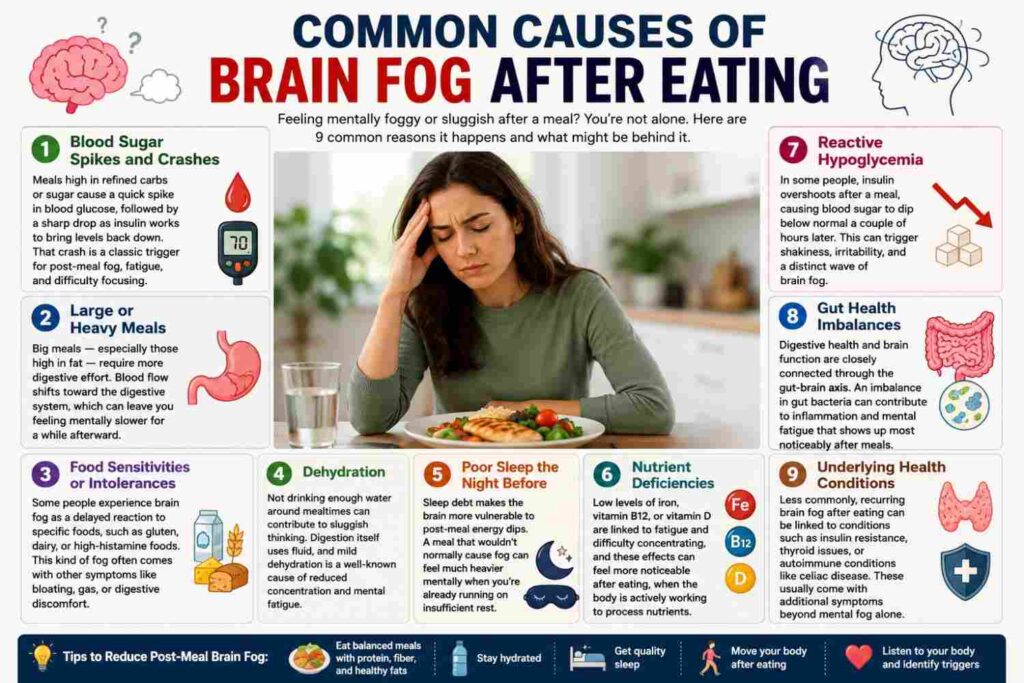
1. Blood Sugar Spikes and Crashes
Meals high in refined carbs or sugar cause a quick spike in blood glucose, followed by a sharp drop as insulin works to bring levels back down. That crash is a classic trigger for post-meal fog, fatigue, and difficulty focusing.
2. Large or Heavy Meals
Big meals — especially those high in fat — require more digestive effort. Blood flow shifts toward the digestive system, which can leave you feeling mentally slower for a while afterward.
3. Food Sensitivities or Intolerances
Some people experience brain fog as a delayed reaction to specific foods, such as gluten, dairy, or high-histamine foods. This kind of fog often comes with other symptoms like bloating, gas, or digestive discomfort.
4. Dehydration
Not drinking enough water around mealtimes can contribute to sluggish thinking. Digestion itself uses fluid, and mild dehydration is a well-known cause of reduced concentration and mental fatigue.
5. Poor Sleep the Night Before
Sleep debt makes the brain more vulnerable to post-meal energy dips. A meal that wouldn’t normally cause fog can feel much heavier mentally when you’re already running on insufficient rest.
6. Nutrient Deficiencies
Low levels of iron, vitamin B12, or vitamin D are linked to fatigue and difficulty concentrating, and these effects can feel more noticeable after eating, when the body is actively working to process nutrients.
7. Reactive Hypoglycemia
In some people, insulin overshoots after a meal, causing blood sugar to dip below normal a couple of hours later. This can trigger shakiness, irritability, and a distinct wave of brain fog.
8. Gut Health Imbalances
Digestive health and brain function are closely connected through the gut-brain axis. An imbalance in gut bacteria can contribute to inflammation and mental fatigue that shows up most noticeably after meals.
9. Underlying Health Conditions
Less commonly, recurring brain fog after eating can be linked to conditions such as insulin resistance, thyroid issues, or autoimmune conditions like celiac disease. These usually come with additional symptoms beyond mental fog alone.
Why Do I Have a White Tongue? 9 Hidden Causes You Should Know
When to Worry About Brain Fog After Eating
Occasional, mild fog after a big or carb-heavy meal usually isn’t a medical concern. However, you should consider seeing a doctor if:
- Brain fog happens after almost every meal, regardless of what you eat
- It’s accompanied by shakiness, rapid heartbeat, or sweating (possible signs of blood sugar issues)
- You also notice unexplained weight changes, digestive symptoms, or fatigue that doesn’t improve with rest
- Fog is severe enough to interfere with work, driving, or daily tasks
- Symptoms have developed gradually over weeks or months and are getting worse
A doctor can check for blood sugar irregularities, thyroid function, nutrient deficiencies, and food sensitivities to help pinpoint the cause.
How to Reduce Brain Fog After Eating
- Balance meals with protein, fiber, and healthy fats instead of relying on refined carbs alone
- Eat smaller, more frequent meals rather than a few very large ones
- Stay hydrated throughout the day, not just at mealtimes
- Prioritize consistent, quality sleep
- Take a short walk after eating to support digestion and blood sugar regulation
- Track your meals and symptoms for a couple of weeks to spot patterns
Frequently Asked Questions
Is brain fog after eating a sign of diabetes?
It can be, particularly if it’s paired with excessive thirst, frequent urination, or fatigue. It’s not a diagnosis on its own, but persistent post-meal fog is worth mentioning to a doctor.
Why do I feel foggy after eating carbs specifically?
Refined carbs digest quickly and cause a fast rise and fall in blood sugar, which is one of the most common triggers for post-meal mental fatigue.
Can food allergies cause brain fog?
Food sensitivities (different from true allergies) can trigger delayed symptoms, including brain fog, several hours after eating a trigger food.
The Bottom Line
Brain fog after eating is common and, in most cases, tied to everyday factors like blood sugar swings, meal size, hydration, or sleep. But when it happens consistently or comes with other symptoms, it can be a signal from your body worth paying attention to. Tracking your patterns and talking to a healthcare provider when needed is the best way to get to the root cause.
1 thought on “Brain Fog After Eating: What It Means and When to Worry”