

You look in the mirror while brushing your teeth and notice that your tongue has a white coating that was not there before. Or maybe it has been there for a while and you have been wondering whether it is something to worry about. A white tongue can look alarming, particularly when it appears suddenly or covers most of the tongue surface, but in the majority of cases it has a straightforward and easily treatable cause.
White tongue is one of the most common oral health complaints among American adults. Understanding what is causing your white tongue is the first step toward addressing it effectively. Here are nine of the most common hidden causes and what each one means for your oral and overall health.
1. Poor Oral Hygiene
Poor oral hygiene is the most common cause of white tongue, and it is also the most directly correctable. The tongue surface is covered with tiny projections called papillae that trap bacteria, dead cells, food debris, and other particles. When oral hygiene is inadequate, these particles accumulate in the spaces between the papillae and create the white, coated appearance that characterizes a dirty white tongue. The coating is essentially a biofilm of bacteria, dead epithelial cells, and food particles that has not been adequately cleared by brushing and flossing.
White tongue from poor oral hygiene is typically diffuse, covering much of the tongue surface with a milky or grayish white coating that can be partially removed with a toothbrush or tongue scraper. It is often accompanied by bad breath for the same reason that the coating forms. People who sleep with their mouths open, who breathe primarily through their mouths, or who have reduced saliva production are particularly prone to this type of white tongue because saliva normally helps cleanse the tongue surface.
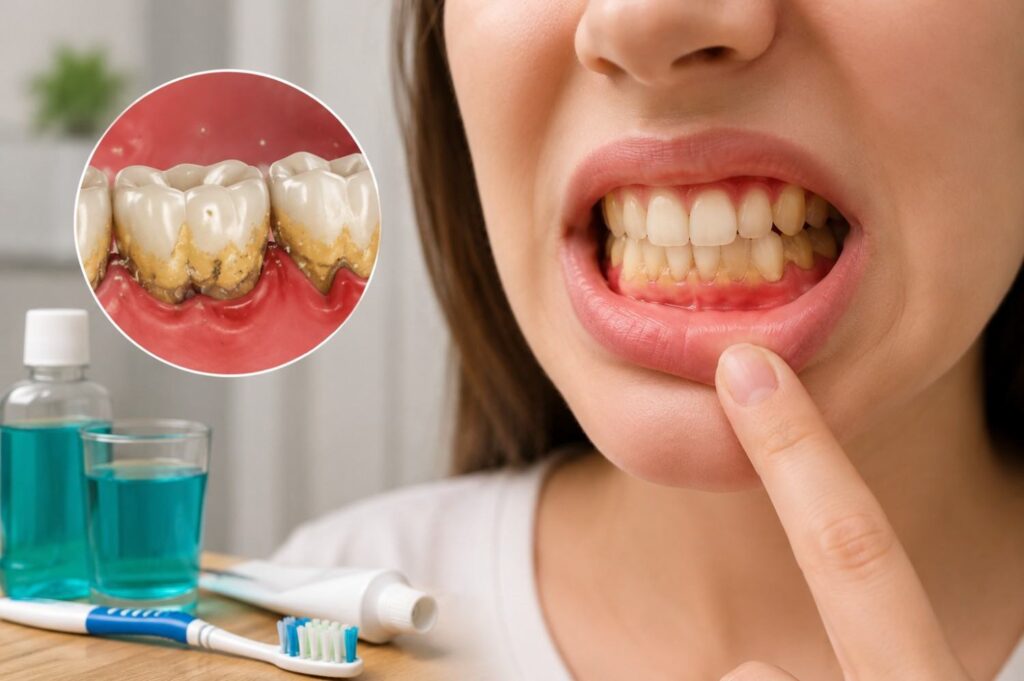
Brushing the tongue gently with a soft toothbrush or using a dedicated tongue scraper as part of a twice-daily oral hygiene routine typically resolves oral hygiene-related white tongue within a few days.
2. Oral Thrush
Oral thrush, medically called oral candidiasis, is a fungal infection of the mouth caused by the yeast Candida albicans, and it is one of the most significant medical causes of white tongue. Oral thrush produces white patches on the tongue, inner cheeks, roof of the mouth, and throat that look like cottage cheese or curdled milk and cannot be fully removed by scraping. When you do try to scrape off the patches, they may leave behind a red, raw, and sometimes bleeding surface underneath.
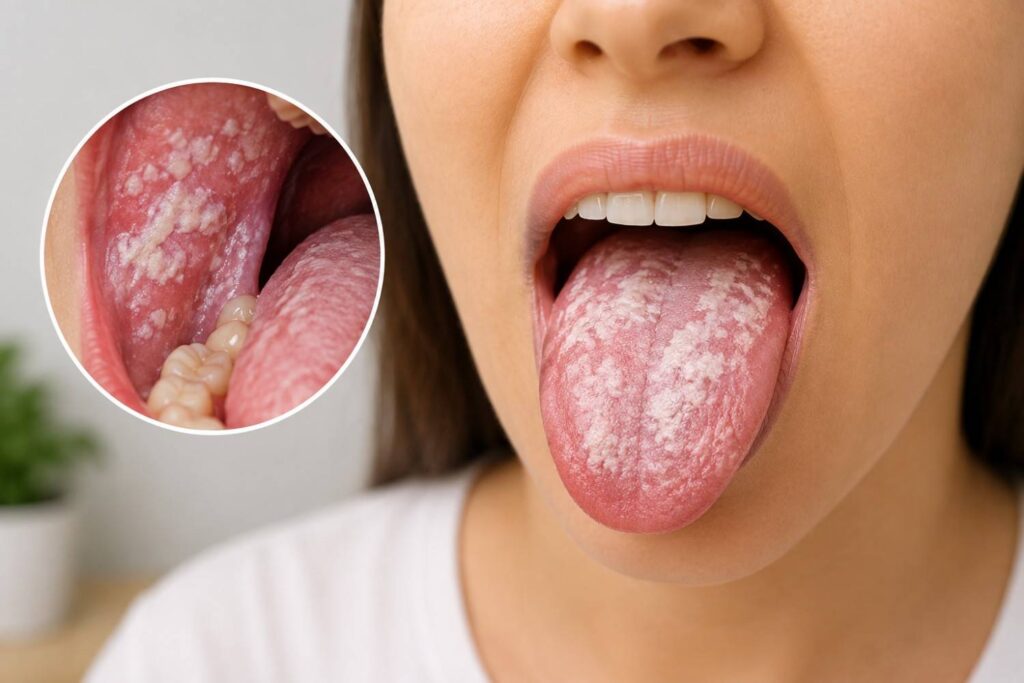
Oral thrush develops when the normal balance of bacteria and fungi in the mouth is disrupted. Common triggers include recent antibiotic use that kills the beneficial bacteria that normally keep Candida in check, inhaled corticosteroids used for asthma that deposit on the oral mucosa, poorly controlled diabetes, immunosuppression from HIV, chemotherapy, or other conditions, and dentures that are not adequately cleaned.
Oral thrush is treated with antifungal medications, typically fluconazole taken orally or nystatin used as a mouth rinse. Identifying and addressing the underlying predisposing factor is equally important to prevent recurrence of the white tongue from this cause.
3. Dehydration and Dry Mouth
Dehydration and dry mouth are among the most common everyday causes of white tongue, and the mechanism is straightforward. Saliva plays a critical role in cleansing the tongue surface by washing away dead cells, bacteria, and food debris. When saliva production drops from dehydration, medications that cause dry mouth, mouth breathing, or medical conditions affecting the salivary glands, those cleansing functions are impaired and the tongue surface accumulates the debris that produces a white coating.
People who are significantly dehydrated, who drink very little water throughout the day, who rely heavily on caffeine and alcohol, or who take antihistamines, antidepressants, diuretics, or other medications that reduce saliva production commonly develop a white tongue that improves when hydration is improved and saliva flow is restored.

Drinking consistently throughout the day, reducing caffeine and alcohol intake, and using saliva-stimulating products or sugar-free gum to encourage saliva flow are the most effective approaches for hydration and dry mouth-related white tongue.
4. Leukoplakia
Leukoplakia is a condition where white patches develop on the tongue and other oral mucous membranes from chronic irritation, and it is one of the more clinically important causes of white tongue because some cases can be precancerous. Leukoplakia produces thick, white patches that cannot be scraped off and do not have an obvious explanation like thrush or oral hygiene accumulation. The patches are typically on the sides of the tongue or the floor of the mouth and have a rough, hardened texture.
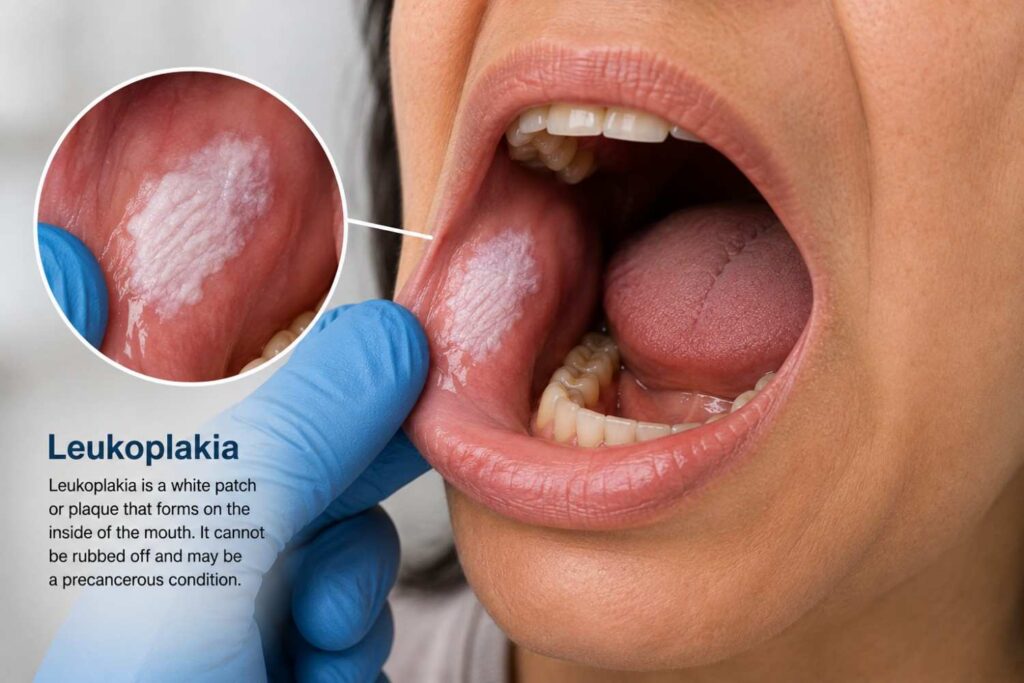
Smoking and tobacco use are the most significant risk factors for leukoplakia, and heavy alcohol consumption compounds the risk. Chronic irritation from rough teeth, poorly fitting dentures, or habitual cheek biting can also produce localized leukoplakia-like changes. The vast majority of leukoplakia cases are benign, but a meaningful percentage can progress to oral cancer, which is why any persistent white patch on the tongue that does not resolve within two weeks warrants dental or medical evaluation.
A dentist or oral medicine specialist can biopsy suspicious leukoplakia patches to determine whether dysplastic or malignant changes are present and direct appropriate management.
5. Geographic Tongue
Geographic tongue is a harmless but visually striking condition where the tongue develops irregular, smooth red patches surrounded by white or grayish borders, creating a map-like appearance that changes in size, shape, and location over time. While geographic tongue primarily produces red patches, the surrounding white borders can make the overall appearance of the tongue look significantly white-coated, leading people to describe their white tongue without realizing the underlying pattern is geographic tongue.
Geographic tongue affects approximately 1 to 3 percent of the population and is more common in women and in people with a family history of the condition. It is completely benign and does not represent an infection or a precancerous condition, though the patches can occasionally cause mild burning or sensitivity when eating spicy or acidic foods.
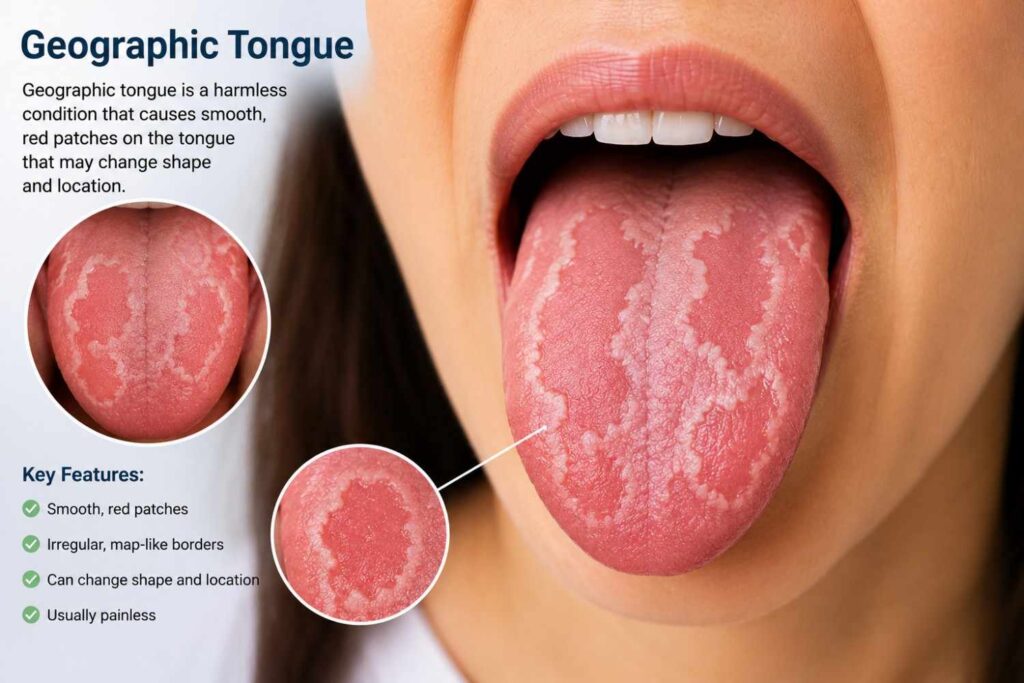
Geographic tongue typically requires no treatment, though identifying and avoiding individual food triggers that worsen symptoms can improve comfort. Reassurance that the condition is benign is the most important component of management for most people who discover their white tongue pattern is geographic tongue.
6. Lichen Planus
Oral lichen planus is an inflammatory condition that affects the mucous membranes of the mouth and commonly produces white, lacy, or net-like patterns on the tongue and inner cheeks that give the tongue a distinctly white appearance. Unlike the removable coating of poor oral hygiene or the patchy appearance of thrush, the white patterns of oral lichen planus have a characteristic reticular or lace-like appearance that is fairly specific to this condition.
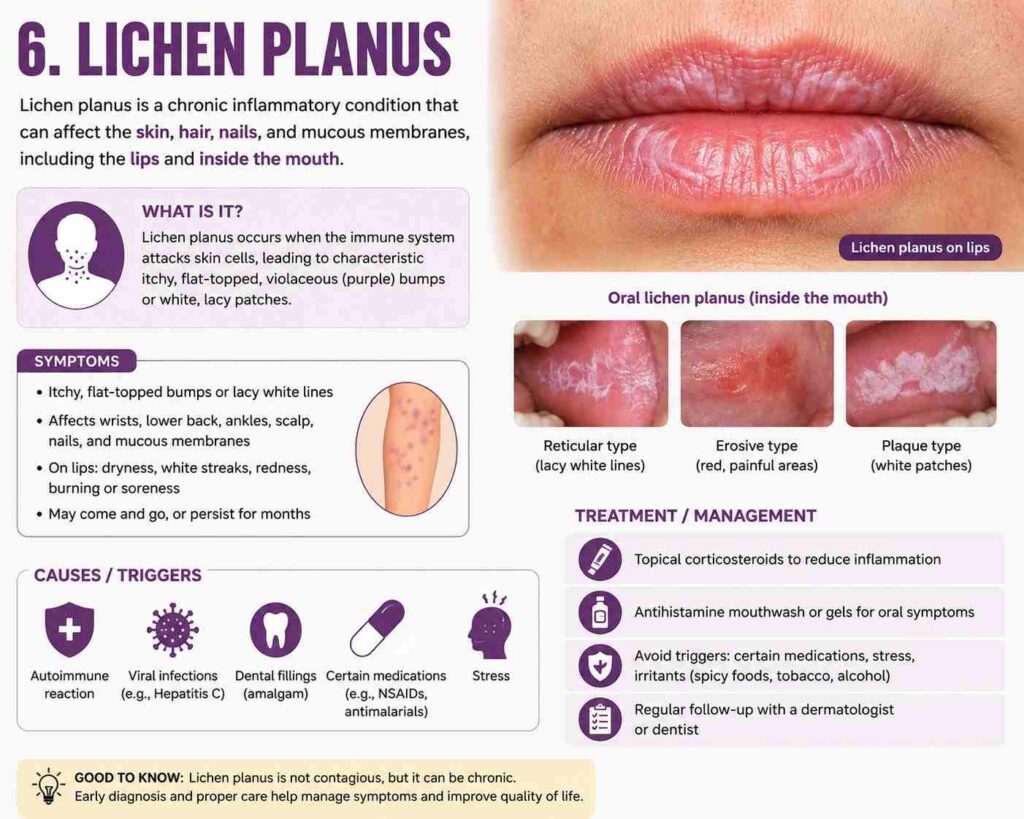
Oral lichen planus can also produce erosive lesions that are painful and can make eating uncomfortable, particularly spicy, acidic, or rough-textured foods. The condition is thought to be an autoimmune reaction and is more common in middle-aged and older adults, with women being more commonly affected than men. Stress, certain medications, and hepatitis C infection have been associated with oral lichen planus.
While oral lichen planus is usually benign, erosive forms have a small risk of malignant transformation and should be monitored by a dentist or oral medicine specialist. Treatment focuses on managing symptoms with topical corticosteroids and identifying any contributing factors.
7. Syphilis
Syphilis is a sexually transmitted infection that can produce oral manifestations including white patches on the tongue and mouth mucosa during its secondary stage, and it is worth including as a cause of white tongue because it is increasingly common in the United States and is frequently missed when it presents with oral rather than genital symptoms. Secondary syphilis produces highly infectious mucous patches in the mouth that can appear as grayish-white, slightly raised plaques on the tongue and inner cheeks.
The oral lesions of secondary syphilis typically appear weeks to months after the initial infection and may be accompanied by a generalized rash, particularly on the palms of the hands and soles of the feet, swollen lymph nodes, fever, and general malaise. People who notice a white tongue alongside any of these systemic symptoms, particularly in the context of recent unprotected sexual contact, should seek STI testing promptly.
Syphilis is very effectively treated with penicillin antibiotics when identified. The importance of prompt diagnosis and treatment cannot be overstated both for the individual’s health and for preventing transmission to others.
8. Medications and Antibiotic Use
Medications are among the most common triggers of white tongue through multiple mechanisms. Antibiotics disrupt the normal balance of bacteria in the mouth and gut, allowing Candida yeast to proliferate and produce the oral thrush that causes white tongue. Inhaled corticosteroids used for asthma deposit on the tongue and oral mucosa and suppress local immune function, making oral thrush more likely. Medications that cause dry mouth including antihistamines, antidepressants, antipsychotics, and bladder medications reduce the saliva that normally cleanses the tongue surface.
If your white tongue developed shortly after starting a course of antibiotics or a new medication, the medication is almost certainly the primary driver. Using a spacer with inhaled corticosteroids and rinsing the mouth thoroughly with water after each use significantly reduces inhaled steroid-related oral thrush. Probiotic supplementation during and after antibiotic courses may help restore oral and gut bacterial balance and reduce antibiotic-related white tongue.
9. Systemic Illness and Immune Suppression
Systemic illnesses that affect immune function are significant causes of white tongue because a healthy immune system normally keeps the Candida yeast that lives in everyone’s mouth in check. When immune function is compromised, Candida can proliferate unchecked and produce the oral thrush that causes white tongue. HIV infection is the most significant immune condition associated with oral thrush, and a persistent white tongue can be one of the earliest oral signs of undiagnosed HIV.
Uncontrolled diabetes provides an environment of high glucose in the oral secretions that promotes Candida growth. Cancer and its treatments including chemotherapy and radiation therapy dramatically suppress immune function and make oral thrush very common. Autoimmune conditions treated with immunosuppressive medications carry the same risk. Iron deficiency anemia and vitamin B12 deficiency can cause changes to the tongue surface including whitish patches from impaired cellular renewal of the oral mucosa.
If your white tongue is persistent, does not respond to improved oral hygiene or basic treatment, and you have risk factors for immune compromise or systemic illness, a medical evaluation that includes appropriate blood testing is warranted to identify any underlying condition.
When to See a Doctor About White Tongue
Most cases of white tongue from poor oral hygiene, dehydration, or temporary antibiotic use resolve with simple measures within one to two weeks and do not require medical attention. But certain patterns warrant professional evaluation.
See a dentist or doctor if your white tongue has been present for more than two weeks without an obvious cause or improvement, if the white patches cannot be scraped off and are thickened or hardened, if there is pain or burning alongside the white tongue, if you have risk factors for oral cancer including heavy smoking and alcohol use, if you have been on antibiotics or immunosuppressive medications recently, or if the white tongue is accompanied by systemic symptoms like fever, rash, or swollen lymph nodes.
A dentist can evaluate white tongue through visual examination and in some cases a biopsy to determine whether any concerning changes are present. White tongue is almost always treatable and often completely reversible once the underlying cause is properly identified.
1 thought on “Why Do I Have a White Tongue? 9 Hidden Causes You Should Know”