
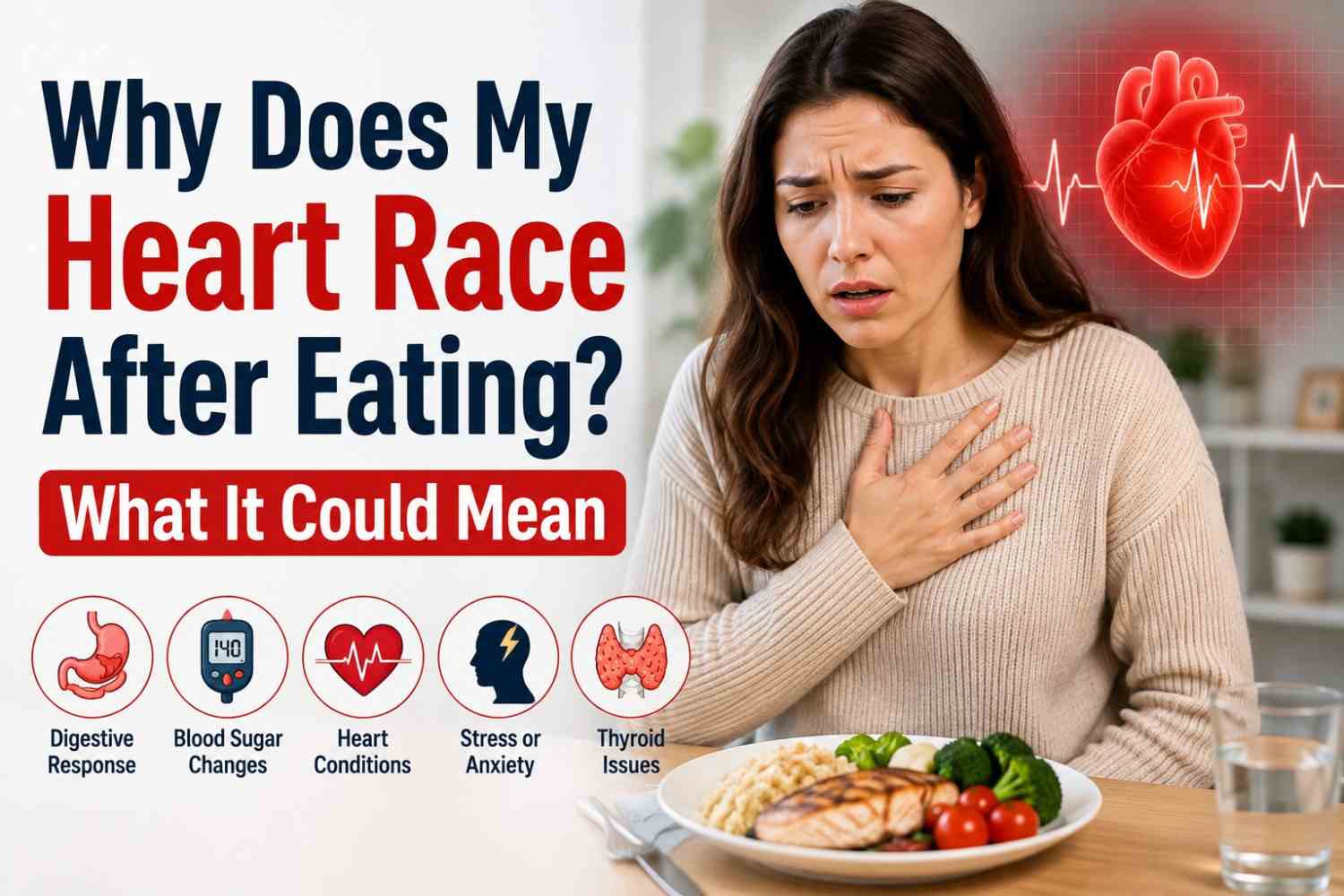
You finish your meal, push back from the table, and within minutes your heart is beating noticeably faster than it was before you ate. Maybe it is a rapid fluttering, maybe a pounding sensation, or maybe a racing quality that makes you suddenly very aware of your heartbeat when you were not thinking about it at all moments before. If your heart race after eating regularly, you are right to want to understand why.
The experience of a heart that races after eating is more common than most people realize, and while it is almost always harmless, the causes range widely and a few warrant genuine attention. Understanding the specific pattern of your symptoms, including what you ate, how much, how quickly, and what other symptoms accompany the racing, helps identify which of the possible causes most likely applies to you.
Why Would Eating Affect Heart Rate?
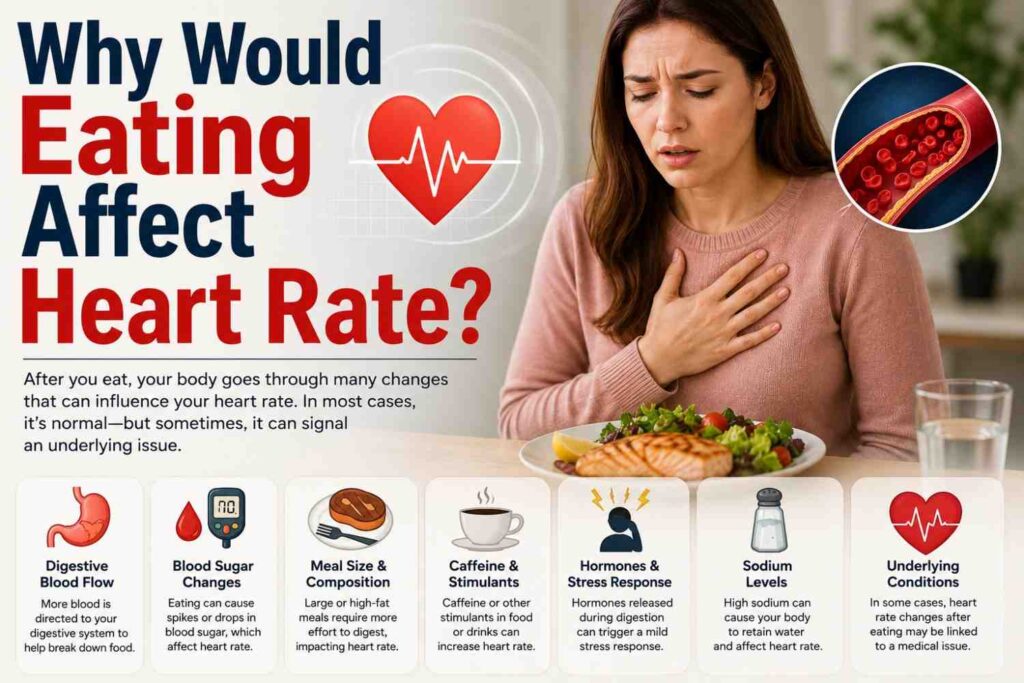
Before getting into specific causes it helps to understand why eating can influence heart rate at all. The process of digestion requires significant cardiovascular work. After a meal, blood is redirected toward the digestive organs to support the work of breaking down and absorbing food. The heart has to increase its output to maintain adequate circulation to the rest of the body while simultaneously supplying the digestive system with the additional blood flow it needs. This naturally produces a modest increase in heart rate after eating that is completely normal.
The problem arises when that increase is more dramatic than expected, when it is accompanied by palpitations or an irregular beat, or when it occurs alongside other symptoms that suggest an underlying condition. When the heart race after eating in a way that is noticeable, uncomfortable, or alarming, one of the causes below is almost certainly involved.
1. Eating Too Much Too Quickly
The most common reason the heart race after eating is simply overeating or eating too quickly, and the mechanism involves the vagus nerve, which is the main nerve connecting the digestive system to the heart. When the stomach is distended from a large meal or from food consumed too rapidly, the stretched stomach wall can activate vagal reflexes that alter heart rate and rhythm. In some people this produces a temporary racing sensation, in others it produces palpitations, and in a smaller number it can even slow the heart briefly before it compensates with a faster rate.
The heart race after eating large meals far more consistently than after small ones, and the effect is most pronounced when meals include very fatty or very rich foods that sit in the stomach for extended periods. Eating more slowly, stopping before feeling overly full, and choosing smaller more frequent meals over fewer large ones are the most effective immediate interventions for this cause.
2. Blood Sugar Spikes and Reactive Hypoglycemia
Blood sugar dysregulation is one of the most significant metabolic causes of a heart that races after eating, and it works through the adrenaline response that the body triggers when blood sugar drops rapidly. When a meal high in refined carbohydrates and sugar causes blood glucose to spike sharply and then crash, the body releases adrenaline as an emergency response to restore blood sugar levels. Adrenaline causes the heart to beat faster and harder, producing the racing, pounding sensation that many people experience one to two hours after a high-carbohydrate meal.
If your heart race after eating specifically in the hour or two following a carbohydrate-heavy meal, and if the racing is accompanied by shakiness, sweating, anxiety, and intense hunger, reactive hypoglycemia is a very likely explanation. Balancing meals with protein, healthy fat, and fiber slows glucose absorption and prevents the sharp spike and crash cycle that triggers the adrenaline response. Reducing refined carbohydrates and added sugars makes a significant and often rapid difference in post-meal heart racing from this cause.
3. Acid Reflux and Vagal Stimulation
Acid reflux is a recognized cause of heart race after eating that surprises most people because they associate reflux primarily with chest burning rather than heart rhythm changes. When stomach acid refluxes into the esophagus, it can irritate the vagus nerve, which runs directly adjacent to the esophagus in the chest. Vagal stimulation from this acid irritation can trigger heart palpitations, racing, and in some cases skipped beats that can feel alarming even though they are not dangerous.
People who notice that their heart race after eating is most pronounced when lying down, bending over, or after meals that include trigger foods like fatty foods, citrus, coffee, or alcohol are almost certainly dealing with a reflux component to their post-meal heart symptoms. The connection between reflux and heart racing is so well-established that cardiologists routinely ask about reflux symptoms when evaluating patients with post-meal palpitations.
Managing the underlying acid reflux through dietary modifications, eating smaller meals, avoiding lying down for two to three hours after eating, and when appropriate acid-suppressing medications typically reduces both the reflux symptoms and the associated heart racing.
4. Food Allergies and Allergic Reactions
Food allergies are a significant and sometimes serious cause of heart race after eating, and they range from mild to life-threatening depending on the severity of the reaction. When the immune system mounts an allergic response to a food, histamine and other inflammatory mediators are released that cause blood vessel dilation and a compensatory increase in heart rate to maintain blood pressure. Even mild allergic reactions that do not produce obvious external symptoms like hives or swelling can produce the cardiovascular effects that make the heart race after eating.
More severe allergic reactions approaching anaphylaxis produce very significant cardiovascular effects including profound heart racing, a drop in blood pressure, throat tightening, and difficulty breathing that constitute a medical emergency. If your heart race after eating a specific food consistently, particularly if accompanied by any facial swelling, throat tightening, skin reactions, or difficulty breathing, this pattern requires prompt allergy evaluation and potentially carrying emergency epinephrine.
Common food allergens that can trigger post-meal heart racing include peanuts, tree nuts, shellfish, fish, dairy, eggs, and wheat, but any food can potentially cause an allergic reaction in a sensitized individual.
5. Postprandial Hypotension
Postprandial hypotension is a drop in blood pressure that occurs after eating, and the heart race after eating in this condition as a compensatory response to the blood pressure drop. When a significant amount of blood is redirected to the digestive system after a large meal, blood pressure can fall enough in susceptible people to trigger a reflex increase in heart rate as the cardiovascular system tries to maintain adequate circulation to the brain and other organs.
Postprandial hypotension is particularly common in older adults, in people with diabetes or Parkinson’s disease, and in anyone taking medications that affect blood pressure or autonomic nervous system function. The heart racing from postprandial hypotension is typically accompanied by lightheadedness or dizziness that comes on after eating, particularly when standing up. If your heart race after eating alongside dizziness, particularly in the context of any of these risk factors, postprandial hypotension is worth discussing with your doctor.
Eating smaller meals more frequently, reducing refined carbohydrate content of meals, lying down briefly after eating if dizziness is significant, and staying well hydrated are the most effective management strategies.
Women Heart Attack Warning Signs You Should Never Ignore
6. Caffeine and Stimulants in Food and Drink
Caffeine is a direct cardiac stimulant and one of the most straightforward causes of heart race after eating, particularly when meals include coffee, caffeinated tea, energy drinks, or dark chocolate. Caffeine blocks adenosine receptors in the heart and brain, producing increased alertness and increased heart rate, and when consumed with a meal the caffeine absorption alongside the normal post-meal cardiovascular changes can produce a more significant heart racing effect than either would alone.
People who are sensitive to caffeine or who consume it in amounts that exceed their tolerance often notice that their heart race after eating when coffee accompanies the meal in a way that does not happen with the same meal without coffee. Other stimulants found in certain pre-workout supplements, herbal preparations including guarana and ginseng, and some medications can produce the same effect.
If your heart race after eating consistently following meals where you consumed caffeine or stimulant-containing products, reducing or eliminating those substances from your diet is the simplest test of whether they are responsible.
7. Dumping Syndrome
Dumping syndrome is a condition where food moves from the stomach into the small intestine much faster than normal, triggering a cascade of hormonal and fluid shifts that produce significant cardiovascular effects including a racing heart. The heart race after eating in dumping syndrome because the rapid movement of food into the small intestine causes a large amount of fluid to shift from the bloodstream into the intestine and triggers the release of gut hormones that affect heart rate directly.
Dumping syndrome is most common in people who have had gastric bypass surgery or other stomach surgeries, though it can occasionally occur without a surgical history. Early dumping syndrome, which causes heart racing, sweating, and dizziness within thirty minutes of eating, is driven by the fluid shifts. Late dumping syndrome, occurring one to three hours after eating, is driven by reactive hypoglycemia from the insulin surge that follows rapid carbohydrate absorption.
Women Heart Attack Warning Signs You Should Never Ignore
If you have had stomach surgery and your heart race after eating every meal, dumping syndrome is almost certainly involved and a dietitian experienced in post-bariatric nutrition can provide specific guidance on meal composition and eating behaviors that significantly reduce symptoms.
8. Thyroid Problems
An overactive thyroid, known as hyperthyroidism, causes the heart to beat faster and harder even at rest, and this baseline elevation in heart rate means that the normal post-meal increase in cardiac output produces a more pronounced racing sensation than it would in someone with normal thyroid function. People with hyperthyroidism frequently notice that their heart race after eating as one of their consistent symptoms alongside the persistent resting tachycardia, weight loss, heat intolerance, and anxiety that characterize the condition.
If your heart race after eating and you also notice unexplained weight loss despite eating normally, feeling hot all the time, hand tremors, difficulty sleeping, and an overall sense of being revved up, thyroid function testing is an important step. A TSH blood test can identify hyperthyroidism, and treatment that brings thyroid hormone levels back to normal typically resolves the post-meal heart racing alongside the other symptoms.
9. Arrhythmias Triggered by Eating
In some people, eating directly triggers cardiac arrhythmias including supraventricular tachycardia or atrial fibrillation through the combination of vagal stimulation, autonomic nervous system changes, and the electrolyte shifts that accompany digestion. The heart race after eating in these cases not from a simple increase in sinus rate but from an abnormal electrical circuit being activated in the heart. This type of post-meal heart racing tends to come on suddenly, feel very rapid and sometimes irregular, and may start and stop abruptly.
If your heart race after eating in a pattern that feels sudden, very rapid, irregular, or is accompanied by dizziness, shortness of breath, or chest discomfort, this pattern warrants cardiac evaluation including a Holter monitor to capture heart rhythm during a symptomatic episode. Some arrhythmias that are triggered by eating are completely benign while others require treatment, and the distinction requires proper cardiac evaluation.
Women Heart Attack Warning Signs You Should Never Ignore
When Is a Racing Heart After Eating an Emergency?
Most cases of heart race after eating are benign and resolve on their own within minutes. But certain patterns require prompt or emergency medical attention.
Call 911 immediately if heart race after eating is accompanied by chest pain or pressure, severe shortness of breath, fainting or near-fainting, facial swelling or throat tightening suggesting anaphylaxis, or a heart rate that is extremely fast and does not slow down on its own within a few minutes.
See a doctor promptly if your heart race after eating consistently with every meal, if the racing is accompanied by dizziness or lightheadedness, if it comes with an irregular beat rather than just a fast one, if you have known heart disease or thyroid problems and your post-meal symptoms have changed, or if the racing is severe enough to cause significant distress or interfere with your daily activities.
For most people whose heart race after eating, the cause is identifiable and very manageable once properly understood. Paying attention to the pattern of your symptoms, what you ate, how much, how quickly, and what else you were feeling, gives both you and your doctor the best chance of identifying the specific cause and addressing it effectively.