
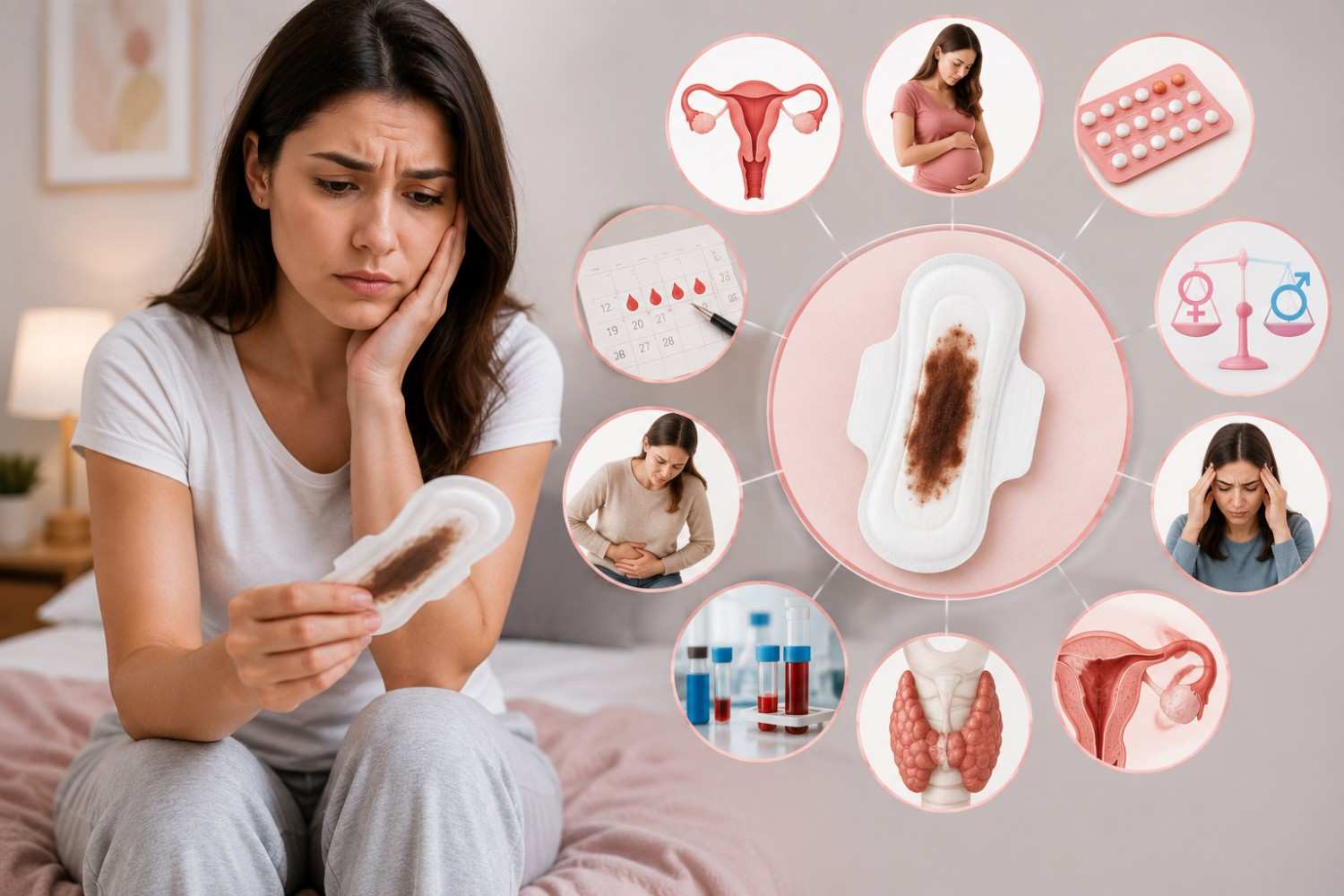
You noticed that your period blood is brown instead of the bright red you are used to, and now you are wondering whether something is wrong. Maybe it happened at the beginning of your period, or at the end, or it has been happening every cycle for a while. If you keep asking why is my period blood brown and you are not sure what it means, you are in good company because this is one of the most commonly Googled period questions among American women.
The short answer is that brown period blood is usually old blood, and old blood is almost always harmless. But the full picture is a bit more nuanced than that. If you are asking why is my period blood brown, sometimes the answer is completely normal while other times it is a signal worth paying attention to. Understanding the difference comes down to when in your cycle it appears and what other symptoms if any come with it.
Here are ten of the most common causes of brown period blood and what each one means for your health.
1. Old Blood at the Beginning of Your Period
The most common reason why is my period blood brown at the start of a cycle is simply that it is old blood that has been sitting in the uterus since the end of your last period and is only now being expelled as the new cycle begins. Blood that has had time to oxidize, meaning it has been exposed to oxygen over time, turns from bright red to dark red, then burgundy, then brown. This is the same chemical process that turns a cut on your skin brown as it dries.
When your uterine lining begins to shed at the start of a new cycle, the first blood to exit is often the oldest, darkest blood that was slow to leave at the end of the previous period. This brown period blood at the start of a cycle is particularly common in people whose periods begin slowly with light spotting before building to a heavier flow. It is not a sign of anything wrong and typically transitions to brighter red blood within a day or two as the fresh shedding accelerates.

2. Old Blood at the End of Your Period
If you are asking why is my period blood brown at the end of your cycle, the answer is almost universally harmless. As the period winds down and flow becomes lighter, blood moves through the cervix and vagina more slowly than during the heavier days of the period. This slower transit time allows more oxidation to occur, turning the remaining blood darker and eventually brown before it exits the body.
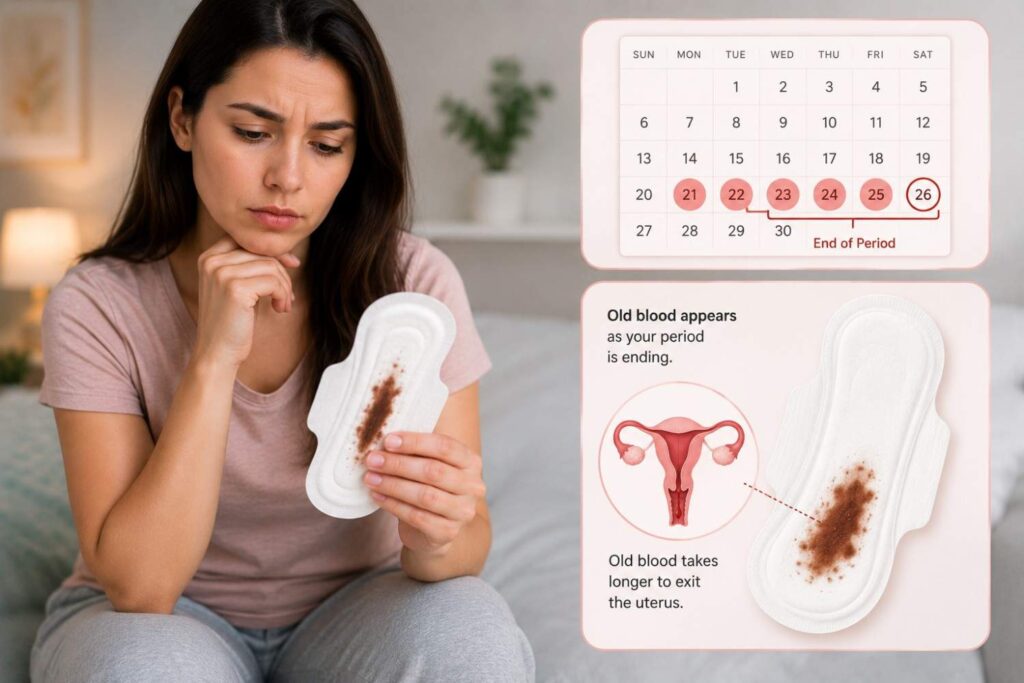
The tail end of a period being brown rather than red is so common that most gynecologists consider it completely normal and expected. If your period consistently ends with a day or two of brown discharge before stopping entirely, this is not a sign of incomplete shedding or any other problem. It simply reflects the physics of slower blood flow through the reproductive tract during the lightest days of menstruation.
3. Hormonal Imbalance
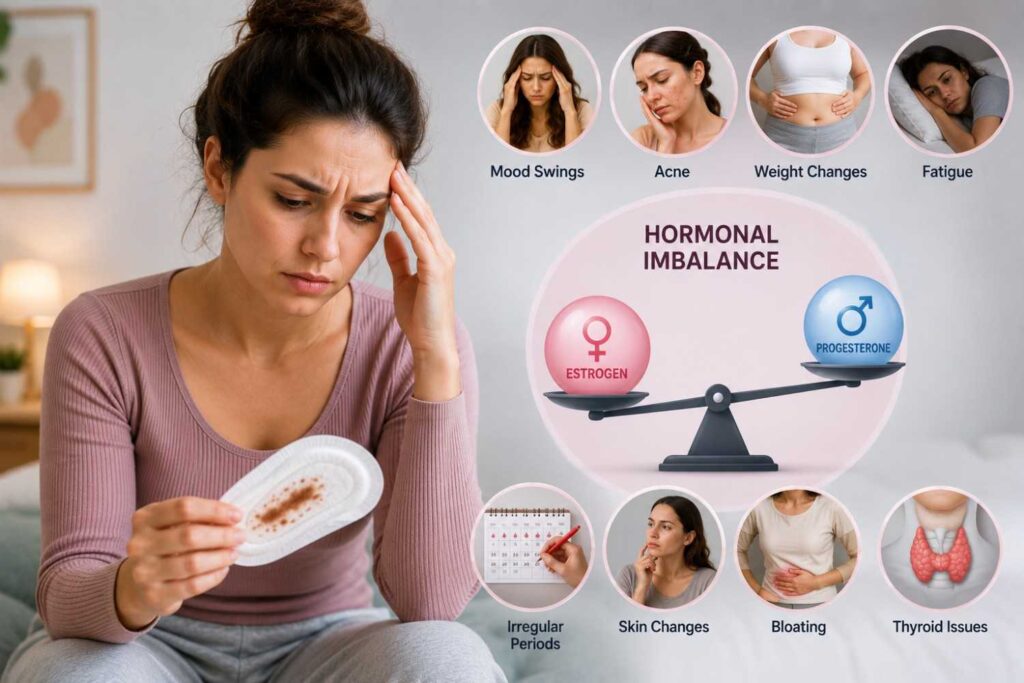
A hormonal imbalance is one of the more common medical explanations for consistently brown period blood throughout the cycle rather than just at the beginning or end. When estrogen and progesterone are not in their normal balance, the uterine lining may not build up or shed as efficiently as it should. Lining that is not shed promptly has more time to oxidize in the uterus before exiting, which means it appears as brown period blood rather than the bright red of fresh blood.
Conditions that commonly cause hormonal imbalances including polycystic ovary syndrome, thyroid disorders, perimenopause, and stress-related hormonal disruption can all produce brown period blood as one of their menstrual manifestations. If your period blood has always been predominantly red and has recently shifted to being mostly brown, you may be wondering why is my period blood brown so consistently now, or if the brown blood is accompanied by other cycle changes like irregular timing, significantly lighter or heavier flow, or new symptoms between periods, hormonal evaluation is a logical next step.
Shorter Periods Than Usual? Here’s What Your Body May Be Telling You
4. Implantation Bleeding
Implantation bleeding is one of the earliest possible signs of pregnancy and is a specific type of brown or pink spotting that occurs when a fertilized egg attaches to the uterine lining, typically six to twelve days after ovulation. The light bleeding from the implantation process is usually too slight to maintain the bright red color of fresh menstrual blood, and by the time it exits the body it is often brown, pink, or rust-colored.
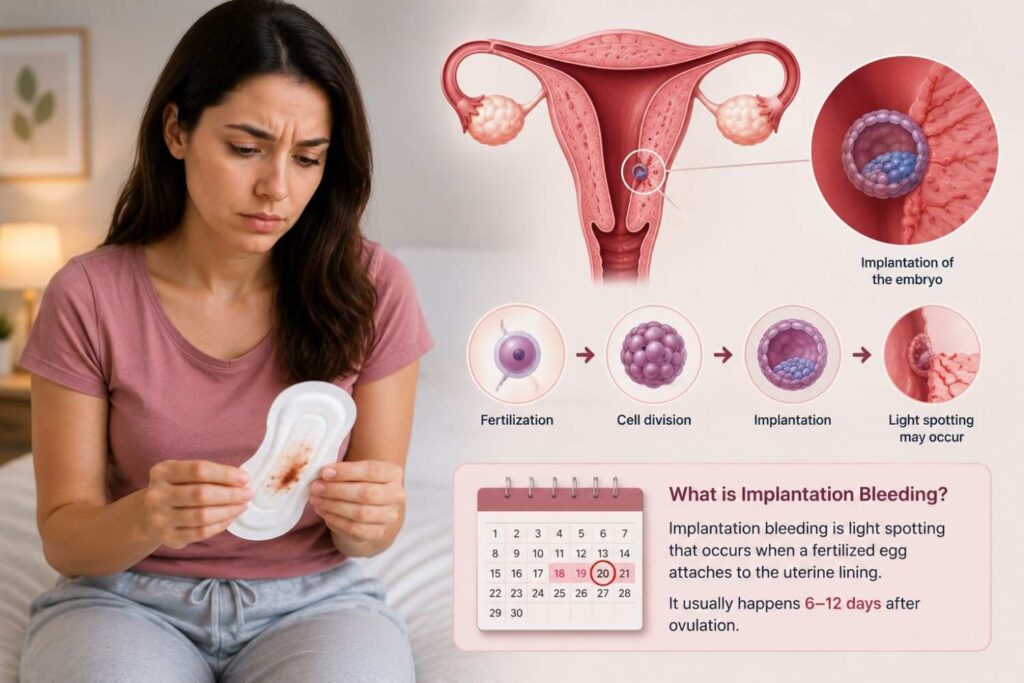
Implantation bleeding is typically very brief, lasting one to two days at most, and is significantly lighter than a normal period. It often occurs around the time a period would be expected, which is why many women mistake it for a very light, brown period rather than a pregnancy sign. If your brown period blood came earlier than expected, lasted only one to two days, and was noticeably lighter than your usual period, you may be asking why is my period blood brown this month specifically, and if you have been sexually active without consistent contraception, a home pregnancy test is the most practical next step.
5. Perimenopause
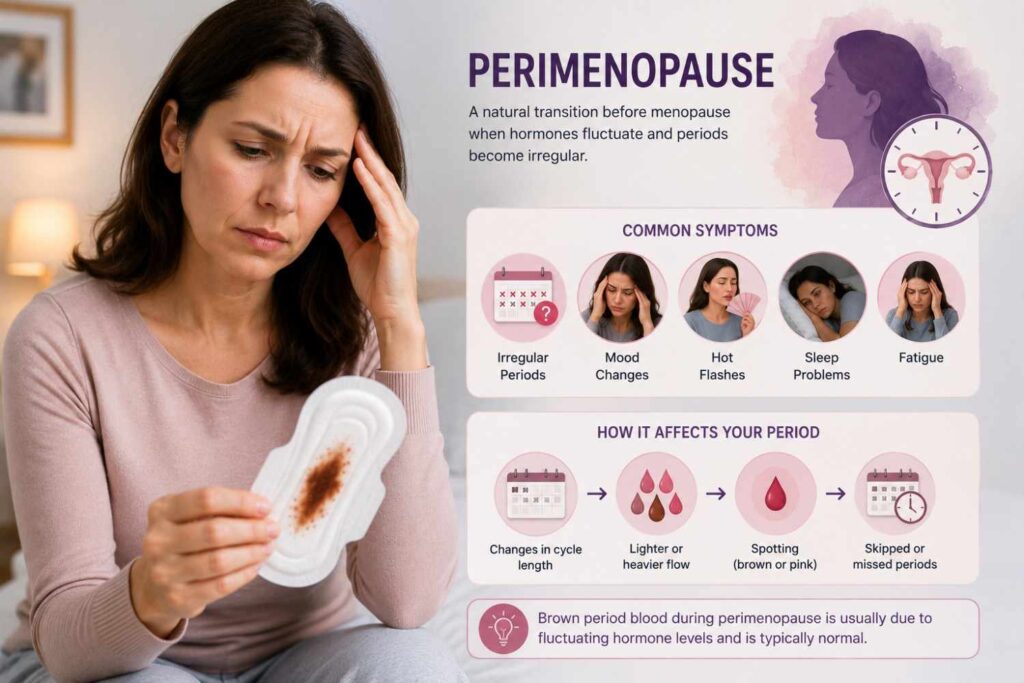
Women in their late 30s, 40s, and early 50s who keep asking why is my period blood brown may be experiencing the hormonal changes of perimenopause. As estrogen and progesterone levels become less predictable and generally decline in the years before menopause, the uterine lining may not build up as thickly as it did during the prime reproductive years. Thinner lining that sheds more slowly produces blood that has more time to oxidize in the uterus, resulting in brown period blood rather than the bright red that characterized earlier cycles.
Perimenopausal changes in period color often accompany other changes including irregular cycle lengths, lighter or occasionally heavier than usual flow, hot flashes, night sweats, and sleep disruption. If you are in the right age range and your period blood has become increasingly brown alongside these other changes, perimenopause is a likely explanation. That said, new or changing vaginal bleeding in this age group always warrants a gynecological evaluation to rule out endometrial changes that should not be attributed to perimenopause without proper assessment.
6. Polycystic Ovary Syndrome
PCOS is one of the most common hormonal disorders among women of reproductive age in the United States, and brown period blood is among its many possible menstrual manifestations. In PCOS, irregular or absent ovulation means the uterine lining may sit for longer than normal before finally being shed, giving blood more time to oxidize and turn brown before it exits. Women with PCOS who have infrequent periods often find themselves asking why is my period blood brown particularly at the beginning because of the extended time the old lining has been present in the uterus.
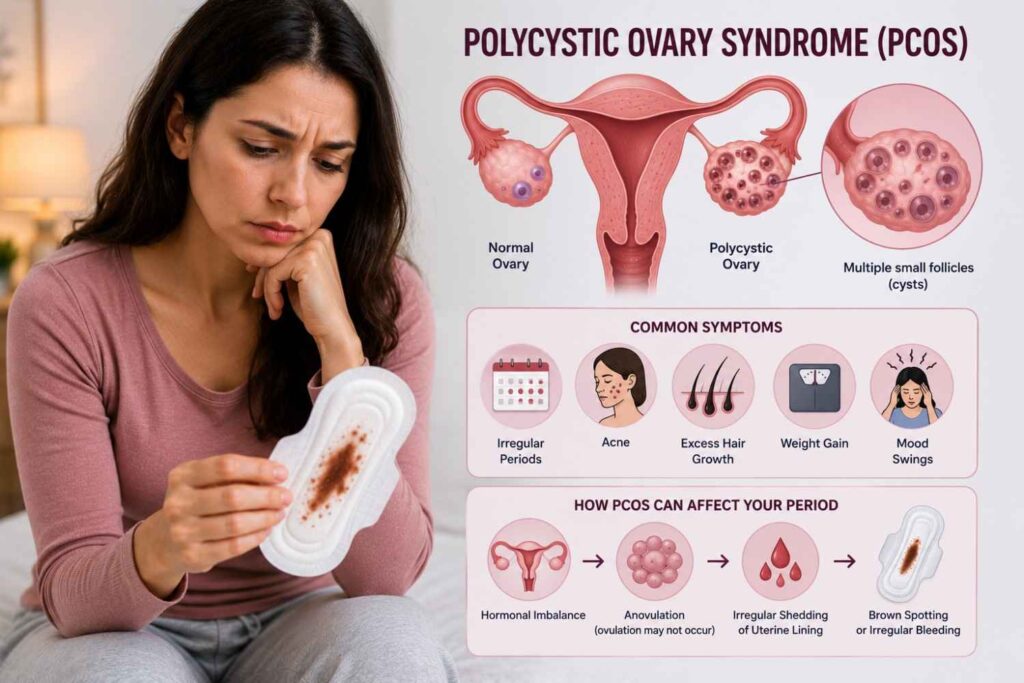
PCOS-related brown period blood is often accompanied by other cycle irregularities including periods that are unpredictably spaced, lighter or heavier than expected, or that vary significantly from cycle to cycle. Other signs of PCOS include unwanted hair growth on the face or body, acne particularly along the jawline, thinning hair on the scalp, and difficulty managing weight. A gynecologist can diagnose PCOS through a combination of symptom review, blood hormone testing, and pelvic ultrasound.
7. Thyroid Disorders
Both hypothyroidism and hyperthyroidism can affect the menstrual cycle in ways that produce brown period blood. Hypothyroidism slows the metabolism and the shedding process of the uterine lining, meaning blood that would normally be expelled promptly has more time to sit and oxidize before exiting. Hyperthyroidism can produce lighter and shorter periods, and lighter flow means slower transit and more oxidation of the blood that does shed.
Women with thyroid disorders often notice their period blood color changes alongside other menstrual irregularities including changes in flow heaviness, cycle length, and timing. Thyroid disorders are significantly more common in women than in men and are frequently underdiagnosed because symptoms develop gradually and overlap with many other conditions. If your period blood has changed alongside other potential thyroid symptoms and you are asking why is my period blood brown now when it was not before, thyroid function testing is a worthwhile addition to any hormonal evaluation.

8. Birth Control
Hormonal birth control is one of the most common reasons period blood is brown, and the effect is typically more pronounced in people using low-dose hormonal contraceptives or progestin-only methods. Hormonal IUDs, the implant, the mini pill, and low-dose combination pills all reduce the amount of uterine lining that builds up each cycle. Less lining means lighter periods, and lighter periods mean slower flow and more time for oxidation, which produces brown rather than red period blood.

Many women using hormonal IUDs notice that their periods become increasingly light and brown over time until they may consist of only a day or two of brown spotting each month or disappear entirely. This is a recognized and harmless effect of the hormonal IUD’s local effect on the uterine lining and is not a sign of pregnancy or any problem. If you recently started or changed a hormonal contraceptive and are wondering why is my period blood brown now, the contraceptive is almost certainly the explanation.
9. Uterine Fibroids and Polyps
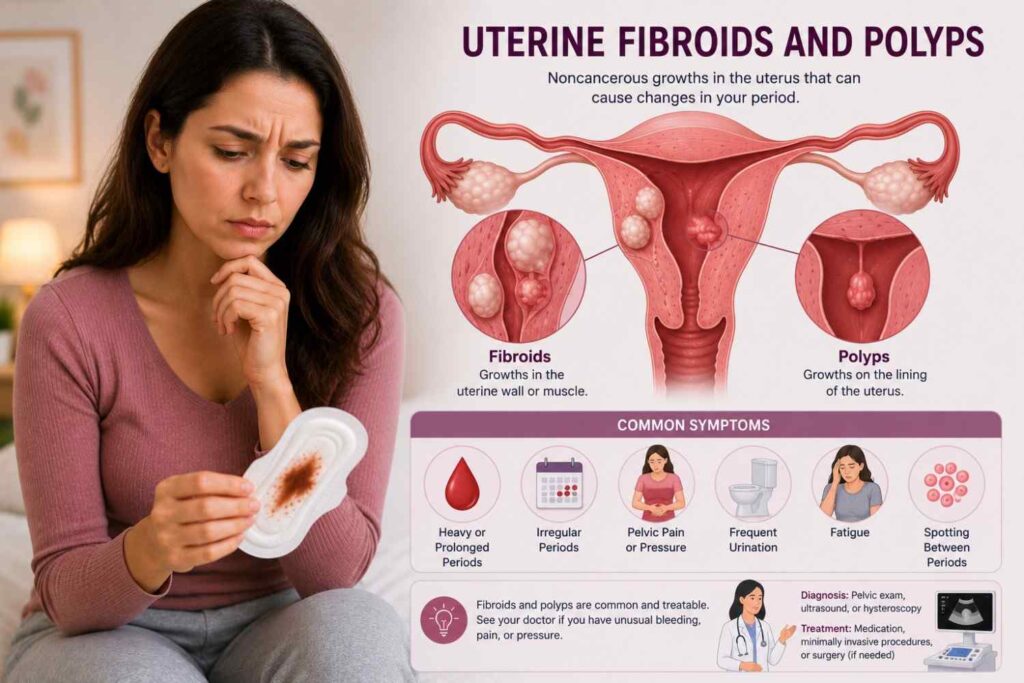
Uterine fibroids and endometrial polyps are among the structural gynecological conditions that can cause brown period blood alongside other menstrual irregularities. Fibroids and polyps create irregular surfaces within the uterine cavity where blood can collect and sit rather than being efficiently expelled with the rest of the menstrual flow. This pooled blood oxidizes over time and is released as brown period blood, sometimes as spotting between periods rather than during the period itself.
Fibroids in particular can affect how completely and efficiently the uterine lining sheds, with some areas shedding promptly as bright red blood and other areas releasing older, darker blood that appears brown. Polyps tend to produce spotting or brown discharge at irregular times including between periods, before the period officially begins, or after it has officially ended. If your brown period blood is accompanied by spotting between periods, heavier flow than usual, or pelvic pressure and you keep asking why is my period blood brown with these symptoms, a pelvic ultrasound can identify whether fibroids or polyps are present.
10. Sexually Transmitted Infections and Cervical Issues
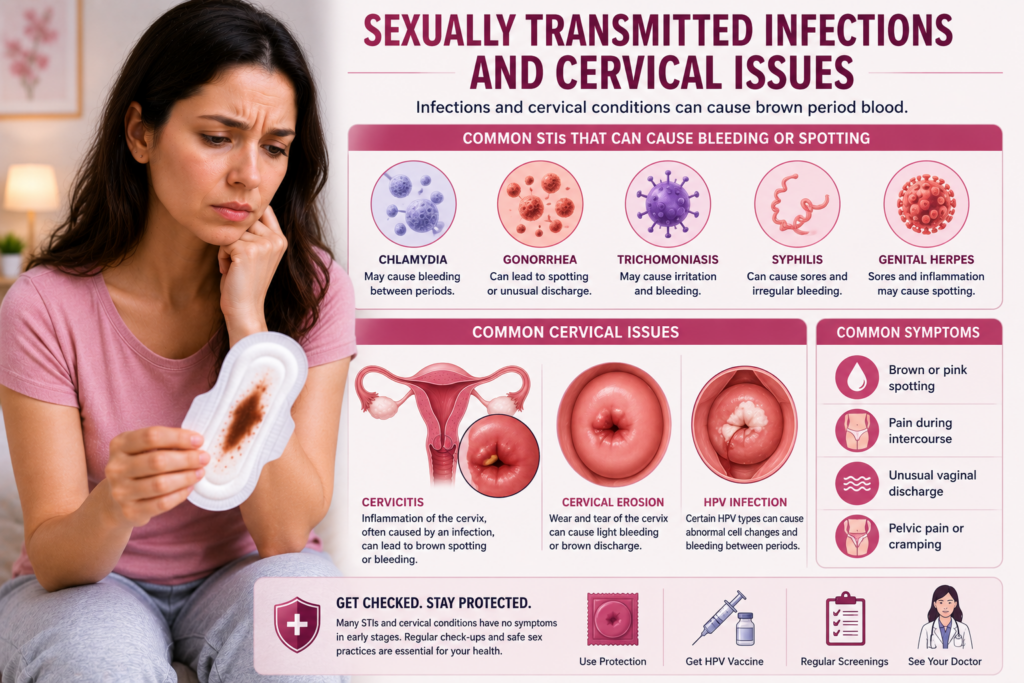
Certain sexually transmitted infections and cervical conditions can cause brown discharge that may be mistaken for brown period blood, particularly when it occurs around the time of the expected period. Chlamydia and gonorrhea can cause cervical inflammation that produces brown or blood-tinged discharge. Cervical polyps can bleed spontaneously in small amounts that dry to a brown color by the time they exit the body. Cervicitis from any cause can produce brown spotting or discharge that may coincide with the menstrual cycle.
If you are asking why is my period blood brown and it is accompanied by unusual vaginal odor, unusual discharge between periods, pelvic pain, or pain during intercourse, these additional symptoms point toward an infectious or structural cervical cause rather than the more benign explanations of old blood or hormonal variation. STI testing and a pelvic examination including a Pap smear if due are the appropriate next steps when these accompanying symptoms are present.
When Should Brown Period Blood Concern You?
Brown period blood at the very beginning or very end of an otherwise normal period is almost always harmless and requires no action beyond noting the pattern. But if you keep asking yourself why is my period blood brown throughout your entire cycle, that warrants a conversation with your gynecologist.
See a doctor if your period blood is brown throughout your entire period rather than just at the start or end, if brown discharge is appearing between your periods without explanation, if the brown blood is accompanied by an unusual smell or other discharge changes, if you are postmenopausal and noticing any brown spotting or bleeding, if you are trying to conceive and noticing brown spotting around the time of your expected period, or if your period color has changed significantly and recently without an obvious explanation like a new birth control method.
Brown period blood is almost always your body working normally, but when it represents a change from your established pattern and you find yourself asking why is my period blood brown every single cycle, understanding why that change has occurred is always worth a conversation with a healthcare provider.