

You reach for your coffee cup and notice your hand is trembling. You try to write something down and your handwriting looks shakier than it used to. You hold your hands out in front of you and there is a fine, persistent tremor that was not there a year ago. If you keep asking yourself why do my hands shake, particularly when nothing obvious has happened to trigger it, you are right to take it seriously.
Hand tremors are extremely common, affecting millions of Americans across all age groups, and most cases have a clear and identifiable cause. Some are completely harmless and easily addressed. Others point toward a medical condition that benefits from proper evaluation and treatment. Understanding the most common hidden reasons behind why do my hands shake is the first step toward getting real answers.
Here are ten of the most common causes of hand tremors and what each one means for your health.
1. Essential Tremor
Essential tremor is the most common movement disorder in the world and the most frequent medical answer to why do my hands shake in adults over 40, though it can occur at any age. Unlike the tremor of Parkinson’s disease, which occurs at rest, essential tremor is an action tremor, meaning it is most noticeable when the hands are in use, such as when holding a cup, writing, or reaching for something. It tends to affect both hands, though one side is often more affected than the other, and it typically worsens with fatigue, stress, and caffeine.
Essential tremor runs strongly in families, with approximately half of cases having a family history of the condition, which is why it is sometimes called familial tremor. It is not dangerous and does not shorten life expectancy, but it can significantly affect quality of life and daily function as it progresses. Many people find that a small amount of alcohol temporarily reduces the tremor, which is a characteristic feature of essential tremor that helps distinguish it from other types.

A neurologist can confirm essential tremor through examination and, if needed, distinguish it from Parkinson’s disease and other movement disorders. Medications including propranolol and primidone are effective for reducing tremor severity in many people, and for severe cases, more advanced treatments are available.
2. Caffeine and Stimulants
If you have been asking yourself why do my hands shake, one of the first and most easily tested explanations is caffeine overconsumption. Caffeine is a stimulant that increases the excitability of the nervous system, and when consumed in amounts that exceed your personal tolerance threshold, it produces fine tremors in the hands alongside jitteriness, a racing heart, and difficulty sitting still. The tremor from excess caffeine is typically a fine, rapid shaking that affects both hands and resolves within hours of stopping caffeine intake.

Many people gradually increase their caffeine consumption over months or years without realizing how much they are drinking, and the threshold at which tremors appear varies widely between individuals. Some people experience hand shaking with as little as two cups of coffee per day while others can consume much more without noticeable tremor.
Other stimulants including energy drinks, certain pre-workout supplements, some decongestants, and weight loss supplements can produce the same effect. Reducing your overall caffeine intake gradually rather than stopping abruptly and cutting off caffeine by noon can produce noticeable improvement in hand tremors within a few days for people in whom caffeine is a primary driver.
3. Anxiety and Stress
Anxiety is one of the most common answers to why do my hands shake, and the physiological mechanism is direct and well understood. When you are anxious or under significant stress, your body activates the fight-or-flight response and releases adrenaline. Adrenaline increases muscle tension throughout the body and makes the nervous system more excitable, producing the fine hand tremors that most people have experienced before a stressful presentation, an important interview, or any high-stakes situation.
In people with chronic anxiety or anxiety disorders, this adrenaline-driven tremor is not limited to obviously stressful moments. The nervous system remains in a persistently heightened state, and hand shaking can occur throughout the day in situations that most people would not find particularly stressful. People with social anxiety often experience hand tremors specifically in social situations, which can itself become a source of embarrassment that worsens the anxiety and the tremor.

Addressing the underlying anxiety through cognitive behavioral therapy, which has the strongest evidence base for anxiety disorders, alongside stress management practices, regular exercise, and medication when appropriate, typically reduces anxiety-related hand tremors alongside the other symptoms of anxiety over several weeks to months of consistent treatment.
4. Low Blood Sugar
Hypoglycemia, or low blood sugar, is a well-recognized and immediate cause of why do my hands shake, and it is one that requires prompt attention when it occurs. When blood glucose drops below the level needed to adequately fuel the brain and nervous system, the body releases adrenaline as an emergency response to trigger glucose release from the liver. Adrenaline causes rapid, noticeable hand tremors alongside sweating, a racing heart, dizziness, and anxiety that can come on quite suddenly.

People with diabetes who take insulin or certain oral medications are at the highest risk for hypoglycemia-related hand shaking, particularly before meals, after exercise, or when a meal is delayed. But hypoglycemia can also occur in people without diabetes who skip meals, fast for extended periods, eat very high-sugar meals that cause a reactive blood sugar crash, or drink alcohol without food.
If your hands shake and you also feel sweaty, dizzy, anxious, and hungry simultaneously, eating something with fast-acting carbohydrates such as fruit juice, glucose tablets, or a few crackers typically resolves the tremor within 15 minutes as blood sugar normalizes.
5. Medication Side Effects
A surprisingly wide range of commonly used medications cause hand tremors as a known side effect, and this is one of the most frequently overlooked answers to why do my hands shake, particularly in people who have been on the same medication for a while and did not connect the tremor to a drug they have been taking long-term. Mood stabilizers including lithium and valproate are well-known causes of hand tremors. Certain antidepressants particularly SSRIs and SNRIs, antipsychotic medications, stimulant medications for ADHD, corticosteroids, thyroid hormone replacement at too-high a dose, and some asthma inhalers are all associated with hand shaking as a side effect.
The tremor from medication-related causes is often dose-dependent, meaning it worsens at higher doses and may reduce when the dose is lowered. If your hands started shaking around the time you began a new medication or had a dose increase, this timing is a meaningful clue worth discussing with your prescribing doctor. Never adjust or stop a prescribed medication without medical guidance, but do raise the tremor as a concern since in many cases alternatives or dose adjustments are available.

6. Thyroid Problems
An overactive thyroid, known as hyperthyroidism, is a medically significant cause of why do my hands shake and produces a fine, rapid tremor that affects both hands. Thyroid hormone accelerates virtually every metabolic process in the body, including nerve and muscle activity, and when thyroid hormone levels are too high, the resulting metabolic overdrive makes the neuromuscular system significantly more excitable and prone to tremor.

Hyperthyroid tremors are often accompanied by other recognizable symptoms including unexplained weight loss despite a normal or increased appetite, feeling hot and sweating more than usual even in cool environments, a racing or irregular heartbeat, difficulty sleeping, irritability, and diarrhea. These symptoms can develop gradually enough that they are attributed to stress or anxiety for months before a thyroid cause is identified.
A TSH blood test can check thyroid function quickly and inexpensively. If hyperthyroidism is confirmed, treatment with medication, radioactive iodine, or in some cases surgery brings thyroid hormone levels back to normal and typically resolves the associated hand tremors within weeks to months of achieving stable thyroid levels.
7. Parkinson's Disease
Parkinson’s disease is the neurological condition most people think of when they ask why do my hands shake, and while it is less common than essential tremor as a cause of hand shaking, it is important to recognize because it is a progressive condition that benefits from early diagnosis and management. The tremor of Parkinson’s disease has specific characteristics that distinguish it from other types. It is a resting tremor, meaning it is most pronounced when the hand is completely relaxed and at rest, and it typically improves or disappears temporarily when the hand is actively being used.
Parkinson’s resting tremor is often described as a pill-rolling tremor, where the thumb and fingers move rhythmically against each other as though rolling a small pill between them. It typically begins on one side of the body and may remain asymmetric for years. Other early signs of Parkinson’s disease include reduced arm swing when walking, a shuffling gait, smaller handwriting, a softer voice, reduced facial expression, and stiffness in the arms or legs.

If your hand tremor has the characteristics of Parkinson’s disease, a neurologist evaluation is important. While there is currently no cure for Parkinson’s, medications and other treatments can significantly manage symptoms and improve quality of life, particularly when treatment begins early in the disease course.
Why Are My Hands Always Cold? 9 Hidden Health Reasons Explained
8. Alcohol Withdrawal
For people who consume alcohol regularly and heavily, a sudden reduction or cessation of alcohol can cause significant hand tremors as part of alcohol withdrawal syndrome. When heavy alcohol use is abruptly stopped, the nervous system, which has adapted to the depressant effect of alcohol by increasing its own excitability, suddenly finds itself without the chemical it has been compensating for. The resulting rebound hyperexcitability of the nervous system produces prominent hand tremors alongside anxiety, sweating, rapid heart rate, and in severe cases seizures.

Alcohol withdrawal tremors typically begin 6 to 24 hours after the last drink and peak in intensity around 24 to 72 hours. They are distinct from the tremor of chronic alcoholism, which can develop in long-term heavy drinkers from direct alcohol toxicity to the cerebellum. If you notice that your hands shake specifically in the morning before your first drink or when you have gone longer than usual without alcohol, this pattern strongly suggests alcohol dependence and withdrawal-related tremor that warrants medical attention rather than managing with more alcohol.
9. Vitamin and Mineral Deficiencies
Certain nutritional deficiencies can directly cause hand tremors by affecting nerve function, neurotransmitter production, or the electrolyte balance that nerves require to fire correctly. Vitamin B12 deficiency damages the myelin sheath around nerve fibers in ways that can produce tremors alongside tingling, numbness, and balance problems. Magnesium deficiency increases neuromuscular excitability, making spontaneous and involuntary muscle firing including tremors more likely. Vitamin D deficiency has been associated with increased tremor frequency in some research, potentially through its effects on neuromuscular function.
Zinc deficiency and certain B vitamin deficiencies can also contribute to hand tremors through their effects on neurotransmitter synthesis and nerve function. People at risk for multiple nutritional deficiencies include those following restrictive diets, people with gastrointestinal conditions affecting absorption, older adults who absorb certain nutrients less efficiently, and people under chronic stress which depletes several key nutrients more rapidly than normal.

A comprehensive nutritional blood panel can identify which deficiencies if any are contributing to your hand tremors and allow for targeted supplementation rather than guessing about which nutrients might help.
Why Are My Hands Always Cold? 9 Hidden Health Reasons Explained
10. Multiple Sclerosis
Multiple sclerosis is a neurological condition where the immune system attacks the myelin sheath covering nerve fibers in the brain and spinal cord, and tremor is one of its recognized symptoms when demyelination affects the pathways involved in coordinating voluntary movement. MS-related tremor is often an intention tremor, meaning it is absent or minimal at rest but becomes worse as the hand approaches a target, which is the opposite of the resting tremor of Parkinson’s disease.
MS-related hand tremors are almost always accompanied by other neurological symptoms including vision disturbances, weakness or numbness in one or more limbs, balance problems, cognitive changes, and fatigue that is characteristically out of proportion to activity level. MS is significantly more common in women than men and most commonly presents between the ages of 20 and 50.
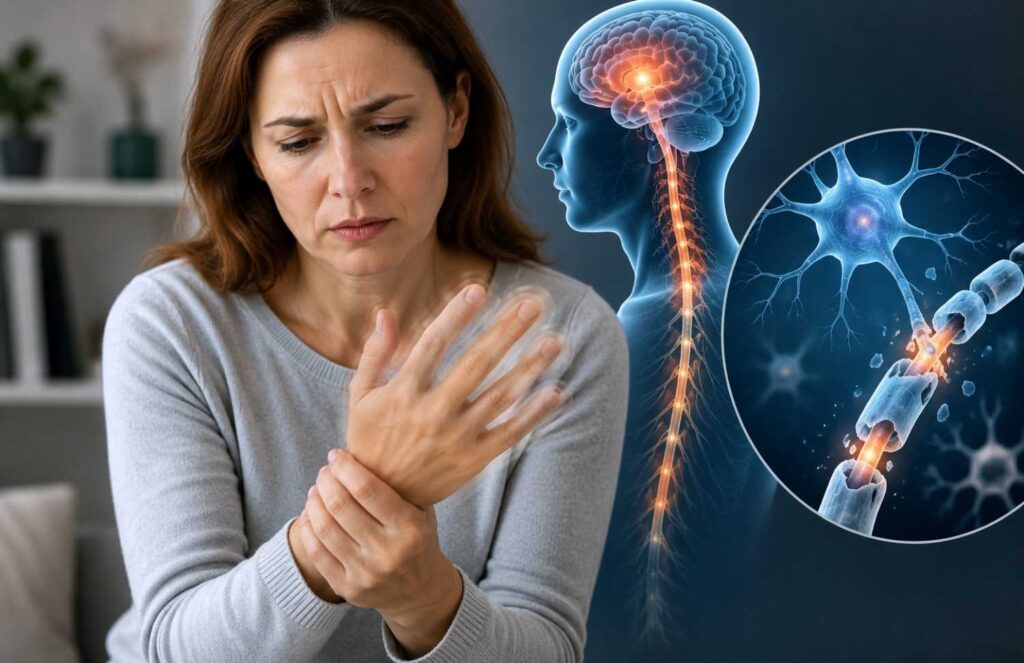
If your hands shake and you have other symptoms that suggest neurological involvement, particularly if you are in the typical MS demographic, a neurological evaluation including MRI imaging is the appropriate next step to properly assess what is happening.
When to See a Doctor About Hand Tremors
Many people asking why do my hands shake can identify the most likely cause from this list and address it with straightforward changes including reducing caffeine, managing stress, or discussing a medication adjustment with their doctor. But certain patterns warrant professional evaluation rather than ongoing self-management.
See a doctor if your hand tremors are new and progressively getting worse, if they are significantly affecting your ability to eat, write, or perform daily tasks, if they are accompanied by other neurological symptoms like weakness, balance problems, or coordination difficulties, if you suspect Parkinson’s disease or another movement disorder, or if the tremors occur specifically at rest and improve with movement. A neurologist can perform a comprehensive evaluation and, if needed, run tests to identify the specific cause and direct you toward the most effective treatment.
Why do my hands shake is a question with a real answer in almost every case, and finding that answer is worth the effort.