

You are sitting at your desk, relaxing on the couch, or lying in bed about to fall asleep when suddenly a muscle somewhere in your body jumps on its own. Your eyelid flutters for a few seconds. Your calf twitches out of nowhere. A muscle in your thigh pulses repeatedly without any input from you. If your muscles twitch randomly and it has been happening more than you would like, you are probably wondering whether it is something to worry about.
The honest answer is that muscles twitching randomly is extremely common and in the vast majority of cases completely harmless. But there are specific patterns and accompanying symptoms that can signal something worth paying attention to. Understanding the difference is what this guide is all about.
Here are nine of the most common reasons your muscles twitch randomly and what each one means.
1. Stress and Anxiety
Stress and anxiety are the single most common cause of muscles that twitch randomly in otherwise healthy adults. When your nervous system is in a heightened state of activation from chronic stress or anxiety, it fires nerve signals more erratically than usual. Those erratic signals can reach your muscles and cause them to contract briefly and involuntarily without any intention on your part.
Anxiety-related muscle twitching tends to affect small muscle groups and moves around the body unpredictably. Your eyelid twitches for a day or two, then it stops and your calf starts. Then your thumb. Then your shoulder. This wandering quality is very characteristic of stress-driven twitching and is quite different from the localized, persistent twitching that neurological conditions tend to produce
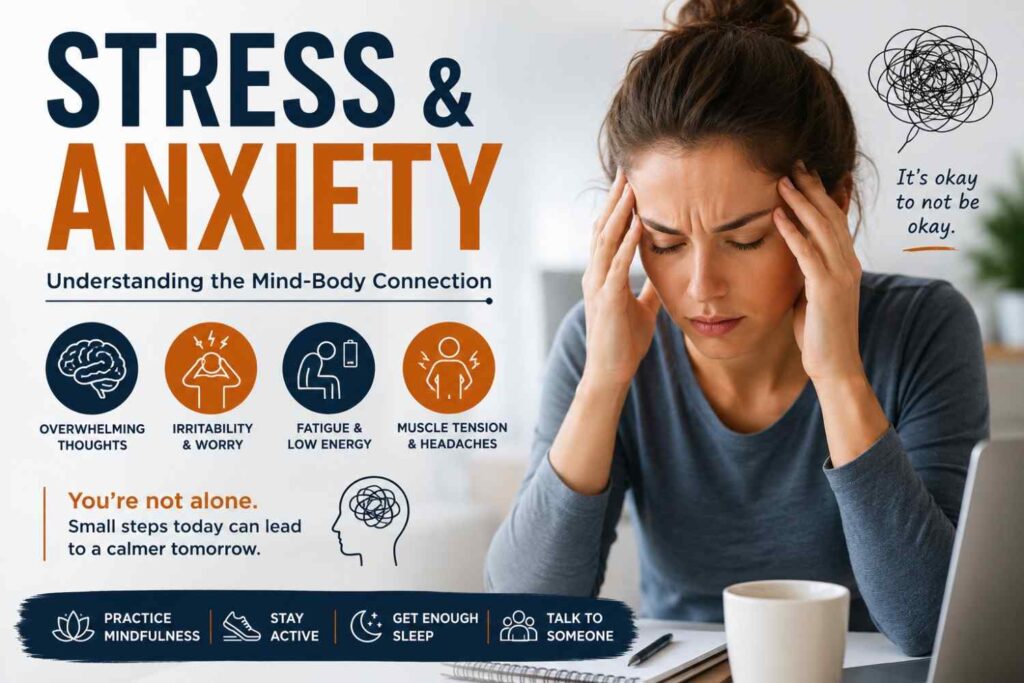
People often notice that their muscles twitch randomly more during or after particularly stressful periods at work or in their personal lives, and that the twitching reduces or disappears when the stress resolves. If this pattern describes you, stress management is both the diagnosis and the treatment.
2. Caffeine Overconsumption
Too much caffeine is one of the most straightforward and most reversible causes of muscles that twitch randomly. Caffeine is a stimulant that increases the excitability of your nervous system, which makes nerve-to-muscle signaling more likely to fire spontaneously. When you consume more caffeine than your nervous system can comfortably handle, that excess excitability manifests as muscle twitches, jitteriness, and an inability to sit still.

The threshold varies significantly from person to person. Some people can drink four cups of coffee without any twitching. Others find that two cups in a day leaves their eyelids and calf muscles firing involuntarily throughout the afternoon and evening. If your muscles twitch randomly and your caffeine intake is high, cutting back is the fastest way to test whether caffeine is the culprit
Reducing your daily caffeine gradually rather than stopping abruptly avoids withdrawal headaches while still giving your nervous system a chance to calm down. Most people who reduce excessive caffeine notice a meaningful reduction in random muscle twitching within three to five days.
3. Magnesium Deficiency
Magnesium is one of the most important minerals for normal muscle and nerve function, and deficiency in it is one of the most common nutritional causes of muscles that twitch randomly. Magnesium plays a direct role in regulating the nerve signals that trigger muscle contractions. When magnesium levels are too low, the threshold for spontaneous muscle firing drops and muscles become more prone to twitching without deliberate movement
Magnesium deficiency is far more common than most people realize. An estimated 50 percent of Americans consume less than the recommended daily amount of magnesium. People who drink a lot of alcohol, take certain medications including diuretics and proton pump inhibitors, have type 2 diabetes, or have gastrointestinal conditions that affect nutrient absorption are at particularly high risk.
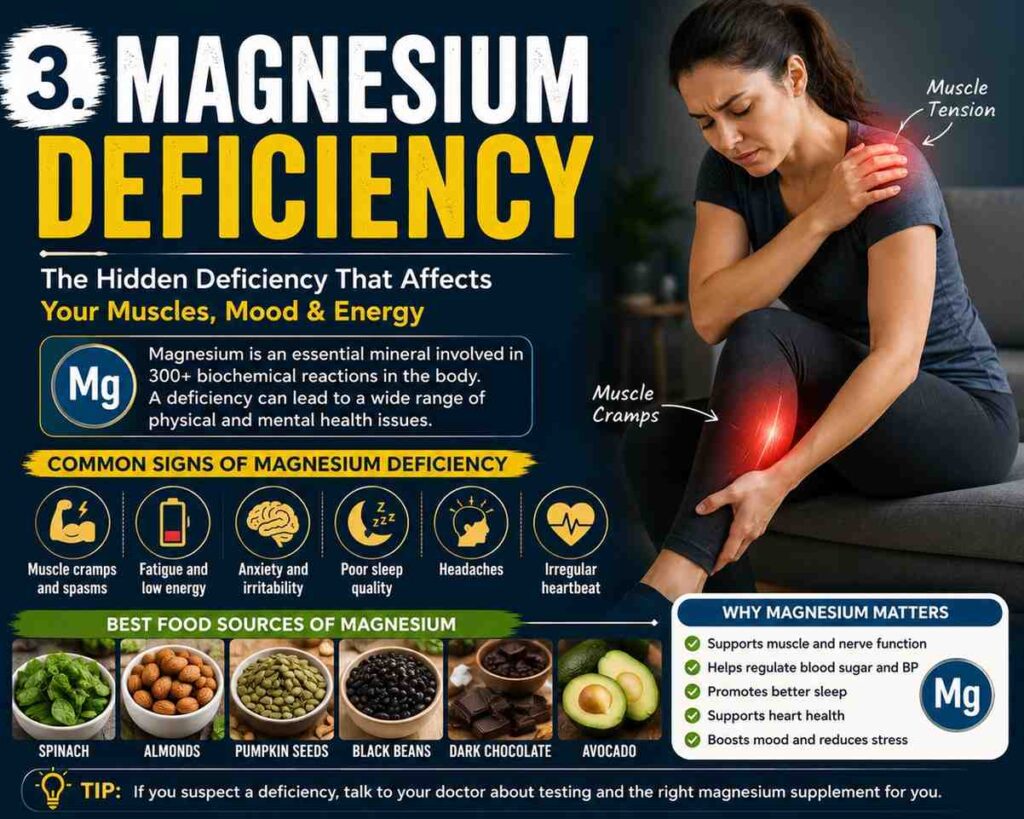
Foods rich in magnesium include dark leafy greens, almonds, pumpkin seeds, black beans, avocado, and dark chocolate. A magnesium glycinate or magnesium citrate supplement taken in the evening can also help, and many people report noticeable improvement in random muscle twitching within two to three weeks of correcting a deficiency.
4. Poor Sleep and Fatigue
Muscle fatigue and sleep deprivation are reliable triggers for muscles that twitch randomly, and this is a connection most people make only after being told to look for it. When your muscles are fatigued from overuse or when your nervous system is depleted from inadequate sleep, the normal inhibitory controls that prevent spontaneous muscle firing become less effective. The result is that individual muscle fibers or small groups of fibers fire on their own in what doctors call fasciculations.
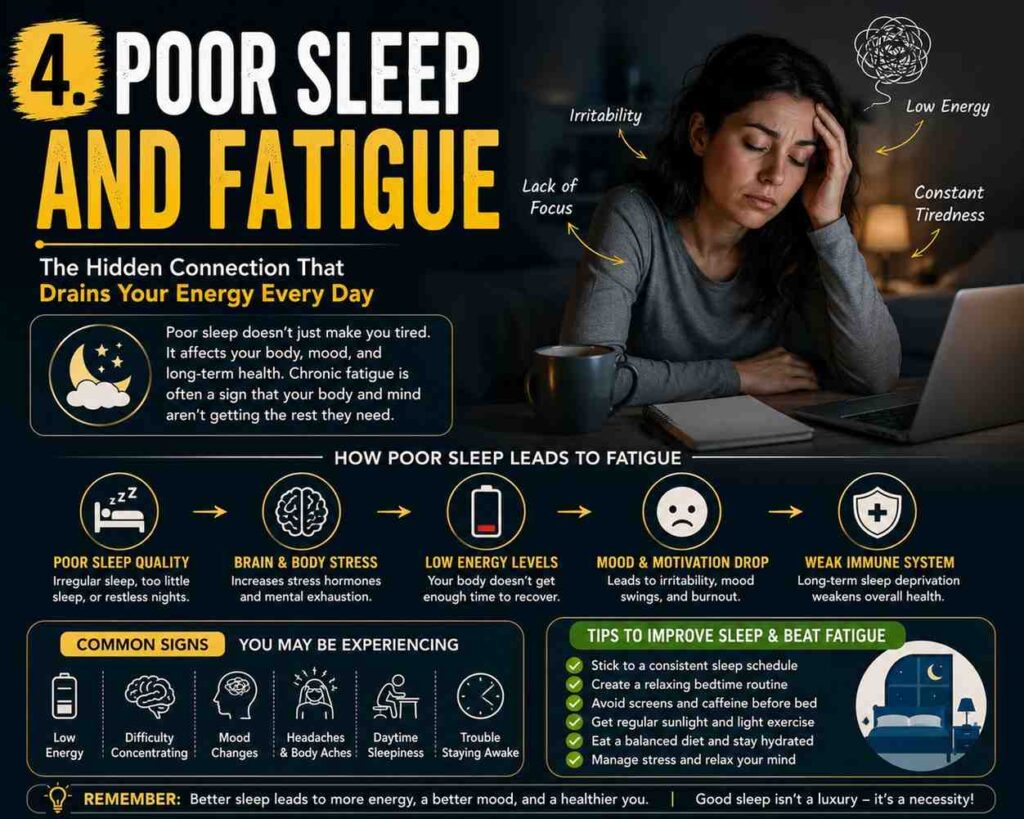
Most people have experienced the eyelid twitching that comes with a few nights of poor sleep. That is the same mechanism playing out in a very visible location. The same thing can happen in any muscle in the body when fatigue and sleep deprivation are significant enough.
Getting consistent, adequate sleep and allowing fatigued muscles to recover between exercise sessions are the most effective ways to reduce fatigue-related random muscle twitching. If you have been training harder than usual or sleeping significantly less than normal and your muscles have started twitching randomly, rest is almost certainly part of the solution.
Why Am I Sweating So Much Even When It’s Not Hot? 10 Hidden Reasons You Should Know
5. Exercise and Muscle Fatigue
Intense or unaccustomed exercise is one of the most common immediate triggers for muscles twitching randomly, and it is completely normal and expected. When you push a muscle beyond what it is conditioned for, whether through a particularly hard workout, a longer run than usual, or heavy lifting, the nerve-muscle connections in that muscle become temporarily more excitable as part of the recovery and adaptation process.
Post-exercise muscle twitching typically occurs in the muscles that were most heavily used and tends to come on in the hours after exercise and sometimes continues into the next day. It is not a sign of damage or injury in the vast majority of cases. It is simply your neuromuscular system recalibrating after an unusual demand.
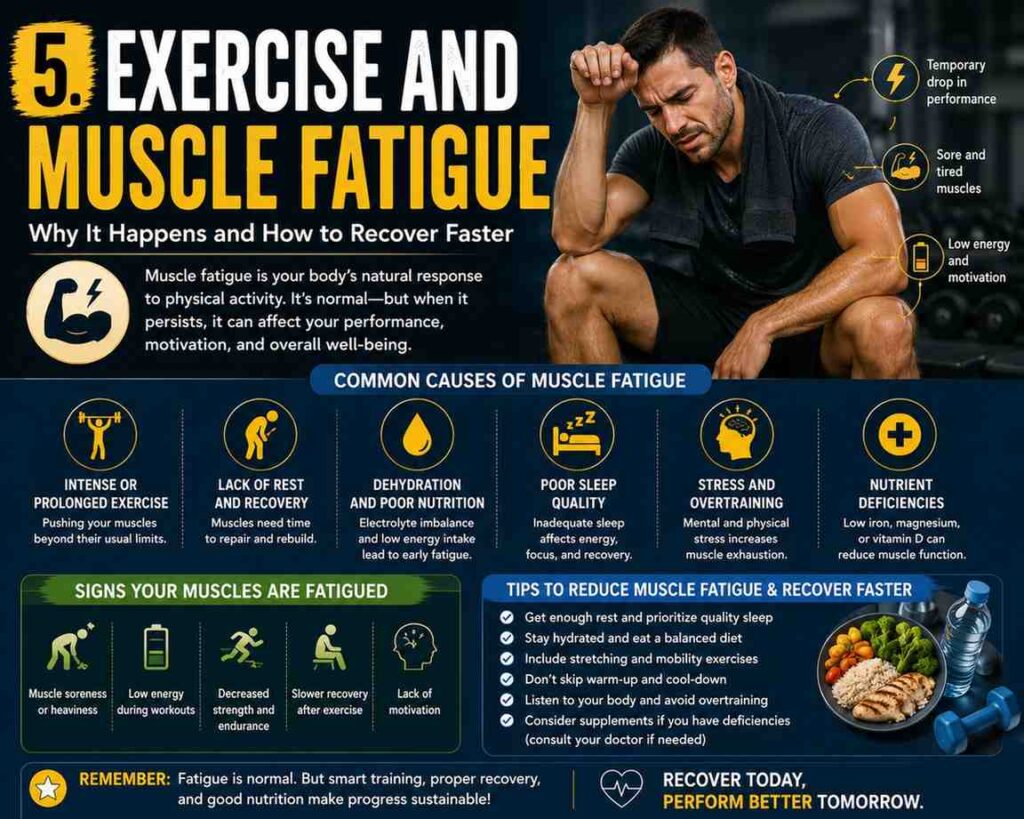
Staying well hydrated during and after exercise, ensuring adequate electrolyte intake particularly sodium, potassium, and magnesium, and allowing sufficient recovery time between intense training sessions all help reduce post-exercise muscle twitching.
6. Dehydration and Electrolyte Imbalance
Dehydration and electrolyte imbalance are closely related causes of muscles that twitch randomly and frequently occur together. Electrolytes, particularly sodium, potassium, calcium, and magnesium, are the charged minerals that nerves and muscles use to generate and transmit electrical signals. When these minerals are out of balance from dehydration, excessive sweating, illness with vomiting or diarrhea, or inadequate dietary intake, the electrical environment that muscles need to function properly is disrupted.
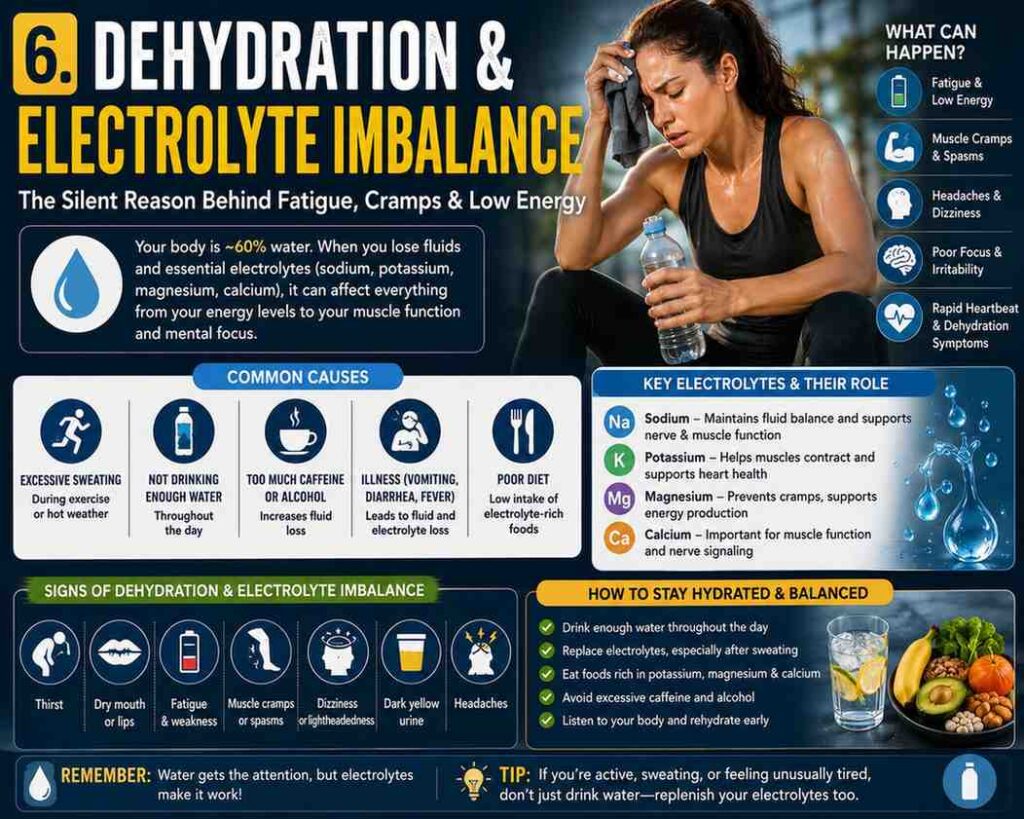
The result is muscle excitability that manifests as twitching, cramping, and in more severe cases weakness. Athletes who sweat heavily, people who spend time in hot environments, and anyone going through an illness that causes significant fluid and electrolyte loss are particularly prone to dehydration-related random muscle twitching.
Drinking adequate water throughout the day and ensuring your diet contains sufficient electrolyte-rich foods like bananas, sweet potatoes, leafy greens, nuts, and seeds is the foundation of prevention. If you are exercising heavily or in hot weather, a low-sugar electrolyte drink can help maintain the balance your muscles need to function without twitching.
Why Am I Sweating So Much Even When It’s Not Hot? 10 Hidden Reasons You Should Know
7. Medications and Stimulants
Several commonly used medications and stimulants can cause muscles to twitch randomly as a direct side effect. Stimulant medications used for ADHD, certain asthma medications, corticosteroids, diuretics, and some antidepressants are among the most frequently reported pharmaceutical causes of muscle twitching. Nicotine, a stimulant found in cigarettes and vaping products, can also increase nervous system excitability enough to produce random muscle twitching in regular users.
If your muscles started twitching randomly around the time you began a new medication or increased a dose, the timing is meaningful and worth bringing to your prescribing doctor. In some cases a dose adjustment or switch to a different medication in the same class resolves the twitching completely.
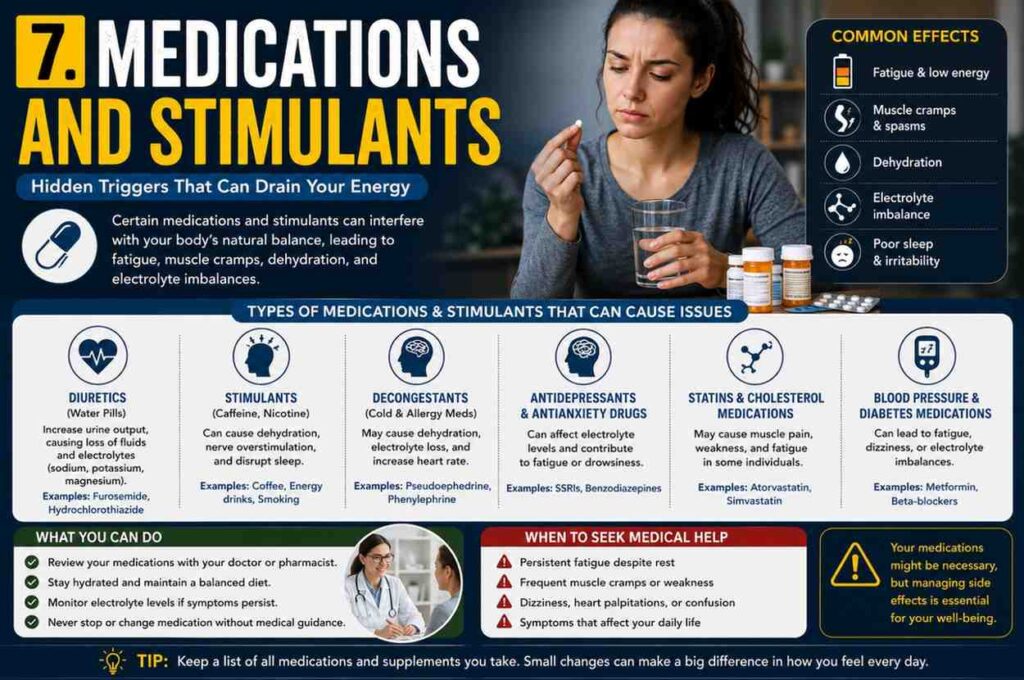
Over-the-counter stimulants found in energy drinks, pre-workout supplements, and some weight loss products are also common causes of muscles twitching randomly that people overlook because they do not think of supplements as medications with real physiological effects.
8. Benign Fasciculation Syndrome
Benign fasciculation syndrome is a condition that most people and even many doctors have never heard of, but it is actually a very common explanation for persistent random muscle twitching that has no other identifiable cause. In benign fasciculation syndrome, the nerve endings that connect to muscle fibers are hyperexcitable in a way that produces frequent and widespread twitching throughout the body without any underlying neurological disease.
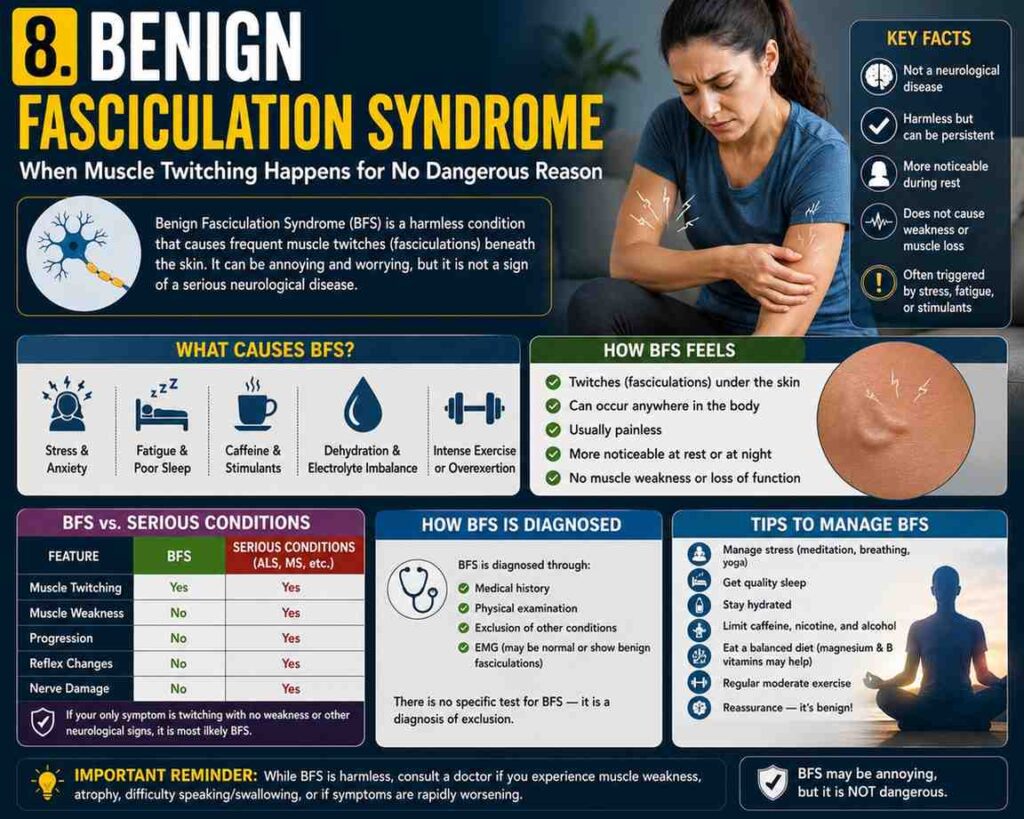
People with benign fasciculation syndrome typically experience twitching in many different muscle groups, often throughout the day and sometimes at rest and during sleep. The twitching can feel alarming because it is persistent and widespread, which leads many people to search their symptoms online and convince themselves they have a serious neurological condition. The key distinguishing feature of benign fasciculation syndrome is that the twitching occurs without any accompanying weakness, coordination problems, or sensory changes.
A neurologist can confirm benign fasciculation syndrome through a clinical examination and if needed an electromyography test that evaluates the electrical activity of the muscles. Once the diagnosis is confirmed and serious conditions are ruled out, reassurance is the most important treatment alongside stress reduction, caffeine limitation, and adequate sleep and hydration.
9. Neurological Conditions Worth Ruling Out
While the vast majority of random muscle twitching is harmless and caused by the factors above, it is important to acknowledge that persistent muscle twitching can occasionally be a symptom of a neurological condition that deserves medical evaluation. Conditions like ALS, multiple sclerosis, and spinal muscular atrophy can all produce muscle fasciculations as part of their symptom profile.
The critical distinction is that neurological disease-related twitching almost never occurs in isolation. It is accompanied by other symptoms that clearly signal something more serious is happening. Progressive muscle weakness that makes everyday tasks harder. Difficulty walking, swallowing, or speaking. Loss of coordination. Sensory changes like numbness or tingling. These accompanying symptoms are the red flags that separate concerning twitching from the benign variety.
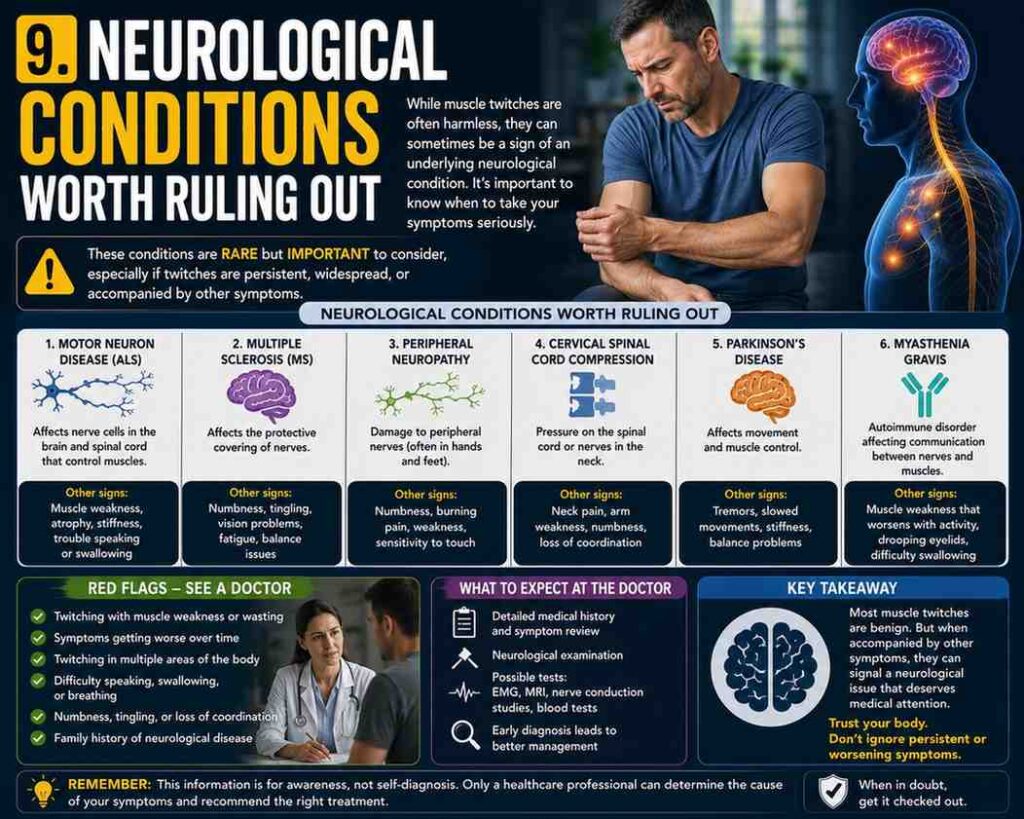
If your muscles twitch randomly but you have no weakness, no coordination problems, no sensory changes, and no other neurological symptoms, the statistical likelihood that your twitching represents a serious neurological disease is very low. If you have any of those accompanying symptoms alongside your twitching, a neurological evaluation is the right next step and should happen sooner rather than later.
Why Am I Sweating So Much Even When It’s Not Hot? 10 Hidden Reasons You Should Know
When to See a Doctor About Random Muscle Twitching
For most people whose muscles twitch randomly, a visit to the doctor is not urgent. Isolated twitching without weakness or other neurological symptoms that responds to better sleep, less caffeine, improved hydration, and stress reduction is almost always benign and self-limiting.
See a doctor promptly if your muscle twitching is accompanied by progressive weakness in the affected muscle or anywhere else in your body, if you notice muscle wasting or significant size loss in a twitching muscle, if the twitching began after a head or spinal cord injury, if you have difficulty with speech, swallowing, or balance alongside the twitching, or if the twitching is severe enough to significantly disrupt your sleep and daily life despite addressing the common lifestyle causes.
Your muscles twitching randomly is almost certainly not the sign of something serious. But knowing what to watch for gives you the confidence to manage it sensibly rather than either ignoring it completely or spiraling into unnecessary worry.