
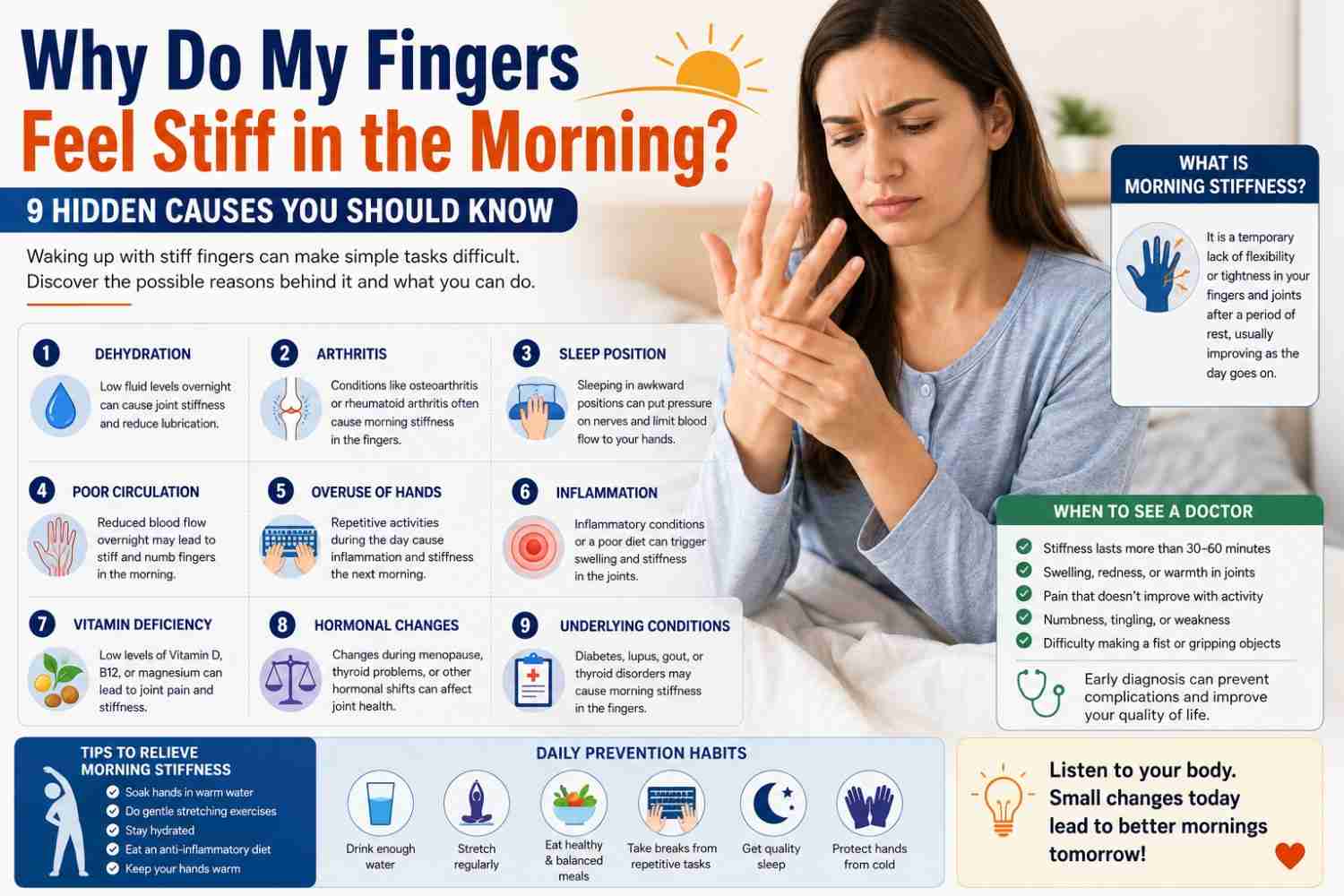
You wake up and try to make a fist, but your fingers feel stiff, swollen, and reluctant to bend. Maybe it takes five minutes to get them working normally, maybe it takes thirty. Maybe the stiffness is mild enough that you barely notice it after your first cup of coffee, or maybe it lingers long enough to make your morning routine genuinely difficult. If you keep asking yourself why do my fingers feel stiff in the morning, something specific is driving that symptom and understanding what it is makes a real difference in how you address it.
Morning finger stiffness is one of the most common musculoskeletal complaints among American adults, and it spans a wide range of causes from completely benign to medically significant. Here are nine of the most common hidden causes of why do my fingers feel stiff in the morning and what each one means.
1. Rheumatoid Arthritis
Rheumatoid arthritis is the most important medical cause of why do my fingers feel stiff in the morning, and morning stiffness lasting more than 30 minutes in the small joints of the hands is one of its most characteristic and diagnostically significant features. Rheumatoid arthritis is an autoimmune condition where the immune system attacks the synovial lining of the joints, causing chronic inflammation, swelling, and progressive joint damage. The small joints of the fingers and hands are almost always the first and most severely affected.
The stiffness from rheumatoid arthritis is driven by the accumulation of inflammatory fluid in the joint space during the overnight rest period. When the joint is not being moved, inflammatory mediators pool and the joint capsule tightens, producing the gel phenomenon where joints feel most stiff and swollen after prolonged inactivity. This is why do my fingers feel stiff in the morning is such a reliable early symptom of rheumatoid arthritis and why the duration of morning stiffness is used as a measure of disease activity.

If your morning finger stiffness lasts longer than 30 to 60 minutes, affects multiple joints symmetrically, and is accompanied by joint swelling, warmth, and fatigue, rheumatoid arthritis should be evaluated with blood tests and a rheumatology consultation as early as possible. Early treatment significantly improves long-term outcomes.
2. Osteoarthritis
Osteoarthritis is the most common form of arthritis overall and a very frequent cause of why do my fingers feel stiff in the morning, particularly in adults over 50. Unlike rheumatoid arthritis, osteoarthritis involves the mechanical breakdown of cartilage rather than autoimmune inflammation, and the morning stiffness it produces tends to be shorter in duration, typically lasting less than 30 minutes before improving with movement and warming up.

Osteoarthritis of the fingers most commonly affects the distal interphalangeal joints at the tips of the fingers and the base of the thumb. The characteristic bony enlargements that develop at these joints, called Heberden’s nodes at the fingertips and Bouchard’s nodes at the middle knuckles, are a visible sign of osteoarthritic changes. The stiffness from osteoarthritis is most pronounced first thing in the morning and after prolonged inactivity, improving quickly once the joint is warmed up and moving.
Family history plays a significant role in finger osteoarthritis, and women are more commonly affected than men. Management includes joint protection strategies, warm soaks to loosen the joints in the morning, anti-inflammatory medications, hand therapy, and activity modifications that reduce mechanical stress on the affected joints.
3. Trigger Finger
Trigger finger, medically called stenosing tenosynovitis, is a condition where the tendon that controls finger flexion becomes inflamed and thickened, and the sheath through which it travels becomes narrowed. This mismatch between the tendon size and the space available for it to glide produces catching, locking, and significant stiffness in the affected finger that is characteristically worst in the morning and is one of the most specific answers to why do my fingers feel stiff in the morning for people with this condition.
In trigger finger, the affected digit may be stuck in a bent position upon waking and require manual straightening with the other hand, or it may snap and click as it finally releases. The ring finger and middle finger are most commonly affected, though trigger finger can affect any digit. Diabetes, rheumatoid arthritis, and repetitive gripping activities are among the most significant risk factors.
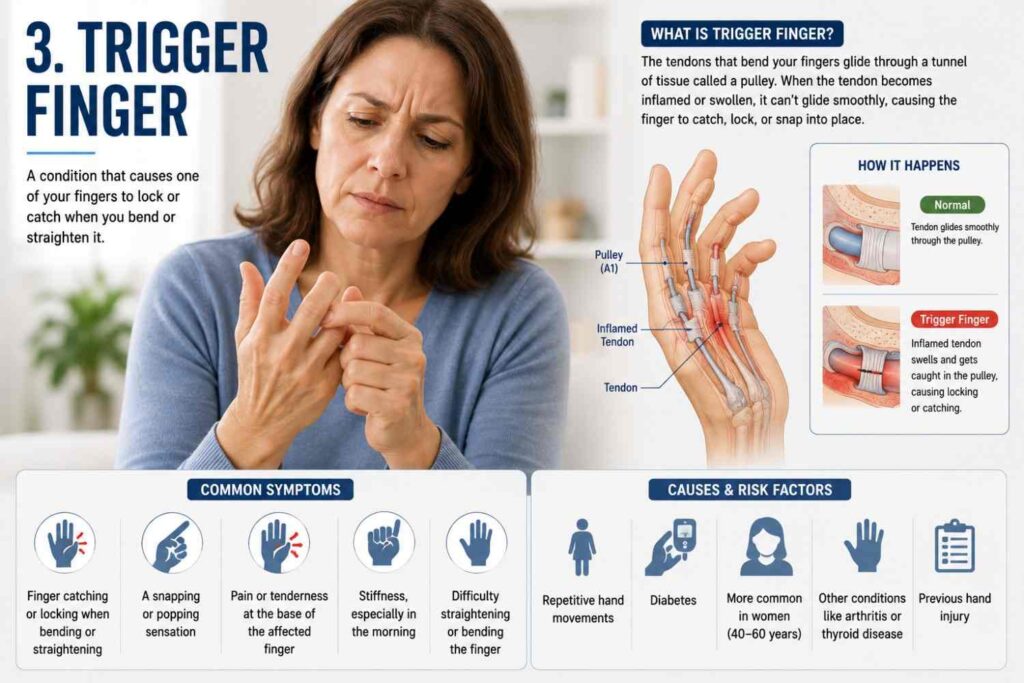
Treatment options range from rest and splinting the finger in extension overnight to corticosteroid injections into the tendon sheath to surgical release of the constricted sheath in cases that do not respond to conservative management.
4. Carpal Tunnel Syndrome
Carpal tunnel syndrome involves compression of the median nerve as it passes through the carpal tunnel at the wrist, and it produces a distinctive pattern of symptoms including numbness, tingling, pain, and stiffness in the thumb, index, middle, and half of the ring finger. Morning finger stiffness and numbness from carpal tunnel syndrome is extremely common because the wrists tend to flex during sleep, which increases pressure within the carpal tunnel and compresses the median nerve for hours at a time.
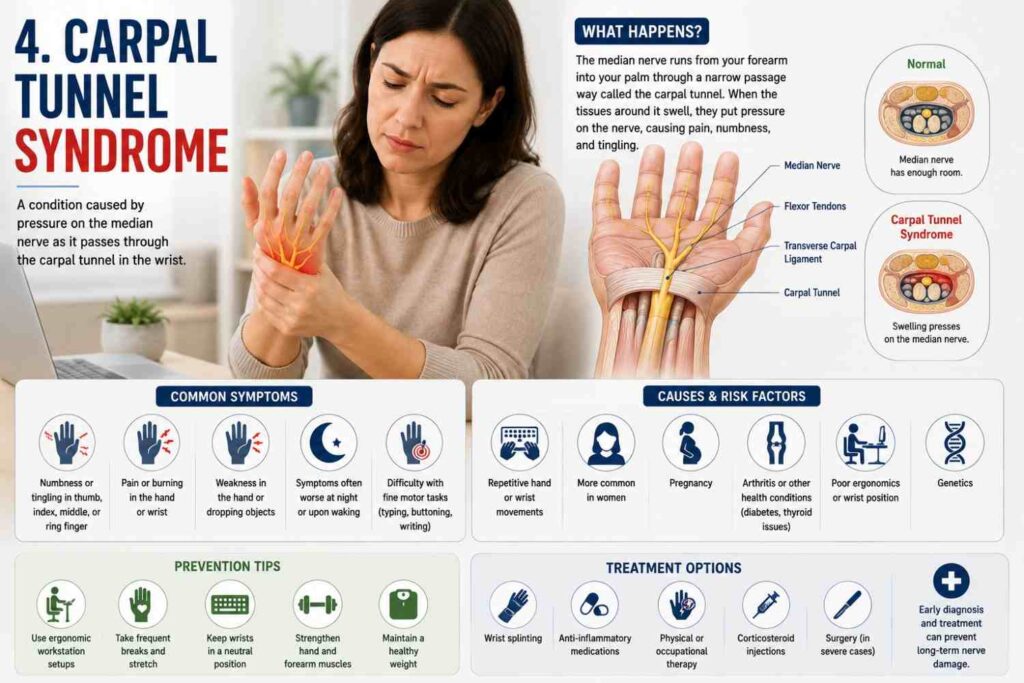
Many people with carpal tunnel syndrome wake up with fingers that feel stiff, numb, and difficult to use, and they find themselves shaking their hands or holding them in specific positions to restore sensation and mobility. The stiffness from carpal tunnel syndrome answers why do my fingers feel stiff in the morning for a very large number of people, particularly those who do repetitive hand and wrist work, type extensively, or have other risk factors including pregnancy, diabetes, and hypothyroidism.
A wrist splint worn at night to maintain the wrist in a neutral position significantly reduces overnight nerve compression and typically produces meaningful improvement in morning finger stiffness and numbness within the first week of consistent use.
5. Psoriatic Arthritis
Psoriatic arthritis is an inflammatory arthritis associated with the skin condition psoriasis, and it produces joint inflammation and morning stiffness that can closely resemble rheumatoid arthritis. Morning finger stiffness is one of its most consistent symptoms, and a distinctive feature of psoriatic arthritis is dactylitis, sometimes called sausage fingers, where an entire finger becomes uniformly swollen and stiff rather than just the individual joints. This whole-finger swelling is a fairly specific sign of psoriatic arthritis that helps distinguish it from other forms of inflammatory arthritis.
Psoriatic arthritis can develop before, during, or after the skin manifestations of psoriasis become apparent, which means that not everyone who asks why do my fingers feel stiff in the morning and has psoriatic arthritis will have obvious skin plaques at the time their joint symptoms begin. The arthritis can affect any joint in the body but the fingers and toes are commonly involved.

Like rheumatoid arthritis, psoriatic arthritis benefits significantly from early treatment with disease-modifying medications. A rheumatology evaluation is warranted when inflammatory arthritis is suspected.
Why Do I Keep Waking Up Before My Alarm? 9 Hidden Reasons You Should Know
6. Lupus
Lupus is an autoimmune condition that can affect virtually every system in the body, and joint pain and morning stiffness in the fingers and hands are among its most common symptoms. The arthritis of lupus is typically non-erosive, meaning it does not cause the bone damage seen in rheumatoid arthritis, but it produces significant inflammation and morning finger stiffness that can be debilitating during flares.

Lupus is significantly more common in women than in men and is more prevalent in Black, Hispanic, and Asian women than in white women in the United States. Other symptoms that accompany lupus-related joint symptoms include a butterfly-shaped facial rash across the cheeks and nose, extreme fatigue, hair loss, sensitivity to sunlight, and involvement of the kidneys, lungs, or nervous system in more severe cases.
If why do my fingers feel stiff in the morning is accompanied by any of these additional symptoms, lupus should be included in the differential diagnosis and evaluated with appropriate blood tests including ANA and anti-double-stranded DNA antibodies.
7. Hypothyroidism
An underactive thyroid is a frequently overlooked cause of why do my fingers feel stiff in the morning, and it produces joint and muscle symptoms through several mechanisms simultaneously. Hypothyroidism causes fluid retention throughout the body including in the joints and surrounding soft tissues, which compresses the structures of the hand and contributes to morning stiffness. It also directly affects muscle metabolism and joint lubrication in ways that impair the smooth movement of the fingers.
Hypothyroidism is particularly associated with carpal tunnel syndrome, which as described above produces significant morning finger stiffness and numbness. The fluid retention of hypothyroidism increases the volume of tissue within the carpal tunnel, compressing the median nerve even in people who do not have the repetitive strain history typically associated with carpal tunnel syndrome.
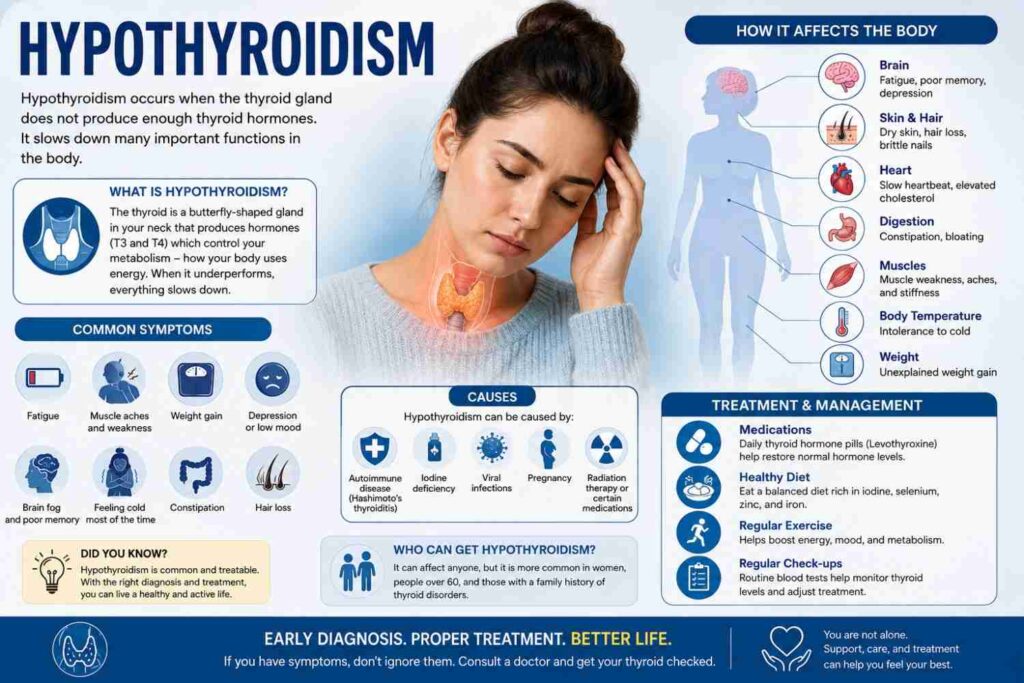
Women are significantly more likely than men to develop hypothyroidism, and the condition often develops gradually enough that symptoms including morning finger stiffness are attributed to aging or other causes before the thyroid connection is made. A TSH blood test can identify hypothyroidism quickly, and thyroid hormone replacement therapy typically improves the associated joint and carpal tunnel symptoms within several weeks to months of achieving stable thyroid levels.
8. Raynaud's Phenomenon
Raynaud’s phenomenon causes the blood vessels of the fingers to constrict dramatically in response to cold or stress, cutting off circulation temporarily. While Raynaud’s is most recognized for causing color changes in the fingers, the reduction in blood flow also affects the warmth and mobility of the finger tissues, and people with Raynaud’s frequently describe their fingers feeling stiff, cold, and difficult to move in the morning when the bedroom temperature is lower and the body is emerging from the relatively lower temperature of sleep.
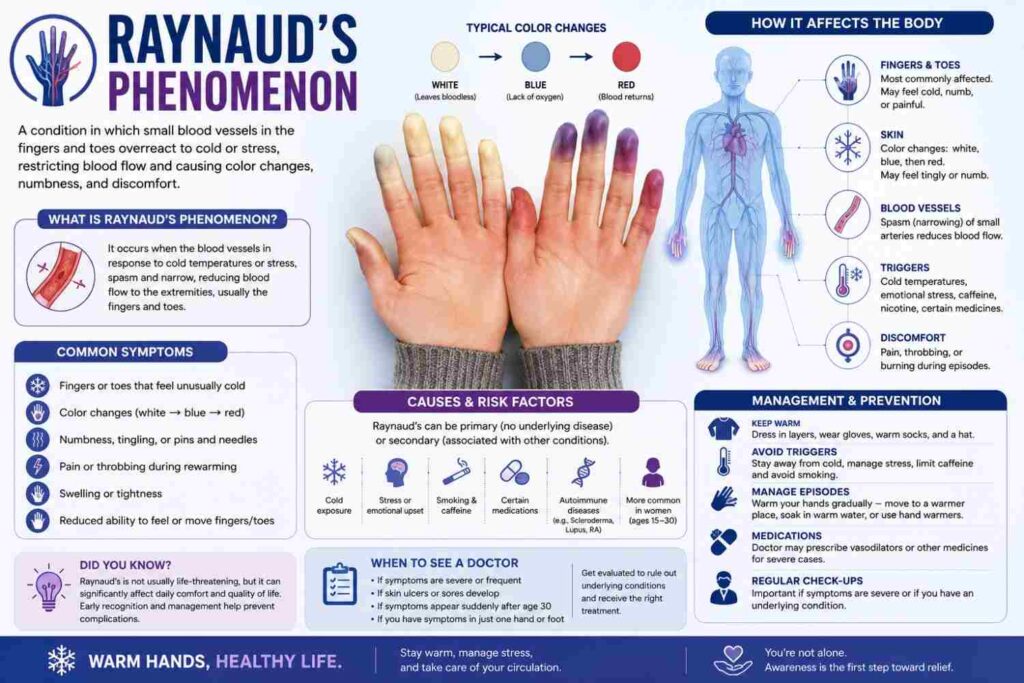
The stiffness from Raynaud’s-related poor circulation in the morning answers why do my fingers feel stiff in the morning for people whose symptoms correlate with cold exposure and who notice color changes in the fingers alongside the stiffness. The fingers may appear white or bluish in the morning before normal circulation is restored as the body warms up.
Keeping the hands warm with gloves in cold environments, maintaining a comfortably warm bedroom temperature, and avoiding cold triggers are the most practical management strategies. For more severe cases, vasodilating medications prescribed by a doctor can significantly reduce the frequency and severity of episodes.
9. Overuse and Repetitive Strain
Repetitive hand activities performed during the previous day are a very direct and physical cause of why do my fingers feel stiff in the morning that many people never connect to their morning symptoms because the time between the activity and the stiffness makes the association non-obvious. Typing for extended periods, playing a musical instrument, doing detailed craft work, gardening, using hand tools, or any activity that repeatedly loads the tendons, joints, and muscles of the fingers can produce an inflammatory response that peaks during the overnight rest period and presents as significant morning stiffness.
The tendons of the hand run through tight sheaths and the joints have limited synovial fluid to begin with, making them particularly susceptible to overuse inflammation. When overused tendons and joints are then held still for seven or eight hours of sleep, the inflammatory fluid accumulates and the tissues stiffen in a way that makes why do my fingers feel stiff in the morning a reliable consequence of particularly intensive hand use the previous day.

Rest from the offending activity, alternating tasks to reduce repetitive loading of the same structures, ergonomic adjustments that reduce strain during activities, and anti-inflammatory measures including ice and over-the-counter NSAIDs are the most effective approaches for overuse-driven morning finger stiffness.
Why Do I Keep Waking Up Before My Alarm? 9 Hidden Reasons You Should Know
What Helps Morning Finger Stiffness
Regardless of the underlying cause, several approaches provide immediate relief for stiff fingers in the morning. Soaking the hands in warm water for five to ten minutes is one of the most effective immediate interventions and helps warm the joint fluid, reduce the viscosity of synovial fluid, and relax the surrounding soft tissues. Gentle range-of-motion exercises performed in the warm water or immediately after, including making fists and spreading the fingers wide, help restore normal mobility more quickly.
Understanding why do my fingers feel stiff in the morning in your specific case is the most important step for long-term management. If the stiffness lasts more than 30 minutes most mornings, if it is accompanied by joint swelling, warmth, or redness, if it has been getting progressively worse over weeks or months, or if you have other symptoms suggesting a systemic condition, a medical evaluation is warranted.
A rheumatologist can evaluate for inflammatory arthritis. A hand specialist or orthopedic surgeon can assess for structural causes like trigger finger or carpal tunnel syndrome. A general practitioner can run initial blood tests to check for thyroid dysfunction and inflammatory markers. Why do my fingers feel stiff in the morning is a question with a real answer, and finding that answer is the most direct path to mornings that start without pain and stiffness.