

One moment everything looks fine and then suddenly your vision goes soft, hazy, or out of focus in a way that feels wrong. Maybe it happened while you were reading, driving, or just going about your day. Maybe it came on gradually over the past few days and you kept hoping it would go away on its own. If you have experienced blurry vision suddenly, you already know how unsettling it feels to have something go wrong with your eyesight without an obvious explanation.
Blurry vision suddenly is a symptom that spans a wide range of causes, from completely harmless and easily corrected to genuinely serious conditions that require prompt medical attention. Understanding the difference is not always obvious, which is exactly why knowing the most common causes matters.
Here are ten of the most common hidden health causes of blurry vision suddenly and what each one means for your eyes and your overall health.
1. Refractive Errors and Changing Prescription
The most common cause of blurry vision suddenly in otherwise healthy adults is a change in their refractive error, meaning their glasses or contact lens prescription has become outdated. Nearsightedness, farsightedness, and astigmatism can all shift over time, and when they do, the corrective lenses that once worked perfectly no longer compensate fully for the change in the shape of the eye.
People often describe this as blurry vision suddenly appearing when in reality the change happened gradually enough that they adapted to it until one day they realized things were noticeably less sharp than they should be. This is one of the most benign causes of blurry vision and is easily addressed with an updated eye examination and new prescription lenses.
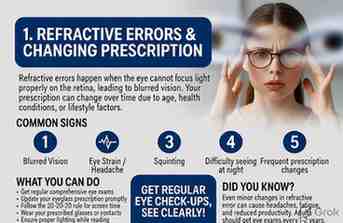
If you have not had an eye exam in more than a year and your vision has become blurry suddenly, starting with a comprehensive eye exam is always the right first step to rule out or address any refractive changes.
Pink Eye, Eye Vitamins, and Eye Drops for Irritation
2. Digital Eye Strain
Digital eye strain, also called computer vision syndrome, is one of the most common causes of blurry vision suddenly in American adults who spend significant time on screens. When you stare at a screen for extended periods, your blink rate decreases dramatically, from a normal rate of around 15 to 20 blinks per minute down to as few as 5 to 7. This reduced blinking allows the tear film on the surface of your eye to evaporate, which dries out the eye surface and produces blurry, fluctuating vision that can come on quite suddenly after prolonged screen time.

Digital eye strain also causes the focusing muscles of the eye to fatigue from the sustained near-focus demand of screen work, producing a temporary inability to shift focus smoothly that appears as blurry vision suddenly when you look up from your screen or try to read after a long day of computer work.
The 20-20-20 rule provides practical relief: every 20 minutes, look at something at least 20 feet away for at least 20 seconds. Using artificial tear drops, adjusting screen brightness and contrast, and ensuring adequate lighting in your workspace all help reduce digital eye strain and the blurry vision suddenly that comes with it.
3. Diabetes and High Blood Sugar
High blood sugar is one of the most significant medical causes of blurry vision suddenly, and it can occur even before a person has been formally diagnosed with diabetes. When blood glucose levels spike, the lens of the eye absorbs excess glucose along with the water that follows it, causing the lens to swell and change shape. This change in lens shape alters its focusing power and produces blurry vision that can come on quite quickly following a significant blood sugar elevation.
aThis type of blurry vision suddenly is often fluctuating, meaning it may be worse at certain times of day when blood sugar is higher and somewhat better when levels normalize. It is frequently one of the first symptoms that leads to a diabetes diagnosis in people who were previously unaware of their blood sugar issues.Magnesium deficiency is far more common than most people realize. An estimated 50 percent of Americans consume less than the recommended daily amount of magnesium. People who drink a lot of alcohol, take certain medications including diuretics and proton pump inhibitors, have type 2 diabetes, or have gastrointestinal conditions that affect nutrient absorption are at particularly high risk.

Diabetic retinopathy, the longer-term damage that high blood sugar causes to the blood vessels in the retina, can also cause blurry vision suddenly as those vessels leak or grow abnormally. Any person with diabetes who experiences new or worsening blurry vision should see an eye doctor promptly, as early treatment can prevent significant vision loss.
4. High Blood Pressure

Severely elevated blood pressure is a direct and serious cause of blurry vision suddenly that requires urgent medical attention. The blood vessels in the retina are among the smallest and most delicate in the body, and when blood pressure reaches dangerous levels, those vessels can leak, swell, or in severe cases produce changes in the optic nerve that cause sudden visual disturbances. This condition is called hypertensive retinopathy in its chronic form and hypertensive emergency when it occurs acutely.
Blurry vision suddenly in the context of very high blood pressure may be accompanied by severe headache, chest pain, difficulty breathing, or neurological symptoms, which together constitute a hypertensive crisis requiring emergency care. Even without these accompanying symptoms, new blurry vision in someone with known hypertension or hypertension risk factors warrants same-day medical evaluation rather than a wait and see approach.
5. Migraines and Ocular Migraines
Migraines are a well-recognized cause of blurry vision suddenly, and the visual disturbances they produce can be quite dramatic and alarming the first time they occur. Migraine aura, which precedes the headache phase in many migraine sufferers, commonly involves visual symptoms including blurring, shimmering zigzag lines across the visual field, blind spots, or flashing lights that typically last 20 to 60 minutes before resolving.
Ocular migraines, also called retinal migraines, are a less common variant where the visual symptoms occur in one eye rather than in the visual field of both eyes, and they are caused by temporary reduced blood flow to the retina rather than the cortical spreading depression that produces typical migraine aura. Both types produce blurry vision suddenly that is temporary and typically resolves completely without treatment, though they can be frightening and warrant discussion with a doctor to confirm the diagnosis and rule out other causes.

If you experience blurry vision suddenly alongside a one-sided headache, sensitivity to light and sound, or nausea, migraine is a very likely explanation, particularly if this pattern has occurred before.
Pink Eye, Eye Vitamins, and Eye Drops for Irritation
6. Dry Eye Disease
Dry eye disease is one of the most common eye conditions in the United States and a very frequent cause of blurry vision suddenly, particularly vision that fluctuates throughout the day and temporarily improves with blinking. When the tear film covering the eye surface is insufficient in quantity or quality, the optical surface of the eye becomes irregular, scattering incoming light instead of focusing it cleanly on the retina.

People with dry eye disease often notice their blurry vision is worst during activities that reduce blinking like reading, driving, or screen work, and that it temporarily clears when they blink deliberately or use lubricating eye drops. Dry, indoor air from heating or air conditioning, contact lens wear, certain medications including antihistamines and antidepressants, and hormonal changes particularly around menopause all contribute to dry eye disease.
Preservative-free artificial tear drops used consistently, omega-3 fatty acid supplementation, and in more significant cases prescription medications or in-office procedures to improve tear production or reduce drainage can all meaningfully improve the blurry vision suddenly that dry eye produces.
7. Cataracts
Cataracts are a gradual clouding of the eye’s natural lens that most commonly develops with age, and while they typically cause slowly progressive vision changes rather than blurry vision suddenly, many people describe reaching a point where they suddenly realize how significantly their vision has deteriorated. The cloudiness of a cataract scatters incoming light, producing blurry, hazy, or faded vision that is often worse in bright light or when driving at night due to glare and halos around lights.
Cataracts are the leading cause of reversible blindness worldwide and are extremely common in adults over 60, though they can develop earlier as a result of prolonged sun exposure, steroid medication use, diabetes, or eye injury. The only definitive treatment for cataracts is surgical removal and replacement of the clouded lens with a clear artificial lens, a procedure that is among the most commonly performed and most successful surgeries in the United States.

8. Retinal Detachment
Retinal detachment is one of the most serious causes of blurry vision suddenly and constitutes a medical emergency when it occurs. The retina is the light-sensitive tissue lining the back of the eye, and when it detaches from the underlying layers that supply it with oxygen and nutrients, the cells begin to die within hours if the detachment is not repaired. Blurry vision suddenly is one of the warning symptoms of retinal detachment, often accompanied by a sudden shower of new floaters, flashes of light in the peripheral vision, or a curtain or shadow appearing at the edge of the visual field.

Risk factors for retinal detachment include extreme nearsightedness, previous eye surgery, eye trauma, diabetes, and a family history of retinal detachment. The symptoms of retinal detachment, particularly sudden new floaters, flashes, and a shadow in the vision, require same-day emergency eye care. When caught and repaired quickly, the prognosis for preserving vision is significantly better than when treatment is delayed.
If you experience blurry vision suddenly alongside any new floaters, flashes of light, or a shadow appearing in your peripheral vision, do not wait to see if it improves. Go to an emergency room or call an ophthalmologist immediately.
9. Stroke and TIA
Blurry vision suddenly is one of the recognized warning signs of stroke and transient ischemic attack, and this connection is important enough that it should never be dismissed without proper evaluation when it occurs. The visual cortex in the brain, which processes the signals your eyes send, receives its blood supply from the posterior circulation, and when a clot or bleed affects these blood vessels, sudden visual disturbances can be the first and sometimes only warning sign.
A transient ischemic attack, sometimes called a mini-stroke, causes temporary symptoms that resolve completely within minutes to hours but signal a very high risk of a full stroke in the days following. Blurry vision suddenly in one or both eyes that lasts more than a few minutes, particularly when accompanied by other stroke warning signs like sudden weakness on one side of the body, facial drooping, difficulty speaking, or severe headache, is a medical emergency requiring immediate emergency care.

The FAST acronym is the standard reminder: Face drooping, Arm weakness, Speech difficulty, Time to call 911. Visual changes including blurry vision suddenly belong alongside these symptoms as a reason to seek emergency evaluation without delay.
Pink Eye, Eye Vitamins, and Eye Drops for Irritation
10. Multiple Sclerosis
Multiple sclerosis is a neurological condition where the immune system attacks the myelin sheath covering nerve fibers throughout the brain and spinal cord, and blurry vision suddenly is one of its most common presenting symptoms, particularly in younger adults. A specific condition called optic neuritis, which is inflammation of the optic nerve, causes blurry or lost vision that typically affects one eye, often with pain behind the eye that worsens with eye movement, and can develop over the course of hours to days.
Optic neuritis is the first symptom of multiple sclerosis in approximately 15 to 20 percent of people who are ultimately diagnosed with the condition, and it occurs at some point in the disease course in up to 50 percent of people with MS. The blurry vision from optic neuritis typically improves over weeks to months with or without treatment, though some residual visual changes may persist.

Blurry vision suddenly in one eye in a young adult, particularly accompanied by eye pain with movement, warrants prompt ophthalmological and neurological evaluation to assess for optic neuritis and its potential underlying causes including multiple sclerosis.
When Is Blurry Vision Suddenly an Emergency?
Most cases of blurry vision suddenly have benign explanations like eye strain, dry eyes, or a change in prescription that can be addressed with an eye exam and appropriate treatment. But certain patterns demand urgent or emergency evaluation rather than waiting for a scheduled appointment.
Seek emergency care immediately if blurry vision suddenly comes with flashes of light, a shower of new floaters, or a curtain across your vision suggesting retinal detachment. Call 911 if blurry vision comes alongside sudden weakness, facial drooping, difficulty speaking, or severe headache suggesting stroke. See a doctor the same day if blurry vision develops in the context of very high blood pressure, eye pain, significant head injury, or loss of vision in one eye.
For everything else, an ophthalmologist or optometrist appointment within a few days is the appropriate starting point. Blurry vision suddenly that does not resolve on its own within 24 hours should always be evaluated professionally rather than dismissed.