
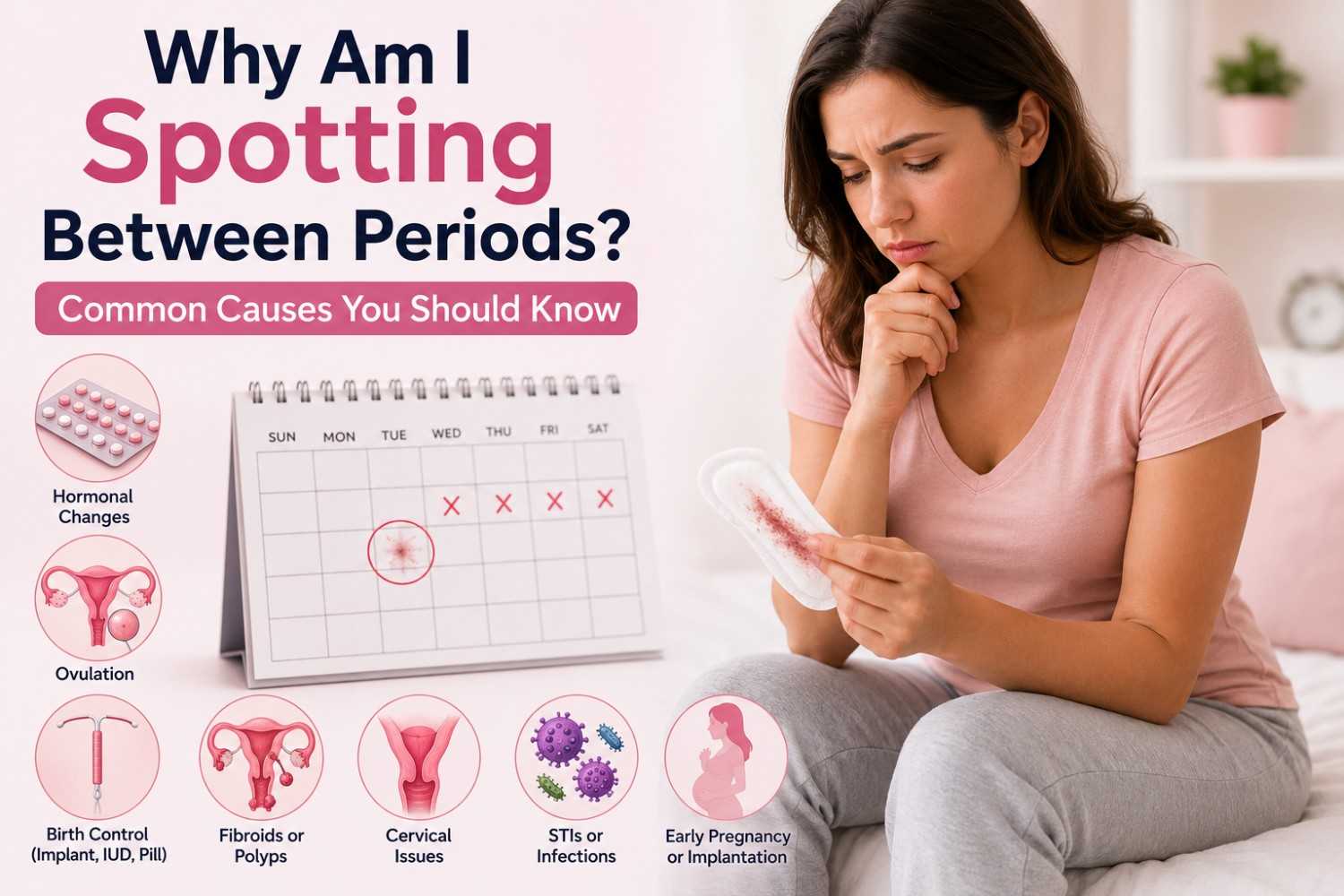
You noticed some light bleeding or pink, brown, or red discharge on a day that has nothing to do with your period. Maybe it happened once and you dismissed it. Maybe it has been happening regularly and you have been putting off figuring out what it means. If you are spotting between periods, your body is communicating something, and understanding what that something is matters more than most women realize.
Spotting between periods, medically referred to as intermenstrual bleeding, is one of the most common gynecological concerns among American women of reproductive age. For some women it is completely harmless and resolves on its own. For others it signals a hormonal imbalance, an infection, or a structural condition that needs attention. Knowing which category you fall into requires understanding the most common causes.
Here is what your spotting between periods might be telling you.
1. Ovulation Spotting
Ovulation spotting is one of the most common and most benign reasons for spotting between periods, and many women never realize it is a normal part of their cycle. Around the time of ovulation, which typically occurs in the middle of the menstrual cycle roughly 14 days before the next expected period, a small drop in estrogen accompanies the release of the egg from the follicle. This brief hormonal dip can cause light spotting that lasts anywhere from a few hours to a day or two.
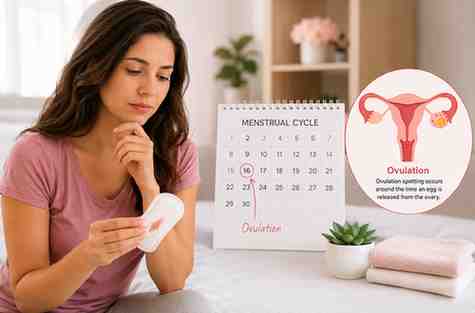
Ovulation spotting is typically very light, ranging from pink to light brown, and it often accompanies other ovulation signs including mild one-sided pelvic cramping called mittelschmerz, an increase in cervical mucus that becomes clear and stretchy like egg whites, and a slight rise in basal body temperature. If your spotting between periods occurs consistently at the midpoint of your cycle and matches these other signs, ovulation spotting is almost certainly the explanation and requires no treatment or intervention.
2. Hormonal Contraceptives
Hormonal birth control is one of the most common causes of spotting between periods, particularly in the first three to six months of starting a new method or changing methods. Combination oral contraceptive pills, progesterone-only mini pills, hormonal IUDs, the implant, the patch, and the ring all alter the hormonal environment of the uterus in ways that can cause breakthrough bleeding or spotting as the body adjusts to the new hormonal pattern.

Missing a pill, taking a pill at a significantly different time than usual, or certain medications and supplements that interfere with hormonal contraceptive absorption can all trigger spotting between periods even in women who have been on the same contraceptive for years without any issues. Extended cycle pills that are designed to reduce periods to once every three months commonly cause spotting between periods more frequently than standard monthly pills because of the prolonged hormonal suppression of the uterine lining.
If your spotting between periods started with a new or changed contraceptive and is light and irregular, it is almost certainly a normal adjustment response that will resolve within a few months. If it persists beyond six months or is heavier than light spotting, discussing it with your doctor or gynecologist is appropriate.
3. Implantation Bleeding
Implantation bleeding is a specific type of spotting between periods that occurs in early pregnancy when the fertilized egg attaches to the uterine lining, typically six to twelve days after ovulation and conception. The implantation process disrupts small blood vessels in the uterine lining, causing light spotting that can be mistaken for an early or unusually light period.
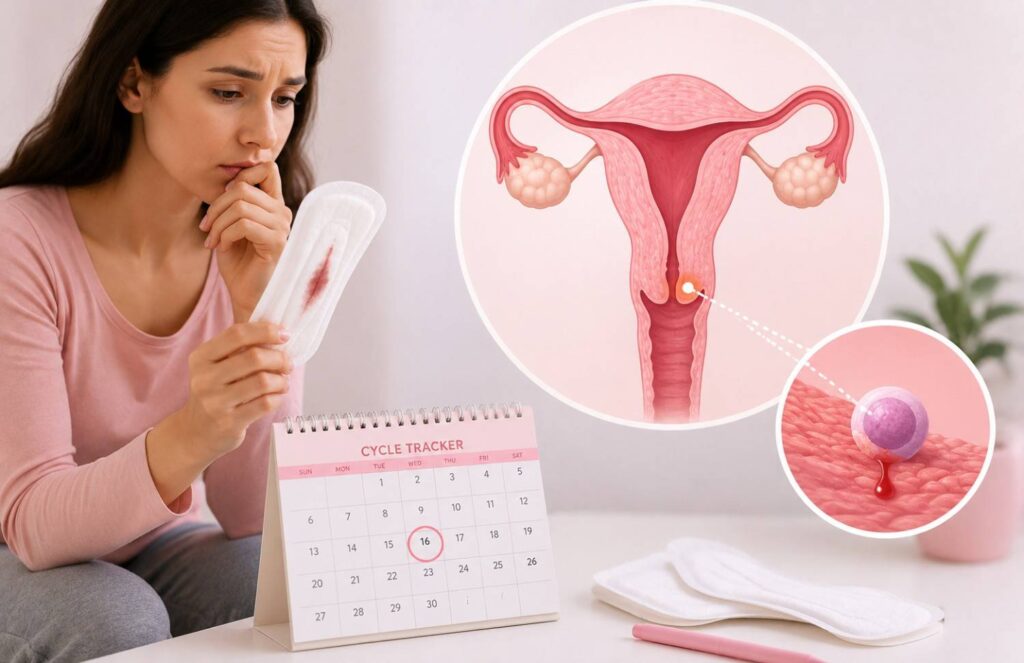
Implantation bleeding is typically lighter than a normal period, lasting one to two days at most, and is often described as pink, light red, or brown rather than the brighter red of a normal period flow. It may be accompanied by mild cramping that is similar to but typically lighter than period cramps. If your spotting between periods occurred around the time your period was expected but was noticeably lighter and briefer than usual, and if you have been sexually active without consistent contraception, a home pregnancy test is the most straightforward next step.
4. Uterine Fibroids and Polyps
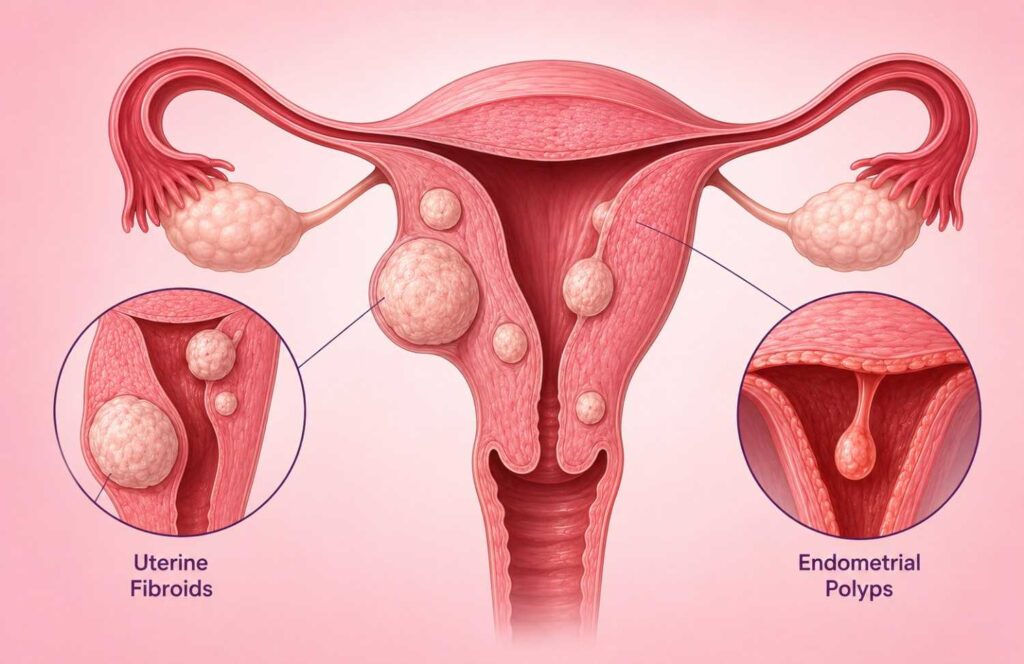
Uterine fibroids and endometrial polyps are among the most common structural causes of spotting between periods in women of reproductive age and into perimenopause. Fibroids are noncancerous muscle growths in or around the uterine wall, and those that grow into the uterine cavity, called submucosal fibroids, are particularly associated with abnormal bleeding including spotting between periods, heavier periods, and prolonged periods. The irregular surface and increased vascularity of fibroid tissue makes it prone to spontaneous bleeding between periods
Endometrial polyps are soft, benign growths from the uterine lining that can cause spotting between periods as they shed tissue or bleed from their surface between menstrual cycles. Polyps are more common in women approaching or in perimenopause, in women with obesity, and in those using tamoxifen for breast cancer treatment. Both fibroids and polyps are typically identified through pelvic ultrasound, and polyps in particular can often be removed during a simple hysteroscopic procedure that resolves the associated spotting.
5. Cervical Issues
The cervix can be a source of spotting between periods through several different mechanisms, and cervical causes of intermenstrual bleeding are important to evaluate because while most are benign, some are not. Cervical ectropion, where cells from inside the cervical canal are present on the outer surface of the cervix, is a common and completely benign condition that makes the cervix more fragile and prone to bleeding from mild trauma including intercourse, a pelvic examination, or even vigorous exercise. The spotting from cervical ectropion is typically light and occurs immediately after the triggering activity.
Cervical polyps are small, benign growths on the cervix that can bleed spontaneously or with minimal stimulation, producing spotting between periods that is light and often brown or pink. Cervicitis, which is inflammation of the cervix from infection or irritation, can also cause spotting between periods alongside unusual discharge and sometimes pelvic discomfort.
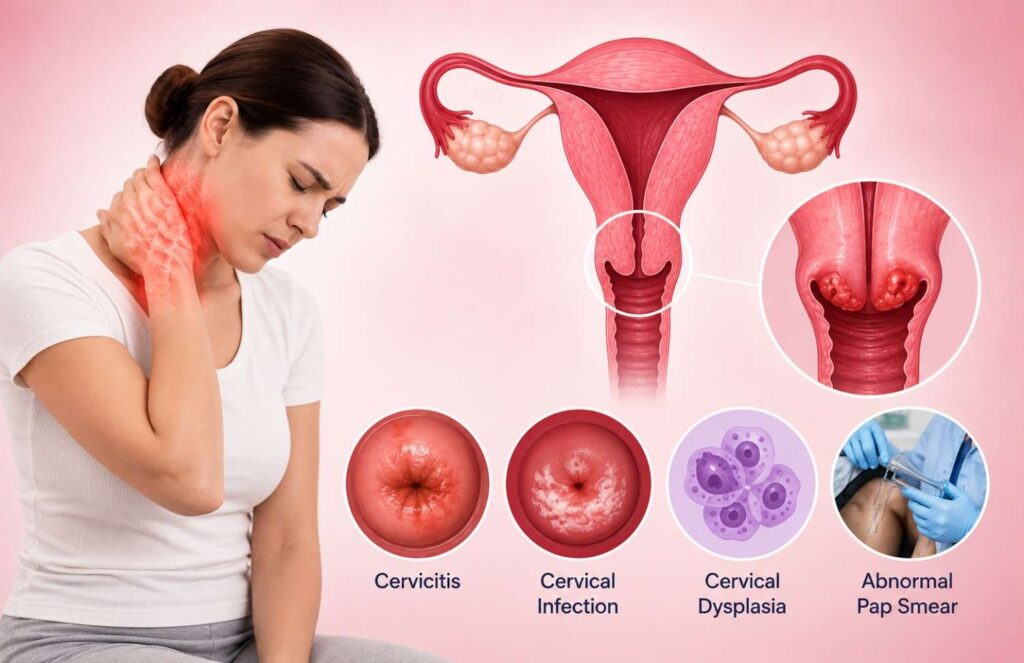
Importantly, cervical cancer can present with spotting between periods, particularly bleeding after intercourse, which is why any persistent, unexplained intermenstrual spotting warrants a pelvic examination and, if you are due for one, a Pap smear and HPV test. Catching cervical abnormalities early through regular screening is one of the most effective preventive health measures available to women.
6. Sexually Transmitted Infections
Certain sexually transmitted infections, particularly chlamydia and gonorrhea, commonly cause cervical and uterine inflammation that produces spotting between periods alongside other symptoms. Chlamydia is the most frequently reported STI in the United States and is often completely asymptomatic, making it easy to miss. When symptoms do occur, they can include unusual vaginal discharge, pelvic pain or discomfort, pain during intercourse, and spotting between periods or after sex.

Untreated chlamydia and gonorrhea can progress to pelvic inflammatory disease, which is a serious infection of the reproductive organs that can cause significant long-term complications including fertility problems and chronic pelvic pain. If your spotting between periods is accompanied by unusual discharge that has changed in color, consistency, or smell, pelvic discomfort, or pain during intercourse, STI testing is an important step regardless of your perceived risk level.
STI testing is quick, non-invasive, and available through your gynecologist, primary care doctor, or local sexual health clinic.
7. Pelvic Inflammatory Disease
Pelvic inflammatory disease, commonly called PID, is an infection of the uterus, fallopian tubes, and surrounding pelvic structures that most commonly results from untreated chlamydia or gonorrhea ascending from the cervix. Spotting between periods is one of the recognized symptoms of PID alongside pelvic pain that may be constant or worsen with movement, fever, unusual vaginal discharge, pain during intercourse, and painful urination.
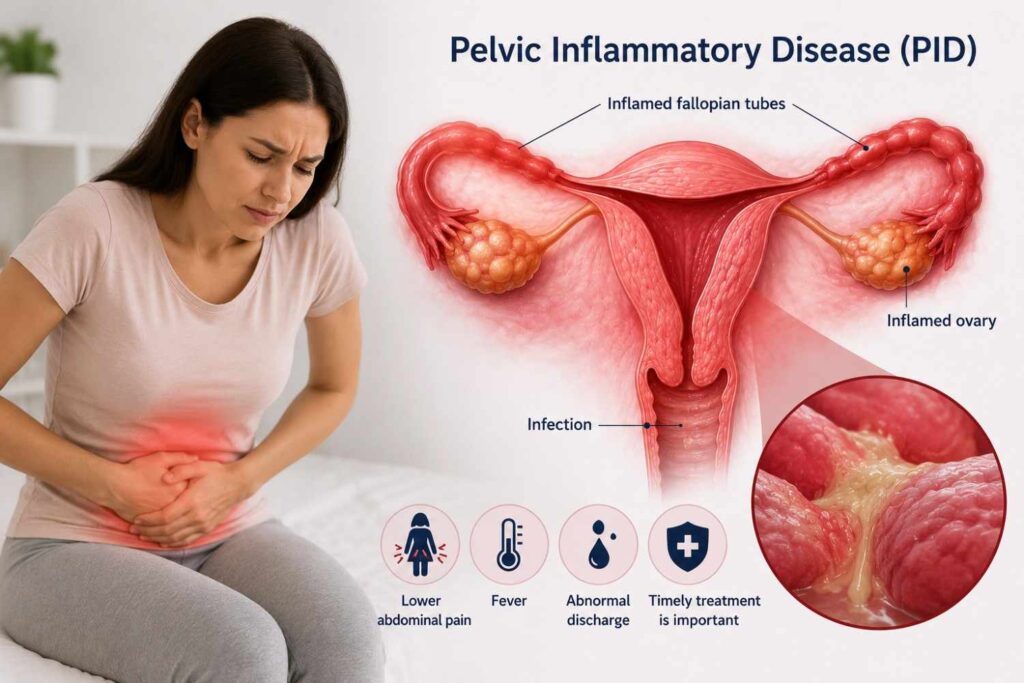
PID is a condition that requires prompt antibiotic treatment to prevent permanent damage to the fallopian tubes that can affect fertility. Delaying treatment significantly increases the risk of complications including ectopic pregnancy, chronic pelvic pain, and tubo-ovarian abscess. If your spotting between periods is accompanied by any pelvic pain, fever, or unusual discharge, seeking same-day medical evaluation rather than waiting to see if symptoms improve is strongly recommended.
8. Thyroid Disorders
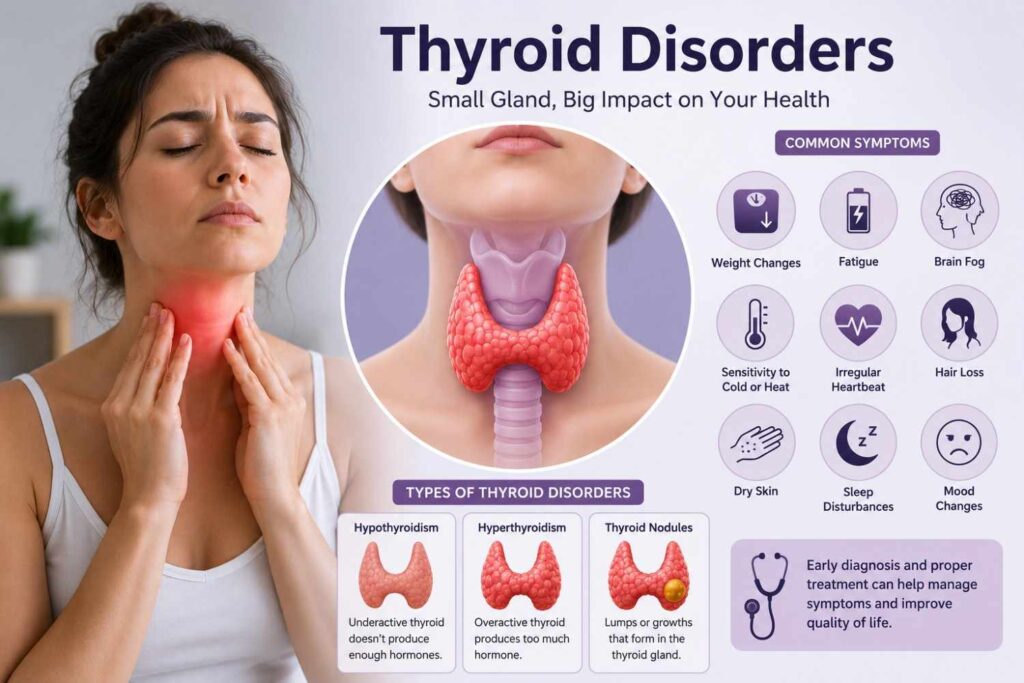
Thyroid dysfunction affects menstrual regularity in multiple ways, and spotting between periods is among the menstrual disturbances that both hypothyroidism and hyperthyroidism can produce. The thyroid hormones play a role in regulating the production of reproductive hormones, and when thyroid function is disrupted, the normal hormonal cycle that governs menstruation can become irregular in ways that produce unexpected bleeding at points in the cycle where it should not occur.
Hypothyroidism is more commonly associated with heavier and more prolonged periods, but it can also cause irregular spotting between periods, particularly as the condition develops and the hormonal dysregulation is still evolving. Women who notice spotting between periods alongside other potential thyroid symptoms including unexplained weight changes, fatigue, temperature sensitivity, hair changes, or mood shifts should ask their doctor to check thyroid function as part of their evaluation.
Shorter Periods Than Usual? Here’s What Your Body May Be Telling You
9. Perimenopause
Women in their late 30s, 40s, and early 50s who notice spotting between periods may be experiencing the early hormonal changes of perimenopause rather than a discrete medical problem. As ovarian function begins to fluctuate and decline in the years before the final menstrual period, estrogen and progesterone production becomes less predictable. Cycles without ovulation become more frequent, and the uterine lining can build up and shed irregularly, producing spotting between periods alongside changes in cycle length and flow.
Perimenopausal spotting between periods is often irregular and unpredictable, which is itself a distinguishing feature from the more pattern-based spotting of ovulation or birth control adjustment. Other signs of perimenopause including hot flashes, night sweats, sleep changes, and mood fluctuations alongside the spotting help confirm that hormonal transition is the likely explanation.
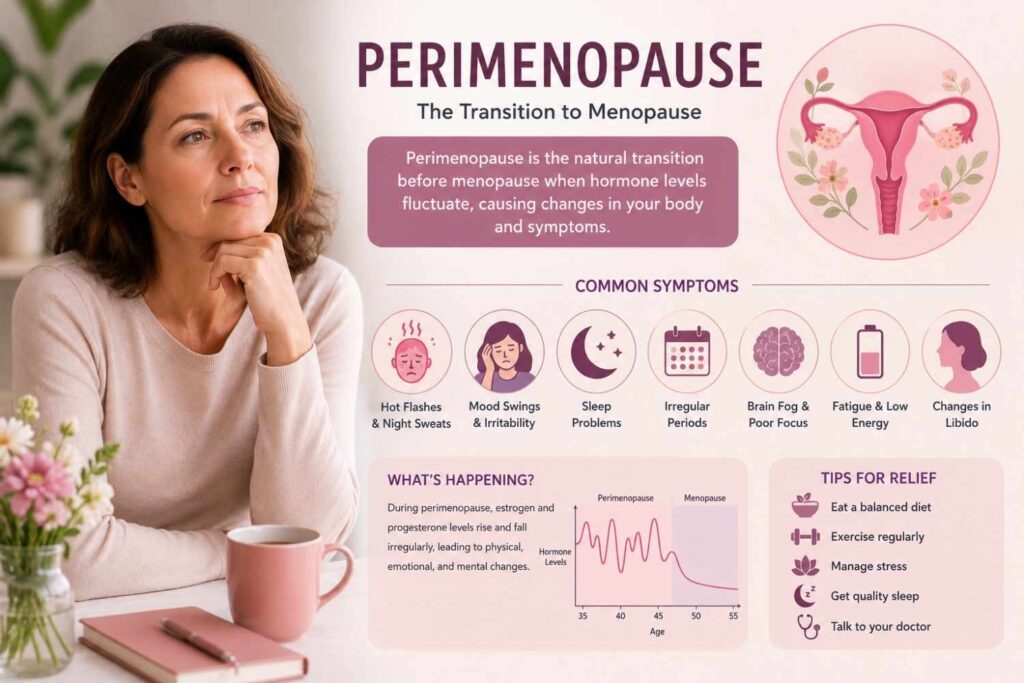
It is important to note that even in perimenopause, new or changed spotting between periods always warrants a gynecological evaluation to rule out structural causes like polyps, fibroids, or endometrial abnormalities before attributing the bleeding to hormonal transition alone.
10. Endometrial Hyperplasia and Cancer
While most causes of spotting between periods are benign, it is important to acknowledge that endometrial hyperplasia, which is an overgrowth of the uterine lining, and in rare cases endometrial cancer can present with irregular or unexpected vaginal bleeding including spotting between periods. Endometrial hyperplasia is most common in women with prolonged exposure to estrogen without adequate progesterone, which occurs in PCOS, obesity, perimenopause, and in women taking estrogen without a progestin.
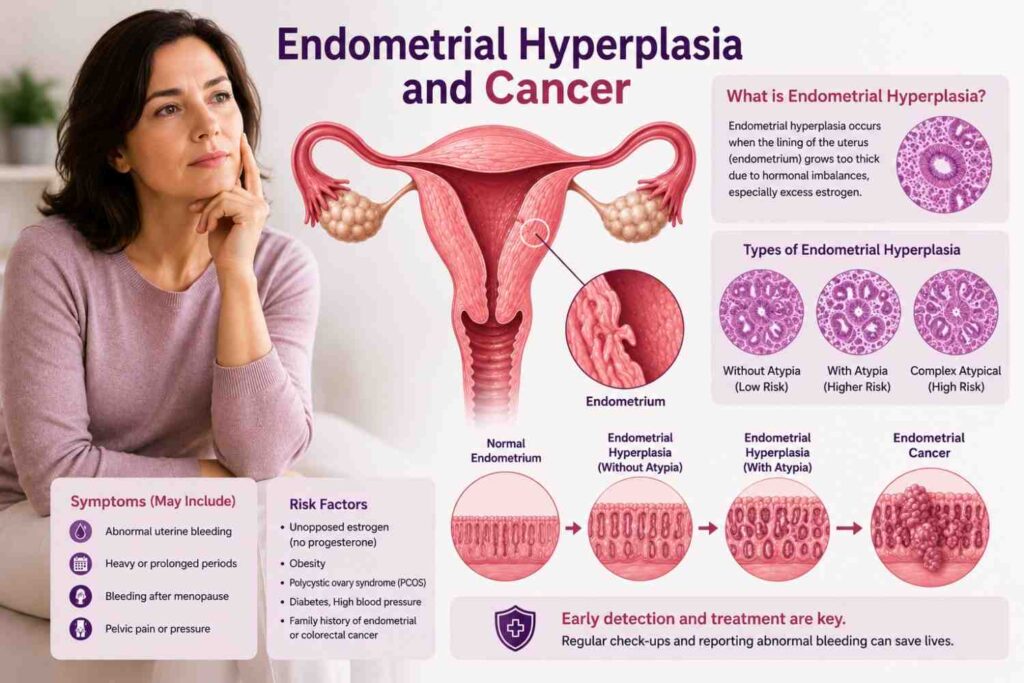
Endometrial cancer is the most common gynecological cancer in American women and most commonly presents as abnormal uterine bleeding in postmenopausal women, though it can occur in premenopausal women as well. Any spotting between periods that is persistent, worsening, or occurring in a postmenopausal woman should be evaluated promptly. Endometrial biopsy and transvaginal ultrasound are the standard diagnostic tools for evaluating the uterine lining when endometrial abnormalities are suspected.
When Should You See a Doctor About Spotting Between Periods?
Occasional very light spotting around ovulation in an otherwise regular cycle is rarely a cause for concern. But there are clear situations where spotting between periods warrants professional evaluation.
See a doctor if your spotting between periods has happened for more than two consecutive cycles without an obvious explanation, if it is accompanied by pelvic pain, fever, unusual discharge, or pain during intercourse, if you are postmenopausal and experiencing any vaginal bleeding at all, if you are pregnant or think you might be, or if the spotting is heavy enough to require a pad or tampon on a day outside of your normal period.
Spotting between periods is your body communicating something. Taking that communication seriously and seeking the right evaluation when it persists is always the right response.