

If your throat has been hurting for a few days and home remedies just are not cutting it, you might be wondering if it is something more than a regular cold. Strep throat is one of the most common bacterial throat infections in the United States, and knowing what it actually looks like can help you decide whether it is time to call your doctor. Unlike a viral sore throat that usually clears up on its own, strep throat is caused by bacteria and often needs proper treatment to avoid complications.
In this article, we will walk through exactly what does strep throat look like, the visual signs to check for at home, the symptoms that usually come along with it, and when you should stop guessing and get tested by a medical professional.
What Does Strep Throat Look Like Inside the Mouth
When people ask what does strep throat look like, they are usually picturing the back of the throat. If you grab a flashlight and look inside your mouth, a strep infected throat typically shows a few clear signs. The tonsils are often swollen and appear bright red, sometimes with white or yellow patches of pus scattered across the surface. The back wall of the throat may look inflamed and irritated, and in some cases you might notice tiny red spots on the roof of the mouth, near the soft palate.
This combination of redness, swelling, and white patches is one of the biggest giveaways that you are not just dealing with a scratchy throat from allergies or dry air. A normal sore throat from a cold usually looks pink and mildly irritated, without the thick white coating that strep throat often produces. If you see those white or yellow spots sitting on swollen tonsils, that is a strong hint that bacteria, not a virus, is behind your discomfort.
Frequent Urination at Night: When It May Be More Than Just Aging
Other Visible Signs of Strep Throat
Beyond the throat itself, strep throat can show up in a few other visible ways. Swollen lymph nodes are extremely common, and you can often feel or even see small, tender lumps on the sides of your neck, just under the jaw. These swollen glands are your body’s way of fighting off the bacterial infection, and pressing on them usually causes noticeable discomfort.
Some people also develop a fine, sandpaper like rash on the chest, neck, or arms, which is linked to a related condition called scarlet fever. This rash feels rough to the touch and can spread across the body within a day or two of the sore throat starting. A bright red tongue with a bumpy texture, sometimes called a strawberry tongue, is another visual clue that is occasionally seen alongside strep throat, especially in children.
Common Symptoms That Come With Strep Throat
While the visual signs matter, strep throat almost always comes with a set of symptoms that show up quickly and feel more intense than a typical cold. Recognizing the full picture makes it easier to know when the sore throat you are dealing with is actually strep.
The most common symptoms include:
- Sudden, severe throat pain that makes swallowing difficult
- A fever, often above 101 degrees Fahrenheit
- Swollen and tender lymph nodes in the neck
- Red and swollen tonsils, sometimes with white patches
- Tiny red spots on the roof of the mouth
- Headache and general body aches
- Nausea or stomach pain, more common in children
- Loss of appetite
One important thing to note is that strep throat rarely comes with a runny nose, cough, or congestion. If you have those symptoms along with your sore throat, it is more likely a viral infection rather than strep. This distinction is one of the easiest ways doctors use to tell the two apart before even running a test.
Strep Throat in Children Versus Adults
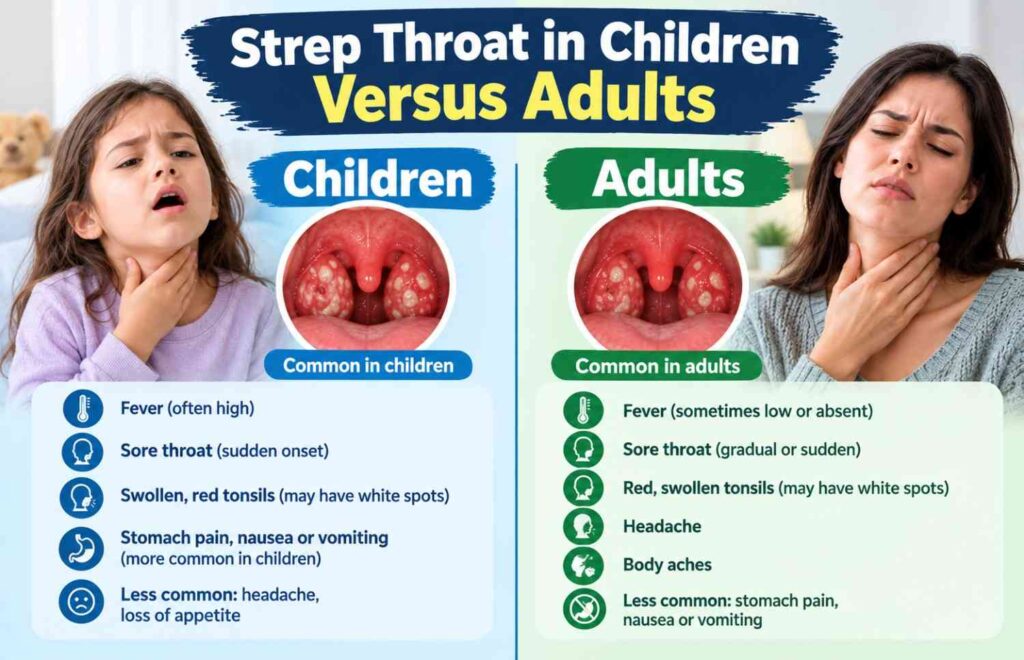
Strep throat looks slightly different depending on age. In children, it often comes on suddenly and can include stomach pain, vomiting, and a general feeling of being unwell, sometimes without a very high fever at first. Kids may also be more likely to develop the sandpaper rash associated with scarlet fever, and parents often notice their child refusing to eat or drink because swallowing is so painful.
In adults, strep throat symptoms tend to center more heavily around the throat itself, with intense pain, difficulty swallowing, and swollen glands being the most noticeable signs. Fatigue and body aches are also common, and some adults mistake the illness for a bad cold or flu until the throat pain becomes severe enough to seek medical attention. Either way, the underlying signs, red and swollen tonsils with white patches, remain the most reliable visual clue across all age groups.
What Strep Throat Does Not Look Like
It helps to know what strep throat usually does not include, since this can prevent unnecessary worry or, on the flip side, help you take a real case more seriously. Strep throat typically does not cause a runny nose, sneezing, or watery eyes, which are classic signs of a viral cold or allergies. It also rarely causes a persistent cough, since strep is a bacterial infection localized mostly in the throat and tonsils rather than the sinuses or lungs.
If your main symptoms are congestion, sneezing, and a mild scratchy throat that slowly improves over a few days, you are likely dealing with a common cold rather than strep. Strep throat tends to hit harder and faster, with pain that feels sharp and swallowing that becomes genuinely difficult within a day or two of the first symptoms appearing.
Frequent Urination at Night: When It May Be More Than Just Aging
When to See a Doctor
Because strep throat is caused by bacteria, it will not go away on its own the way many viral infections do, and leaving it untreated can lead to complications. You should see a doctor if you notice red, swollen tonsils with white or yellow patches, especially when paired with a sudden fever and painful swallowing. Swollen lymph nodes in the neck that are tender to the touch are another strong reason to get checked out.
It is especially important to seek care quickly if the sore throat is severe enough to make swallowing food or liquids difficult, if a fever rises above 101 degrees Fahrenheit, or if you notice the sandpaper like rash associated with scarlet fever. Left untreated, strep throat can sometimes lead to more serious complications such as rheumatic fever or kidney inflammation, so getting a proper diagnosis matters more than trying to wait it out.
How Doctors Diagnose Strep Throat
Since strep throat can sometimes resemble other throat infections, doctors do not rely on appearance alone. A rapid strep test is usually the first step, where a swab is used to collect a sample from the back of the throat and tonsils. Results often come back within fifteen minutes, giving a quick answer on whether bacteria are present.
If the rapid test comes back negative but strep is still suspected based on symptoms, doctors may send a throat culture to a lab for a more thorough check, since rapid tests can occasionally miss an active infection. This two step approach helps ensure that people are not given antibiotics unnecessarily, while also making sure a real bacterial infection does not go untreated.
Treatment Options for Strep Throat
Strep throat is treated with antibiotics, which are prescribed by a doctor after a positive test result. Taking the full course of antibiotics as directed is important, even if symptoms start improving after just a couple of days, since stopping early can allow the infection to return or lead to resistance issues down the line.
Alongside antibiotics, plenty of rest and fluids help the body recover more comfortably. Warm liquids like tea with honey, as well as cold options like ice pops, can soothe throat pain. Over the counter pain relievers such as acetaminophen or ibuprofen can help manage fever and discomfort, and gargling warm salt water a few times a day may also ease some of the soreness while the antibiotics take effect.
Most people start feeling noticeably better within 24 to 48 hours of starting antibiotics, and are generally no longer contagious after about a day of treatment, though it is still smart to avoid close contact with others during that early window.
How Strep Throat Spreads
Strep throat spreads through respiratory droplets, which means coughing, sneezing, or even close talking can pass the bacteria from one person to another. It can also spread through shared food, drinks, or utensils, which is part of why it moves quickly through households, classrooms, and daycare settings.
Washing hands frequently, avoiding shared cups or utensils, and covering coughs and sneezes are simple habits that go a long way in reducing the spread. If someone in your home has been diagnosed with strep throat, it is a good idea to avoid close contact and disinfect commonly touched surfaces until they have been on antibiotics for at least 24 hours.
Frequent Urination at Night: When It May Be More Than Just Aging
Final Thoughts
So, what does strep throat look like in the end? The clearest signs are red, swollen tonsils covered in white or yellow patches, tiny red spots on the roof of the mouth, and tender swollen glands in the neck, often paired with a sudden fever and painful swallowing. Unlike a typical cold, strep throat usually skips the runny nose and cough, hitting the throat hard and fast instead.
If you notice these signs in yourself or your child, it is worth getting a proper test rather than guessing, since a quick visit to the doctor can confirm the diagnosis and get treatment started before things get worse. With the right antibiotics and a little rest, most people start feeling like themselves again within just a couple of days.