

You wake up in the middle of the night and your hand feels completely dead. You shake it, squeeze it, wait for the pins and needles to pass, and eventually fall back asleep. Then it happens again. If your hands go numb while sleeping on a regular basis, you already know how annoying and sometimes alarming it can feel. The good news is that in most cases, hands going numb while sleeping has a clear, identifiable cause and a straightforward fix.
The less good news is that occasionally, hands go numb while sleeping because of something that genuinely needs medical attention. Knowing the difference between the two is what this guide is all about.
Here are nine of the most common hidden reasons your hands go numb while sleeping and what each one means for your health.
1. You Are Sleeping on Your Arm or Hand

This is the most common reason hands go numb while sleeping, and it is also the most harmless. When you sleep on your arm or with your hand tucked under your body or pillow, you compress the nerves and blood vessels that run through your arm. Cut off the blood supply and nerve signaling long enough and you get that classic dead, tingly, numb feeling that most people have experienced at least once.
The technical term for this is Saturday night palsy when it involves the radial nerve, but the same principle applies to any position that puts sustained pressure on a nerve or blood vessel in your arm or hand. The fix is usually as simple as changing your sleep position. Sleeping on your back with your arms at your sides rather than tucked under your body reduces the chances of hands falling asleep significantly.
2. Carpal Tunnel Syndrome

Carpal tunnel syndrome is one of the leading medical causes of hands going numb while sleeping, and it affects millions of Americans. The carpal tunnel is a narrow passageway in your wrist through which the median nerve passes. When that tunnel becomes inflamed or compressed, the median nerve gets squeezed and sends numbness, tingling, and sometimes pain into the thumb, index finger, middle finger, and half of the ring finger.
Carpal tunnel symptoms are almost always worse at night. During the day, movement keeps fluid from pooling in the wrist. When you sleep, your wrist stays still, often in a bent position, which increases pressure on the median nerve and causes hands falling asleep and tingling that can wake you up multiple times a night.
People who do repetitive hand and wrist work, type for long hours, or use vibrating tools are at higher risk. A wrist splint worn at night to keep the wrist in a neutral position is often the first and most effective treatment for nighttime carpal tunnel symptoms. If the numbness is severe or persistent, a doctor can confirm the diagnosis and discuss additional options.
3. Poor Sleeping Posture
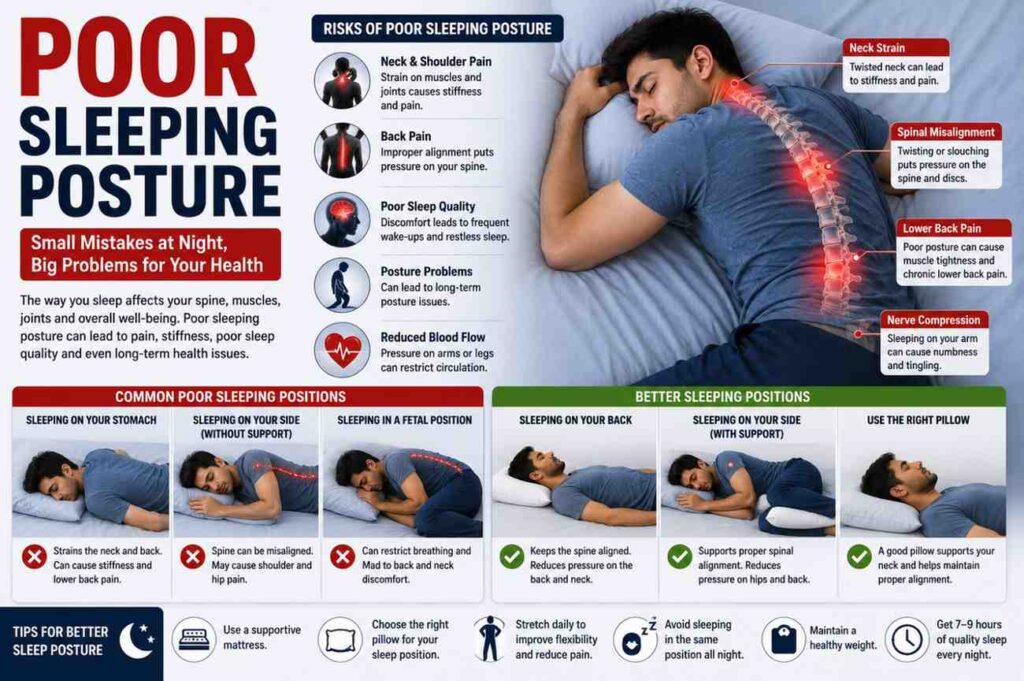
Beyond sleeping directly on your arm, your overall sleep posture has a bigger impact on whether your hands go numb while sleeping than most people realize. Sleeping with your neck bent at an awkward angle, hunching your shoulders forward, or curling into a tight fetal position can all put indirect pressure on the nerves that travel from your neck and shoulder down into your hands.
The brachial plexus is a network of nerves that originates in your neck and controls sensation and movement in your arms and hands. Any sleep position that compresses or stretches these nerves can cause hands falling asleep, tingling, and numbness that feels like it is coming from the hand but is actually originating much higher up in the shoulder or neck.
Side sleepers are particularly prone to this. If you sleep on your side and your hands go numb while sleeping, try placing a pillow between your knees to align your hips and reduce the compensatory tension that travels up through your shoulder and into your arm.
4. Thoracic Outlet Syndrome

Thoracic outlet syndrome is a condition most people have never heard of, but it is a surprisingly common cause of hands going numb while sleeping, especially in people who have tight chest muscles, poor posture, or a history of neck or shoulder injury. The thoracic outlet is the space between your collarbone and first rib through which nerves and blood vessels pass on their way to your arm.
When this space becomes compressed, either from muscle tightness, an extra rib, or poor posture, it can cause numbness, tingling, and hands falling asleep, particularly at night when you are lying still in a position that narrows that space further. The numbness from thoracic outlet syndrome often affects the pinky and ring finger side of the hand, which distinguishes it somewhat from carpal tunnel syndrome.
If your hands go numb while sleeping and you also notice aching in your neck, shoulder, or arm during the day, thoracic outlet syndrome is worth discussing with a healthcare provider.
5. Cervical Nerve Compression

Your spine is home to the nerves that control sensation throughout your entire body, including your hands. When one or more of the cervical vertebrae in your neck compress a nerve root, either through a herniated disc, bone spur, or degenerative changes, that nerve compression can cause hands going numb while sleeping as well as during waking hours.
Cervical nerve compression tends to cause numbness in a specific pattern depending on which nerve is affected. Compression at certain levels affects the thumb and index finger while compression at others causes numbness in the pinky and ring finger. If your hands go numb while sleeping and you also experience neck pain, stiffness, or pain that radiates down your arm, cervical nerve compression is a likely contributor.
This is one cause of hands falling asleep at night that genuinely warrants a medical evaluation, particularly if the numbness is getting progressively worse or is accompanied by weakness in your hand or arm.
6. Diabetes and Peripheral Neuropathy

Diabetes is one of the most significant risk factors for peripheral neuropathy, a condition where the peripheral nerves that carry sensation to the hands and feet become damaged over time from chronically elevated blood sugar. One of the hallmark symptoms of peripheral neuropathy is numbness, tingling, and burning in the hands and feet, and these symptoms are often worse at night.
If you have diabetes or prediabetes and your hands go numb while sleeping regularly, peripheral neuropathy may be the reason. Unlike positional numbness that resolves quickly when you move your arm, neuropathic numbness tends to be more persistent, may affect both hands simultaneously, and often comes with a burning or electric sensation alongside the numbness.
Managing blood sugar effectively is the most important intervention for slowing the progression of diabetic neuropathy. If you suspect this is why your hands go numb while sleeping, talk to your doctor about having your blood sugar and A1C levels checked.
7. Vitamin B12 Deficiency

Vitamin B12 plays a critical role in maintaining the myelin sheath, the protective coating around your nerve fibers that allows them to transmit signals efficiently. When B12 levels drop too low, nerve function deteriorates and one of the earliest symptoms is numbness and tingling in the hands and feet, which is often most noticeable at night.
B12 deficiency is more common than most people realize, particularly in older adults, vegetarians and vegans, people who take metformin for diabetes, and anyone who has had gastrointestinal surgery. The numbness from B12 deficiency tends to be bilateral, meaning it affects both hands, and it may be accompanied by fatigue, brain fog, and mood changes.
If your hands go numb while sleeping and you fall into any of these risk categories, a simple blood test can check your B12 levels. Supplementation or B12 injections can reverse the deficiency and in many cases significantly reduce the numbness over time.
8. Hypothyroidism
An underactive thyroid, known as hypothyroidism, is another frequently overlooked reason hands go numb while sleeping. When your thyroid is not producing enough hormone, it causes fluid retention throughout the body, including in the tissues surrounding the carpal tunnel in your wrist. This fluid buildup compresses the median nerve in much the same way that primary carpal tunnel syndrome does, leading to hands falling asleep and tingling at night.
People with hypothyroidism often develop what looks like carpal tunnel syndrome but does not respond well to standard carpal tunnel treatments because the underlying cause is hormonal rather than mechanical. Other symptoms of hypothyroidism include persistent fatigue, feeling cold all the time, unexplained weight gain, dry skin, and hair thinning.
If your hands go numb while sleeping and you have other symptoms that suggest hypothyroidism, ask your doctor to check your thyroid function with a TSH blood test. Treating the thyroid condition often resolves the associated hand numbness without any additional intervention.
9. Poor Circulation and Raynaud’s Phenomenon
Poor circulation is a general contributor to hands going numb while sleeping, but Raynaud’s phenomenon is a specific circulatory condition worth knowing about. In Raynaud’s, the small blood vessels in the fingers overreact to cold temperatures or stress by constricting dramatically, which cuts off blood flow and causes fingers to turn white, then blue, then red as circulation returns.
Raynaud’s episodes can happen during sleep if the bedroom is cold or if your hands are exposed to cool air. The resulting numbness, color change, and tingling as blood flow returns is distinctive and different from the pressure-related numbness most people experience. Raynaud’s is much more common in women and in people who live in colder climates.
If your hands go numb while sleeping and you notice color changes in your fingers alongside the numbness, keeping your hands warm with gloves in cool environments and maintaining a warmer bedroom temperature are the most effective first steps.
When Should You See a Doctor?
Occasional hand numbness that goes away when you change position is almost always harmless and positional. But there are specific situations where hands going numb while sleeping warrants a medical evaluation rather than a wait and see approach.
See a doctor if the numbness is getting progressively worse over weeks or months, if it affects both hands simultaneously without an obvious positional cause, if it is accompanied by weakness or clumsiness in your hand, if you notice muscle wasting in your hand or fingers, or if the numbness persists for a long time after you wake up and change position. These signs suggest the cause may be neurological, metabolic, or vascular and needs proper diagnosis.
For most people though, hands falling asleep at night comes down to sleep position, wrist position, or a condition like carpal tunnel syndrome that responds well to simple interventions. Start with a wrist splint if the numbness follows a carpal tunnel pattern, adjust your sleep position, and pay attention to whether any of the risk factors in this guide apply to you.
Your hands going numb while sleeping is a signal. Listen to it, understand what it is telling you, and take the right steps to address it.