
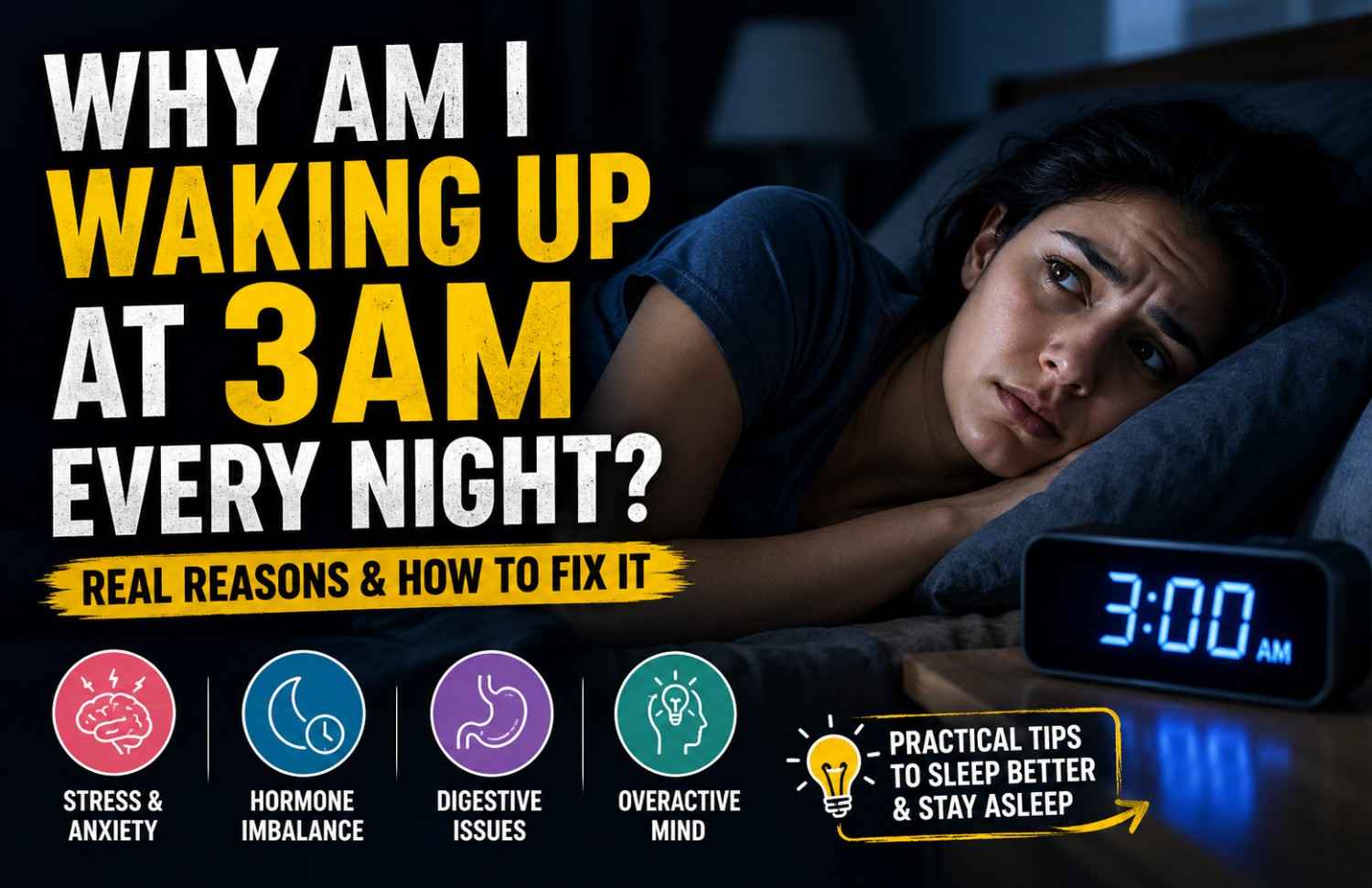
Waking up in the middle of the night at the exact same time has become one of the most commonly searched health questions across the United States. People describe it the same way every single time they fall asleep just fine, but something pulls them out of sleep in the early morning hours and then they lie there staring at the ceiling with their thoughts already racing at full speed. It feels disorienting, frustrating, and after a few weeks of it, genuinely exhausting.
The good news is that this pattern is almost always fixable once you understand what is actually happening inside your body. And no, it is not random. There are very specific reasons why 3 AM is such a common wakeup time, and most of them come down to your hormones, your nervous system, and a handful of daily habits that are quietly working against you while you sleep.
Why 3 AM Specifically? It Is Not a Coincidence

Your body runs on a 24-hour internal clock called the circadian rhythm, and around 3 AM, something very deliberate happens beneath the surface. Your adrenal glands begin releasing cortisol, which is your body’s primary alertness hormone, because your system is already beginning to prepare for the day ahead. In a healthy person with low stress levels, this cortisol rise is gradual and gentle. You barely notice it, and you drift right back into deep sleep without ever being aware it happened.
But if your stress levels are elevated, your cortisol is already running higher than it should be, and that early morning hormonal spike hits you like a switch being flipped. One moment you are asleep, and the next you are wide awake with your heart beating a little faster than it should and your mind already spinning through everything you need to do tomorrow. This is also the point in the night when sleep naturally shifts from deep, restorative stages into lighter REM sleep. Those lighter stages make you far more vulnerable to being pulled fully awake by any internal signal your body sends out.
Your Blood Sugar Is Crashing and Waking You Up
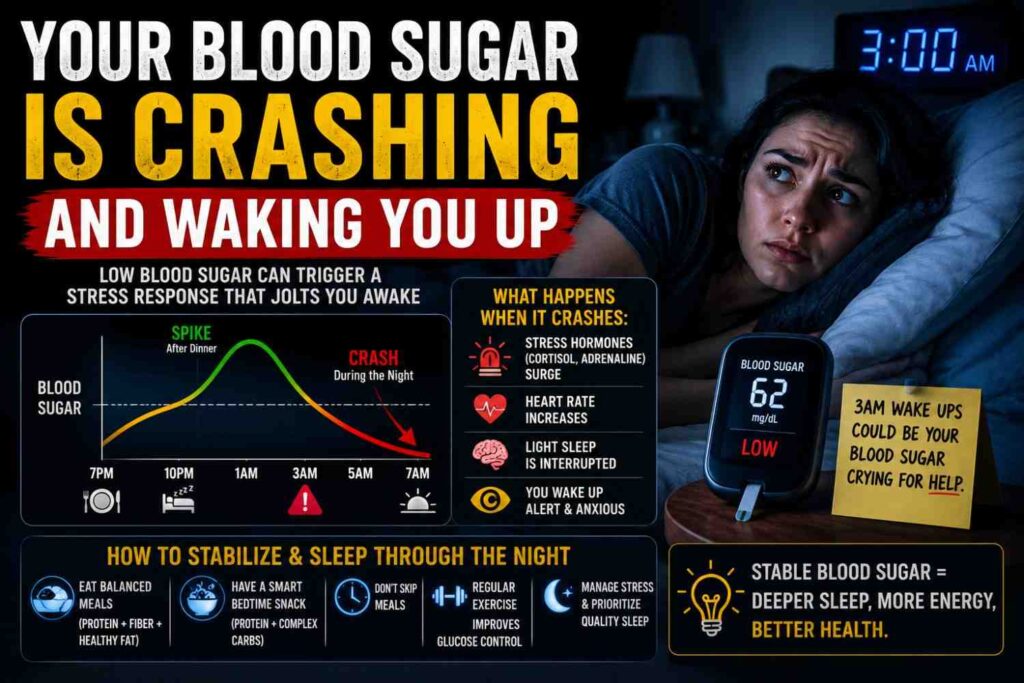
This is one of the most overlooked causes of middle-of-the-night waking, and it affects a surprisingly large number of Americans who have no idea it is happening. When you eat a high-carbohydrate dinner or have a sugary snack close to bedtime, your blood sugar spikes before you fall asleep and then drops steeply during the night as your body processes it. When that drop goes too low, your body treats it as an emergency. It releases a surge of adrenaline, cortisol, and other stress hormones to bring blood sugar back up to a safe level, and that hormonal rush is more than enough to wake you from sleep.
If you often find yourself waking at 3 AM feeling anxious with your heart pounding, sometimes with a strange urge to eat something even though you are not truly hungry, blood sugar instability is very likely playing a major role. People who have insulin resistance or early-stage blood sugar issues experience this most intensely, but it can happen to anyone who eats the wrong combination of foods too close to bedtime. The fix is simpler than most people expect — finishing your last meal at least two to three hours before bed and choosing protein or healthy fats for any evening snack rather than carbohydrates can make a noticeable difference within just a few nights.
Stress and Anxiety Are Running the Show While You Sleep
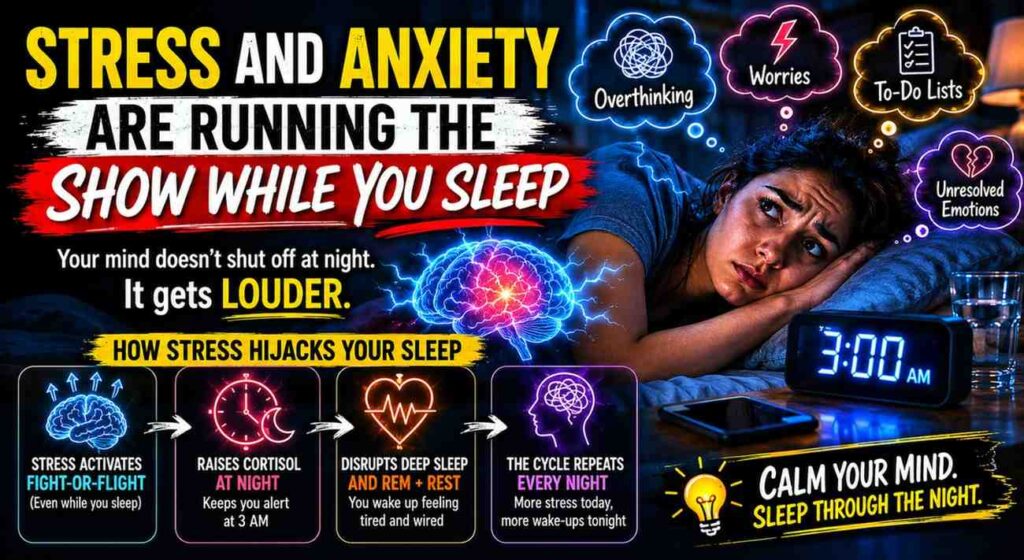
Stress does not take a break just because you fell asleep. When you are carrying a heavy mental load, your nervous system stays in a low-level state of alert all night long. It never fully lets its guard down. The natural cortisol rise your body produces around 3 AM is enough to push an already-stressed nervous system right over the threshold into full wakefulness, and once you are awake, your anxious mind immediately picks up where it left off hours earlier.
The darkness and silence of 3 AM has a particular way of making every worry feel more urgent and more serious than it actually is. Problems that seem manageable during a busy day become enormous when you are lying alone in a dark room with nothing to distract you from your own thoughts. This is not a character flaw or a sign of weakness. It is simply what anxiety does when the usual noise of daily life goes completely quiet and there is nothing left to occupy your mind except the things that have been troubling you.
Managing stress during the daylight hours is genuinely one of the most powerful things you can do for your sleep quality at night. People who exercise regularly, who have some form of outlet for processing their thoughts — whether that is journaling, talking to someone, meditating, or even just taking a proper walk — tend to sleep through the early morning hours much more reliably than those who carry the full weight of their day directly into bed with them.
What Alcohol Is Really Doing to Your Sleep
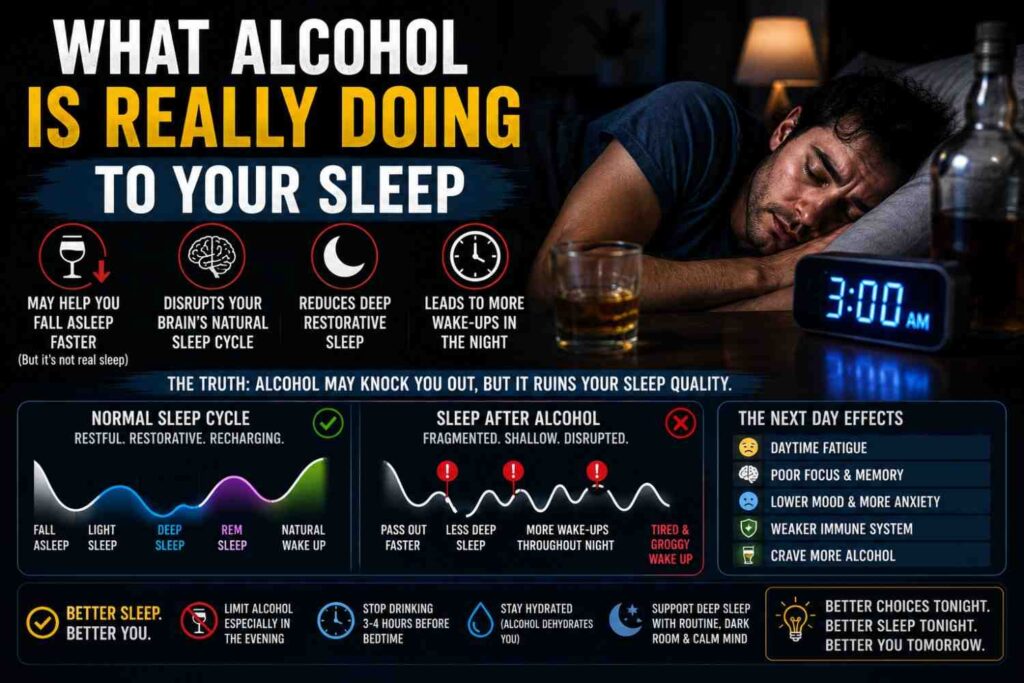
A lot of Americans have a drink or two in the evening to wind down after a long day, and many of them notice they fall asleep easily but wake up a few hours later feeling restless, uncomfortable, and unable to get back to sleep. This is not a coincidence and it is not in their heads. Alcohol is metabolized by your liver over the course of several hours, and as your body processes it during the night, your sleep transitions from deeper stages into lighter and much more fragmented sleep. By 3 AM, the sedative effect of the alcohol has completely worn off, and your body is dealing with a kind of rebound state that makes real rest almost impossible.
Even two drinks in the evening can significantly disrupt the second half of your night. You might sleep through the first four hours without any trouble at all, but your REM sleep gets suppressed and the quality of what you are getting is far lower than it appears. Many people who reduce or eliminate evening alcohol report that their 3 AM wakeups disappear within just one to two weeks, which tells you a great deal about how much impact this single habit can have on your sleep architecture.
The Role of Magnesium and Why So Many Americans Are Deficient
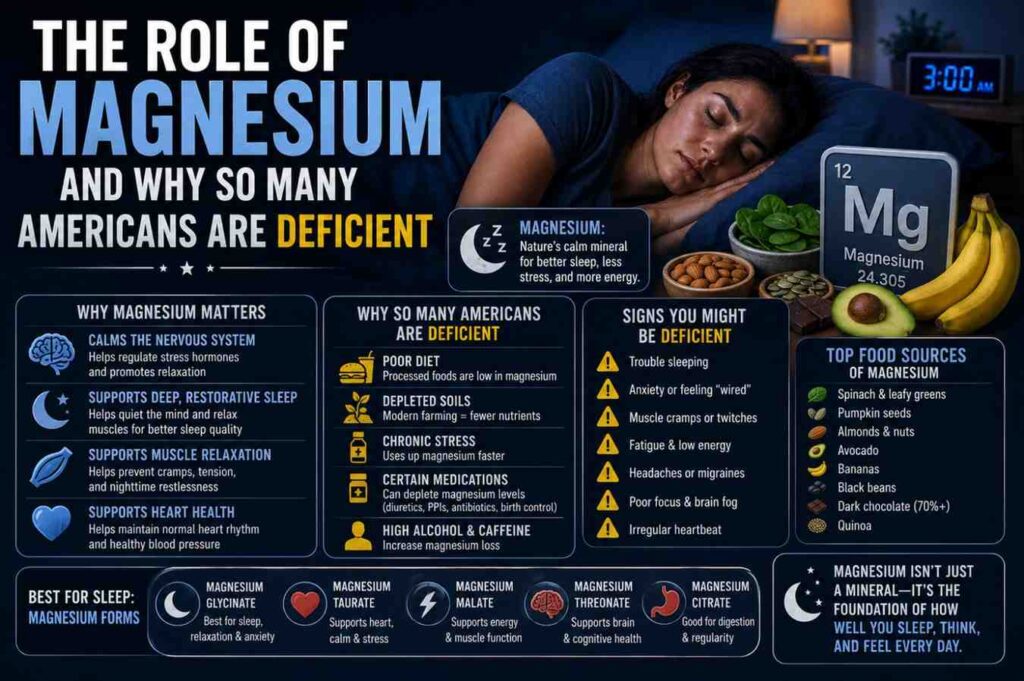
Magnesium is a mineral that plays a direct role in regulating your nervous system and helping your body produce the melatonin it needs to stay asleep. Studies have consistently shown that a large percentage of Americans do not get enough magnesium through their diet alone, and low magnesium levels are closely associated with poor sleep quality, increased nighttime awakenings, and difficulty falling back asleep once woken. Many people have never had their magnesium levels checked and have no idea that a simple deficiency could be contributing to months or even years of broken sleep.
Magnesium glycinate in particular has become one of the most widely discussed sleep supplements in the country, and the research supporting it is genuinely promising. Taking it about an hour before bed has helped a significant number of people reduce middle-of-the-night wakeups noticeably, often within the first couple of weeks. It is always worth discussing any new supplement with your doctor first, but magnesium glycinate has a strong safety profile and is considered one of the most well-absorbed forms available. Foods rich in magnesium include dark leafy greens, pumpkin seeds, black beans, and dark chocolate, so adjusting your diet is another route worth considering alongside any supplementation.
When It Might Be a Sleep Disorder
Sleep apnea is far more common than most people realize, and it frequently goes undiagnosed for years. If you have sleep apnea, your airway partially closes during sleep, your breathing becomes shallow or briefly stops, and your brain wakes you up just enough to restore normal breathing before you drift off again. This can happen dozens of times per night without you having any conscious awareness that it is occurring. Many people with sleep apnea only notice that they feel exhausted no matter how much time they spend in bed, that they wake up with headaches, or that their partner has mentioned loud snoring or pauses in their breathing during the night.
Restless leg syndrome is another condition that tends to peak during the early morning hours, creating uncomfortable sensations in the legs that make sustained sleep very difficult. If you consistently wake up with an urgent need to move your legs or feel a crawling, tingling discomfort that does not go away until you get up and walk around, this is something worth raising with a healthcare provider rather than trying to manage on your own.
What You Should Actually Do When You Wake Up
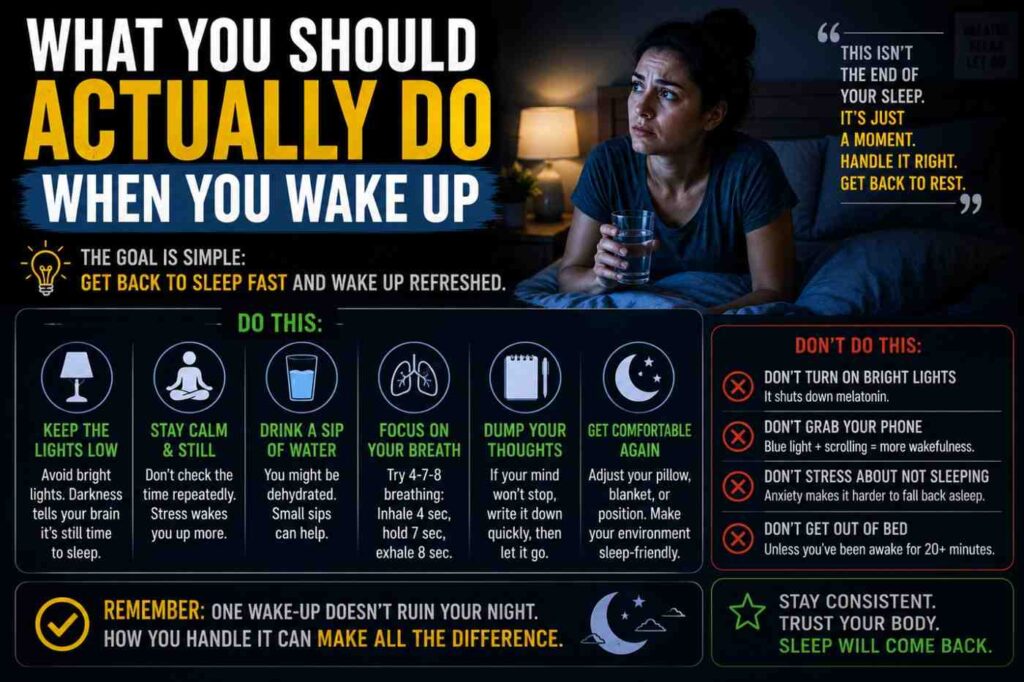
The most important thing to understand is that lying in bed getting frustrated and watching the minutes tick by almost never works in your favor. When you toss and turn and stare at the ceiling, your brain gradually begins associating your bed with the feeling of being awake and anxious. Over time this makes the whole problem significantly worse. Sleep specialists consistently recommend getting out of bed if you have been awake for more than about 20 minutes and do not feel like sleep is coming back soon.
Going to another room, keeping the lights low, and doing something genuinely calming tends to work far better than forcing yourself to stay horizontal and fight sleep. Reading a physical book works well for many people. Gentle stretching, slow breathing exercises, or simply sitting quietly in a comfortable chair without looking at your phone can help your nervous system settle back down into a calmer state. When you start feeling genuinely sleepy again, return to bed. This approach sounds counterintuitive when you are desperate to sleep, but it is one of the most consistently supported strategies in sleep medicine and forms the basis of a treatment called cognitive behavioral therapy for insomnia, which has a stronger track record than sleeping pills for long-term results.
Your room environment also deserves a serious look. Sleep researchers consistently identify 65 to 68 degrees Fahrenheit as the optimal bedroom temperature for most adults, and anything significantly warmer than that makes lighter, more disrupted sleep far more likely. Blackout curtains to eliminate early morning light, a white noise machine or fan if noise is a factor, and keeping your phone out of reach so you are not tempted to check it when you wake are all changes that cost very little but tend to deliver noticeable results over time.
When to See a Doctor
Occasional 3 AM wakeups are a normal part of being human, particularly during stressful stretches of life. But if this pattern has been going on for more than a few weeks, if you consistently wake up gasping or with your heart pounding uncomfortably, if someone who shares your bed has mentioned that you stop breathing or snore loudly during sleep, or if you feel genuinely unrefreshed and exhausted no matter how long you spend in bed, those are signals that go beyond what a lifestyle adjustment alone can fix.
A primary care physician can help you determine whether stress, a medication side effect, or an underlying condition is driving the problem. Sleep studies have become far more accessible in recent years, and many can now be completed at home without spending a night in a clinic. Getting a proper evaluation is almost always faster than spending months trying to troubleshoot something blind, and the right diagnosis changes everything when it comes to actually treating the root cause rather than just managing the symptoms.
People Also Ask
Is waking up at 3 AM a sign of anxiety?
It can be. Anxiety keeps your nervous system in a heightened state even during sleep, and the natural cortisol rise that happens around 3 AM can be enough to pull anxious people fully awake. If you consistently wake with racing thoughts, a pounding heart, or a strong sense of unease, anxiety is a very likely contributor. Managing daytime stress through exercise, mindfulness, or therapy is one of the most effective long-term approaches for this pattern.
Can what I eat before bed cause me to wake up at night?
Yes, absolutely. High-carbohydrate meals and sugary snacks eaten close to bedtime cause blood sugar to spike and then crash overnight. When blood sugar drops too low, your body releases stress hormones to correct it, and those hormones are strong enough to wake you from sleep. Finishing meals at least two to three hours before bed and choosing protein or healthy fat for any evening snack can make a significant difference for many people.
Why do I wake up at 3 AM and cannot get back to sleep?
By 3 AM most adults have completed their deep sleep phases and are cycling through lighter REM sleep, which makes waking much easier and returning to sleep harder. Once awake, elevated cortisol, anxious thoughts, or physical discomfort can sustain that wakefulness for a long time. Getting out of bed after 20 minutes and doing something calming before returning tends to work better than lying in bed waiting and hoping sleep returns on its own.
Could waking at 3 AM every night be a sign of something serious?
For most people it is not serious and is linked to stress, diet, alcohol, or sleep environment — all of which are addressable. However, if waking is accompanied by gasping, pauses in breathing, chest discomfort, or persistent daytime exhaustion despite adequate time in bed, those symptoms are worth discussing with a doctor to rule out sleep apnea or another underlying condition.