
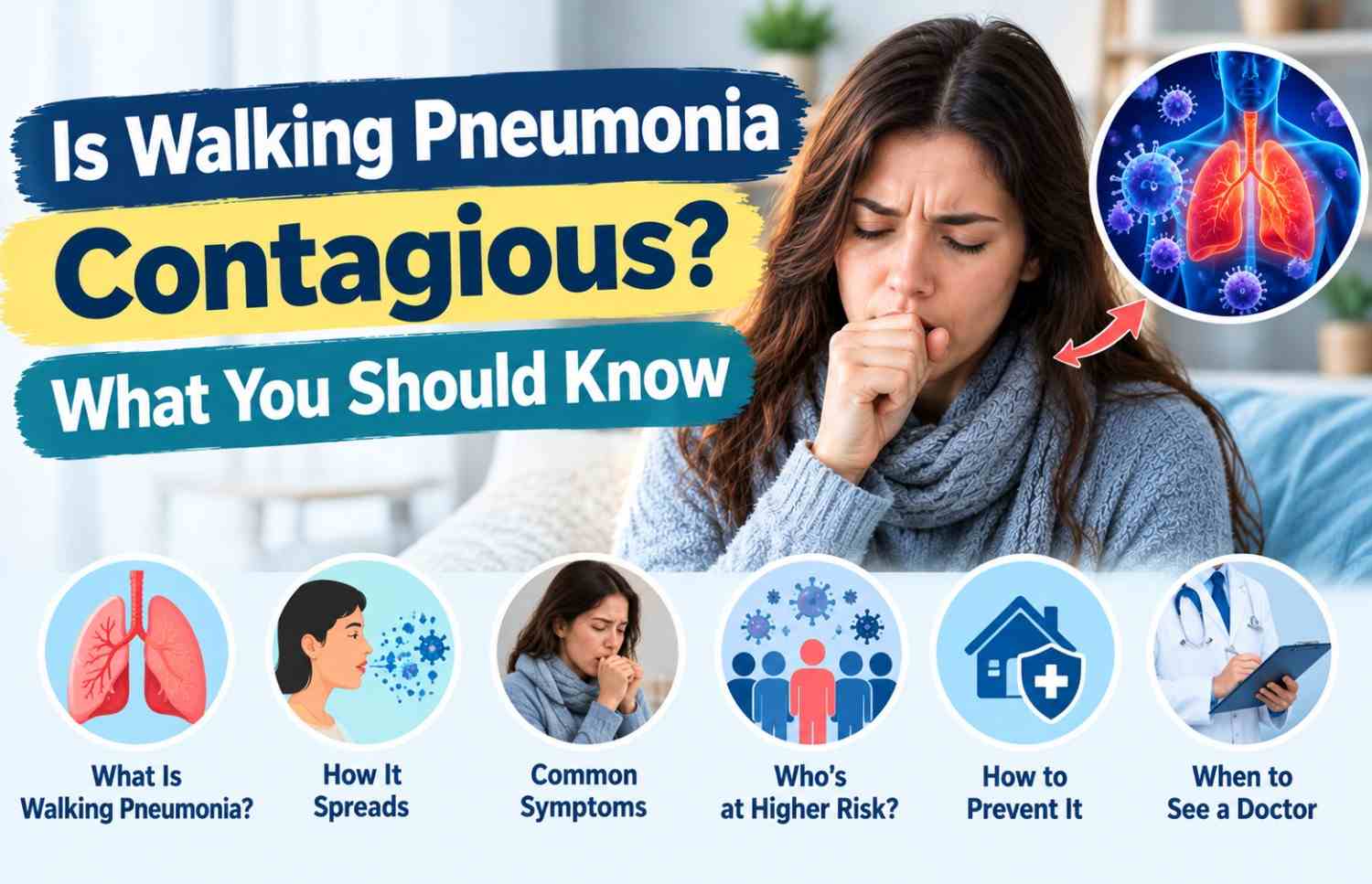
You have been coughing for two weeks. You feel tired, but not sick enough to stay in bed. Then your doctor says the words walking pneumonia, and suddenly you start thinking about your kids, your coworkers, and everyone you hugged this week. The first question almost everyone asks is a simple one: is walking pneumonia contagious?
The short answer is yes. Walking pneumonia spreads from person to person through tiny droplets that fly out when someone coughs, sneezes, or talks. It usually moves more slowly than a cold or the flu, but it can still work its way through a family, a classroom, or an office. Knowing how it spreads and how long you can pass it on makes it much easier to protect the people around you.
This guide explains everything in plain language. You will learn what walking pneumonia is, why it spreads, and how long the contagious period lasts. You will also find practical prevention tips, treatment basics, and clear signs that it is time to call a doctor.
What Is Walking Pneumonia?
Walking pneumonia is an informal name for a mild form of pneumonia. Doctors often call it atypical pneumonia. The word walking comes from the fact that many people feel well enough to stay on their feet, go to work, and carry on with daily life. You are not in a hospital bed, and you may not even feel very sick.
Most cases are caused by a tiny bacterium called Mycoplasma pneumoniae. Other germs can cause it too, including Chlamydia pneumoniae and certain viruses. Because the symptoms are milder than classic pneumonia, many people assume they just have a stubborn cold or bronchitis. That confusion is one reason the infection often goes unnoticed for days or even weeks.
Pneumonia simply means an infection in the lungs. In classic pneumonia, the air sacs fill with fluid and make breathing hard, which often sends people to bed with a high fever. In walking pneumonia, the infection tends to be lighter. The lungs are still involved, but the illness usually builds slowly and feels more like a long, draining chest cold.
Is Walking Pneumonia Contagious?
Yes, it is. People often ask, is walking pneumonia contagious even when the symptoms are mild? The answer is still yes. The bacteria live in the mucus and saliva of an infected person, so anything that sends those droplets into the air can spread the illness to someone else.
Here is the part that surprises many people. Walking pneumonia is contagious even when you feel well enough to run errands. That is exactly how it earned its nickname. Many people keep going to work, keep sending kids to school, and keep sharing space with others without realizing they are passing the infection along.
So, is walking pneumonia contagious in the same way as the flu? Not quite. The flu can sweep through a household in a couple of days. Walking pneumonia usually needs closer and longer contact, such as sharing a home, sitting near each other in a classroom, or sleeping in the same dorm room. That slower pace is why outbreaks tend to build quietly over several weeks instead of exploding overnight.
How Does Walking Pneumonia Spread?
Is walking pneumonia contagious because of airborne droplets? Mostly, yes. The main route is respiratory droplets. When an infected person coughs, sneezes, laughs, or even talks, tiny droplets carrying the bacteria are released into the air. Another person can breathe those droplets in, or they can land on the eyes, nose, or mouth. The closer you are and the longer you stay near someone who is coughing, the higher the chance of catching it.
Surfaces can play a small role too. If someone coughs into their hand and then touches a doorknob, phone, or shared keyboard, germs may be left behind. A second person who touches that surface and then rubs their eyes or nose can pick up the infection. This is less common than direct droplet spread, but it is one reason handwashing matters so much.
Crowded and shared spaces make everything easier for the germ. Public health experts have long linked these infections to schools, college campuses, military barracks, nursing homes, and large households. Cases tend to rise in late summer and fall, though they can happen at any time of year. Every few years, communities see larger waves, and the United States had a noticeable surge in 2023 and 2024.
How Long Is Walking Pneumonia Contagious?
This is the question that matters most when you are deciding whether to stay home. Is walking pneumonia contagious for just a few days? Unfortunately, no. The incubation period, which is the time between catching the germ and feeling sick, is long. Symptoms often take one to four weeks to appear, and most people notice them around two to three weeks after exposure.
Because of that long delay, a person can unknowingly spread the infection before they feel ill. Once symptoms begin, you are generally most contagious while the cough, fever, and sore throat are at their worst. Many people remain contagious for as long as the cough lasts, and some may carry the bacteria for several weeks, even after they start to feel better.
Treatment can change the picture. Antibiotics may shorten the illness and reduce how long a person spreads the bacteria, though the cough can linger anyway. A doctor can tell you when it is reasonable to return to normal activities based on your symptoms, rather than the calendar alone.
Early Symptoms to Watch For
Symptoms of walking pneumonia usually build gradually over several days. They are often mistaken for a lingering cold. Common signs include:
- A dry, nagging cough that can last for weeks
- A mild fever, often below 101 degrees Fahrenheit
- Sore throat and hoarseness
- Fatigue and low energy
- Headache
- Chest discomfort or tightness, especially when coughing
- Chills
Some people also notice a skin rash, ear pain, or an upset stomach. Symptoms in kids can look slightly different, with more runny nose, wheezing, or vomiting. Unlike the flu, which usually hits suddenly, walking pneumonia tends to creep in. You might feel off on Monday, a little worse by Thursday, and still be coughing the following week.
The cough is the signature symptom. It often starts dry and may bring up a little mucus later. It can get worse at night and may stay for three to four weeks or longer. Is walking pneumonia contagious during that long cough? Often yes, which is why paying attention to your symptoms matters. If your cough keeps hanging on after other symptoms fade, ask a healthcare provider whether you should be checked for pneumonia.
Is Walking Pneumonia Contagious to Everyone? Who Is Most at Risk
Anyone can catch walking pneumonia, but some groups get it more often. School age children and young adults are affected frequently, mainly because they spend so much time in close contact with others. College students living in dorms and people in crowded workplaces also have higher exposure. Household members of someone who is already sick are at especially high risk.
Is walking pneumonia contagious to people with weaker lungs? Yes, and they face a higher chance of complications. Adults over 65, people with asthma or COPD, smokers, and those with weakened immune systems should be extra careful. For these groups, an infection that feels mild in a healthy teenager can become more serious. If you live with someone in a higher risk group, taking precautions while you are sick is even more important.
How Is Walking Pneumonia Diagnosed?
Before you worry about spreading it, you need to know if you actually have it. A doctor will start by asking about your symptoms and how long they have lasted. They will listen to your lungs with a stethoscope and check your temperature and oxygen level. Walking pneumonia can sound subtle on a lung exam, so a chest X ray is often used to confirm that the lungs are involved. On the X ray, the infected area may look patchy and cloudy.
Sometimes extra tests are used, such as a nose or throat swab or a blood test to identify the exact germ. Many providers diagnose it based on symptoms and the X ray alone, because test results can take time and the treatment plan is often similar. If you suspect walking pneumonia, do not guess at home. A proper diagnosis helps you get the right treatment and helps you know how careful you need to be around others.
Treatment and Recovery
Is walking pneumonia contagious once treatment begins? Usually less so, but not instantly. Many mild cases improve with rest and fluids. Your doctor may prescribe an antibiotic if a bacterial cause is likely. Common choices include azithromycin or doxycycline, and the right option depends on your age and health. Never take leftover antibiotics or share someone else’s prescription, since the wrong medicine will not help and can cause harm.
Antibiotics do not work on viruses, so if a virus is the cause, care focuses on comfort. Rest as much as you can, drink plenty of water, and use a humidifier if the air is dry. Over the counter pain relievers can help with headaches and body aches, but check the label and ask a pharmacist if you take other medicines. Warm tea with honey may soothe a sore throat for adults and kids over one year old.
Recovery is usually gradual. Most people start feeling better within a week or so of treatment, but fatigue and cough can linger for several weeks. Do not rush back into a full schedule, because pushing too hard can prolong the illness. Listen to your body and give yourself permission to slow down.
When Can You Go Back to Work or School?
There is no single rule that fits everyone, so your doctor’s advice comes first. A common guideline for many respiratory illnesses is to stay home until you have been without a fever for at least 24 hours without taking medicine to bring it down, and your symptoms are clearly improving. A cough may continue after that point, and a lingering cough alone does not always mean you must stay home.
If you return while still coughing, take sensible precautions. Cover every cough, wash your hands often, and keep some distance from others. Consider wearing a mask in crowded indoor spaces, especially around anyone who is elderly or has a chronic health condition. Is walking pneumonia contagious until the cough completely disappears? Not always, but taking extra care during this stage is a thoughtful thing to do.
Parents often feel torn about sending a recovering child back to school. A good test is how your child acts. If they are eating, playing, and sleeping normally with no fever, they are usually ready. If they are exhausted, coughing nonstop, or still feverish, another day or two of rest is the better choice.
How to Stop Walking Pneumonia From Spreading
There is no vaccine for the bacteria that cause most walking pneumonia, so everyday habits are your best defense. Is walking pneumonia contagious enough to worry about at home? It can be, which is why these simple steps matter:
- Wash your hands with soap and water for at least 20 seconds
- Cough or sneeze into your elbow or a tissue, then throw the tissue away
- Avoid sharing cups, utensils, towels, and pillows while sick
- Open windows when possible to keep fresh air moving
- Clean phones, doorknobs, and counters with a household disinfectant
- Stay home when you have a fever or feel truly unwell
- Keep some distance from newborns, older adults, and people with weak immune systems
Prevention also means looking after your own health. Get enough sleep, eat balanced meals, stay active, and avoid smoke, since all of these help your lungs and immune system do their job. Staying current on recommended vaccines for the flu, COVID, and pneumococcal pneumonia will not prevent walking pneumonia caused by Mycoplasma, but it lowers your risk of other lung infections that could make you sicker.
When to See a Doctor Right Away
Is walking pneumonia contagious when symptoms turn severe? Yes, so getting care quickly protects you and others. Most cases are mild, but some signs need prompt attention. Call a healthcare provider if your cough lasts longer than a week or two, if you feel worse after starting to improve, or if you develop a fever that keeps climbing. Do not wait it out if something feels wrong. A quick visit can stop a mild infection from becoming a bigger problem.
Seek urgent medical care if you notice trouble breathing, fast breathing, sharp chest pain, confusion, or bluish lips or fingertips. Older adults and people with chronic lung or heart conditions should be seen sooner rather than later. For babies and small children, call a pediatrician quickly if you see labored breathing, refusal to drink, or unusual sleepiness. When in doubt, it is always better to ask.
Final Thoughts
So, is walking pneumonia contagious? Yes, and it can spread for weeks, often before you realize you are sick. The good news is that it is usually mild, treatable, and manageable with the right care. Simple habits like handwashing, covering your cough, and staying home when you feel unwell can protect the people you love.
If you have a cough that will not quit, do not ignore it, and do not assume you are in the clear just because you feel fine. Get checked, follow your doctor’s advice, and give your body time to heal. Taking care of yourself is also the best way to take care of everyone around you. This article is for general information only and is not a substitute for professional medical advice.
Frequently Asked Questions
Is walking pneumonia contagious before symptoms start?
Yes. Because the incubation period can last one to four weeks, a person may spread the bacteria before they feel sick at all. That is one reason walking pneumonia can move quietly through homes, schools, and offices.
Is walking pneumonia contagious through kissing or sharing drinks?
Yes, it can be. Close contact and shared cups, bottles, or utensils can pass along the droplets that carry the bacteria. If someone in your home has it, avoid sharing drinks and keep close contact to a minimum until they improve.
Is walking pneumonia contagious if you are already taking antibiotics?
Antibiotics may reduce how long you spread the bacteria, but they do not make you safe right away. Keep covering your cough, washing your hands, and following your doctor’s advice about when it is safe to return to normal activities.
Can you get walking pneumonia more than once?
Yes. Immunity after an infection does not always last, so it is possible to catch it again later. Good hygiene and a healthy lifestyle are your best protection.
How can I tell walking pneumonia from a cold?
A cold usually improves within a week to ten days. Walking pneumonia tends to last longer, with a stubborn cough, tiredness, and sometimes chest tightness or a low fever. If your symptoms are dragging on or getting worse, see a healthcare provider.