

You open your eyes and before you have even gotten out of bed, your jaw is already aching. Maybe it is a dull throb around the joint in front of your ear. Maybe it is a tightness in the muscles along the side of your face that makes opening your mouth feel stiff and uncomfortable for the first hour of the day. If you keep asking yourself why does my jaw hurt when I wake up every morning, something specific is happening during your sleep that your waking body is paying the price for.
Morning jaw pain is more common than most people realize and has several distinct causes that range from easily correctable habits to conditions that benefit from professional treatment. Understanding why does my jaw hurt when I wake up in your specific case is what makes it possible to actually address the problem rather than just waiting for it to ease off each morning.
Here are nine of the most common hidden reasons your jaw hurts when you wake up and what each one means.
1. Teeth Grinding and Bruxism
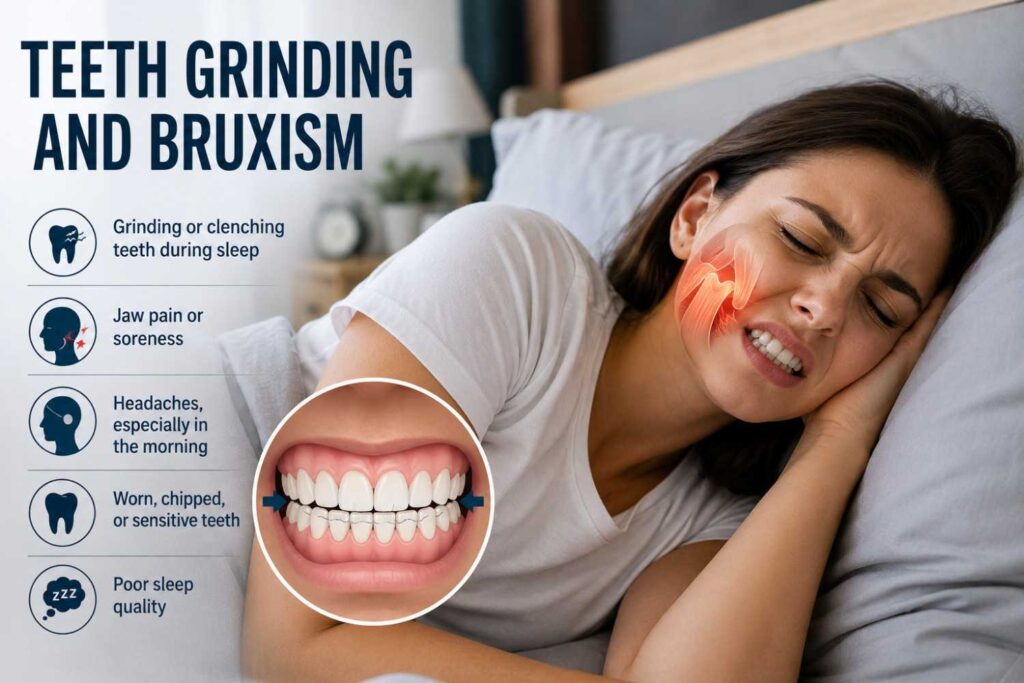
Teeth grinding, medically called bruxism, is the single most common reason people ask why does my jaw hurt when I wake up, and it is something the majority of people who do it are completely unaware of because it happens during sleep. Bruxism involves clenching the jaw tightly and grinding the teeth against each other repeatedly throughout the night, which keeps the jaw muscles in a state of sustained, forceful contraction for hours at a time. The result is that you wake up with the same kind of muscle soreness and fatigue in your jaw that you would experience in any other muscle group after hours of unrelenting exertion.
The pain from bruxism is typically felt in the muscles of the temples, cheeks, and jaw rather than in the joint itself, though joint pain can develop over time if grinding continues untreated. Other signs of nighttime bruxism include waking up with a headache particularly at the temples, a partner hearing grinding sounds during your sleep, noticeably worn or flattened teeth noticed by a dentist, and increased tooth sensitivity. A custom night guard made by a dentist is the most effective first-line treatment for bruxism and significantly reduces the muscle fatigue and pain that answer why does my jaw hurt when I wake up for most people with this condition.
2. TMJ Disorder
Temporomandibular joint disorder, commonly called TMJ or TMD, is a condition involving dysfunction of the joint that connects the lower jaw to the skull on each side of the face, and it is one of the most significant medical answers to why does my jaw hurt when I wake up. The temporomandibular joint is a complex sliding and rotating joint that is used constantly throughout the day for eating, speaking, and swallowing, and when it becomes inflamed, misaligned, or structurally compromised, the resulting pain can be particularly pronounced upon waking after the joint has been held in a relatively fixed position all night.
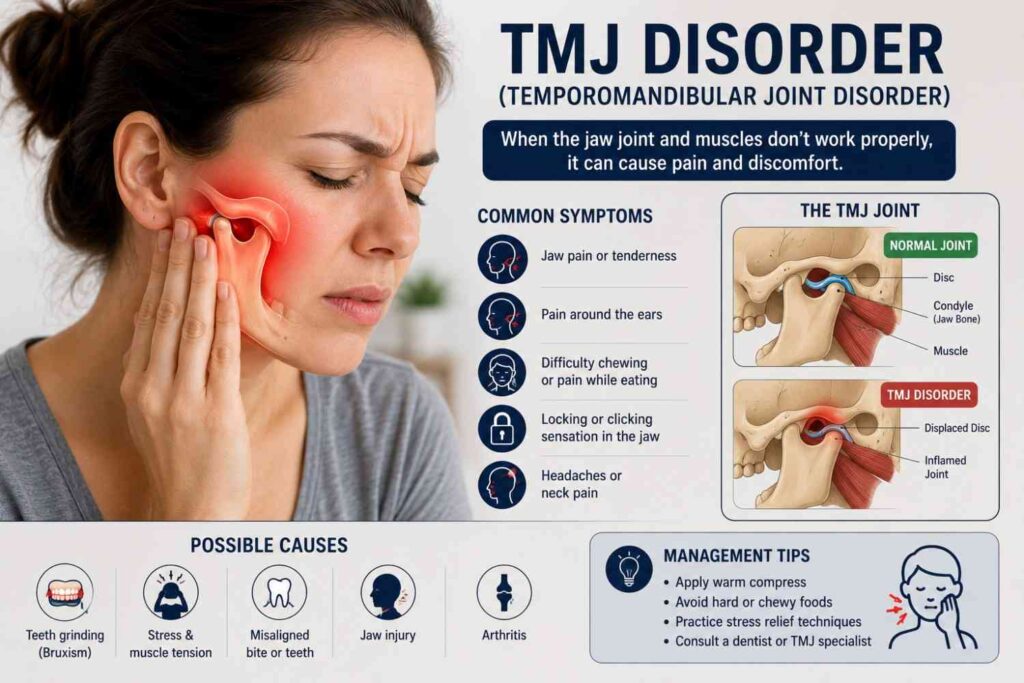
TMJ disorder produces pain that is typically centered directly in front of the ear at the joint itself, though it often radiates into the cheek, temple, neck, and behind the eye. Other characteristic features include a clicking or popping sound when opening or closing the mouth, difficulty opening the mouth fully, and a jaw that occasionally locks in an open or closed position. TMJ disorder can result from bruxism, trauma to the jaw, arthritis in the joint, or simply an anatomical predisposition, and it is significantly more common in women than in men.
A dentist or oral maxillofacial specialist can evaluate TMJ disorder and recommend appropriate treatment, which may include a splint or night guard, physical therapy, anti-inflammatory medications, or in more significant cases more advanced interventions.
Why Do My Legs Feel Heavy When I Wake Up? 10 Hidden Causes You Should Know
3. Poor Sleep Position
The position you sleep in can directly cause or worsen jaw pain in the morning, and this is one of the most easily correctable answers to why does my jaw hurt when I wake up. Sleeping on your stomach requires your head to be turned sharply to one side for hours at a time, which places sustained rotational stress on the cervical spine and creates tension that travels into the jaw muscles and joint. Sleeping on your side with your face pressed against a pillow can also apply direct pressure to the jaw joint and surrounding muscles that accumulates over hours.
People who sleep with their hand or arm pressed against their jaw face add additional external pressure to the joint that compounds the positional stress. Even side sleeping without face pressure can tilt the jaw in a direction that strains the ligaments and muscles of the TMJ if the pillow height is not appropriate for the individual’s shoulder width and neck length.
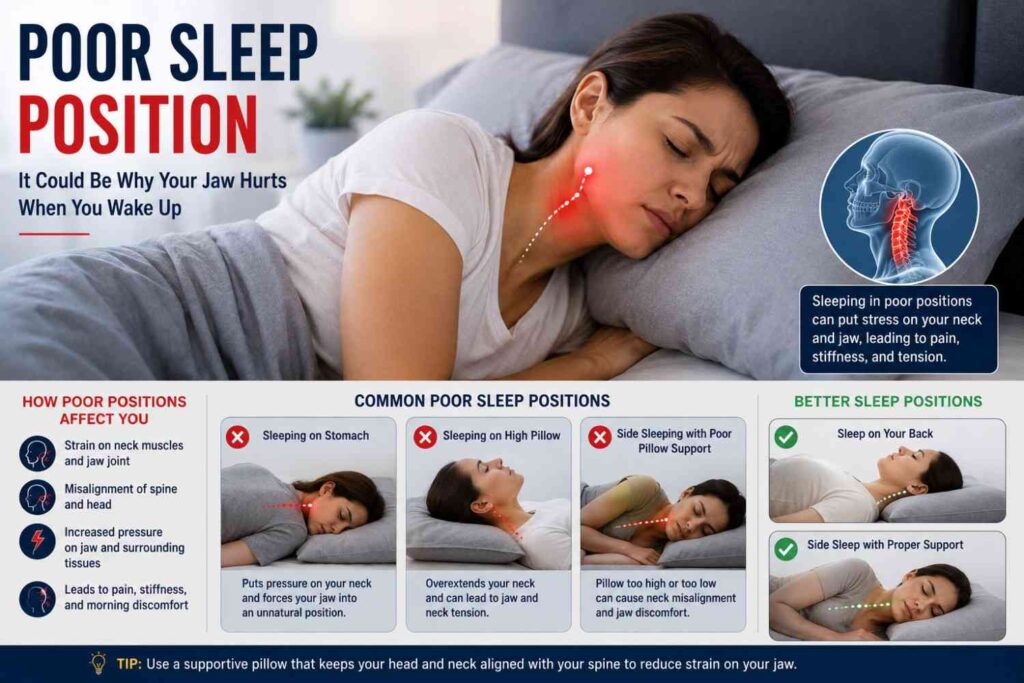
Switching to back sleeping is the most effective positional change for reducing sleep-related jaw pain. If back sleeping is not comfortable, ensuring that your pillow is the correct height for side sleeping and consciously avoiding positions where your face is pressed against the pillow or your hand are practical interim steps.
4. Stress and Anxiety
Stress and anxiety are among the most significant contributors to morning jaw pain, and they work through multiple mechanisms simultaneously. People who are under significant stress or anxiety tend to clench their jaw throughout the day, which they may do consciously or unconsciously, and this daytime tension carries over into sleep where it manifests as bruxism or sustained clenching even without full grinding. The jaw muscles never fully relax during the night, and by morning the accumulated tension has built into genuine pain and stiffness.
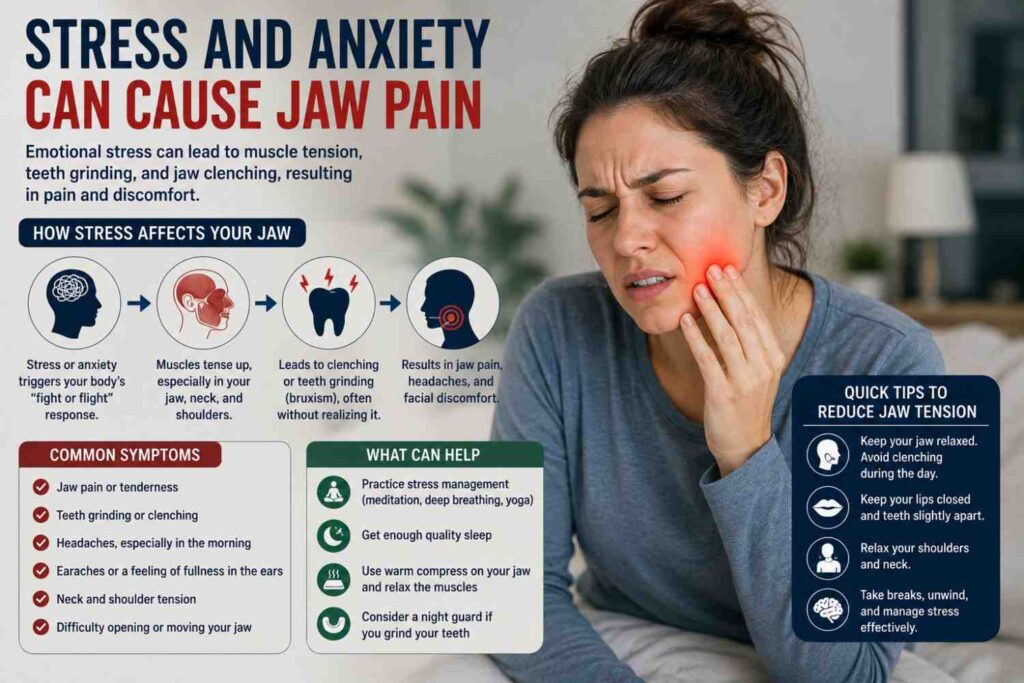
If you are wondering why does my jaw hurt when I wake up more during stressful periods in your life and less during calmer stretches, this stress-clenching connection is almost certainly a primary driver. High-stress events, deadline pressure, relationship difficulties, and financial worry are among the most consistent triggers for jaw clenching that leads to morning jaw pain.
Addressing the underlying stress through whatever combination of therapy, exercise, stress management practices, and lifestyle adjustment genuinely helps reduces the jaw clenching both during the day and at night. In the shorter term, being conscious of jaw clenching during the day and deliberately relaxing the jaw muscles, along with a night guard to protect the teeth and joint during sleep, are the most practical immediate steps.
Why Do My Legs Feel Heavy When I Wake Up? 10 Hidden Causes You Should Know
5. Arthritis
Arthritis in the temporomandibular joint is a recognized and significant cause of morning jaw pain, and it answers why does my jaw hurt when I wake up for a meaningful number of adults, particularly those over 50. Osteoarthritis, the most common form of arthritis, involves the gradual breakdown of the cartilage that cushions the surfaces of the TMJ, leading to bone-on-bone contact that causes pain, stiffness, and reduced range of motion. Like arthritis in the knees, hips, and hands, TMJ arthritis tends to be worst first thing in the morning when the joint has been relatively still overnight and has not yet been warmed up by movement.
Rheumatoid arthritis, an autoimmune condition where the immune system attacks joint tissue throughout the body, can also affect the TMJ and cause significant morning jaw pain as part of the generalized morning stiffness that characterizes this condition. People with rheumatoid arthritis typically have morning stiffness in multiple joints, not just the jaw, which is a useful distinguishing feature.
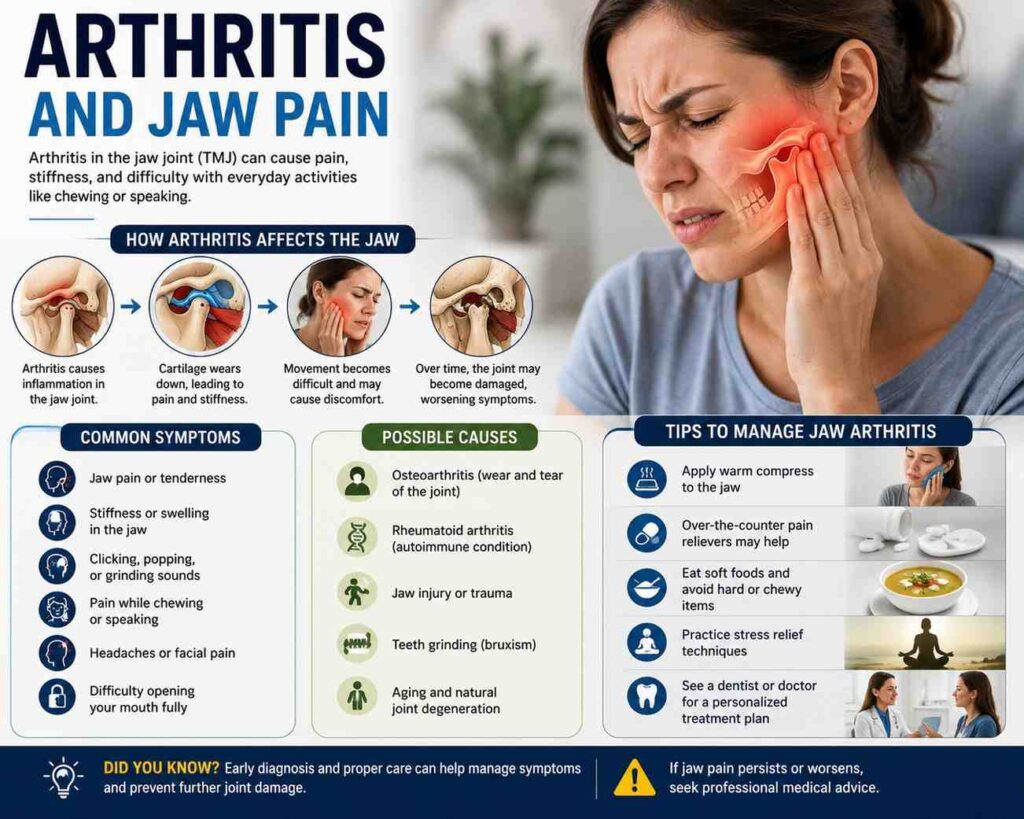
Treatment for arthritis-related TMJ pain includes anti-inflammatory medications, warm compresses applied to the joint area in the morning, gentle range-of-motion exercises, and in more advanced cases referral to a rheumatologist or oral surgeon for more targeted intervention.
6. Dental Problems
Dental problems are a common and often overlooked answer to why does my jaw hurt when I wake up, and a wide range of dental conditions can produce morning jaw pain through various mechanisms. An impacted wisdom tooth that is partially erupted and pressing against neighboring teeth can cause significant jaw pain that is worst upon waking when the pressure from overnight jaw position has had hours to accumulate. A cracked tooth, dental abscess, or significant cavity can cause pain that radiates through the jaw and is perceived as jaw pain rather than tooth pain.
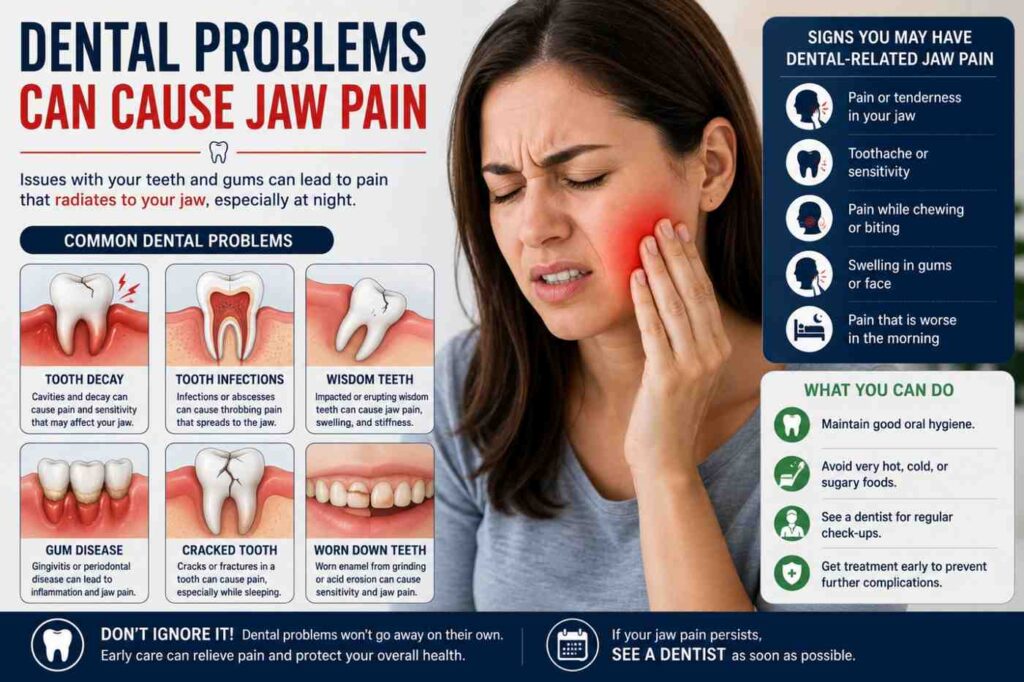
Malocclusion, which is a misalignment of the bite where the upper and lower teeth do not meet properly when the mouth closes, can cause the jaw to work harder than it should during chewing and even during the resting closed position maintained during sleep. This sustained muscular compensation produces jaw muscle fatigue and pain by morning. People who have recently had dental work that altered their bite, including crowns, fillings, or orthodontic changes, sometimes develop morning jaw pain from a bite that is not yet optimally adjusted.
A dental examination can identify most dental causes of morning jaw pain, and addressing the specific dental issue typically resolves the associated jaw pain once the underlying problem is treated.
Why Do My Legs Feel Heavy When I Wake Up? 10 Hidden Causes You Should Know
7. Myofascial Pain Syndrome
Myofascial pain syndrome is a condition involving the development of trigger points, which are hypersensitive knots within muscle tissue, in the muscles of the jaw, face, and neck. These trigger points produce localized pain and referred pain that can extend across the jaw, into the temples, and down the neck, and they are frequently a significant contributor to morning jaw pain. The trigger points in the masseter muscle, which is the large chewing muscle along the side of the jaw, and in the temporalis muscle, which extends up the side of the skull from the temple, are particularly associated with morning jaw pain.
Trigger points develop from sustained muscle tension, overuse, poor posture, and repetitive strain, all of which are related to the same factors that drive bruxism and daytime jaw clenching. People with myofascial pain syndrome often notice that pressing on certain spots in their jaw or temple muscles produces a distinctive sharp pain and sometimes refers sensation to another area of the face or head.
Physical therapy, trigger point massage, dry needling, and postural correction are among the most effective treatments for myofascial pain syndrome affecting the jaw, and they often produce significant relief in morning jaw pain within a course of several treatment sessions.
8. Sleep Apnea and Oral Appliance Use
Sleep apnea and its treatment can both contribute to morning jaw pain, which is an interesting and sometimes unexpected answer to why does my jaw hurt when I wake up. Untreated sleep apnea causes the jaw to repeatedly open and close as the body struggles to restore airflow during apnea episodes, which can strain the jaw muscles and joint over the course of a night. The oral positioning that the jaw takes during repeated apnea episodes may also place the TMJ in a strained position.
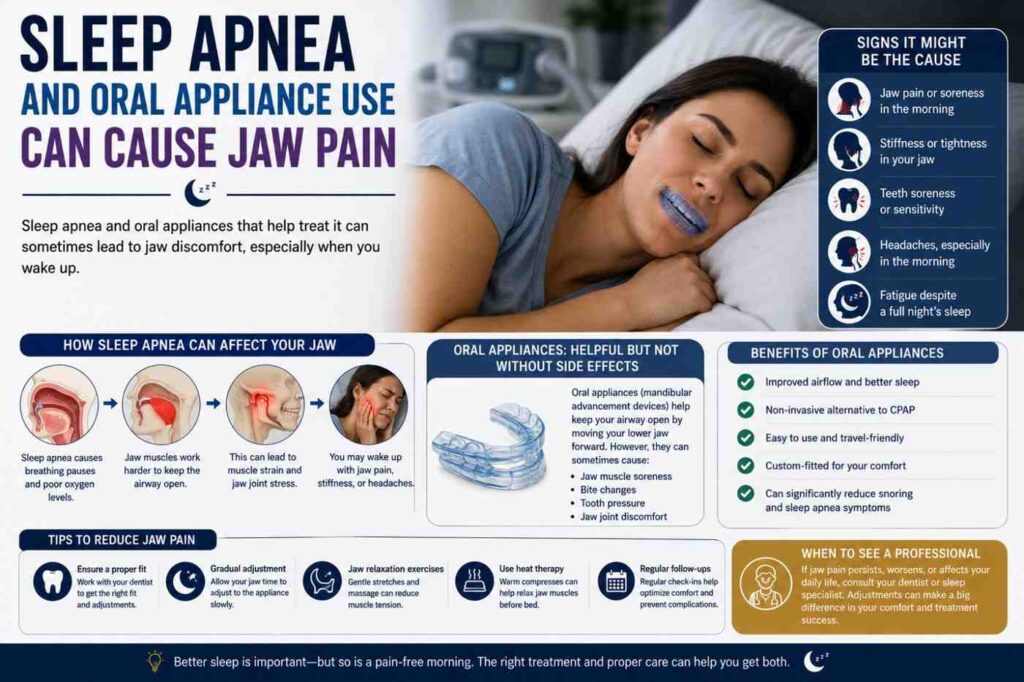
For people who use a mandibular advancement device to treat their sleep apnea, which is an oral appliance that holds the lower jaw forward to keep the airway open, morning jaw soreness and stiffness is one of the most common reported side effects. The device holds the jaw in an unnatural forward position for the duration of sleep, and the muscles and joint must compensate for this positioning, producing soreness upon waking that is often most significant in the first weeks of using the device and typically improves as the jaw adapts.
If you use a mandibular advancement device and your morning jaw pain is significant, discussing the fit and degree of jaw advancement with your sleep medicine doctor or dentist can often lead to adjustments that reduce the discomfort without compromising the effectiveness of the treatment.
9. Referred Pain From the Neck and Spine
Morning jaw pain is not always generated in the jaw itself. Referred pain from the cervical spine and neck muscles is a recognized and frequently overlooked cause of why does my jaw hurt when I wake up, and it is particularly relevant for people who sleep in positions that strain the neck. The muscles and joints of the upper cervical spine are anatomically connected to the jaw region through shared nerve pathways and fascial connections, and when the neck is stressed during sleep, that tension can refer pain forward into the jaw in a way that genuinely feels like it originates there.
People with cervical spine problems including disc herniation, facet joint arthritis, or chronic neck muscle tension often report that their neck symptoms and their jaw pain follow the same pattern, both being worst in the morning after sleep and improving with gentle movement throughout the day. Headaches that accompany morning jaw pain and extend from the base of the skull forward are particularly suggestive of a cervical contribution.
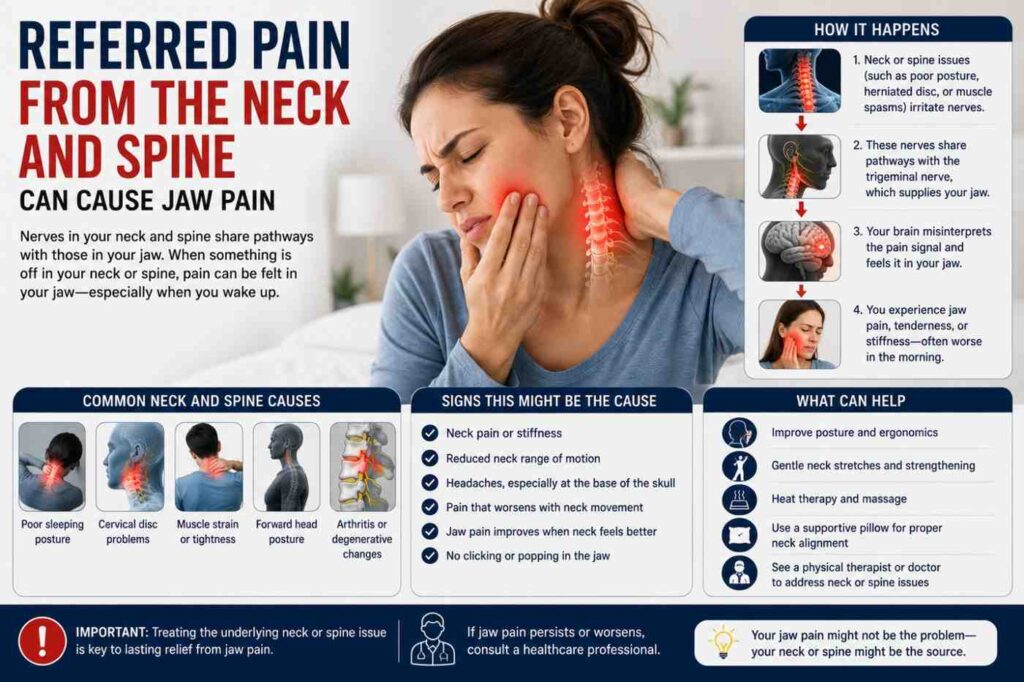
Addressing neck posture and sleep position, using appropriate pillow support, and seeking physical therapy evaluation for any cervical spine issues can produce significant improvement in morning jaw pain that has a cervical component.
What to Do About Morning Jaw Pain
The most effective first step depends on which cause or combination of causes applies to you. If teeth grinding is the most likely explanation, a dental evaluation to check for wear patterns and a custom night guard is the most direct path forward. If stress is clearly a driver, making jaw relaxation and stress management a daily priority alongside a night guard addresses both the cause and the symptom. If the pain centers in the joint itself and is accompanied by clicking or limited opening, a TMJ specialist evaluation is warranted.
For immediate morning relief, applying a warm compress to the jaw joint and muscles for ten minutes upon waking helps loosen tight muscles and reduce joint stiffness. Gentle jaw stretching exercises, eating softer foods on particularly painful days, and avoiding habits like chewing gum or eating very hard foods that add strain to an already irritated jaw all help manage symptoms while you address the underlying cause.
Why does my jaw hurt when I wake up is a question with a real answer in almost every case, and finding that answer is the most direct path to mornings that do not start with pain.