

You swing your legs over the side of the bed and immediately notice that they feel like they are made of lead. Heavy, sluggish, and difficult to move in a way that has nothing to do with how tired you are overall. Maybe it takes ten or fifteen minutes of moving around before your legs start to feel like they belong to you again. If your legs feel heavy when I wake up regularly, something specific is behind that sensation and it is worth understanding what.
Heavy legs in the morning is one of those symptoms that people tend to dismiss as just being tired or just getting older. But when it happens consistently and affects your ability to get moving in the morning, it is your body communicating something about your circulation, your nervous system, your nutrition, or your overall health. Here are ten of the most common hidden causes of legs feel heavy when I wake up and what each one means.
1. Poor Circulation and Venous Insufficiency
Poor circulation is the most common reason legs feel heavy when I wake up, and venous insufficiency is one of its most significant contributors. Your veins have one-way valves that prevent blood from flowing backward as it travels from the legs back up to the heart. When these valves weaken or become damaged, blood pools in the leg veins rather than returning efficiently to the heart. This pooling, called venous insufficiency, causes the legs to feel heavy, tired, and swollen, particularly after periods of inactivity like a full night of sleep when movement-assisted circulation is at its lowest.
People with venous insufficiency often notice that their legs feel heavy when they wake up but that the sensation gradually improves as they move around during the day, since muscle contractions in the legs help pump blood back toward the heart. The heaviness may return in the evening after prolonged standing or sitting. Visible varicose veins are a common outward sign of venous insufficiency, though the condition can be significant without obvious surface veins.

Wearing compression stockings during the day, elevating the legs when resting, staying active, and maintaining a healthy weight all help manage venous insufficiency and reduce morning leg heaviness.
Why Do My Legs Cramp at Night? 10 Common Causes and How to Stop Them
2. Restless Legs Syndrome
Restless legs syndrome is a neurological condition that causes uncomfortable sensations in the legs, including heaviness, crawling, tingling, aching, and an irresistible urge to move them, and these sensations are typically worst during periods of inactivity, particularly in the evening and overnight. People with restless legs syndrome often spend significant portions of the night moving their legs involuntarily in a related condition called periodic limb movement disorder, and the result is that their legs feel heavy when they wake up from a night of disrupted, poor-quality sleep and prolonged muscle activation.

The heaviness from restless legs syndrome in the morning reflects both the physical fatigue from overnight involuntary movements and the poor sleep quality that the condition produces. People with this condition frequently describe their legs as feeling exhausted upon waking even though they spent the night in bed.
Restless legs syndrome is associated with iron deficiency, kidney disease, pregnancy, and certain medications. Identifying and treating the underlying cause, ensuring adequate iron levels, and in more severe cases using prescription medications that address the neurological component can significantly improve both overnight symptoms and morning leg heaviness.
3. Lymphedema
Lymphedema is a condition where the lymphatic system, which drains excess fluid from the tissues, is impaired or damaged, causing fluid to accumulate in the affected limb. When lymphedema affects the legs, they can feel heavy, swollen, and difficult to move, and this heaviness is often most noticeable in the morning after lying flat overnight because the reduced activity and horizontal position allow fluid to redistribute throughout the leg tissues rather than draining toward the body’s core.
Lymphedema most commonly develops as a result of damage to the lymph nodes from cancer treatment, particularly lymph node removal or radiation therapy. It can also occur from infection, trauma, or in some cases as a primary condition without an identifiable cause. The heaviness of lymphedema-affected legs is often accompanied by visible swelling, skin changes, and a sensation of tightness or fullness that is distinct from the heaviness of venous insufficiency.

Lymphedema requires specialized management from a certified lymphedema therapist, who uses techniques including manual lymphatic drainage massage, compression bandaging, and specific exercise programs to reduce fluid accumulation and improve leg function.
4. Peripheral Artery Disease
Peripheral artery disease is a condition where the arteries supplying blood to the legs become narrowed from atherosclerotic plaque, reducing oxygen delivery to the leg muscles and tissues. When circulation to the legs is significantly impaired, the muscles receive inadequate oxygen not just during exercise but also during rest and sleep, and the resulting oxygen deprivation produces a heavy, aching, fatigued sensation that makes legs feel heavy when I wake up.

Risk factors for peripheral artery disease include smoking, diabetes, high blood pressure, high cholesterol, obesity, and a family history of cardiovascular disease. People with peripheral artery disease often also notice that their legs ache or cramp during walking, a symptom called claudication, and that their feet are cold and pale compared to the rest of their body. Leg hair may be sparse or absent on the affected limb because the skin and hair follicles are receiving inadequate blood supply.
Peripheral artery disease is both a significant cardiovascular risk marker and a condition with effective treatments including lifestyle changes, medications, and in some cases procedures to restore blood flow. If your legs feel heavy when I wake up and you have cardiovascular risk factors, a vascular evaluation is an important step.
Why Do My Legs Cramp at Night? 10 Common Causes and How to Stop Them
5. Vitamin and Mineral Deficiencies
Several nutritional deficiencies can directly cause legs to feel heavy when you wake up by affecting muscle function, nerve signaling, or circulation. Vitamin D deficiency is one of the most common, producing a characteristic muscle weakness and heaviness that affects the proximal muscles of the legs and hips particularly. Research consistently shows that people with low vitamin D levels report more generalized muscle fatigue and heaviness compared to those with adequate levels.
Iron deficiency anemia reduces oxygen delivery to the leg muscles in the same way peripheral artery disease does, and the resulting oxygen deprivation produces morning leg heaviness alongside the fatigue, pale skin, and shortness of breath with exertion that characterize anemia. Magnesium deficiency impairs the energy production processes in muscle cells and can produce a heavy, fatigued feeling in the legs that is worst after periods of rest. B12 deficiency affects nerve function in ways that can alter the sensation of the legs, sometimes producing heaviness alongside tingling and numbness.

A comprehensive nutritional blood panel can identify which deficiencies if any are contributing to morning leg heaviness and allow for targeted intervention rather than guessing about which supplements might help.
6. Sleep Position and Nerve Compression
How you sleep has a more direct impact on how your legs feel when you wake up than most people realize. Sleeping in positions that compress the nerves or blood vessels supplying the legs can produce heaviness, numbness, and tingling that is present immediately upon waking and takes a few minutes to resolve as circulation and nerve function normalize. Sleeping with one leg crossed over the other, with significant pressure on one side of the body, or in a position that flexes the lower back and compresses the lumbar nerve roots can all contribute to legs feel heavy when I wake up.
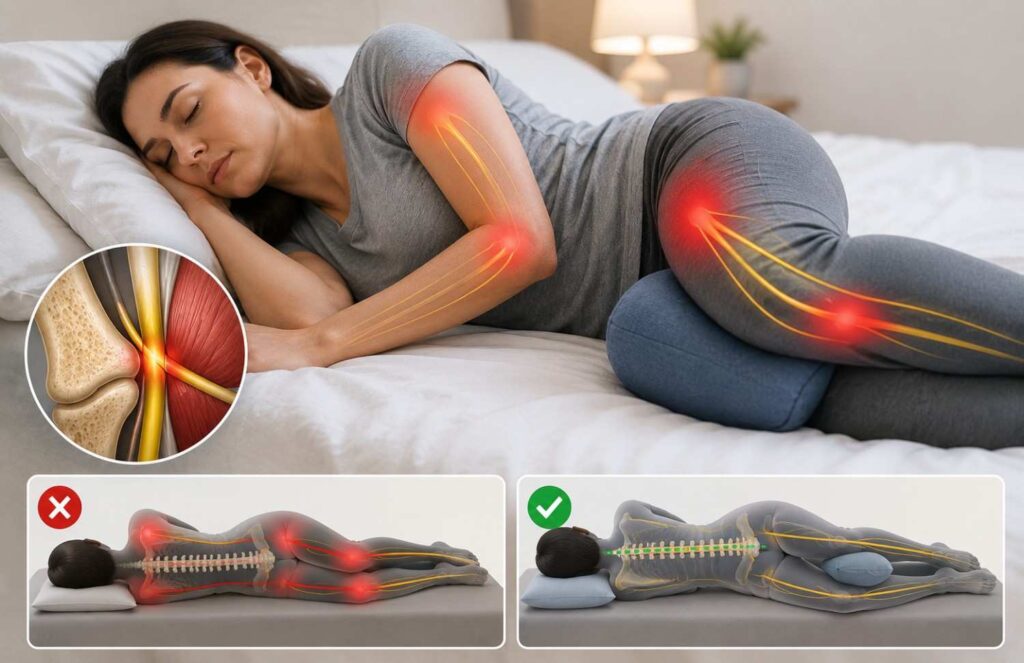
People who sleep on their stomachs often place their spine in a hyperextended position that can compress the facet joints and nerve roots of the lower lumbar spine, referring heaviness and discomfort into the legs. Side sleepers who do not use a pillow between their knees allow their top hip to rotate and their lumbar spine to side-flex, creating tension in the sciatic nerve that can produce morning leg heaviness.
Using a pillow between the knees when sleeping on your side, avoiding stomach sleeping, and ensuring your mattress adequately supports your body weight and sleeping position can all reduce positional causes of morning leg heaviness.
7. Fibromyalgia
Fibromyalgia is a chronic condition characterized by widespread musculoskeletal pain, fatigue, and sleep disturbances, and legs feel heavy when I wake up is one of the most consistently reported morning symptoms among people with this condition. The non-restorative sleep that is a hallmark of fibromyalgia, where people spend adequate time in bed but wake up feeling unrefreshed and physically exhausted, contributes significantly to morning leg heaviness alongside the widespread pain and stiffness that affect the whole body.
People with fibromyalgia often describe their legs feel heavy when I wake up like they have weights attached to them, and this heaviness can be so significant that getting out of bed and beginning to move takes considerable effort. The heaviness typically begins to improve after 30 to 60 minutes of gentle movement as the body warms up, though it may return with prolonged sitting or lying.

Fibromyalgia management involves a combination of low-impact regular exercise, sleep improvement strategies, stress management, and in some cases medications that address the pain sensitization and sleep disruption that drive the condition.
Why Do My Legs Cramp at Night? 10 Common Causes and How to Stop Them
8. Hypothyroidism
An underactive thyroid is a frequently overlooked cause of legs feel heavy when I wake up. When thyroid hormone levels are insufficient, muscle metabolism slows significantly, and legs feel heavy when I wake up because the muscles have not recovered and replenished their energy stores efficiently during sleep. The result is a persistent heaviness and weakness in the legs that is most pronounced in the morning and may improve somewhat as the day goes on and mild physical activity stimulates the muscles.

Hypothyroidism also causes fluid retention throughout the body, including in the leg tissues, which adds a component of actual physical heaviness from accumulated fluid to the metabolic heaviness from impaired muscle function. Other symptoms of hypothyroidism that often accompany morning leg heaviness include persistent fatigue, weight gain, feeling cold all the time, constipation, dry skin, brain fog, and in women, heavier or more irregular periods.
A TSH blood test can identify hypothyroidism, and thyroid hormone replacement therapy typically improves muscle function, reduces fluid retention, and relieves morning leg heaviness within several weeks to months of achieving stable thyroid levels.
Why Do My Legs Cramp at Night? 10 Common Causes and How to Stop Them
9. Overtraining and Muscle Fatigue
If you exercise regularly and your legs feel heavy when I wake up particularly after training days or during periods of increased training volume, muscle fatigue and overtraining syndrome may be the explanation. When you exercise, particularly with resistance training or high-intensity cardio that heavily loads the leg muscles, microscopic damage occurs in the muscle fibers that triggers an inflammatory repair process. This process causes the muscle to feel sore, stiff, and heavy, and these symptoms are typically most pronounced in the 24 to 48 hours following exercise.
Overtraining syndrome occurs when training load consistently exceeds the body’s ability to recover, producing persistent leg heaviness, reduced performance, increased resting heart rate, and general fatigue that does not improve with rest. This is common in athletes who increase training volume too quickly, do not allow adequate recovery between sessions, or train through illness or inadequate nutrition.

Ensuring adequate rest days between intense training sessions, prioritizing sleep as a recovery tool, fueling training adequately with sufficient carbohydrates and protein, and occasionally reducing training volume to allow accumulated fatigue to resolve are the most effective approaches for exercise-related morning leg heaviness.
10. Depression and Mental Health
Depression has profound physical manifestations that go well beyond mood, and legs feel heavy when I wake up is among the physical symptoms that people with depression commonly report. The heaviness described by people with depression is often all-encompassing, affecting motivation, physical energy, and the simple mechanics of getting up and starting the day. Getting out of bed when legs feel heavy from depression is not laziness. It is a genuine physical manifestation of the neurochemical and physiological changes that depression causes.
Poor sleep quality, which is extremely common in depression, contributes to morning leg heaviness by reducing the restorative processes that normally allow muscles and the nervous system to recover overnight. The reduced physical activity that often accompanies depression impairs circulation and cardiovascular conditioning, adding a circulatory component to the heavy leg sensation.

Treating depression effectively through therapy, medication when appropriate, regular physical activity which has strong evidence as both treatment and prevention, and social engagement typically improves the physical symptoms including morning leg heaviness alongside the mood and motivational symptoms.
What to Do About Heavy Legs in the Morning
The most effective starting point depends on which cause or combination of causes applies to you. For circulation-related heaviness, compression stockings, regular walking, and elevating the legs when resting make an immediate difference. For nutritional causes, a blood panel that checks vitamin D, iron, ferritin, B12, and magnesium points you toward the right supplementation. For sleep position issues, adjusting how you sleep and using appropriate pillow support is a simple and cost-free change.
If your legs feel heavy when I wake up every day and lifestyle adjustments are not making a dent, or if the heaviness is accompanied by visible swelling, skin changes, significant pain, or other symptoms suggesting a medical condition, a medical evaluation is the right next step. A doctor can identify which of the more significant causes might be involved and direct you toward the most effective treatment.
Heavy legs in the morning are not something you simply have to push through every day. Most causes have real and effective solutions once properly identified.