
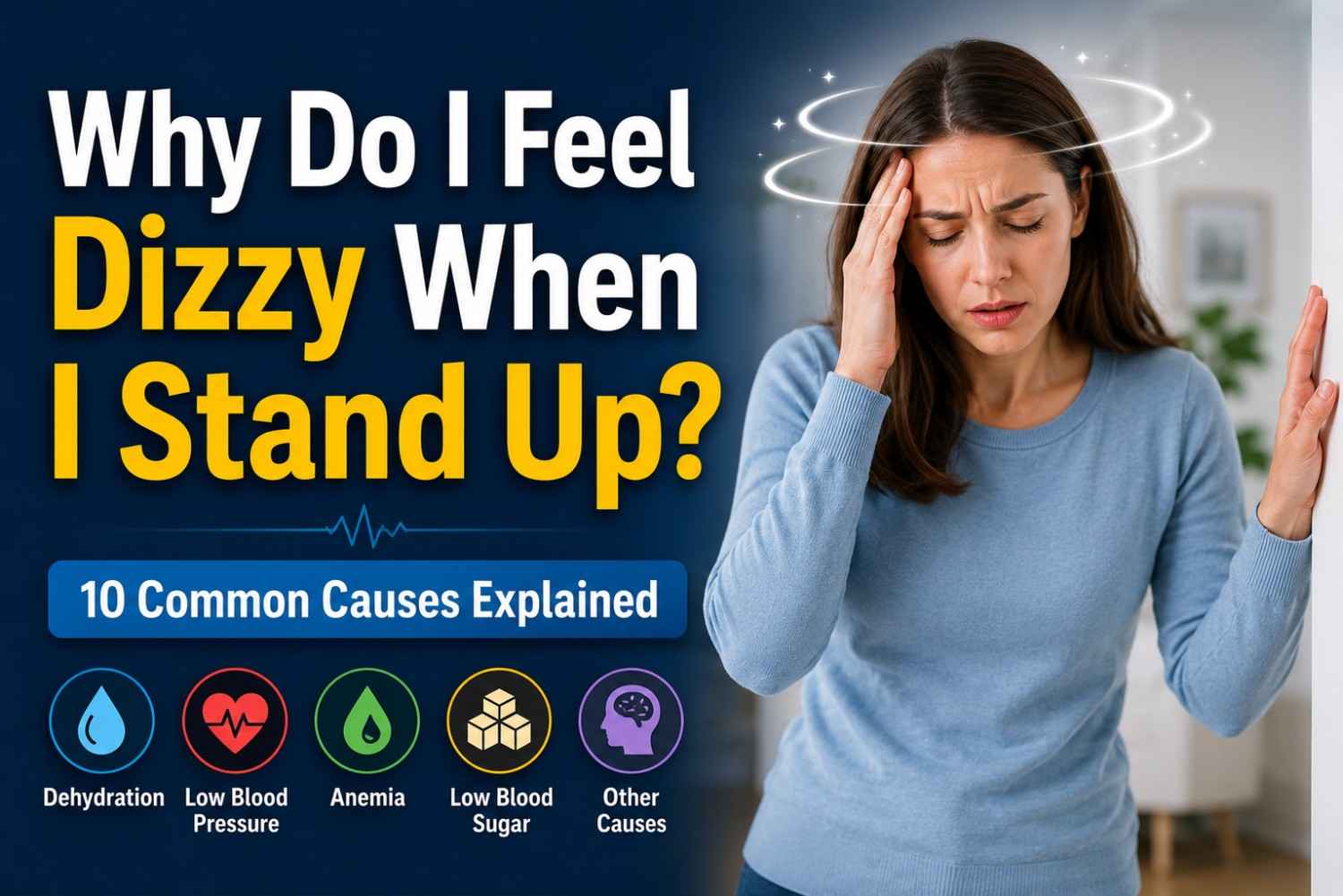
You push yourself up from the couch, stand up from bed in the morning, or rise from your desk after sitting for a while and suddenly the room tilts, your vision goes dark at the edges, and you have to grab something to steady yourself for a few seconds until it passes. If you feel dizzy when I stand up regularly, you know exactly how disorienting that few seconds of lightheadedness can be, and if it is happening frequently, it is worth understanding why.
feeling dizzy when I stand up is so common that it has a medical name: orthostatic hypotension, which simply means a drop in blood pressure that occurs when you change from a sitting or lying position to standing. But orthostatic hypotension is not a diagnosis in itself. It is a symptom with many possible causes, and identifying the right one is what makes it possible to actually fix.
Here are ten of the most common reasons you feel dizzy when I stand up and what each one means for your health.
1. Dehydration
Dehydration is the single most common cause of feeling dizzy when I stand up, and it works through a simple and direct mechanism. Your blood is mostly water, and when you are dehydrated, blood volume drops. Lower blood volume means your heart has less to work with when it needs to quickly compensate for the shift in gravity that happens when you stand. Blood pools in the legs, your heart cannot push enough upward to the brain fast enough, and the momentary drop in cerebral blood flow produces that familiar dizzy, lightheaded sensation.
Even mild dehydration of one to two percent of body weight is enough to trigger dizziness when standing in susceptible people. Hot weather, vigorous exercise, alcohol consumption, excessive caffeine intake, and simply not drinking enough water throughout the day are the most common contributors.

Drinking consistently throughout the day rather than in large amounts at once, keeping a glass of water on your nightstand to drink first thing in the morning before getting up, and increasing your fluid intake in hot weather or after exercise are all practical steps that reduce how often you feel dizzy when I stand up from dehydration.
2. Standing Up Too Quickly
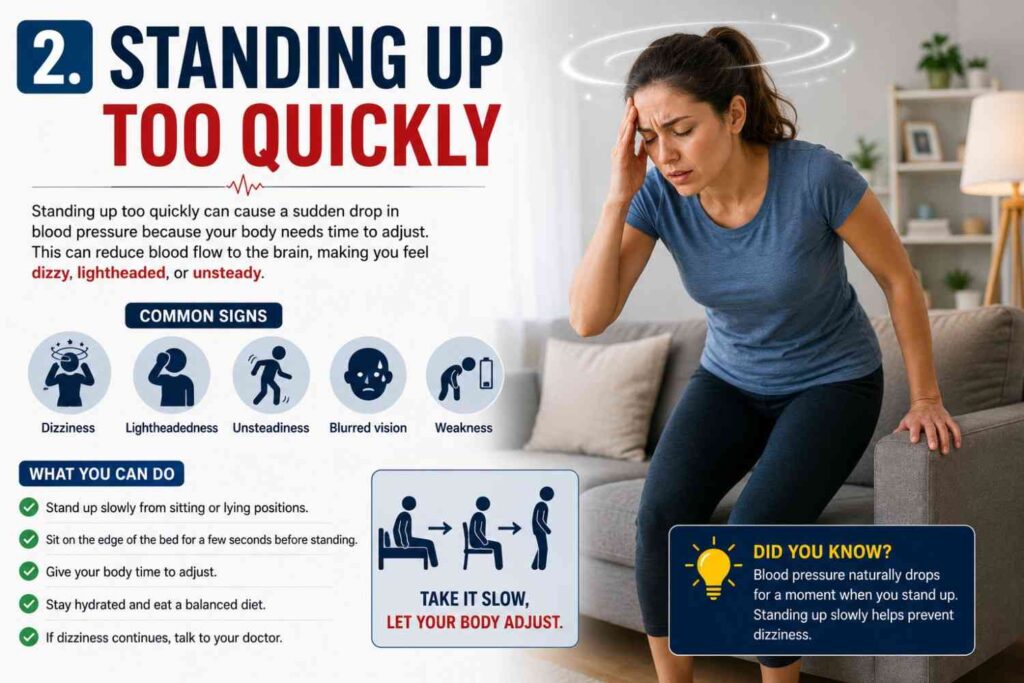
This is the most benign cause of feeling dizzy when I stand up and it happens to virtually everyone at least occasionally. When you stand up quickly from a lying or sitting position, gravity pulls blood toward your legs faster than your cardiovascular system can compensate. Your heart rate, blood vessel tone, and the baroreflex system that normally prevents blood pressure from dropping all need a fraction of a second to respond, and if you move faster than that compensation can occur, the brief undershoot in blood pressure to the brain produces dizziness.
This type of positional dizziness is most pronounced first thing in the morning when blood pressure is at its natural daily low, after prolonged sitting or lying, and in warm environments where blood vessels are already more dilated than usual. Simply slowing down your transitions from sitting to standing, pausing at the edge of the bed for a moment before fully rising, and avoiding jumping up suddenly from a low couch or floor position reduces this type of dizziness significantly.
Why Do I Feel Dizzy After Eating? 10 Hidden Reasons You Should Know
3. Low Blood Pressure
Chronically low blood pressure, known as hypotension, means your baseline blood pressure is lower than the range needed to reliably maintain adequate cerebral perfusion when you change positions. People who naturally run low blood pressure, typically defined as below 90 systolic over 60 diastolic, often feel dizzy when they stand up as a routine feature of their daily life rather than as an occasional occurrence.
Low blood pressure can be constitutional, meaning it is simply how your cardiovascular system is built, or it can result from medications, nutritional deficiencies, hormonal conditions, heart problems, or prolonged bed rest that has deconditioned the cardiovascular system. The dizziness typically resolves within a minute or two of standing as the body compensates, but repeated episodes throughout the day can be disruptive and occasionally dangerous if they cause falls.
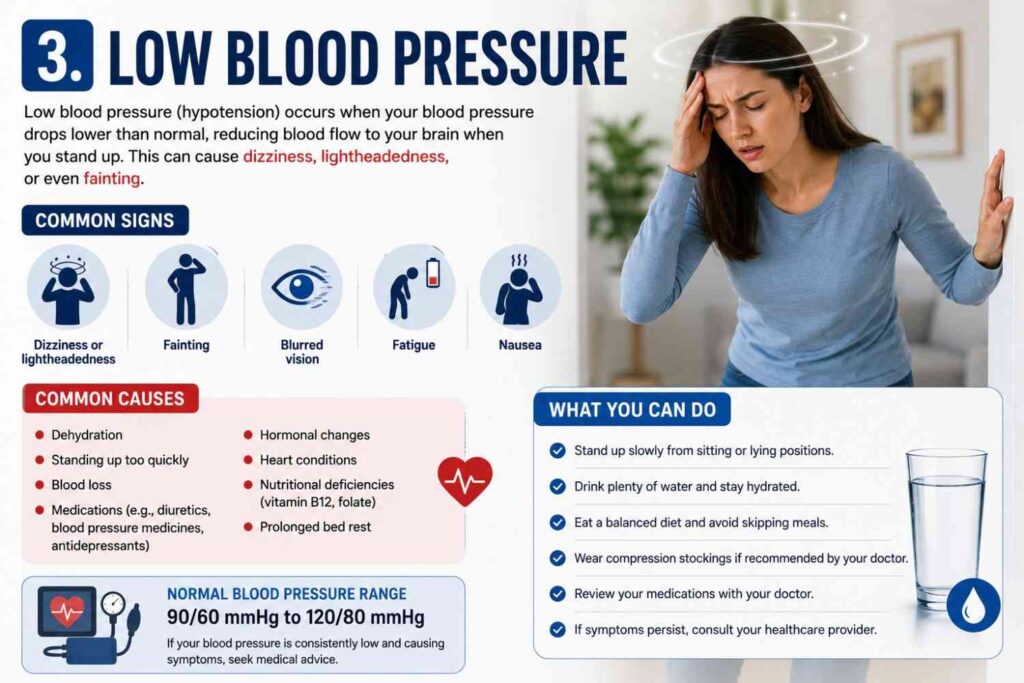
Strategies that help manage low blood pressure-related standing dizziness include increasing fluid and salt intake under medical guidance, wearing compression stockings that reduce blood pooling in the legs, avoiding prolonged standing in one position, and being particularly careful about position changes after meals when blood is directed toward digestion and blood pressure naturally dips.
4. Medications
A surprisingly wide range of commonly prescribed medications cause or worsen feeling dizzy when I stand up as a direct side effect, and this is one of the most frequently missed explanations, particularly in adults who have been on the same medications for a long time and never connected them to their standing dizziness. Blood pressure medications are among the most common culprits because their intended effect of lowering blood pressure can overshoot into symptomatic dizziness when standing.
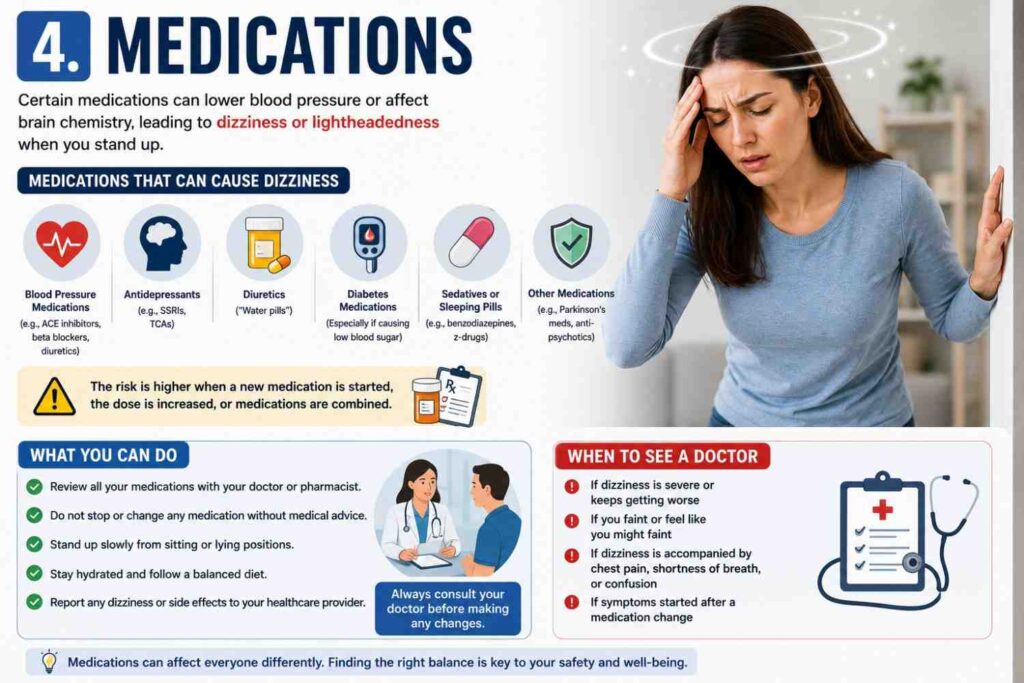
Diuretics reduce blood volume, which compounds the postural blood pressure drop. Alpha-blockers used for prostate conditions or blood pressure cause blood vessel relaxation that reduces the vascular response to standing. Antidepressants, particularly tricyclics, are well-known causes of orthostatic hypotension. Certain Parkinson’s medications, nitrates for heart conditions, and erectile dysfunction medications can also cause significant standing dizziness through various mechanisms.
If you feel dizzy when I stand up and you take any of these medication types, discussing the timing and dosage with your prescribing doctor is a practical first step, since adjustments to when you take the medication or minor dose changes often significantly reduce postural dizziness without compromising treatment effectiveness.
Why Do I Feel Dizzy After Eating? 10 Hidden Reasons You Should Know
5. Heart Problems
Your heart’s ability to quickly increase its pumping rate and output when you stand is central to preventing postural dizziness, which is why heart conditions that affect this response are an important cause of feeling dizzy when I stand up. Heart rhythm abnormalities, particularly those that cause the heart to beat too slowly, can prevent the rapid increase in cardiac output needed when you shift to standing. Heart failure that reduces overall pumping efficiency creates a similar problem.
Aortic stenosis, which is a narrowing of the aortic valve that restricts how much blood the heart can eject with each beat, is a significant cardiovascular cause of standing dizziness in older adults. Bradycardia, an abnormally slow heart rate from any cause, means the heart simply cannot speed up quickly enough to compensate for the gravitational challenge of standing.
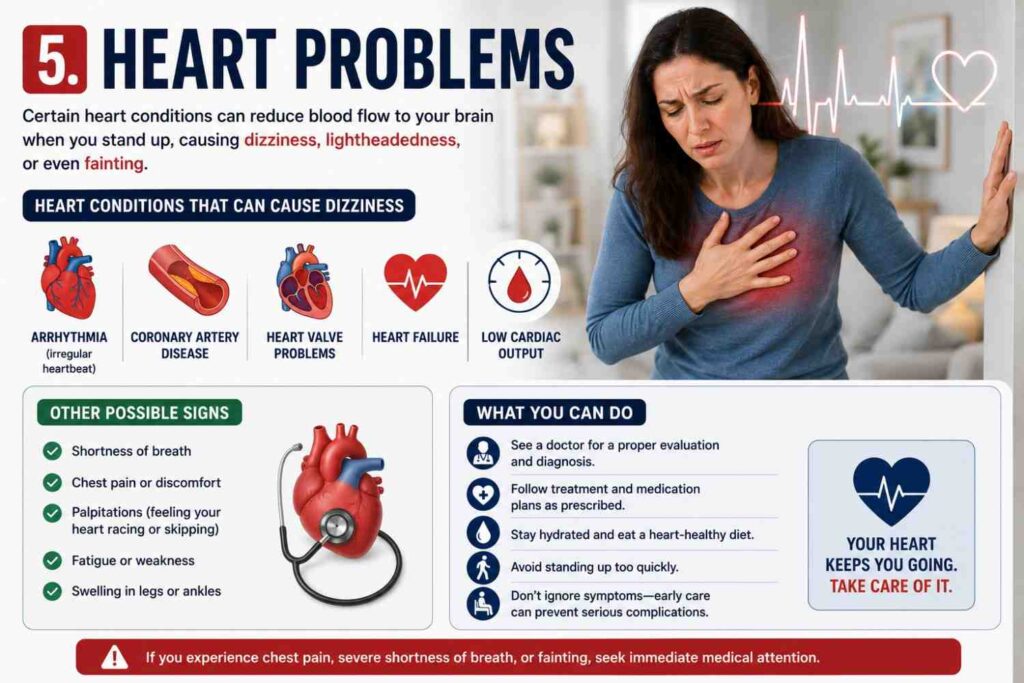
Heart-related dizziness when standing often comes with other cardiovascular symptoms including palpitations, shortness of breath, chest discomfort, or fatigue with minimal exertion. These accompanying symptoms, particularly in combination with standing dizziness, are a signal to seek prompt medical evaluation rather than waiting to see if things improve on their own.
6. Anemia
Iron deficiency anemia and other forms of anemia reduce the oxygen-carrying capacity of the blood, which means less oxygen reaches the brain with each heartbeat. This reduced oxygen delivery is manageable at rest when the brain’s demands are lower, but when you stand up and your cardiovascular system needs to work harder to maintain cerebral blood flow against gravity, the reduced reserve in an anemic person often means the brain receives momentarily less oxygen than it needs, producing dizziness.
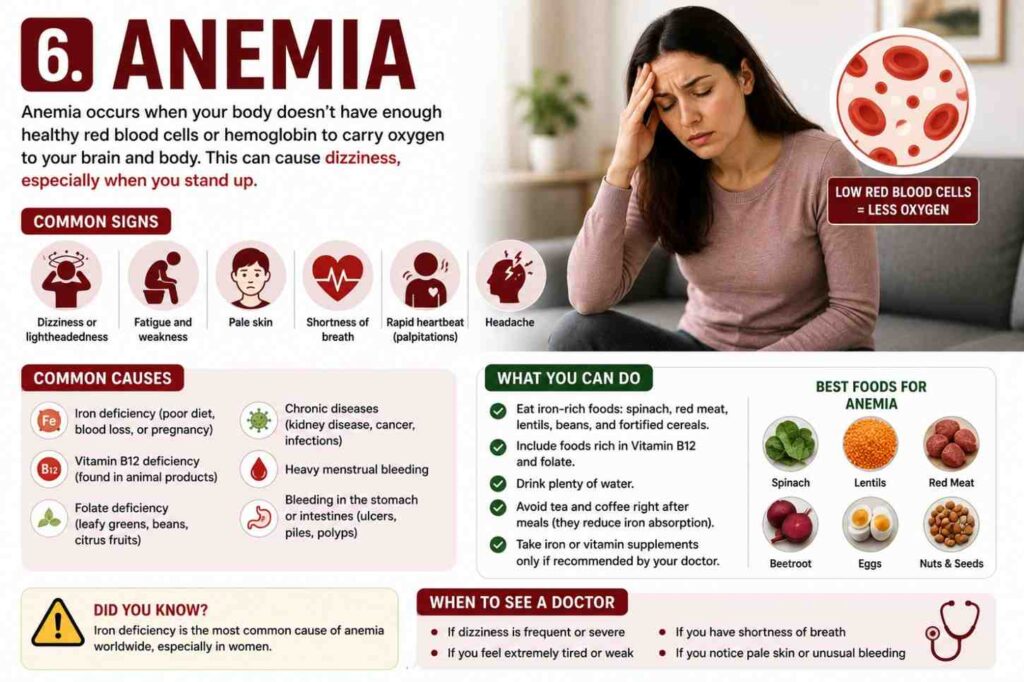
Women of reproductive age, vegetarians, pregnant women, and people with gastrointestinal conditions that affect iron absorption are at the highest risk for iron deficiency anemia. Alongside feeling dizzy when I stand up, anemia typically produces persistent fatigue, pale skin, shortness of breath with minimal exertion, and headaches.
A complete blood count and ferritin test can confirm anemia quickly. Addressing the underlying deficiency through diet and supplementation typically improves standing dizziness alongside the other symptoms over several weeks of treatment
7. Prolonged Bed Rest or Inactivity
Extended periods of bed rest from illness, surgery, or injury cause the cardiovascular system to decondition in ways that make feeling dizzy when I stand up significantly more likely. When you spend extended time lying flat, your body adapts to functioning without the gravitational challenge of upright posture. Your blood vessels become less responsive to the signals that constrict them when you stand, your blood volume decreases slightly, and the baroreflex that prevents blood pressure from dropping becomes less sensitive.
The result is that when you start standing again after extended bed rest, your cardiovascular system temporarily lacks the tone and responsiveness to maintain blood pressure effectively in the upright position. This is why dizziness when standing is such a universal experience for people returning to activity after illness or surgery, and why gradual, supervised mobilization is a standard part of post-hospitalization recovery.
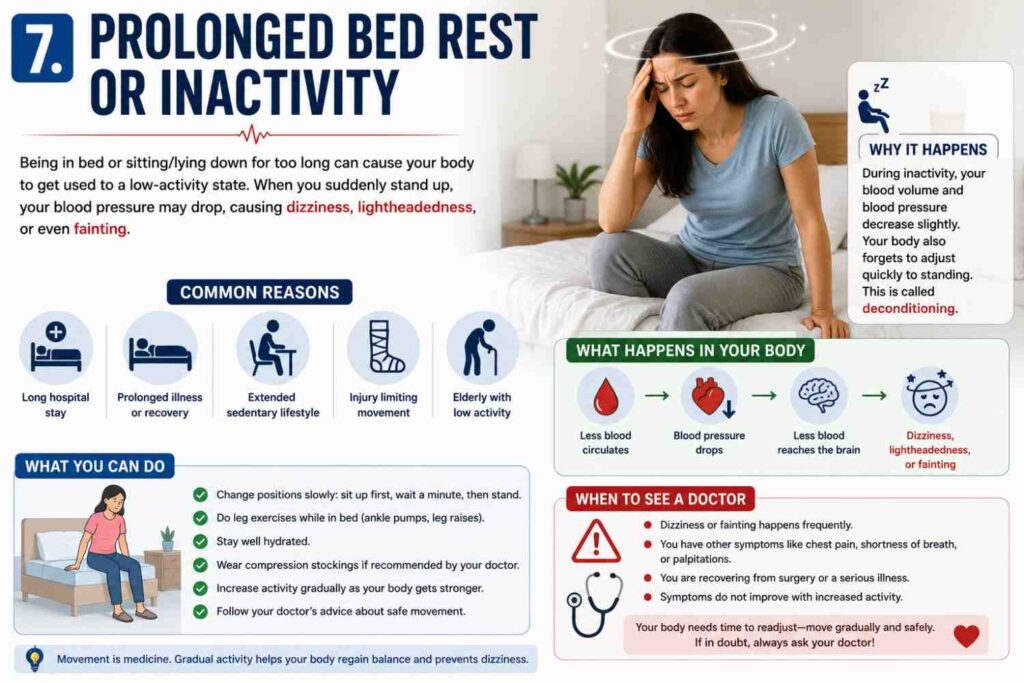
The cardiovascular system reconditions relatively quickly with regular upright activity. Gradual increases in standing and walking time, using compression stockings in the early recovery period, and taking position changes slowly help manage dizziness during the reconditioning phase.
Why Do I Feel Dizzy After Eating? 10 Hidden Reasons You Should Know
8. Diabetes and Autonomic Neuropathy
Diabetes is a significant cause of feeling dizzy when I stand up through a specific complication called autonomic neuropathy. The autonomic nervous system controls the automatic functions of the body including the blood vessel constriction and heart rate changes that prevent blood pressure from dropping when you stand. When diabetes damages the nerves that run this system, those automatic compensatory responses become impaired, and orthostatic hypotension becomes a recurring feature of daily life.
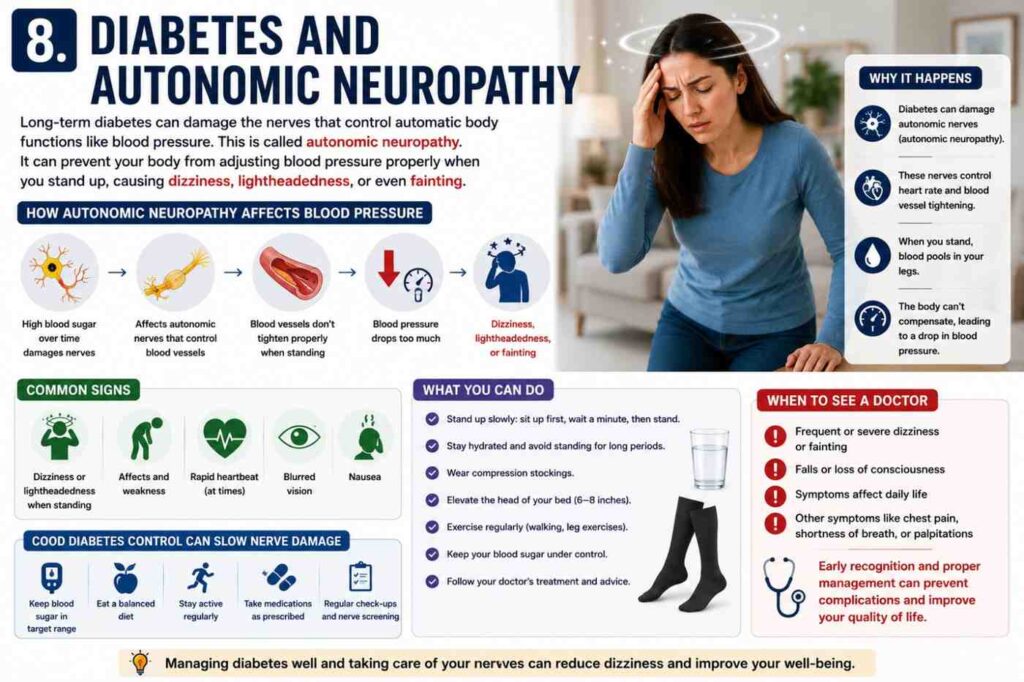
Diabetic autonomic neuropathy is more common in people who have had diabetes for a longer time and in those whose blood sugar has been poorly controlled. Beyond standing dizziness, it can affect heart rate regulation, digestion, bladder function, and sweating. The dizziness when standing from this cause tends to be more pronounced and less responsive to simple hydration and positional adjustments than the more benign causes on this list.
If you have diabetes and feel dizzy when I stand up regularly, discussing this specific symptom with your endocrinologist is important since it indicates autonomic involvement that has management implications beyond just the dizziness itself.
9. Anxiety and Panic
The connection between anxiety and feeling dizzy when I stand up is both physiological and psychological. Anxiety activates the fight-or-flight response, which alters breathing patterns and causes hyperventilation that reduces carbon dioxide levels in the blood. Low carbon dioxide causes the blood vessels supplying the brain to constrict, reducing cerebral blood flow and producing lightheadedness, dizziness, and a sense of unreality that can be particularly pronounced when changing positions.
People with anxiety disorders often become hyperaware of the normal, brief lightheadedness that occurs when standing and interpret it as dangerous, which triggers more anxiety, which worsens the dizziness, creating a cycle that can be difficult to break without addressing the anxiety directly. For some people, the dizziness itself becomes a focus of health anxiety that significantly amplifies their perception of what is actually a mild and common physiological event
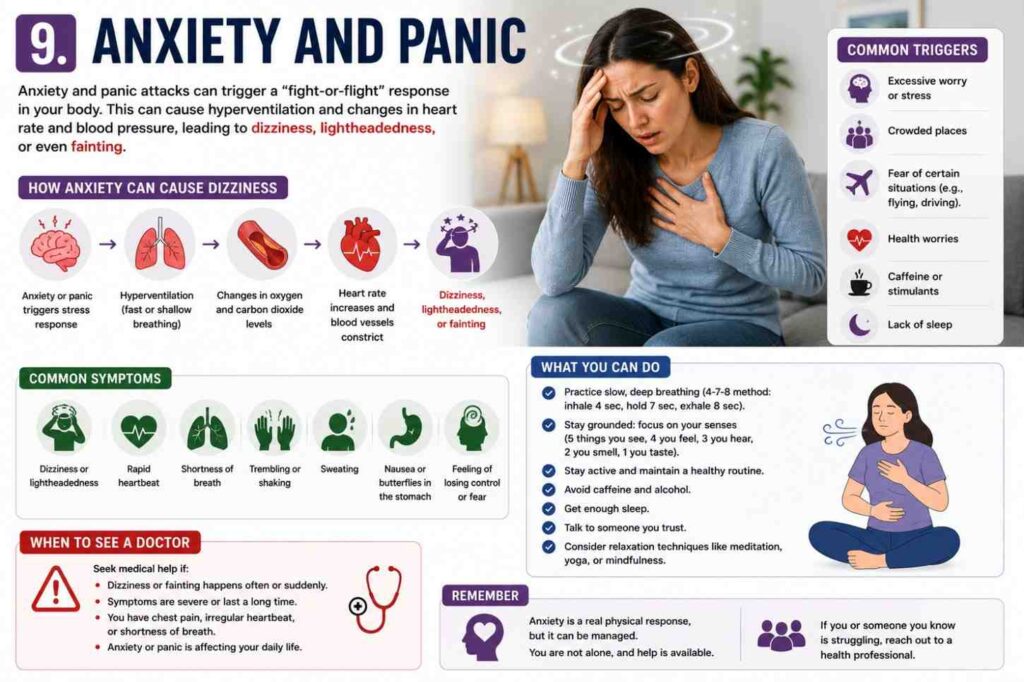
Recognizing the anxiety-dizziness connection and working to manage anxiety through therapy, breathing practices, and stress reduction is often more effective than focusing exclusively on the dizziness itself for people in this category.
10. Neurological Conditions
Less commonly, feeling dizzy when I stand up can be a symptom of neurological conditions that affect the autonomic nervous system or the brain’s ability to regulate blood pressure during position changes. Parkinson’s disease causes significant autonomic dysfunction that frequently produces orthostatic hypotension. Multiple system atrophy, a rare neurodegenerative condition, causes some of the most severe postural dizziness seen in clinical practice. Peripheral neuropathy from causes other than diabetes can also impair the autonomic responses needed to maintain blood pressure on standing.
Neurological causes of standing dizziness are distinguished from the more common causes on this list by their progressive nature, their resistance to standard interventions like hydration and compression stockings, and their association with other neurological symptoms including movement changes, balance problems, cognitive changes, or autonomic symptoms affecting digestion and bladder function.
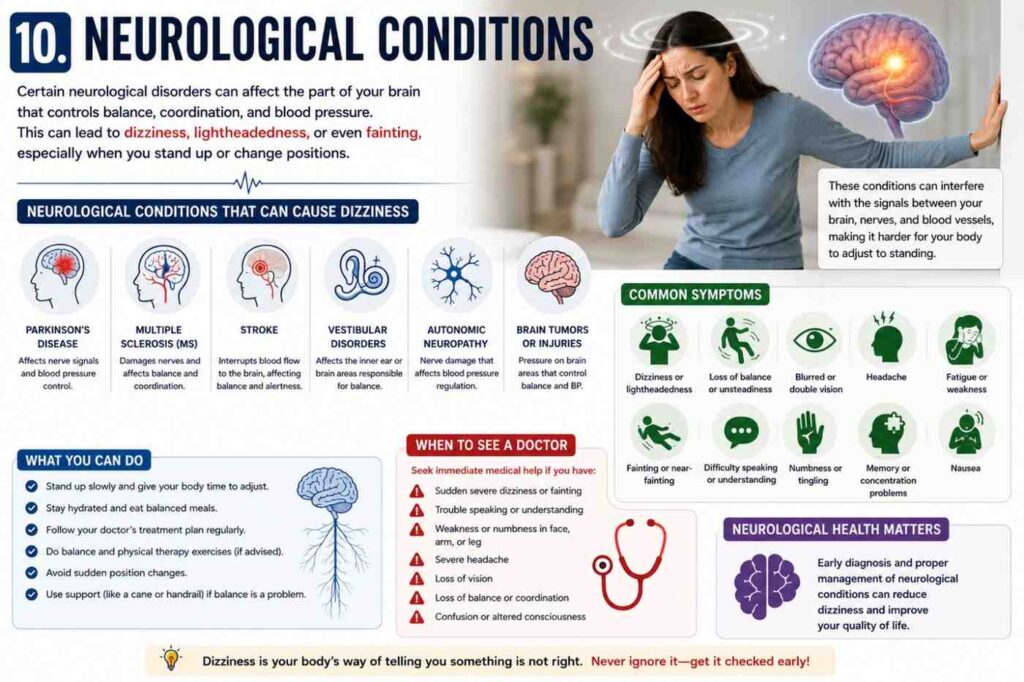
If you feel dizzy when I stand up and you have other neurological symptoms alongside it, a neurological evaluation is the appropriate next step rather than continuing to manage the dizziness alone.
How to Stop feeling dizzy when I stand up
For most people, practical steps make a meaningful difference without any medical intervention. Rise slowly from sitting or lying positions, pausing briefly at the edge of the seat before fully standing. Drink water consistently throughout the day. Avoid prolonged standing in one position, particularly in warm environments. Wear compression stockings if you spend long hours on your feet. Avoid alcohol and caffeine in excess. Exercise regularly to maintain cardiovascular conditioning.
If you feel dizzy when I stand up frequently despite these measures, or if the dizziness is severe enough to cause falls, comes with chest pain, shortness of breath, or significant fatigue, or is not improving over time, a medical evaluation is the right next step. A doctor can identify whether an underlying condition or medication is contributing and guide you toward the most effective treatment.
feeling dizzy when I stand up is common, but frequent or severe episodes are not something you just have to accept. Most causes have practical solutions once properly identified.