

You are fast asleep and then suddenly, without any warning, your calf seizes up like a fist clenching as hard as it can and will not let go. The pain jolts you awake, you scramble to stretch your leg, and you spend the next few minutes limping around the bedroom waiting for the muscle to release. If your legs cramp at night regularly, you already know there are few sleep disruptions quite as sharp and unpleasant as this one.
Nocturnal leg cramps affect a significant portion of American adults, and for many people they happen frequently enough to meaningfully disrupt sleep on a regular basis. The frustrating part is that most people have no idea why their legs cramp at night or what they can do to make it stop. Here are ten of the most common causes and practical steps to address each one.
1. Dehydration and Electrolyte Imbalance
Dehydration is one of the most common and most correctable reasons legs cramp at night. Your muscles need adequate fluid and a proper balance of electrolytes, particularly sodium, potassium, calcium, and magnesium, to contract and relax normally. When you are dehydrated, the concentration of these electrolytes in the fluid surrounding your muscle cells shifts, which disrupts the electrical signals that control muscle contraction and relaxation. The result is that muscles can become hyperexcitable and fire involuntarily, producing the painful sustained contractions that make your legs cramp at night.

People who sweat heavily during the day, drink insufficient water, consume a lot of caffeine or alcohol, or lose significant fluid through illness are particularly prone to dehydration-related leg cramps. Drinking consistently throughout the day rather than trying to catch up in the evening, and ensuring your diet includes potassium-rich foods like bananas, sweet potatoes, and leafy greens alongside adequate sodium, addresses the most common nutritional contributors to nighttime leg cramps
2. Magnesium Deficiency
Magnesium deserves its own entry separate from general electrolyte imbalance because it is specifically and significantly linked to the type of muscle cramping that makes legs cramp at night. Magnesium plays a direct role in muscle relaxation. After a muscle contracts, magnesium is the mineral that allows it to release. When magnesium levels are too low, muscles have difficulty fully relaxing after contraction, making sustained, painful cramps much more likely.

An estimated 50 percent of Americans consume less than the recommended daily amount of magnesium, making deficiency genuinely common rather than a rare edge case. Risk factors for lower magnesium levels include heavy alcohol consumption, type 2 diabetes, gastrointestinal conditions that affect absorption, and long-term use of certain medications including proton pump inhibitors and diuretics.
Magnesium glycinate or magnesium citrate taken in the evening is a supplement approach that many people find significantly reduces how often their legs cramp at night, often within one to two weeks of consistent use. Foods rich in magnesium include dark chocolate, almonds, pumpkin seeds, spinach, and black beans.
Why Do My Muscles Twitch Randomly? 9 Common Causes Explained
3. Prolonged Sitting or Standing
How you spend your day has a direct impact on whether your legs cramp at night. Spending long hours sitting at a desk, particularly with poor posture or with your legs in a fixed position, reduces circulation to the calf muscles and can lead to muscle fatigue and tension that sets the stage for cramping when you finally lie down at night. Similarly, spending long hours on your feet without adequate breaks fatigues the muscles in ways that can trigger cramping during the recovery period of sleep.
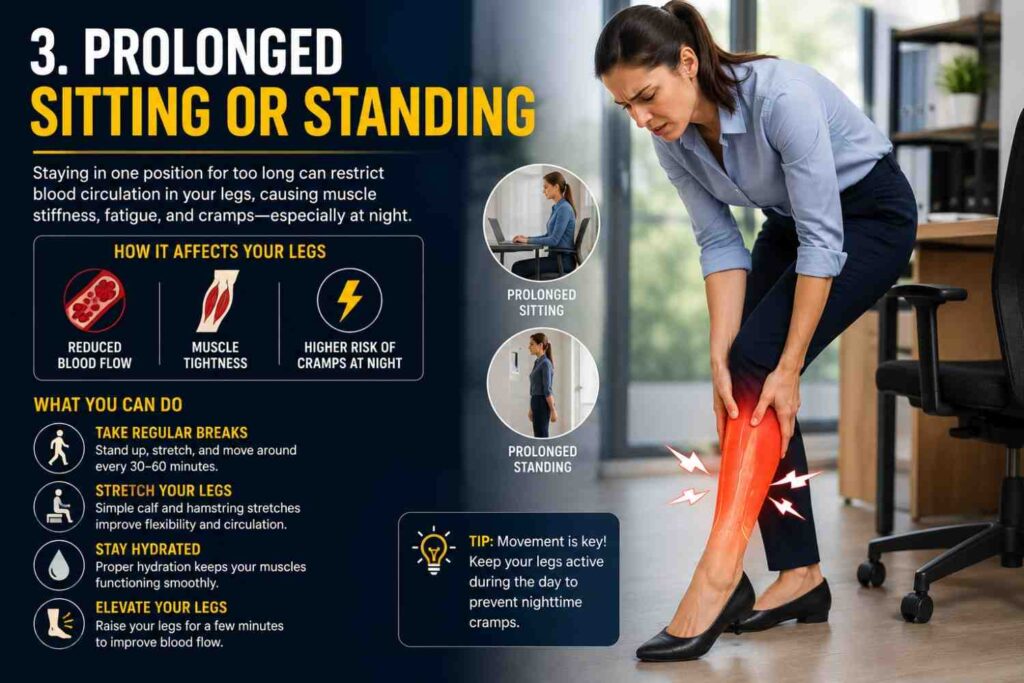
The mechanism involves both reduced circulation during prolonged static postures and the accumulation of metabolic waste products in fatigued muscle tissue that lowers the threshold for spontaneous muscle firing. Taking regular movement breaks throughout the day, stretching your calves before bed, and avoiding sitting with your legs crossed or in positions that restrict blood flow are all practical steps that reduce the likelihood that your legs cramp at night from this cause.
4. Exercise and Muscle Overexertion
Intense exercise, particularly activities that heavily load the calf and hamstring muscles like running, cycling, swimming, or hiking, is a very common trigger for legs that cramp at night in the hours following the workout. When you push muscles beyond what they are conditioned for, you deplete their glycogen stores, generate metabolic byproducts including lactic acid, and create microscopic muscle fiber stress that makes the nerves controlling those muscles more excitable than usual.

This increased excitability is the reason your legs cramp at night after a particularly hard training session even if you have never experienced nighttime cramps before. The cramping typically occurs in the muscles that were most heavily used and tends to happen during the transition from wakefulness to sleep when muscle tone changes.
Proper warm-up and cool-down around exercise, adequate post-exercise hydration and nutrition, and building training intensity gradually rather than dramatically increasing it from one session to the next all reduce the risk of exercise-triggered nocturnal cramping.
5. Poor Sleep Position
The position you sleep in can directly trigger legs cramp at night in susceptible people by placing the calf muscles in a shortened, contracted position for extended periods. Sleeping on your back with your toes pointing downward, which is the natural resting position of the foot when lying flat, keeps the plantar flexors of the calf in a shortened state. When a muscle stays shortened for hours, it becomes more prone to sudden cramping, particularly during the transition between sleep stages when small involuntary movements can trigger a full cramp.
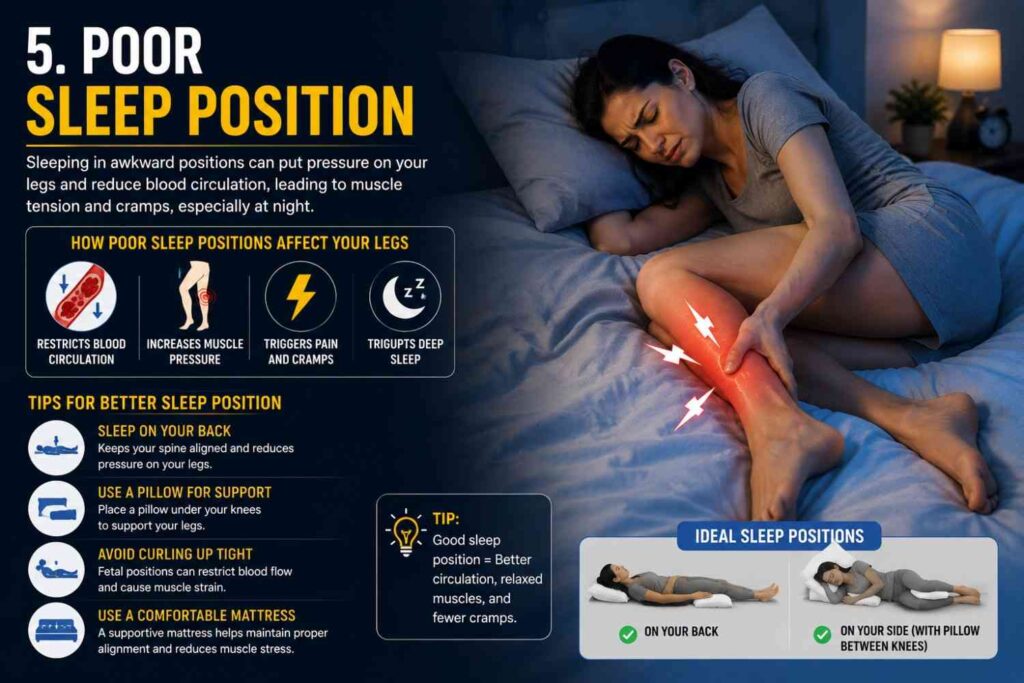
Sleeping with your feet hanging slightly off the end of the bed, using a pillow under your knees to slightly elevate the lower legs, or simply making a conscious effort to keep your feet in a neutral or slightly flexed position before sleep can reduce position-related nocturnal leg cramps. A footboard at the end of the bed that prevents the feet from fully plantarflexing is an old but effective solution that many people find helpful.
6. Medications
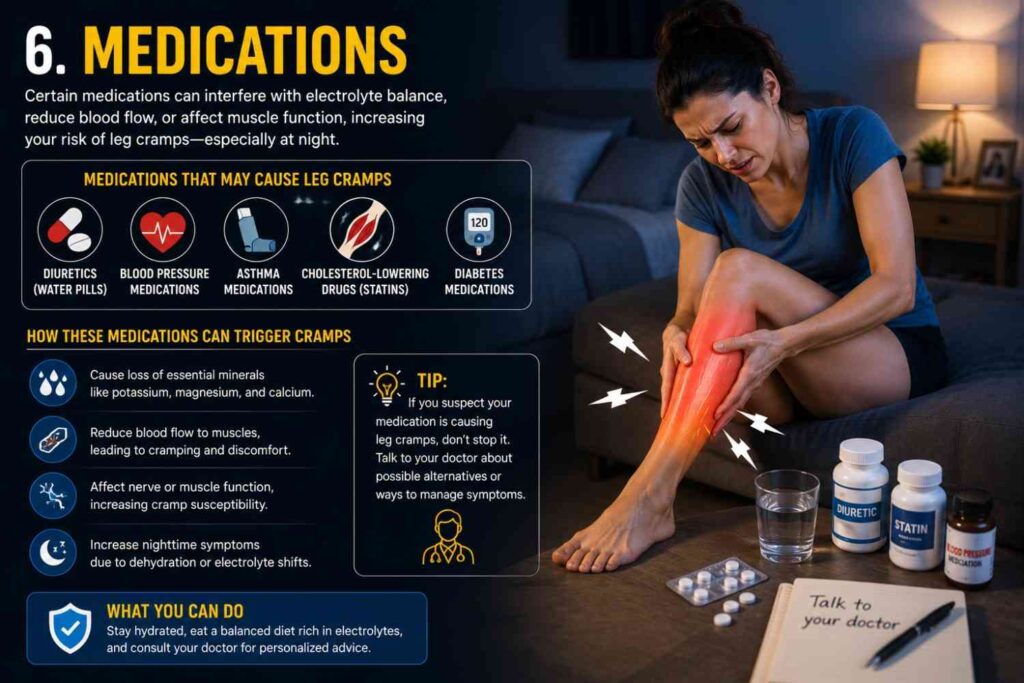
Several commonly prescribed medications list muscle cramps as a known side effect, and nocturnal leg cramps in particular are associated with a meaningful number of drugs that many Americans take regularly. Diuretics, which pull fluid and electrolytes from the body, are among the most significant contributors because they can deplete potassium and magnesium, the two minerals most directly linked to muscle cramping. Statins used for cholesterol management, beta-blockers, certain asthma medications, and some antidepressants have also been associated with increased frequency of legs cramping at night.
If your nocturnal leg cramps started or significantly worsened around the time you began a new medication or had a dose change, this timing is worth noting and discussing with your prescribing doctor. In some cases adjusting the timing of the medication, supplementing the electrolytes the medication depletes, or switching to an alternative can meaningfully reduce cramping without compromising the treatment you need.
Why Do My Muscles Twitch Randomly? 9 Common Causes Explained
7. Peripheral Artery Disease
Peripheral artery disease is a condition where narrowed arteries reduce blood flow to the legs, and it is an important cause of legs cramping at night that should not be overlooked, particularly in people with cardiovascular risk factors. When circulation to the leg muscles is significantly reduced, those muscles do not receive adequate oxygen and nutrients even at rest, and this ischemic environment makes cramping much more likely during the night when blood pressure naturally drops to its daily low point.
Cramping from peripheral artery disease is often felt in the calves or feet and may be accompanied by other signs of reduced circulation including cold feet, pale or bluish skin color in the lower legs, slow-healing sores, and leg pain during walking that improves with rest, a symptom called claudication. Risk factors include smoking, diabetes, high blood pressure, high cholesterol, and obesity.
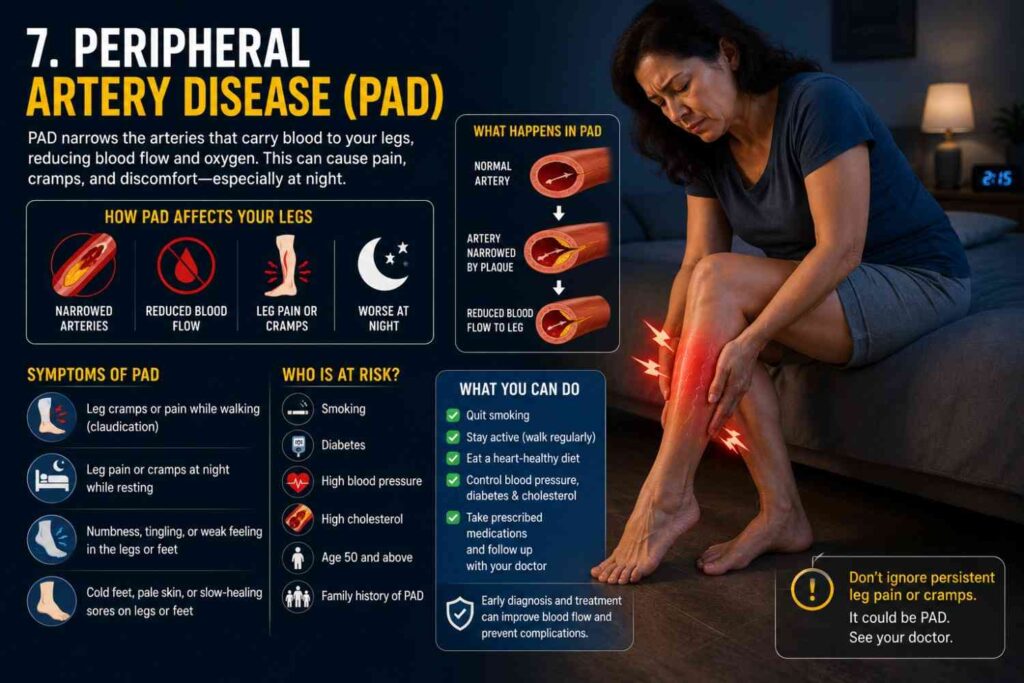
If your legs cramp at night and you have any of these risk factors alongside other signs of poor circulation, a vascular evaluation is an important step to rule out or identify peripheral artery disease.
8. Nerve Compression and Spinal Issues
Compression of the nerves that supply the leg muscles, whether from a herniated disc in the lower spine, spinal stenosis, or prolonged pressure on nerves from sustained postures, can directly cause legs that cramp at night. The nerve signals that control muscle contraction and relaxation become disrupted when the nerve is compressed, and those disrupted signals can trigger involuntary and sustained muscle contractions that feel exactly like ordinary cramps but originate from the nervous system rather than the muscle itself.
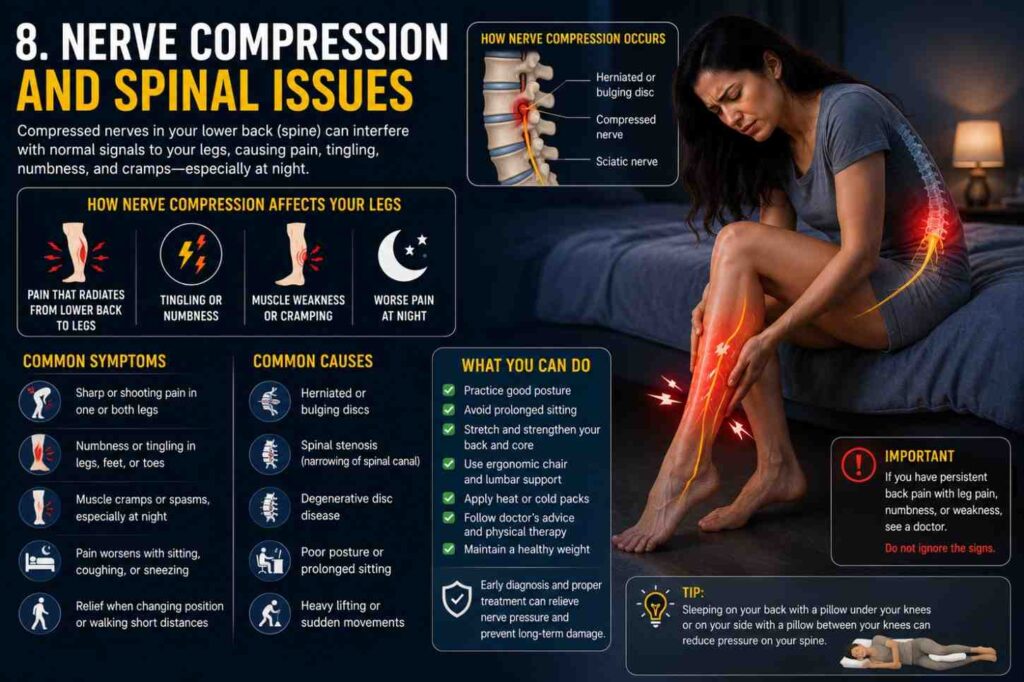
Lumbar spinal stenosis in particular is strongly associated with nocturnal leg cramps in older adults. People with this condition often notice that their leg cramps at night become more frequent and severe as they age, and that the cramps may be accompanied by aching, numbness, or weakness in the legs that is also worse at night or when standing for extended periods.
If your nocturnal leg cramps are accompanied by back pain, numbness or tingling in the legs, or weakness that affects your ability to walk, a spine evaluation is worth pursuing alongside any other approaches to managing the cramping.
9. Pregnancy
Pregnancy is a very common cause of legs cramping at night, with studies suggesting that more than half of pregnant women experience nocturnal leg cramps, particularly in the second and third trimesters. The causes are multiple and work together: increased body weight puts greater mechanical demand on the leg muscles, the growing uterus can compress blood vessels and nerves that supply the legs, and the increased nutritional demands of pregnancy can lead to relative deficiencies in magnesium, calcium, and potassium that directly predispose to cramping.
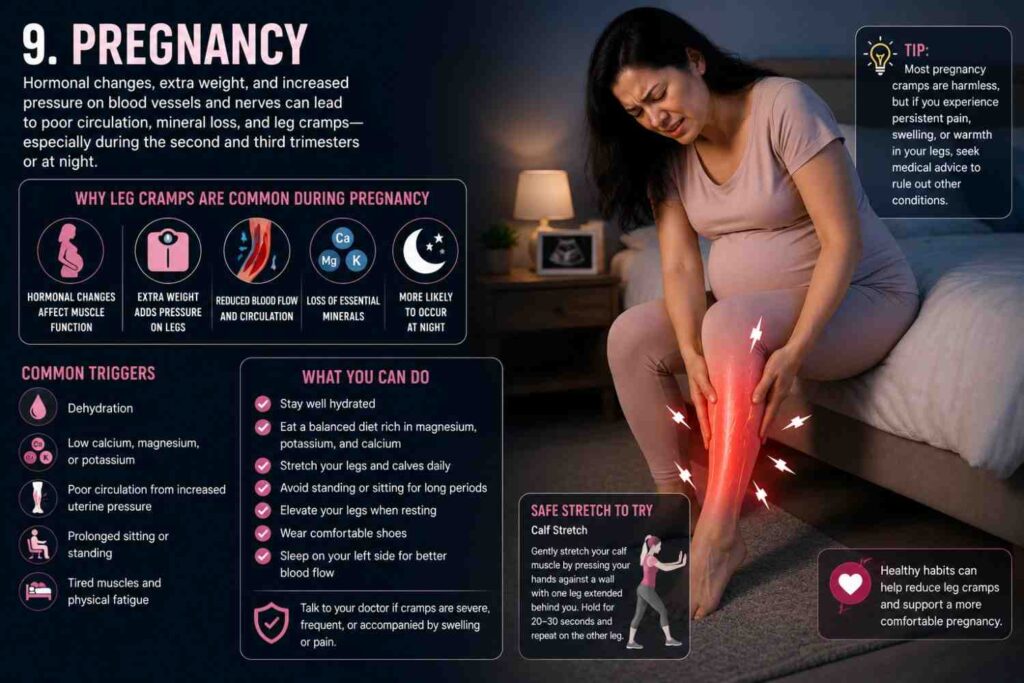
Hormonal changes during pregnancy also affect muscle function and nerve excitability in ways that are not yet completely understood but clearly contribute to the elevated frequency of nocturnal leg cramps during this period. Regular gentle stretching of the calves before bed, maintaining good hydration, ensuring adequate intake of magnesium and calcium through diet and prenatal supplementation, and walking regularly throughout the day all help reduce how often legs cramp at night during pregnancy.
10. Aging and Muscle Changes
Age-related changes in muscle mass, nerve function, and circulation all contribute to the increased frequency of nocturnal leg cramps in older adults. As people age, they naturally lose muscle mass and the remaining muscle becomes less efficient at maintaining normal electrolyte balance during rest. The nerves that control muscle contraction become slightly less precise in their signaling. Circulation to the extremities tends to decline. All of these changes together lower the threshold for spontaneous cramping during sleep.
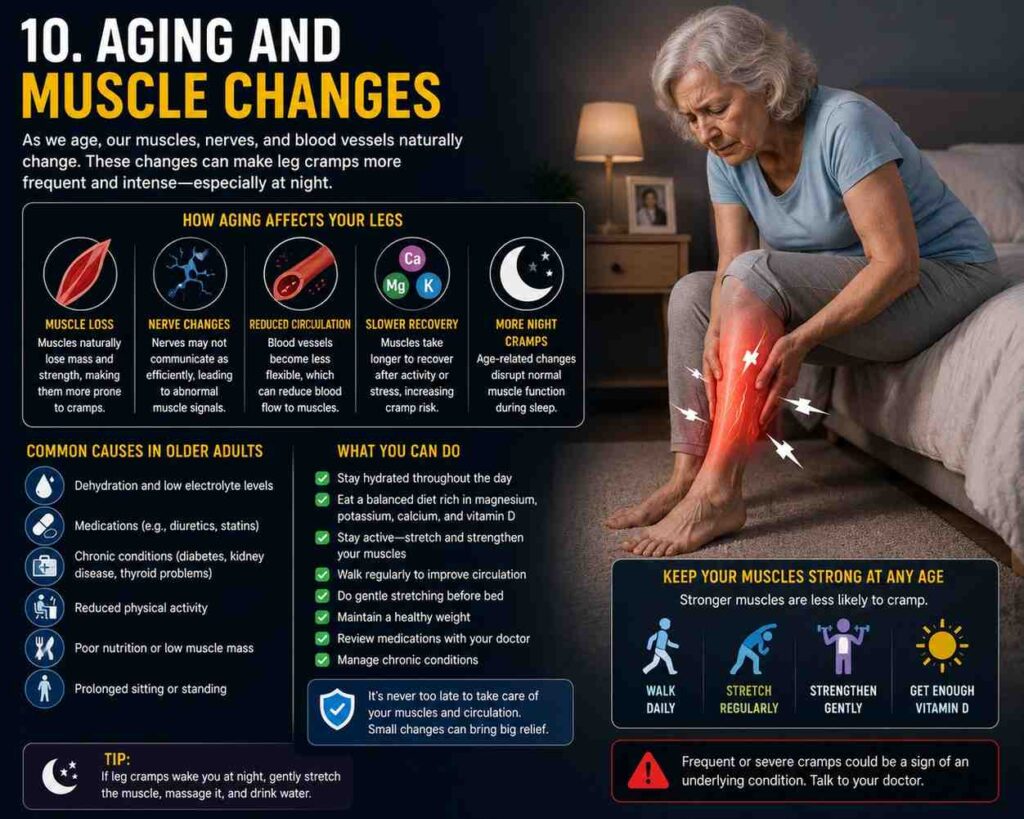
This is why legs that cramp at night become more common with each passing decade and why adults over 60 experience nocturnal leg cramps at significantly higher rates than younger adults. While the aging process itself cannot be reversed, the lifestyle factors that compound it absolutely can be addressed. Staying physically active to maintain muscle mass and circulation, ensuring adequate hydration and electrolyte intake, stretching regularly, and speaking with a doctor about any medications that might be contributing are all meaningful interventions regardless of age.
Why Do My Muscles Twitch Randomly? 9 Common Causes Explained
How to Stop Legs Cramping at Night: Practical Steps
When a cramp strikes, the fastest relief comes from immediately stretching the affected muscle. For a calf cramp, flex your foot upward toward your shin and hold the stretch while massaging the muscle firmly with your hand. Standing up and placing your full weight on the affected leg can also help the muscle release more quickly.
For prevention, the most effective strategies are consistent hydration throughout the day, a diet rich in potassium and magnesium, regular calf stretching before bed, moderate daily physical activity, and reviewing any medications that might be contributing. Magnesium supplementation taken in the evening is one of the most widely reported effective interventions for people whose legs cramp at night frequently.
If your nocturnal leg cramps are severe, happen multiple times per week, do not respond to these measures, or come with other symptoms like leg swelling, pain during walking, or neurological symptoms, a medical evaluation is the right next step. Most causes of legs cramping at night are very manageable once properly identified, and you should not have to dread going to sleep every night.