

There is nothing quite as demoralizing as waking up in pain before your day has even started. You slept, you rested, you did what you were supposed to do, and yet you wake up with headache sitting right behind your eyes or wrapped around the back of your skull like a vice. If this is happening to you regularly, you are not just unlucky. Something specific is causing it.
waking up with headache every morning is more common than most people realize, and in the vast majority of cases it has a clear, identifiable cause. Some of those causes are simple lifestyle factors you can change starting tonight. Others point toward medical conditions that deserve professional attention. Either way, understanding what is behind your morning headaches is the first step toward actually getting rid of them.
Here are eight of the most common reasons you wake up with headache every morning and what each one means for your health.
1. Sleep Apnea

Sleep apnea is one of the most significant and most frequently missed medical causes of waking up with headache every morning. When you have sleep apnea, your airway collapses repeatedly during sleep, causing brief pauses in breathing that reduce the oxygen level in your blood. Low oxygen levels cause the blood vessels in your brain to dilate in an attempt to compensate, and that dilation produces the classic morning headache that people with untreated sleep apnea describe as a dull, pressing pain across the forehead or the back of the head.
The headache from sleep apnea typically resolves within 30 minutes to an hour of waking up and getting upright, which distinguishes it somewhat from other types of morning headaches. Other signs of sleep apnea include loud snoring, waking up with a dry mouth, feeling exhausted despite a full night of sleep, and a bed partner noticing that you stop breathing momentarily during the night.
If you wake up with headache every morning and any of these other symptoms sound familiar, sleep apnea should be evaluated with a sleep study. Treating it with a CPAP machine typically resolves the morning headaches quickly and dramatically improves sleep quality alongside them.
2. Dehydration
Dehydration is one of the simplest and most overlooked reasons people wake up with headache every morning. Your brain is surrounded by fluid, and when total body water drops, that fluid decreases slightly, causing the brain to pull away from the skull and trigger pain signals through the pain-sensitive structures that surround it. This is the mechanism behind the classic dehydration headache, and it is particularly common in the morning after seven or more hours without any fluid intake.
People who drink alcohol in the evening, rely heavily on coffee and tea during the day, live in dry climates or heated indoor environments, or simply do not drink enough water overall are particularly prone to waking up with headache driven by dehydration. Even mild dehydration of one to two percent of body weight is enough to trigger headache symptoms in susceptible people.

The fix is straightforward. Keep a glass of water on your nightstand and drink it as soon as you open your eyes before getting up. Work on consistent hydration throughout the day rather than trying to compensate with large amounts of water right before bed. Many people find that this one habit alone significantly reduces how often they wake up with headache.
3. Teeth Grinding and Jaw Clenching
Bruxism, which is the medical term for teeth grinding and jaw clenching during sleep, is one of the most common causes of waking up with headache every morning in American adults. Most people who grind their teeth at night are completely unaware they are doing it. The first clues are often a sore jaw, worn tooth enamel noticed by a dentist, or a partner hearing the grinding sound during the night.

The headache from bruxism typically presents as a tension-type pain that starts at the temples and can spread across the forehead or down into the neck and shoulders. It is caused by the sustained contraction of the jaw muscles throughout the night, which fatigues and irritates the muscles in a way that produces referred pain into the head. The pain is usually worst first thing in the morning and gradually improves as the jaw muscles relax during the day.
A custom night guard from your dentist is the most effective treatment for bruxism-related morning headaches. It does not stop the grinding entirely but prevents the teeth from making contact, which significantly reduces the muscle tension and headache pain that come with it.
4. Poor Sleep Position and Pillow Problems
The position you sleep in and the pillow you use have a more direct impact on whether you wake up with headache every morning than most people expect. Sleeping with your neck bent at an awkward angle, using a pillow that is too high or too flat for your sleeping position, or sleeping on your stomach, which forces your neck into a rotated position for hours, can all create muscle tension and nerve compression in the neck and upper back that refer pain into the head as a morning headache.

Cervicogenic headaches, which are headaches that originate from the neck rather than the head itself, are frequently at their worst first thing in the morning because the neck has been in a compromised position throughout the night. They typically present as a one-sided pain that starts at the base of the skull and spreads forward toward the forehead or behind one eye.
Side sleepers need a pillow that fills the space between the shoulder and the head to keep the neck in a neutral alignment. Back sleepers do best with a lower, supportive pillow that keeps the neck in its natural curve. Stomach sleeping is the most problematic position for neck-related morning headaches and is worth actively trying to change.
Why Do My Feet Burn at Night? 10 Hidden Reasons You Should Know
5. Caffeine Withdrawal
If you drink coffee or other caffeinated beverages regularly and you consistently wake up with headache every morning, caffeine withdrawal is a very likely contributing factor. Caffeine is a vasoconstrictor, meaning it narrows the blood vessels in your brain. When caffeine levels drop after hours of sleep without it, those blood vessels dilate back to their normal size and that dilation produces a throbbing headache that is typically felt across the forehead.

The timing of caffeine withdrawal headaches is telling. They tend to appear early in the morning, roughly 8 to 12 hours after your last caffeine intake, which for most people lands right around when they wake up. The headache often resolves quickly after a morning cup of coffee, which is itself a sign that caffeine dependence is involved because the coffee is simply preventing the withdrawal rather than treating an independent headache.
Gradually reducing your total caffeine intake over several weeks, spacing your last caffeinated drink earlier in the afternoon, and avoiding dramatic variation in your daily caffeine consumption can all help break the cycle of caffeine-dependent morning headaches.
6. Sleep Disorders and Poor Sleep Quality
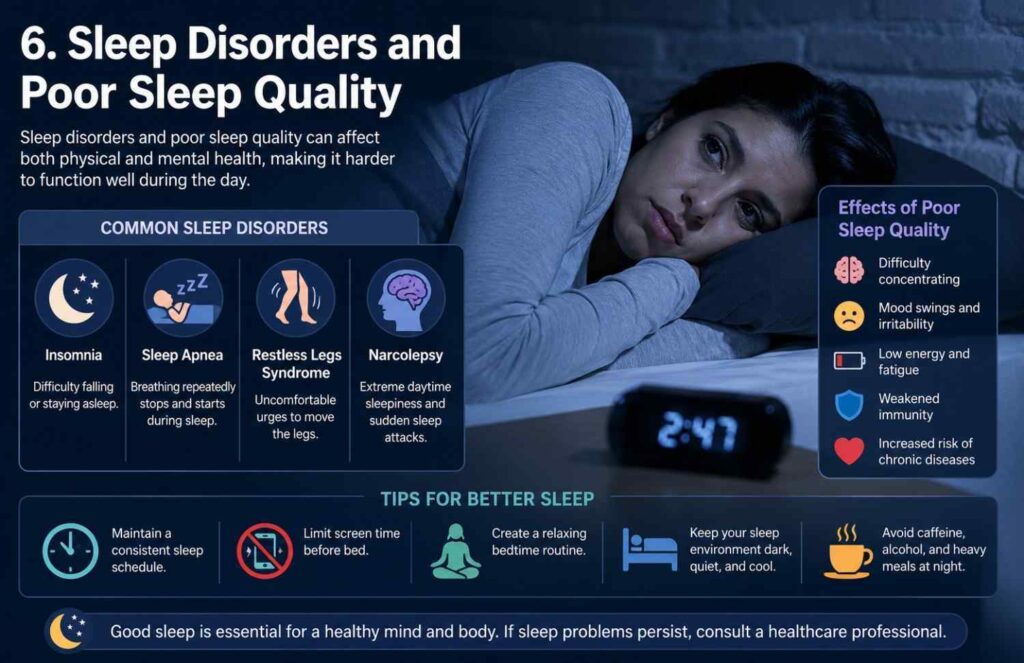
Beyond sleep apnea, other sleep disruptions and disorders can cause you to wake up with headache every morning. Insomnia, restless legs syndrome, and poor overall sleep quality all affect how deeply and continuously you sleep, and disrupted sleep affects the regulation of pain-processing systems in the brain in ways that lower your headache threshold.
Research has consistently found a bidirectional relationship between sleep problems and headaches: poor sleep makes headaches more likely, and headaches make sleep more difficult, creating a cycle that can be hard to break without addressing both sides. People who get fewer than six hours of sleep regularly are significantly more likely to experience morning headaches than those who get seven to eight hours.
Improving sleep hygiene, maintaining a consistent sleep schedule, addressing any underlying sleep disorders, and creating a bedroom environment that supports deep and uninterrupted sleep all contribute to reducing the frequency of waking up with headache.
Why Do My Feet Burn at Night? 10 Hidden Reasons You Should Know
7. High Blood Pressure
Severely elevated blood pressure is a recognized cause of morning headaches, and it is one that deserves prompt medical attention rather than a wait and see approach. Blood pressure follows a natural rhythm throughout the day, typically at its lowest during sleep and rising in the early morning hours before and just after waking. In people with poorly controlled hypertension, that morning rise in blood pressure can be significant enough to produce a headache.
Hypertensive headaches are typically described as a throbbing or pulsating pain at the back of the head and are most severe in the morning when blood pressure is at its daily peak. They may also be accompanied by visual disturbances, dizziness, or shortness of breath. A blood pressure reading above 180 systolic or 120 diastolic is considered a hypertensive crisis and requires emergency medical care.

If you regularly wake up with headache every morning and you have not had your blood pressure checked recently, or if you know you have hypertension that is not well controlled, checking your morning blood pressure and discussing the headaches with your doctor is an important step.
8. Alcohol and Medications

Alcohol consumed the evening before is one of the most direct and common causes of waking up with headache the next morning. Alcohol causes dehydration, disrupts sleep architecture, triggers inflammation, and causes blood vessels to dilate, all of which contribute to the classic morning-after headache that most people have experienced at least once. Even one or two drinks consumed within a few hours of bedtime can produce a mild morning headache in susceptible people, even without reaching a level that anyone would call a hangover.
Certain medications can also cause morning headaches as a side effect or through a phenomenon called medication overuse headache, also known as rebound headache. People who take pain relievers, whether prescription or over-the-counter, more than two to three days per week for headaches are at risk of developing medication overuse headache, where the frequent use of the medication actually causes the headaches to become more frequent and more severe over time.
If you wake up with headache every morning and you take pain medication regularly, talk to a neurologist or headache specialist about whether medication overuse headache may be involved. Treating it requires gradually withdrawing from the overused medication under medical supervision, which typically produces a temporary worsening of headaches before significant improvement occurs.
When Should You See a Doctor About Morning Headaches?
Occasional morning headaches that respond to hydration, a cup of coffee, or over-the-counter pain relief are usually not a cause for urgent concern. But certain patterns of waking up with headache every morning warrant medical evaluation rather than continued self-management.
See a doctor if your morning headaches are getting progressively more severe or more frequent, if they are accompanied by nausea, vomiting, vision changes, numbness, weakness, or confusion, if they wake you up from sleep rather than being present when you wake up naturally, if you have a history of high blood pressure that is not well controlled, or if no amount of lifestyle changes makes a difference in their frequency.
Morning headaches are a signal worth taking seriously. Most of the time the cause is identifiable and very treatable. The sooner you figure out what is behind yours, the sooner you can start your mornings feeling the way you deserve to feel.