

You get into bed, pull up the covers, and within minutes your feet start to feel like they are on fire. The burning is bad enough that you kick off the blankets just to get some relief. Sometimes it is a deep aching heat. Sometimes it is more of a tingling, pins-and-needles sensation that makes it impossible to fall asleep. If your feet burn at night on a regular basis, you are dealing with something that has a real cause and in most cases a real solution.
Burning feet at night is one of those symptoms that people endure for months or even years before bringing it up with a doctor because it does not seem serious enough. But consistently burning feet are your nervous system or your circulation sending a signal worth paying attention to. Here are ten of the most common hidden reasons your feet burn at night and what each one means for your health.
1. Peripheral Neuropathy
Peripheral neuropathy is the most common medical cause of feet burning at night, and it affects millions of Americans across a wide range of ages. Peripheral neuropathy occurs when the nerves that carry signals between your brain, spinal cord, and the rest of your body become damaged. The feet and lower legs are almost always the first area affected because the nerves that travel there are the longest in the body and the most vulnerable to damage.

When peripheral nerves are damaged, they send faulty signals that the brain interprets as pain, heat, tingling, or electric shock sensations even when no actual heat or damage is present. This is why feet burn at night with an intensity that can feel completely out of proportion to anything that has physically happened to them. The burning is typically worse at night because there are fewer competing sensory inputs to distract your nervous system and because lying still removes the mild distraction of movement.
Peripheral neuropathy has many possible causes, with diabetes being the most common, but it can also result from vitamin deficiencies, autoimmune conditions, exposure to toxins, and certain medications. Identifying and treating the underlying cause is the most important step.
2. Diabetic Neuropathy
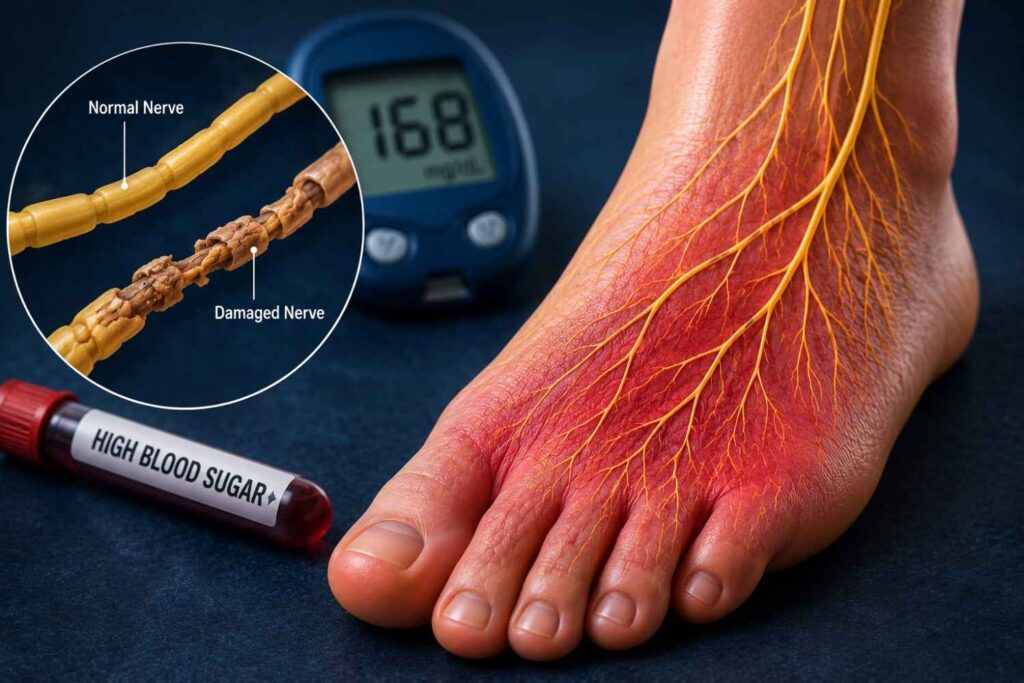
Diabetic neuropathy deserves its own entry because it is by far the leading specific cause of feet that burn at night in the United States. Chronically elevated blood sugar gradually damages the walls of the small blood vessels that supply the peripheral nerves, leading to nerve injury that produces the classic burning, tingling, and numbness that starts in the feet and can progress upward into the legs over time.
An estimated 50 percent of people with diabetes will develop some degree of diabetic neuropathy over the course of their lifetime, and burning feet at night is frequently the symptom that prompts people to seek medical attention and sometimes to discover they have diabetes in the first place. The burning from diabetic neuropathy is characteristically worse at rest and at night, which is what makes it so disruptive to sleep.
If you have diabetes or risk factors for it and your feet burn at night regularly, blood sugar management is the single most important intervention for slowing the progression of nerve damage. Keeping A1C levels in a healthy range significantly reduces the risk of worsening neuropathy.
3. Vitamin B12 Deficiency
Vitamin B12 plays a critical role in maintaining the myelin sheath, the protective coating around nerve fibers that allows them to transmit signals accurately and efficiently. When B12 levels drop too low, myelin begins to deteriorate and the nerves send abnormal signals that the brain interprets as burning, tingling, and numbness. Feet burn at night particularly in B12 deficiency because the longest nerves, which serve the feet, are the most dependent on healthy myelin to function properly.

B12 deficiency is significantly more common than most people realize. Vegetarians and vegans are at high risk because B12 is found almost exclusively in animal products. Older adults absorb B12 less efficiently with age. People who take metformin for diabetes have reduced B12 absorption as a medication side effect. People who have had gastrointestinal surgery may lack the intrinsic factor needed to absorb B12 from food at all.
A blood test measuring serum B12 and methylmalonic acid levels can identify deficiency. Supplementation with B12 tablets or injections can halt the nerve damage and in many cases partially reverse the burning symptoms over several months of consistent treatment.
4. Athlete's Foot and Fungal Infections

Not all burning feet at night come from nerve or circulation problems. Athlete’s foot, a common fungal infection of the skin, can cause intense burning, itching, and stinging sensations in the feet that are noticeably worse at night when the feet have been enclosed in shoes and socks all day creating the warm, moist environment that fungi thrive in.
Athlete’s foot typically starts between the toes but can spread across the sole and sides of the foot. The skin may appear red, flaky, cracked, or blistered, and the burning sensation tends to be accompanied by significant itching. The warmth of bedcovers can intensify the burning by increasing skin temperature in already inflamed tissue.
Antifungal creams available over the counter are highly effective for most cases of athlete’s foot. Keeping feet clean and dry, changing socks daily, and wearing breathable footwear helps prevent recurrence and gives the skin a chance to heal.
5. Tarsal Tunnel Syndrome
Tarsal tunnel syndrome is the foot equivalent of carpal tunnel syndrome in the wrist. The tarsal tunnel is a narrow passageway on the inside of the ankle through which the tibial nerve passes. When that tunnel becomes compressed or inflamed, the tibial nerve gets squeezed and sends burning, tingling, shooting pain, and numbness into the foot and toes.

A podiatrist or orthopedic specialist can diagnose tarsal tunnel syndrome through physical examination and nerve conduction studies. Treatment ranges from orthotics and physical therapy to corticosteroid injections or in persistent cases a surgical procedure to relieve the nerve compression.
People with tarsal tunnel syndrome commonly describe their feet burning at night after a day of standing or walking, with the burning sometimes extending into the arch or heel. Flat feet, ankle injuries, varicose veins near the ankle, and certain systemic conditions that cause tissue swelling can all contribute to tarsal tunnel compression.
6. Hypothyroidism
An underactive thyroid is a frequently overlooked cause of feet burning at night. Hypothyroidism causes fluid retention and slows metabolism throughout the body, and one of its less obvious effects is a condition called hypothyroid neuropathy. When thyroid hormone levels are too low for an extended period, the resulting metabolic disruption can damage peripheral nerves in a way that closely resembles diabetic neuropathy, producing burning, tingling, and numbness that starts in the feet.

Hypothyroidism is also associated with fluid retention that can compress nerves in confined spaces like the tarsal tunnel, compounding the burning symptoms. Women are significantly more likely than men to develop hypothyroidism, and the condition often develops gradually enough that the symptoms are attributed to aging or stress before a thyroid disorder is considered.
A TSH blood test can identify hypothyroidism quickly, and thyroid hormone replacement therapy typically produces noticeable improvement in neuropathic symptoms including burning feet at night within several weeks to months of achieving stable thyroid levels.
7. Erythromelalgia
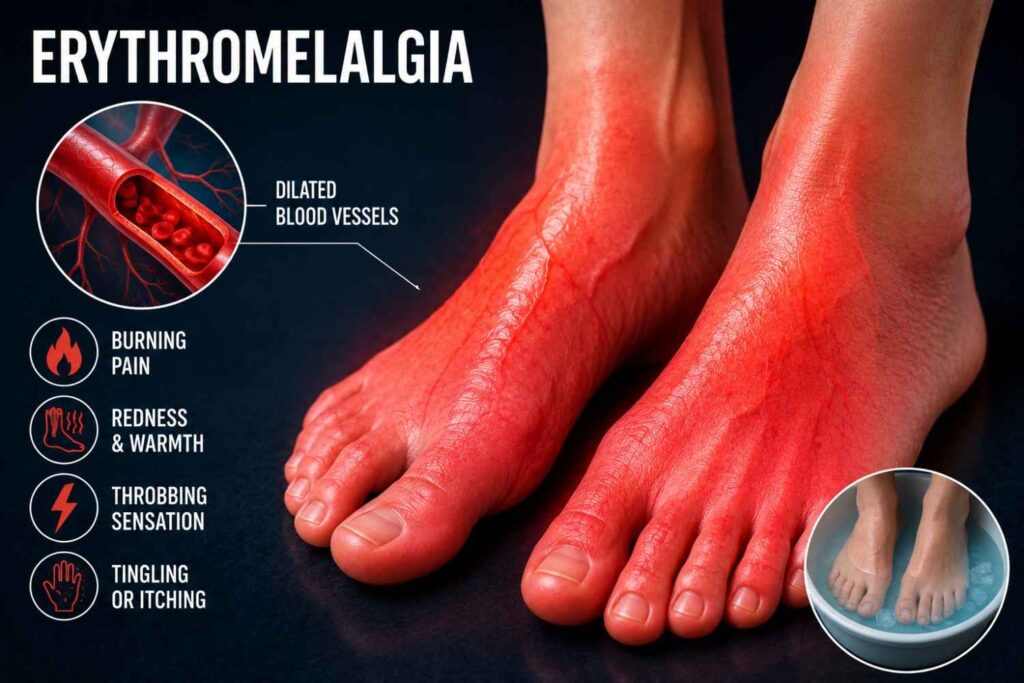
Erythromelalgia is a rare but very distinctive condition where the feet burn at night with an intense heat that causes visible redness and warmth in the affected skin. Unlike many other causes of burning feet where the skin looks normal, erythromelalgia produces a visible flare of redness and swelling that comes and goes, typically triggered by warmth, exercise, or hanging the feet in a dependent position.
People with erythromelalgia often report sleeping with their feet outside the covers or even placing them on cold floors or ice packs to get relief, which is so characteristic of the condition that it is practically diagnostic. The burning in erythromelalgia is genuinely thermally driven, meaning the feet are actually warmer than normal during a flare rather than just feeling that way neurologically.
Erythromelalgia can be primary, meaning it occurs on its own, or secondary to conditions like polycythemia vera, essential thrombocythemia, or certain medications. A hematologist or dermatologist familiar with the condition can help identify the underlying cause and guide treatment.
8. Kidney Disease and Uremia
When the kidneys are not filtering waste products effectively, those waste products accumulate in the bloodstream in a condition called uremia. Uremic neuropathy is a well-recognized complication of chronic kidney disease, and burning feet at night is one of its most common symptoms alongside restless legs syndrome, weakness, and muscle cramps.
The nerve damage in uremic neuropathy results from the toxic effects of accumulated waste products on peripheral nerve fibers, producing a burning and tingling sensation in the feet that tends to worsen as kidney function declines. People with chronic kidney disease, particularly those approaching the need for dialysis, frequently experience worsening burning feet at night as a symptom of declining renal function.
If you have known kidney disease and your feet burn at night, it is worth discussing this symptom with your nephrologist as part of your ongoing management. For people without a known kidney diagnosis, persistent burning feet alongside unexplained fatigue, swelling, and changes in urination frequency warrant a kidney function blood test.
9. Poor Circulation and Peripheral Artery Disease
Reduced blood flow to the feet from peripheral artery disease, which is a narrowing of the arteries that supply the legs and feet, can cause burning sensations as the tissues receive less oxygen than they need. Unlike nerve-related burning that tends to feel like heat or electric shocks, circulation-related burning is often more of an aching, cramping heat that worsens with activity and improves with rest in mild cases but can become constant as the condition progresses.
Risk factors for peripheral artery disease include smoking, diabetes, high blood pressure, high cholesterol, and a family history of cardiovascular disease. People with these risk factors who notice their feet burn at night alongside cold feet, leg pain when walking that goes away with rest, or sores on the feet that heal poorly should raise these symptoms with their doctor promptly. Peripheral artery disease is a significant cardiovascular risk factor that benefits from early detection and management.
10. Restless Legs Syndrome and Sleep-Related Conditions
Restless legs syndrome causes uncomfortable sensations in the legs and feet, including burning, crawling, tingling, and an irresistible urge to move the legs, and these sensations are worst at night when lying still. While RLS is often described as a crawling or creeping sensation, many people with the condition describe it as a burning feeling in the feet and lower legs that makes it impossible to stay still in bed.
RLS is associated with iron deficiency, pregnancy, kidney disease, certain medications, and genetic factors. The burning and discomfort of RLS resolve temporarily when you move your legs or get up and walk around, which distinguishes it from burning that persists regardless of movement.
If your feet burn at night alongside an irresistible urge to move your legs, and if moving provides temporary relief, RLS is a likely diagnosis. A doctor can evaluate you for underlying causes and discuss treatment options ranging from iron supplementation to prescription medications depending on the severity.
What to Do About Burning Feet at Night
The right approach depends entirely on the cause, but there are several things you can do right away to get some relief while you figure out what is behind it. Soaking your feet in cool water before bed can temporarily reduce the burning sensation. Keeping your bedroom cool and sleeping with your feet outside the covers helps if warmth triggers or worsens your symptoms. Avoiding alcohol and caffeine before bed reduces nerve irritation and improves sleep quality overall.
More importantly, if your feet burn at night consistently and it is affecting your sleep or your daily life, bring it up with your doctor. A basic evaluation including blood sugar, B12, thyroid function, kidney function, and a look at your current medications can identify the most common causes quickly and point toward the right treatment.
Burning feet at night is a signal your body is sending. The sooner you figure out what it is saying, the sooner you can actually do something about it.