
You wake up feeling awful. Your throat’s scratchy, your head aches, and you’re not sure if you should drag yourself out of bed or call in sick. The question that immediately pops into your mind: “What do I have?”
It’s a question we’re all asking more often these days. Is it just a cold? Did I catch the flu? Or could it be COVID? Three years ago, this might have seemed like a straightforward question. Now? It feels like trying to solve a puzzle where half the pieces look exactly the same.
I get it. The uncertainty is exhausting. Every sniffle feels loaded with implication. Do you need to test? Should you cancel your plans? Are you putting others at risk?
Let’s walk through this together and figure out what your body might be trying to tell you.
Why Is It So Hard to Tell Them Apart?
Here’s the frustrating truth: many signs and symptoms of flu and COVID-19 overlap, which makes distinguishing between them based on how you feel almost impossible. And when you throw the common cold into the mix, things get even murkier.
Think of it this way: all three are respiratory viruses that affect your nose, throat, and lungs. They’re spread in similar ways, often cause similar discomfort, and can leave you feeling miserable. COVID is honestly a great mimicker of other viruses, with infections that can feel like anything from a mild cold to severe flu.
But there are subtle differences, patterns that can give you clues about what you’re dealing with. And understanding these differences isn’t just about satisfying your curiosity; it can help you recover faster and protect the people around you.
The Common Cold: Your Body’s Familiar Foe
Let’s start with the one we all know too well. The common cold is that annoying companion that shows up uninvited, usually when you’re already stressed or run down.
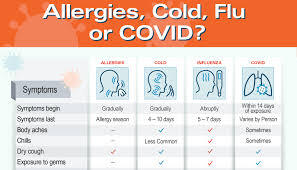
Cold symptoms tend to be mild and develop gradually over a few days. You’ll typically notice things happening from your throat upward: a runny or stuffy nose, sneezing, maybe some sinus pressure, and a scratchy throat. You might have a cough, but it’s usually not too severe.
Here’s what sets a cold apart: you generally won’t have a high fever or significant body aches. You feel lousy, sure, but you can probably still function, make yourself soup, binge-watch your favorite show, maybe even work from home if you push yourself.
The duration is usually manageable, too. Most colds stick around for about three to seven days, though that cough might linger a bit longer just to remind you it was there.
The biggest relief? There’s no urgent need for testing or specific medical treatment. Rest, fluids, over-the-counter cold medicine, and maybe some honey for that cough (if you’re over age one), that’s usually all you need. Your body knows how to handle this one.
Influenza: When It Hits Hard and Fast
Now, the flu is a different beast entirely. If a cold is an unwelcome houseguest, the flu is more like someone broke into your house and rearranged all your furniture while you were sleeping. You know something serious just happened.
Flu symptoms typically appear one to four days after exposure, developing suddenly rather than gradually. One moment you’re fine, the next you’re absolutely flattened. This sudden onset is actually one of the key telltale signs of influenza.
The fever usually comes on strong, we’re talking 100 to 104 degrees Fahrenheit, particularly in the first couple of days. And it doesn’t come alone. You’ll likely experience chills that make you want to wrap yourself in every blanket you own, body aches that feel like you ran a marathon you didn’t train for, and a headache that just won’t quit.
Unlike a cold, the flu affects your whole body, not just your upper respiratory system. You might have a cough, sore throat, and congestion, but it’s that overwhelming fatigue and those intense body aches that really mark the flu’s calling card.
Here’s why the flu matters more than a cold: it can lead to serious complications, especially for young children, older adults, pregnant people, and anyone with chronic health conditions like asthma, diabetes, or heart disease. Pneumonia, bronchitis, and worsening of existing conditions are real risks.
The good news? If you catch it early, within the first 48 hours of symptoms, antiviral medications like Oseltamivir can make your illness milder and shorter. That’s why it’s worth contacting your doctor if you suspect the flu, especially if you’re in a higher-risk group.
COVID-19: The Unpredictable Wildcard
And then there’s COVID-19, which has proven to be the ultimate shape-shifter. COVID-19 typically shows symptoms about five days after infection, though this can range from two to fourteen days, a wider window than either colds or flu.
What makes COVID so tricky is its incredible range. Some people barely notice they’re sick, experiencing symptoms milder than a common cold. Others become severely ill. The same virus, wildly different outcomes, and we still don’t fully understand why.
The most common COVID symptoms include fever, cough, congestion, runny nose, and fatigue. So far, this sounds like everything else, right? But there are some distinctive clues that can point toward COVID.
Loss of taste or smell, while not universal, is much more closely associated with COVID than with flu or colds. If your morning coffee suddenly tastes like absolutely nothing, or you can’t smell your favorite candle, COVID should be high on your suspect list.
Some people also experience gastrointestinal symptoms, nausea, diarrhea, and upset stomach, which are less common with typical colds or flu in adults.
But here’s the thing that keeps healthcare providers on their toes: COVID can surprise you. It can feel like a mild head cold one day and then suddenly get worse. Or it can linger, with symptoms that persist or come and go for weeks or even months (hello, long COVID).
In severe cases, COVID can cause serious complications, including pneumonia, blood clots, and organ damage, which is why taking it seriously matters, even if you’re young and healthy.
The Only Way to Know for Sure: Testing
I wish I could give you a definitive checklist that would tell you exactly what you have based on symptoms alone. But the truth is, you cannot distinguish between flu and COVID-19 by symptoms alone; testing is needed to confirm a diagnosis.
This might feel frustrating, but it’s actually empowering information. You don’t have to guess and worry. COVID-19 tests are widely available, at pharmacies, health centers, and even in home test kits. Many providers can also administer tests that check for both flu and COVID at the same time.
Why does testing matter beyond just satisfying your curiosity? Because both flu and COVID have treatments that work best when started early. For COVID, certain antiviral medications must be taken within five days of symptom onset. For flu, that window is even shorter, within 48 hours.
If you’re at higher risk for complications, because of age, pregnancy, or health conditions, knowing what you have can literally be the difference between a rough week at home and a trip to the hospital.
When to Be Concerned
Most respiratory infections resolve on their own with rest and home care. But there are times when you need medical attention, and you shouldn’t wait.
Seek emergency care if you experience:
- Difficulty breathing or shortness of breath
- Persistent chest pain or pressure
- Confusion or inability to stay awake
- Bluish lips or face
- Severe or persistent vomiting
For children, also watch for difficulty waking, fast breathing, or not drinking enough fluids.
These symptoms suggest your illness has progressed beyond what your body can handle alone. Don’t try to tough it out; get help.
The Prevention Side of Things
Here’s some genuinely good news: the same strategies that protect you from one respiratory virus tend to protect you from all of them.
Vaccination remains your best defense against both flu and COVID. The CDC recommends yearly flu shots for everyone six months and older, and updated COVID vaccines for most adults. Yes, you can get both at the same time, and doing so is much better than skipping either one.
Vaccines won’t necessarily prevent you from getting infected, but they dramatically reduce your risk of severe illness, hospitalization, and death. They can also make your symptoms milder if you do catch something.
Beyond vaccines, the basics still work: wash your hands frequently (and properly, 20 seconds, with soap), avoid touching your face, and stay home when you’re sick. That last one might be the most important. I know there’s pressure to push through, but showing up to work or social events while you’re contagious isn’t noble; it’s risky for everyone around you.
Taking Care of Yourself While You’re Sick
Whether you have a cold, flu, or COVID, your body needs similar support to recover.
Rest isn’t optional, it’s medicine. Your immune system does its best work when you’re sleeping, so give yourself permission to actually rest instead of trying to work from your couch.
Hydration matters more than you think. Fever, sweating, and even just breathing through your mouth when you’re congested all dehydrate you. Water, juice, broth, herbal tea, keep the fluids coming.
Over-the-counter medications can ease your symptoms. Acetaminophen or ibuprofen for fever and aches, decongestants for stuffiness, and cough suppressants for that persistent cough. Just follow the dosing instructions and be aware of what’s in combination products so you don’t accidentally double up.
Use a humidifier to ease congestion and make breathing easier. Prop yourself up with extra pillows when you sleep; it helps with both breathing and drainage.
And please, remember that antibiotics won’t help. All three of these illnesses are caused by viruses, not bacteria, so antibiotics are useless against them and can actually cause harm by killing beneficial bacteria in your body.
The Bottom Line
Living through another season of respiratory viruses doesn’t have to feel overwhelming, even though it sometimes does. The key is accepting that uncertainty is part of the picture, you won’t always know immediately what you have, and that’s okay.
What matters is how you respond. Listen to your body. Test when appropriate, especially if you’re at higher risk or might have COVID. Contact your doctor if you’re concerned or if symptoms persist or worsen. Get vaccinated. Take care of yourself and others.
And maybe most importantly, be kind to yourself if you get sick. Your body is doing complex, remarkable work fighting off an infection. Give it the time, rest, and support it needs to do that job well.
We’ve all become amateur epidemiologists over the past few years, but sometimes the best approach is simpler: pay attention, take precautions, and trust that most of the time, your body knows what it’s doing. And when it needs help, help is available.
Stay well out there.