
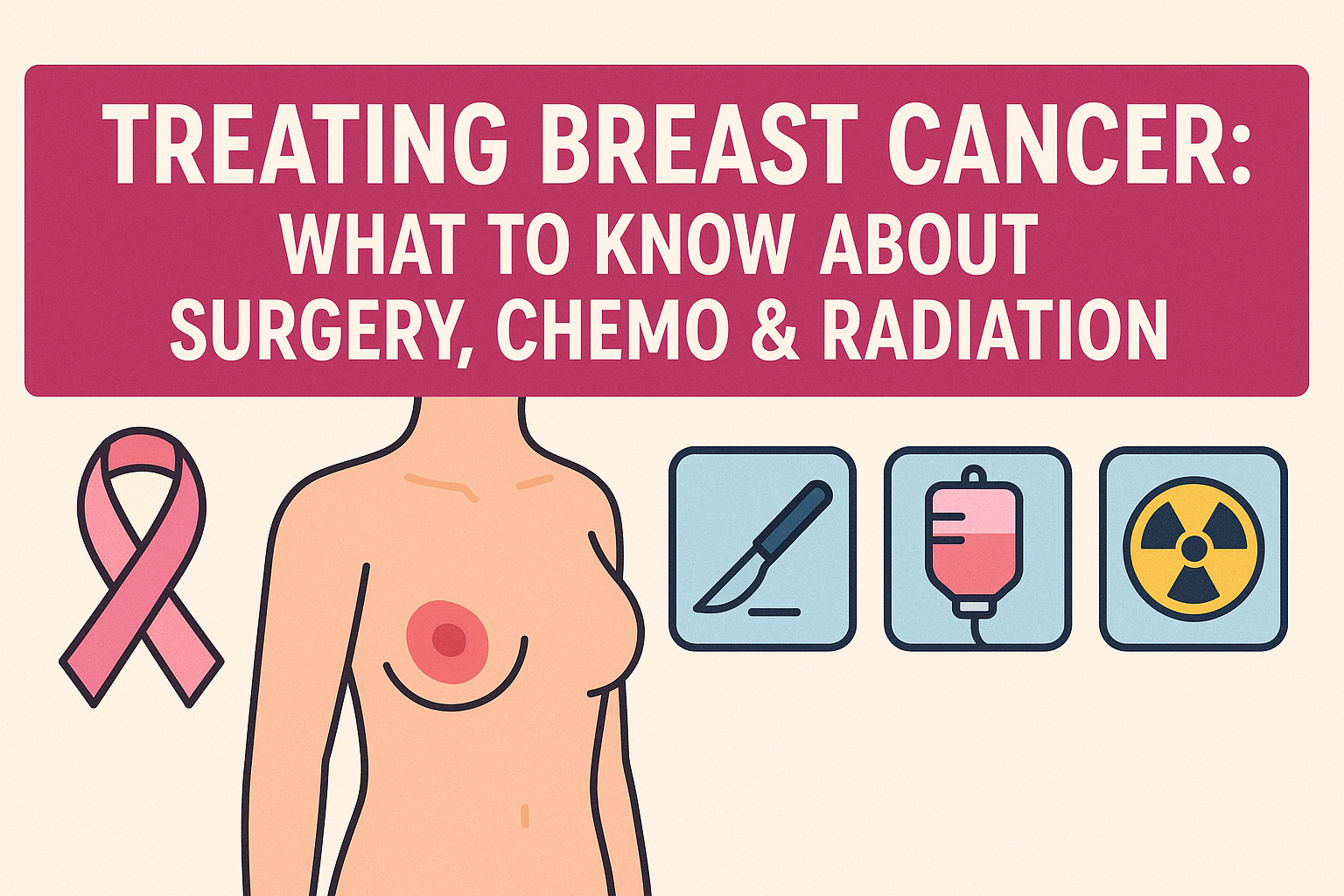
The moment someone hears “You have breasr cancer,” life takes a sudden turn. Life takes a sharp turn, and the road ahead becomes uncertain. Among the various forms of this disease, breast cancer is one of the most common and the most researched. Thanks to medical advancements, early detection and effective treatments have significantly improved outcomes. But navigating those treatment options can feel overwhelming.
If you or a loved one is facing a diagnosis, understanding the major treatment paths, chemotherapy, radiation therapy, and surgery, can help you feel a little more in control.
The Treatment Landscape: What You Need to Know
There is no single approach to treating breast cancer. The treatment plan depends on the type, stage, hormone receptor status, and overall health of the patient. It often involves a combination of therapies designed to remove, shrink, or destroy the cancer cells.
Let’s explore the three most common types of treatment, their purpose, how they work, side effects, and what to expect.
1. Surgery: The First Line of Defense
Surgery is often the first step in treating solid tumors. The goal is to remove as much of the cancerous tissue as possible, often followed by other therapies to ensure all cancer cells are eliminated.
Types of Breast Surgery
Lumpectomy: Also known as breast-conserving surgery, a lumpectomy removes the tumor and a small margin of surrounding tissue. The rest of the breast cancer remains intact. To reduce the likelihood of recurrence, radiation therapy is commonly given afterward. It’s commonly chosen for early-stage breast cancers.
Mastectomy: A mastectomy involves removing the entire breast cancer. In some cases, both breasts are removed (double mastectomy), especially if there is a high genetic risk or if the cancer is more aggressive. Reconstruction options, whether surgical or external prosthetics, are often offered as part of recovery.
Sentinel Node Biopsy & Axillary Dissection: These procedures assess whether breast cancer has spread to the lymph nodes. Removal of affected nodes helps prevent further spread but may result in swelling or lymphedema.
What to Expect
Surgical procedures usually require a few weeks of recovery. Pain, fatigue, and emotional adjustments are common. You may also need to consider physical therapy to regain full range of motion in the arm and shoulder, especially if lymph nodes were removed.
2. Chemotherapy: Systemic Cancer-Fighting Power
Chemotherapy uses strong medicines to fight cancer cells wherever they might be in the body. Since it travels through the bloodstream, it can reach and attack cells that may have spread beyond the breast cancer, even the ones too small to be seen. While it sounds intense, it’s a powerful tool that helps stop the breast cancer from growing or coming back.
When Is Chemo Recommended?
- Before surgery (neoadjuvant chemotherapy) to shrink large tumors
- Following surgery, chemotherapy may be used to target residual breast cancer cells.
- For advanced-stage or metastatic breast cancer that has spread beyond the breast area
Chemotherapy can be particularly effective in aggressive or fast-growing tumors and is tailored to each individual’s cancer subtype.
You can read these blog also :- Understanding Breast Cancer: Insights and Support for Your Journey
Common Chemotherapy Drugs
Drugs are often given in combinations like AC (Adriamycin and Cyclophosphamide) or CMF (Cyclophosphamide, Methotrexate, and 5-fluorouracil), depending on the individual case. Treatments are usually delivered in cycles, a period of treatment followed by rest. Chemotherapy infusions can be given at a hospital, a clinic, or occasionally at home.
Side Effects
Chemo doesn’t just kill cancer cells; it can affect healthy ones too. This results in side effects such as:
- Fatigue
- Hair loss
- Nausea and vomiting
- Mouth sores
- Lowered immunity (due to reduced white blood cells)
These side effects are temporary, and most go away after treatment ends. Some long-term effects, like early menopause, heart problems, or neuropathy (nerve damage), may occur, depending on the drug used.
3. Radiation Therapy: Targeted Precision
Using high-energy rays like X-rays, radiation therapy targets and destroys cancer cells in defined parts of the body. It’s a local treatment, meaning it focuses only on the area where the cancer was found.
When Is Radiation Used?
Radiation therapy is typically recommended after a lumpectomy or mastectomy to target any residual cancer cells and reduce the chance of recurrence. It may also be used to treat lymph nodes or bones if the disease has spread.
Types of Radiation Therapy
External Beam Radiation: The most common type, where beams are directed at the breast from a machine outside the body.
Brachytherapy: Involves placing radioactive material directly into the breast tissue near the tumor site. This is often used in early-stage cases and typically requires fewer sessions than external radiation.
What to Expect
Radiation is usually delivered over several weeks. Treatments are painless, but skin irritation, fatigue, and tenderness are common during and shortly after therapy. Long-term side effects may include slight changes in skin texture, darkening of the skin, or firmness of breast tissue. Rarely, radiation can affect the lungs or heart, especially when the left breast is involved.
Clinical Trials: A Path to New Treatments
For some patients, participating in a clinical trial may be a valuable option. Clinical trials offer access to new drugs, therapies, or combinations that are still being tested but show promise. These studies follow strict safety protocols and can provide cutting-edge treatment while contributing to breast cancer research.
Your oncologist can help determine whether a clinical trial may be appropriate based on your diagnosis and health status.
Integrative and Supportive Care
Beyond the big three treatments, many patients benefit from additional therapies aimed at improving quality of life and managing symptoms. These may include:
- Hormone therapy for hormone-receptor-positive cancers
- Targeted therapy like trastuzumab (Herceptin) for HER2-positive cancers
- Immunotherapy for select aggressive cancers
- Psychological support: counseling, support groups, therapy
- Nutrition: dietary guidance to maintain strength
- Physical therapy to restore mobility post-surgery
These therapies work alongside mainstream treatments to promote healing and overall well-being.
Personalized Treatment Plans
What works for one patient may not be ideal for another. Factors like age, genetic mutations (such as BRCA1 or BRCA2), tumor biology, and overall health play a big role in shaping the right treatment plan.
That’s why it’s essential to work with a multidisciplinary team, including oncologists, surgeons, radiologists, nurses, and mental health professionals, who can tailor a treatment plan that’s both medically sound and emotionally supportive.
Emotional Resilience Through the Journey
While the physical aspects of treatment are challenging, the emotional toll can be just as intense. Fear, anxiety, body image issues, and the pressure of decision-making are common. Survivors often describe the experience as both physically and emotionally transformative. Self-care plays a crucial role, whether through mindfulness, prayer, journaling, nature walks, or creative outlets. Talking to survivors, joining support groups, or leaning on family and friends can offer immense emotional relief. If you feel overwhelmed, don’t hesitate to seek professional counseling or join a community-based support network. You are not alone, and healing often begins with compassion toward others and yourself.
Final Thoughts
A breast cancer diagnosis is never easy. But knowing your options and what to expect from each treatment can bring clarity and confidence during a deeply uncertain time.From surgery that removes the tumor, to chemotherapy that attacks cells throughout the body, to radiation that cleans up what’s left behind, each treatment plays a powerful role in recovery. Add to that integrative therapies, emotional support, and the possibility of clinical trials, and you have a comprehensive approach toward healing. Most importantly, remember this: you are more than your diagnosis. There is a path forward. There is hope at every stage. And there are people walking beside you, every step of the way.
Take one day at a time. Lean into support. Trust the journey. Healing happens.
1 thought on “Treating Breast Cancer: What to Know About Surgery, Chemo & Radiation”