

You fall asleep just fine. But then somewhere around 1am, 3am, maybe 4am, your eyes pop open and you are wide awake again. You toss and turn, fall back asleep, and then it happens again. By the time your alarm goes off, you feel like you barely slept at all. If you are waking up multiple times a night on a regular basis, something is off, and your body is trying to tell you something.
The frustrating part is that most people assume this is just how they sleep, or that it is a normal part of getting older. But waking up multiple times a night is not something you just have to live with. In most cases, there is a specific, identifiable reason behind it, and once you understand what is causing it, you can actually do something about it.
Here are nine of the most common hidden reasons you keep waking up multiple times a night and what each one means for your sleep.
1. Your Bladder Is Waking You Up

This is the number one reason adults wake up in the middle of the night, and it is more common than most people admit. The medical term is nocturia, and it simply means waking up one or more times during the night to use the bathroom. While it becomes more common with age, it is not exclusively an older adult problem.
Drinking too many fluids in the evening, consuming alcohol or caffeine late in the day, and eating high-sodium foods at dinner can all increase nighttime urination. Certain medications including diuretics and some blood pressure drugs are also common culprits. In some cases, nocturia points to something worth checking out medically, like a bladder issue, diabetes, or in men, an enlarged prostate.
If bladder trips are the main reason you are waking up multiple times a night, start by cutting off fluids at least two hours before bed and eliminating caffeine and alcohol in the evening. If the problem persists, bring it up with your doctor.
2. Stress and Anxiety Are Keeping Your Brain Active

Your brain does not automatically switch off the moment you fall asleep. When you are dealing with chronic stress or anxiety, your nervous system stays in a low-level alert state even during sleep. This makes your sleep lighter, more fragmented, and much easier to interrupt. Even minor sounds or temperature changes that would not wake up a relaxed person can pull a stressed person fully awake.
People who are waking up multiple times a night often notice that the wake-ups tend to happen around the same time, commonly between 2am and 4am. This is when your body’s cortisol levels begin rising to prepare you for the day, and in people with elevated stress, that early cortisol rise can be strong enough to pull you out of sleep entirely.
If stress or anxiety is driving your nighttime wake-ups, address it directly. Even simple practices like writing down your worries before bed, doing light stretching, or limiting news and social media in the evening can reduce the nervous system activation that is interrupting your sleep.
3. Sleep Apnea Is Disrupting Your Breathing

Sleep apnea is one of the most underdiagnosed conditions in the country, and it is a leading cause of waking up multiple times a night without knowing why. When you have sleep apnea, your airway partially or fully collapses during sleep, causing brief pauses in breathing. Your brain jolts you awake just enough to restore normal breathing, but usually not enough for you to remember it happening.
You might wake up dozens of times per night from sleep apnea without ever being aware of it. What you do notice is that you feel exhausted in the morning, you may snore loudly, and you frequently wake up with a dry mouth or headache. A bed partner noticing that you stop breathing momentarily during sleep is one of the strongest indicators.
Sleep apnea is very treatable, most commonly with a CPAP machine that keeps your airway open during sleep. If you suspect this is why you are waking up multiple times a night, talk to your doctor about a sleep study.
4. Your Bedroom Environment Is Working Against You
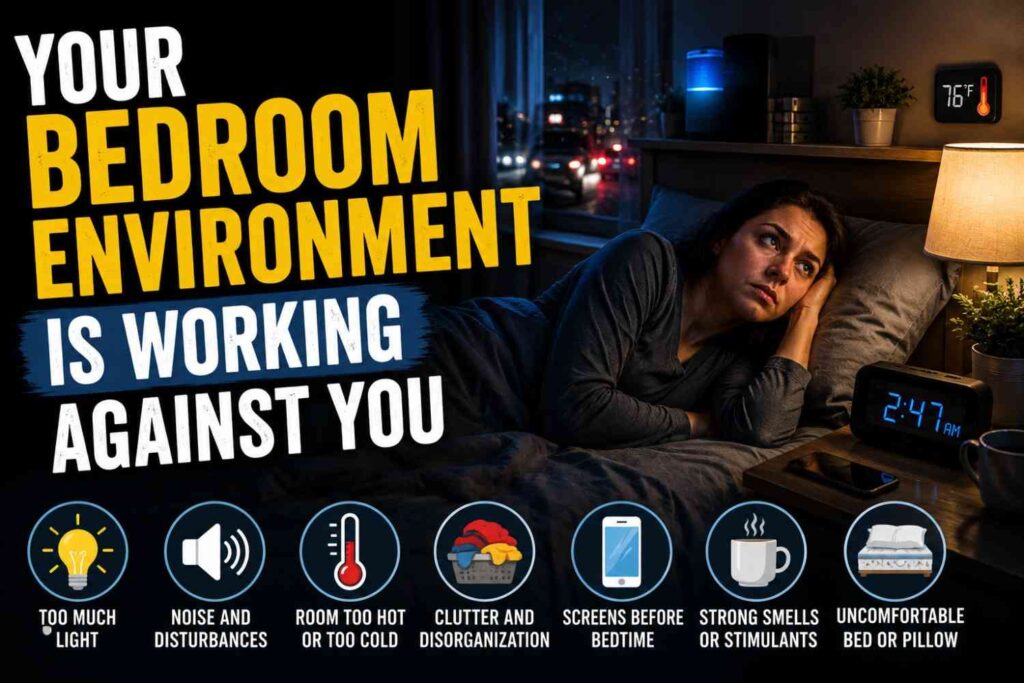
The environment you sleep in has a direct impact on how many times you wake up during the night. Light, noise, and temperature are the three biggest disruptors, and most people underestimate how much they matter.
Even small amounts of light, from a streetlight through a gap in the curtains, a charging phone, or a TV on standby, can suppress melatonin production and make your sleep lighter and more fragmented. Noise is even more disruptive. Your brain continues processing sound during sleep, and inconsistent noise like traffic, a snoring partner, or a neighbor is far more likely to wake you than consistent background sound.
Temperature is the factor most people overlook. Your body needs to drop its core temperature to maintain deep sleep. A bedroom that is too warm, generally above 68 degrees Fahrenheit, makes it significantly harder to stay in deep sleep stages and is a very common reason for waking up multiple times a night. Blackout curtains, white noise, and a cooler thermostat setting can make a surprising difference.
5. Alcohol Is Fragmenting Your Sleep

A lot of people have a drink in the evening to relax and fall asleep faster, and alcohol genuinely does help with sleep onset. The problem is what it does to your sleep a few hours later. As your body metabolizes alcohol, it causes a rebound effect that makes your sleep significantly lighter and more fragmented in the second half of the night.
This is why even two or three drinks can lead to waking up multiple times a night between 2am and 4am, even if you fell asleep quickly and easily. The alcohol suppresses REM sleep early in the night and then causes a surge in lighter sleep stages as it clears your system. You might not connect the drinks you had at 8pm to the wake-ups happening at 3am, but the connection is very direct.
Cutting back on evening alcohol or moving your last drink to earlier in the evening can noticeably reduce how often you are waking up multiple times a night within just a few days.
6. Your Blood Sugar Is Dropping Overnight
This one surprises a lot of people. If you eat a high-carbohydrate dinner or a sugary dessert before bed, your blood sugar may spike and then drop significantly during the night. When blood glucose falls too low, your body releases adrenaline and cortisol to bring it back up. These are stimulating hormones that pull you right out of sleep.
People who are waking up multiple times a night around the same time, particularly between 2am and 3am, sometimes find that overnight blood sugar fluctuations are the cause. This is more common in people with insulin resistance, prediabetes, or type 2 diabetes, but it can happen in anyone who eats a large amount of refined carbohydrates close to bedtime.
Eating a small protein and fat-based snack before bed, like a handful of nuts or a small portion of Greek yogurt, can stabilize blood sugar overnight and reduce these hormonally-driven wake-ups.
7. You Are Too Dependent on Your Phone at Night
Using your phone in bed is one of the most common and most damaging habits for sleep quality in modern life. The blue light emitted by phone screens suppresses melatonin, the hormone your body produces to maintain sleep. But beyond the light, the mental stimulation from scrolling social media, reading news, or checking email keeps your brain in an alert, engaged state that is the opposite of what sleep requires.
People who use their phones in bed frequently report waking up multiple times a night and having trouble falling back asleep after each wake-up. This is because the brain has been conditioned to associate the bed with alertness and stimulation rather than with rest and wind-down.
Keeping your phone out of the bedroom or at minimum putting it face down across the room and switching to night mode well before bed can meaningfully reduce how often you are waking up multiple times a night. It takes about a week of consistent change before the brain starts to re-associate the bedroom with actual rest.
8. Restless Legs Syndrome Is Disrupting Your Sleep
Restless legs syndrome, commonly called RLS, is a neurological condition that causes uncomfortable sensations in the legs, typically described as crawling, tingling, aching, or an irresistible urge to move them. These sensations are worst during periods of inactivity and are most intense in the evening and at night.
RLS can make it difficult to fall asleep and is a significant cause of waking up multiple times a night in people who have it. The discomfort pulls them out of sleep and the urge to move their legs keeps them awake. Many people with RLS do not realize they have it because the symptoms vary widely and are often dismissed as just being fidgety or having poor circulation.
RLS is associated with iron deficiency, kidney disease, pregnancy, and certain medications. If you regularly experience uncomfortable sensations in your legs that drive you to move them at night, bring this up with your doctor. It is very manageable once properly diagnosed.
9. Your Sleep Schedule Is Inconsistent
Going to bed at 10pm on weekdays and 1am on weekends might not seem like a big deal, but your circadian rhythm, the internal clock that regulates your sleep and wake cycles, does not adapt easily to frequent schedule changes. When your sleep and wake times shift significantly from day to day, your body never fully settles into a stable rhythm, and the result is fragmented, disrupted sleep throughout the night.
An inconsistent sleep schedule is one of the most common and most fixable reasons people find themselves waking up multiple times a night without any obvious medical explanation. Your body does its deepest, most restorative sleep work during predictable windows, and when those windows keep shifting, the quality of your sleep drops significantly even if the total hours look adequate.
Committing to the same bedtime and wake time seven days a week, even on weekends, is one of the single most effective changes you can make for sleep continuity. It takes one to two weeks of consistency before your circadian rhythm adjusts, but the improvement in how soundly you sleep through the night is very noticeable.
You Do Not Have to Just Accept This
Waking up multiple times a night is not your normal. It is not just aging. And it is not something you have to push through indefinitely. In the majority of cases, there is a clear, addressable reason behind it, whether that is your evening routine, your bedroom environment, what you are drinking, or an underlying condition that deserves medical attention.
Start with the simplest changes first. Cool down your bedroom. Cut off fluids and alcohol earlier. Put your phone away before bed. Stick to a consistent sleep schedule for two weeks and see what shifts. For a lot of people, those adjustments alone are enough to dramatically reduce how often they are waking up multiple times a night.
If you make those changes and the problem continues, do not ignore it. Talk to your doctor. Sleep is not a luxury. It is the foundation everything else in your health is built on, and you deserve to actually get it.