
There are days that quietly change the course of human history, days when science triumphs, hope is reborn, and the future looks a little brighter.
October 6, 1956, was one such day.
It was the day the first oral polio vaccine was created, marking a defining moment in the world’s long and painful battle against a disease that once crippled millions, polio.
A World Gripped by Fear
Before vaccines became a part of everyday life, the word polio sent shivers down spines. In the early 20th century, the disease was one of the most feared in the world. It struck without warning, often in the heat of summer, targeting mostly children.
Parents lived in terror.
Public swimming pools were closed. Movie theatres went dark. Churches canceled gatherings. Even playgrounds, symbols of childhood, were deserted.
Polio didn’t discriminate. It crippled the poor, the wealthy, the famous, and the ordinary alike. In 1921, even a young Franklin D. Roosevelt, who would later become President of the United States, contracted polio and was left paralyzed from the waist down.
For decades, humanity seemed helpless in the face of this invisible enemy. There were no cures, no treatments, and no understanding of how to stop its relentless spread.
Hospitals filled with rows of children trapped in iron lungs, large, cylindrical machines that helped them breathe when the virus paralyzed their chest muscles. The sight was haunting. The sound of those machines, a rhythmic, mechanical sigh, became the background music of despair.
The First Step: Salk’s Vaccine
The first major breakthrough came in 1955, when Dr. Jonas Salk introduced the inactivated polio vaccine (IPV), a shot that used a killed version of the virus.
It was safe, effective, and immediately hailed as a miracle.
Salk became a hero overnight. Church bells rang, newspapers celebrated him as a savior, and parents wept with relief. But there were challenges. The IPV, while effective, required sterile needles, trained professionals, and multiple doses, making mass vaccination difficult, especially in developing countries.
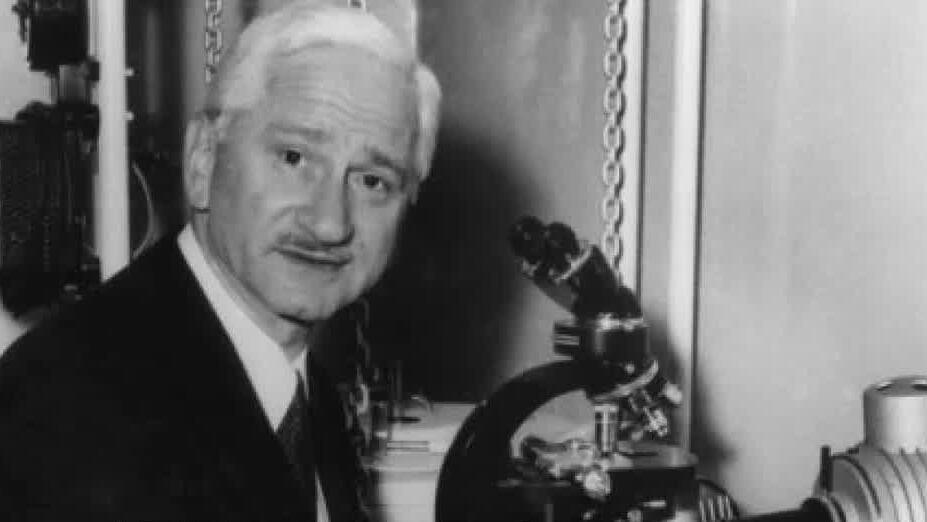
This is where another scientist, Dr. Albert Sabin, stepped forward, determined to make protection accessible to all.
Enter Albert Sabin: The Man Who Dreamed Bigger
Albert Sabin was not new to hardship. Born in Poland in 1906, he emigrated to the United States to escape anti-Semitic persecution and built his life from scratch. His resilience and curiosity shaped his approach to science. He didn’t just want to stop polio; he wanted to eliminate it. Where Salk’s vaccine was injected, Sabin envisioned one that could be swallowed, easy to distribute, affordable, and capable of reaching every corner of the world. He believed the best way to fight the virus was to mimic how it entered the body, through the mouth. So he began developing a live, attenuated vaccine, one made with weakened but living polioviruses that could trigger immunity without causing illness.
It was a daring idea. Many doubted him. The scientific community was divided, and testing such a vaccine was risky. But Sabin was relentless.
October 6, 1956, A New Dawn
After years of research and trials, October 6, 1956, became the day his vision took form. On this date, the first oral polio vaccine was successfully created.
The results were astounding. The vaccine not only prevented paralysis but also stopped the virus from spreading through communities. It provided intestinal immunity, blocking the virus where it entered the body, something Salk’s vaccine couldn’t do as effectively.
For the first time, there was hope that polio could be eradicated completely.
A Vaccine for the People
The beauty of Sabin’s oral vaccine lay in its simplicity. It didn’t need a syringe or a sterile environment. It came in a small sugar cube or liquid drop… sweet, simple, and safe enough for children.
This accessibility made it the vaccine of the masses.
By the early 1960s, millions of children were vaccinated in mass campaigns across the world. In the United States, the vaccine was officially licensed in 1961, and within a few years, polio cases plummeted dramatically.
Countries around the globe followed. The Soviet Union, India, and dozens of nations embraced the oral vaccine as a path to freedom from fear. It became a symbol of hope and progress.
The World Unites Against Polio
What happened next was one of the greatest collaborations in public health history.
Organizations like the World Health Organization (WHO), UNICEF, and Rotary International launched global campaigns to wipe polio off the map. By the 1980s, more than 350,000 children were still being paralyzed by polio every year across 125 countries. But thanks to the oral vaccine, that number began to shrink.
In 1988, the Global Polio Eradication Initiative (GPEI) was launched, a joint effort that aimed to make polio the second disease, after smallpox, to be completely eradicated.
India’s Remarkable Journey
Among the countries deeply affected by polio, India’s story stands out as one of courage, collaboration, and persistence.
In the 1990s, India accounted for nearly 60% of global polio cases. The challenges were immense: high population density, limited infrastructure, and difficult terrain.
But armed with Sabin’s oral polio vaccine, millions of health workers, volunteers, and community leaders came together for one mission: “Do Boond Zindagi Ki”……“Two Drops of Life.” Door to door, city to city, village to village, they carried small vials of the oral vaccine, ensuring no child was left behind. Mothers stood in line, holding their children close, eyes filled with hope.
And slowly, the miracle unfolded.
In 2014, the World Health Organization declared India polio-free, a victory decades in the making. It wasn’t just a scientific achievement; it was a story of faith, resilience, and collective determination.
A Legacy That Lives On
The success of the oral polio vaccine transformed public health forever.
It taught the world that global cooperation, innovation, and compassion could overcome even the deadliest challenges. Even though isolated cases still exist in regions like Afghanistan and Pakistan, the number of infections has dropped by over 99% since 1988.
Albert Sabin’s legacy continues to save lives….not through patents or profits, but through his selflessness. Remarkably, he refused to patent his vaccine. He believed it belonged to humanity, not to any individual or corporation.
In his words:
“A scientist who is motivated primarily by the desire for personal glory or profit is not a true scientist.”
His choice made the vaccine freely available worldwide, an act of generosity that defined the spirit of scientific progress.
Lessons for Our Generation
In an age where vaccine hesitancy and misinformation spread easily, Sabin’s story reminds us of what’s at stake.
Polio was once a global nightmare; now, it’s nearly gone. And it happened not because of fear, but because of trust, trust in science, in community, and in the shared dream of a healthier world.
October 6, 1956, is not just a date on a timeline; it’s a testament to what humanity can achieve when compassion meets courage, and innovation meets purpose.
The oral polio vaccine wasn’t merely a medical invention; it was a promise kept to generations: that no child should ever again be paralyzed by a disease we have the power to defeat.
Today and Beyond
As we reflect on this historic day, we honor not just Albert Sabin, but every researcher, nurse, and volunteer who carried the light of hope into the darkest corners of the world.
From the iron lungs of the 1940s to the two magical drops on a child’s tongue, the journey of the polio vaccine is a story of transformation, of fear turned into faith. The battle may not be over, but the vision remains clear: a world where every child can walk, run, and dream without fear.
So today, when you see a child laugh, take their first step, or chase a kite under the open sky, remember October 6, 1956. Because that was the day humanity took one giant step toward freedom, not just from a disease, but from despair itself.