
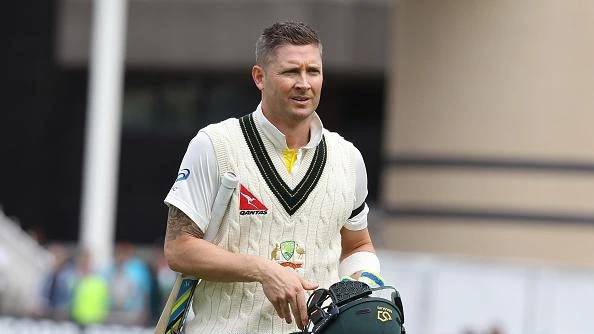
When it comes to cricketing greats, Michael Clarke’s name shines bright. The stylish right-hander who led Australia to their unforgettable 2015 ICC Cricket World Cup victory has given fans countless reasons to cheer. Yet, away from the spotlight of packed stadiums and roaring crowds, Clarke recently faced a far more personal and sobering challenge: he underwent surgery for skin cancer. The news struck a chord not just with cricket fans, but with anyone who understands how unpredictable life can be. It’s a powerful reminder that even the greatest athletes, who once seemed invincible on the field, are just as human and vulnerable as the rest of us. Clarke’s experience isn’t just his own battle; it’s also a wake-up call for millions to take skin health and sun protection seriously.
Michael Clarke: From “Pup” to World Champion
To understand why this story resonates so deeply, we first need to reflect on Clarke’s incredible cricketing journey. Nicknamed “Pup”, Clarke burst onto the international scene in 2004 with a debut century in Bangalore. It wasn’t just the runs; it was the way he scored them. Crisp drives, elegant footwork, and a calmness under pressure made him look like someone born to play for Australia.
Over the next decade, Clarke established himself as the backbone of Australia’s batting order, graceful yet gritty, innovative yet reliable. His record speaks volumes:
- 115 Test matches, over 8,000 runs, and 28 centuries.
- 245 ODIs, with more than 7,900 runs.
- Captaincy that culminated in lifting the 2015 World Cup on home soil, a fairytale ending in front of adoring fans at the Melbourne Cricket Ground.
Clarke took charge at a tough time, after legends like Ricky Ponting and Shane Warne had stepped away. Yet, he managed to steady the ship, guiding a new generation while keeping Australia fiercely competitive. But beneath the glory, Clarke’s career wasn’t without struggles. Chronic back problems often left him grimacing in pain, and his body took a beating over the years. Still, he pushed through, driven by determination and an unwavering love for the game. And now, even in retirement, he faces another fight, this time off the field.
The Harsh Truth: Why Skin Cancer Hits Australia Hard
Australia is famous for its beaches, sunshine, and outdoor lifestyle. But the very sunshine that defines the country also comes with a hidden danger. Australia has one of the highest rates of skin cancer in the world. In fact, studies show that two out of every three Australians will face some form of skin cancer before the age of 70.
Why? It’s a mix of geography, climate, and culture. The hole in the ozone layer above Australia allows stronger ultraviolet (UV) rays to reach the ground. Add to that a lifestyle where outdoor sports, beach trips, and open-air activities are part of everyday life, and the risk multiplies. For cricketers, this danger is magnified. Think about it: standing on the field for hours, day after day, with the sun beating down relentlessly. Hats and sunscreen help, but no protection is perfect when you’re under that level of exposure for decades.
This is the reality, Clarke and countless other athletes live with.
Clarke’s Diagnosis: What We Know
When news broke that Clarke had undergone surgery to remove cancerous spots from his skin, fans everywhere were shocked. While he hasn’t shared every detail of his diagnosis (something deeply personal), Clarke has been clear about one thing: early detection made all the difference.
By going for regular check-ups and catching the problem early, he was able to act before things became more dangerous. That decision might have saved his life.
And in true Clarke fashion, instead of keeping it private, he chose to speak out. By opening up, he turned his own health scare into a message of hope and awareness for others.
Why Early Detection Saves Lives
Clarke’s story underscores a vital truth: when it comes to skin cancer, early detection can change everything. Doctors say that if caught in the initial stages, skin cancer can often be treated successfully with relatively simple procedures.
But what does “early detection” really mean? It’s about being aware and proactive:
- Regularly checking your skin for unusual moles or spots.
- Watching for changes in shape, size, or color.
- See a doctor if something doesn’t feel right.
Medical professionals often talk about the ABCDE rule:
- Asymmetry: One half of a mole doesn’t match the other.
- Border: The edges are irregular.
- Color: Uneven shades or multiple colors.
- Diameter: Larger than 6mm (about the size of a pencil eraser).
- Evolving: Changing in size, shape, or behavior.
Clarke’s quick action shows how important it is not to ignore even small changes.
The Hidden Cost of Cricket and Outdoor Sports
Clarke isn’t alone in this. Cricket has long been associated with sun-related health risks. Legends like Shane Warne also dealt with skin cancer scares. It’s not just cricket either; tennis players, surfers, golfers, swimmers, and even outdoor workers like builders and farmers face similar risks. Unlike indoor sports, cricket is played under the open sky, often for 6–8 hours at a time. Even protective measures, wide-brimmed hats, zinc cream, and long-sleeve shirts, can only do so much when you’re facing years of cumulative sun exposure.
And while sports organizations today are more proactive, older generations of players grew up in a culture where sun safety wasn’t taken seriously. The damage for many had long been done, and Clarke’s surgery underlines the seriousness of such enduring risks.
Clarke’s Message to Fans
What makes Clarke’s story so powerful is not just his surgery…it’s the message he’s chosen to share. Instead of treating it as a private ordeal, he’s encouraging fans and athletes to:
- Get regular skin checks.
- Take sun protection seriously: hats, sunscreen, protective clothing.
- Don’t ignore warning signs.
Clarke has always been a leader, and this is leadership in a different form. He’s not rallying his team on the field this time; he’s rallying the public to take care of their health.
More Than Just Cricket: A Global Issue
While Clarke’s story shines a light on Australia’s battle with skin cancer, the issue is far bigger. The United States, New Zealand, South Africa, and parts of Europe all report rising cases. Climate change, higher UV exposure, and lifestyle choices are making it a worldwide problem. That’s why Clarke’s openness matters. His influence reaches beyond cricket grounds and into everyday life. Whether you’re a teenager who loves the beach or a construction worker on a hot day, his story is a reminder: the sun may give us life, but it can also take it away if we don’t respect it.
Conclusion: Clarke’s Fight is Our Lesson
Michael Clarke has lived the dreams of millions, centuries in packed stadiums, lifting the World Cup trophy, and leading one of the greatest cricketing nations. But his latest battle is deeply personal, and it shows us something bigger: heroes are human too.
By speaking out about his skin cancer surgery, Clarke has given us more than just a health update. He’s given us a lesson in courage, responsibility, and awareness. His message is simple but powerful: protect yourself, check yourself, and never ignore your health. In many ways, Clarke’s legacy now extends beyond cricket. It’s not just about the runs he scored or the trophies he lifted. It’s also about the awareness he raised, the lives he may save, and the reminder that true leadership means using your platform to help others.
For fans who once cheered his boundaries and centuries, Clarke has given us another reason to admire him, not for what he did on the field, but for how he’s facing life off it.