
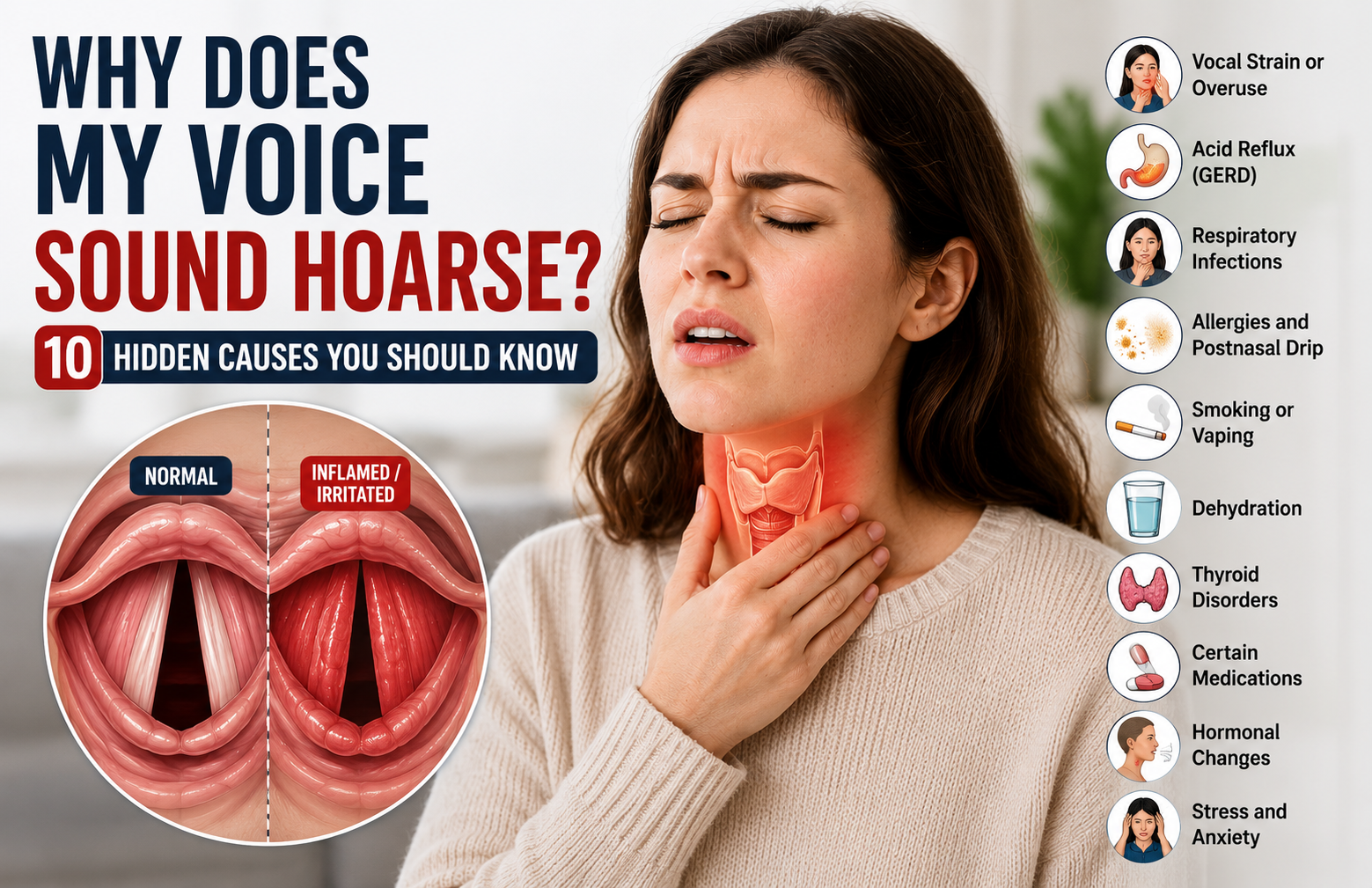
You open your mouth to speak and what comes out sounds rough, raspy, and strained. Your voice is lower than usual, harder to project, and occasionally cracks or breaks mid-sentence. If you keep asking yourself why does my voice sound hoarse and the problem is not going away on its own, something specific is happening to your vocal cords or the structures around them that deserves attention.
A hoarse voice is one of the most common complaints that brings people to a doctor, and it has a wide range of possible causes. Most cases resolve on their own within a couple of weeks. But persistent or recurring hoarseness that lasts more than two to three weeks is one of those symptoms that always warrants professional evaluation because in some cases it signals something that benefits from early identification.
Here are ten of the most common hidden causes of a hoarse voice and what each one means.
1. Acute Laryngitis
Acute laryngitis is the most common reason people ask why does my voice sound hoarse, and it is most typically caused by a viral upper respiratory infection. When a virus infects the larynx, the voice box that houses your vocal cords, the cords become swollen and inflamed. Swollen vocal cords cannot vibrate as freely or as precisely as healthy ones, and the result is the rough, breathy, lower-pitched sound that characterizes a hoarse voice.
Viral laryngitis typically develops alongside or shortly after a cold or flu and is often accompanied by a sore throat, cough, and runny nose. The hoarseness from viral laryngitis usually peaks around the second or third day of the illness and then gradually improves as the infection resolves, typically within one to two weeks.

The most important thing you can do for vocal cord inflammation from laryngitis is to rest your voice as much as possible and stay well hydrated. Whispering is actually harder on inflamed vocal cords than normal speech and should be avoided. Steam inhalation, honey in warm water, and avoiding irritants like smoke and alcohol help the healing process.
Why Do My Ears Feel Clogged? 10 Hidden Causes You Should Know
N
2. Acid Reflux and LPR
Acid reflux is one of the most commonly missed answers to why does my voice sound hoarse, particularly when the hoarseness occurs in the morning, persists without an accompanying cold or illness, or has been present for weeks or months without explanation. Laryngopharyngeal reflux, commonly called LPR or silent reflux, is a form of reflux where stomach acid reaches the larynx and vocal cords without necessarily causing the classic heartburn sensation that most people associate with acid reflux.

When stomach acid repeatedly contacts the delicate tissue of the vocal cords, it causes chronic irritation and inflammation that produces persistent hoarseness, throat clearing, a sensation of something stuck in the throat, and a chronic dry cough. Many people with LPR have no idea their reflux is reaching their throat because they do not experience significant heartburn, which is why the connection to their hoarse voice is so frequently missed.
Dietary modifications to reduce reflux, eating smaller meals, avoiding eating within three hours of bedtime, elevating the head of the bed, and in many cases acid-suppressing medications are the foundation of LPR management and typically produce gradual improvement in voice quality over several weeks of consistent treatment.
3. Voice Overuse and Strain
Vocal overuse is one of the most direct and most physical reasons why does my voice sound hoarse, and it is particularly common in teachers, singers, coaches, salespeople, and anyone else whose job requires extended periods of talking or projecting their voice. When the vocal cords are used intensely for extended periods without adequate rest, the muscle tissue becomes fatigued and the cords can develop swelling, hemorrhage, or small nodules that significantly alter voice quality.
Talking loudly in noisy environments forces the vocal cords to work much harder than they would in a quiet space, which is why voice strain commonly develops after concerts, sporting events, parties, or any situation where you are competing with background noise. Singers who perform without adequate warm-up or who push beyond their comfortable range are particularly vulnerable to voice changes from overuse.

Resting the voice, staying hydrated with water throughout the day, and avoiding whispering, smoking, alcohol, and caffeine which all dry and irritate the vocal cords are the most important steps for recovering from voice strain. If why does my voice sound hoarse from voice overuse is recurring, working with a speech-language pathologist on voice technique and hygiene can prevent the problem from becoming structural.
4. Vocal Nodules and Polyps
Vocal nodules and polyps are benign growths on the vocal cords that develop as a result of chronic voice overuse, vocal strain, or ongoing irritation from reflux, and they are a significant answer to why does my voice sound hoarse persistently. Nodules are callous-like thickenings that typically develop symmetrically on both vocal cords at the point of maximum vibration, while polyps are softer, fluid-filled growths that can develop on one or both cords. Both produce a characteristic persistent hoarseness, breathiness, and reduced vocal range that does not resolve with simple rest the way acute laryngitis does.
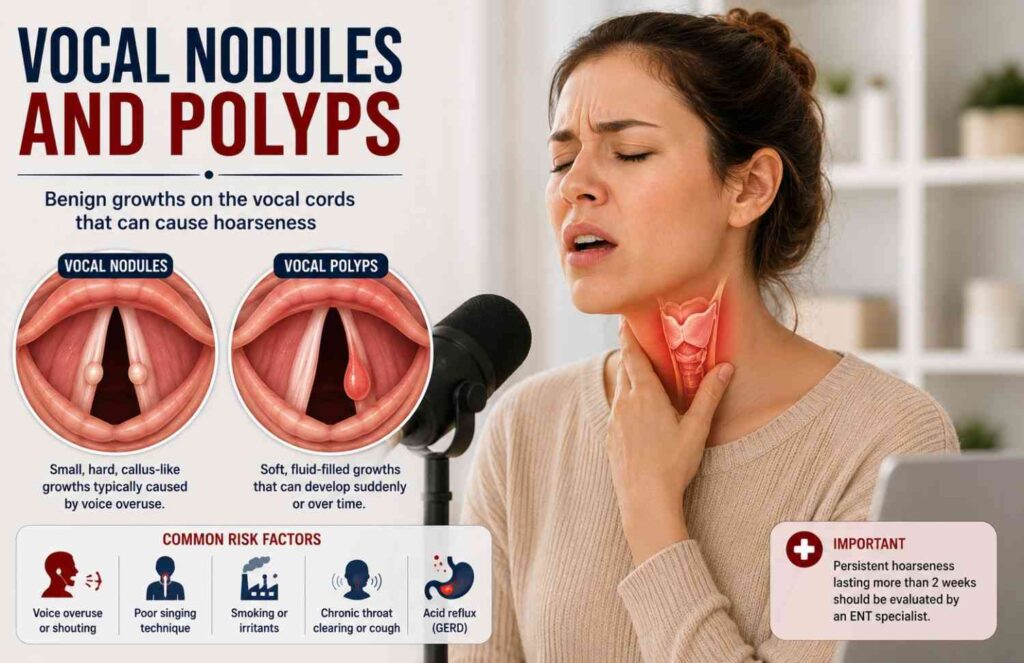
People who develop vocal nodules often notice that their voice is consistently hoarse particularly when tired, that they have reduced high notes if they sing, and that the hoarseness has developed gradually rather than appearing suddenly with an illness. Teachers, singers, and professional voice users are at the highest risk for nodule development.
Vocal nodules are typically treated with voice therapy from a speech-language pathologist, which teaches healthier vocal technique and reduces the behaviors that created the nodules. Most nodules respond well to therapy without requiring surgery. Polyps sometimes require surgical removal if they do not respond to conservative management.
Why Do My Ears Feel Clogged? 10 Hidden Causes You Should Know
5. Allergies and Postnasal Drip
Allergies are a frequently overlooked but very common reason why does my voice sound hoarse, particularly in people whose hoarseness follows a seasonal pattern or correlates with exposure to specific environments. Seasonal allergies produce inflammation throughout the upper respiratory tract including the throat and larynx, and the swelling of the vocal cord tissue from this inflammatory response can cause persistent hoarseness during allergy season.
Postnasal drip, where mucus from the nasal passages drips down the back of the throat, is a particularly significant contributor because it coats the vocal cords with thick, irritating mucus that interferes with their smooth vibration. The constant throat clearing that postnasal drip provokes also traumatizes the vocal cords repeatedly, adding mechanical irritation to the chemical irritation from the mucus itself.

Treating the underlying allergy with antihistamines, nasal steroid sprays, and when appropriate immunotherapy typically reduces postnasal drip and the associated voice changes that answer why does my voice sound hoarse during allergy season. Staying well hydrated and using a saline nasal rinse to reduce the thickness of secretions can also help protect the vocal cords from postnasal drip irritation.
6. Dehydration and Electrolyte Imbalance
Thyroid disorders are a recognized and sometimes surprising answer to why does my voice sound hoarse, and the connection runs through two different mechanisms. An underactive thyroid, hypothyroidism, causes fluid retention and tissue swelling throughout the body, including in and around the larynx. Swelling in the laryngeal tissues alters how freely the vocal cords can vibrate, producing a characteristic low, rough, husky voice quality that many people with hypothyroidism notice as one of their earlier symptoms.

The thyroid gland also sits directly adjacent to the larynx and trachea in the neck, and a significantly enlarged thyroid, called a goiter, or a thyroid nodule or tumor can physically compress the structures of the larynx or the recurrent laryngeal nerve that controls vocal cord movement, directly causing hoarseness through external pressure rather than through hormonal effects.
If your voice has become persistently hoarse and you have other symptoms suggesting thyroid dysfunction including fatigue, weight changes, temperature sensitivity, or a noticeable lump in the neck, thyroid function testing and neck imaging are important parts of a comprehensive evaluation.
7. Smoking and Irritant Exposure
Smoking is one of the most powerful and most damaging causes of chronic hoarseness and answers why does my voice sound hoarse for a significant number of American adults. Cigarette smoke directly irritates and inflames the vocal cord tissue with every inhalation, and over time this chronic irritation causes thickening and stiffening of the vocal cords that produces a characteristic persistent roughness and lowering of the voice that worsens with continued smoking.
Long-term heavy smoking is also the leading cause of a specific condition called Reinke’s edema, where the vocal cords develop significant fluid-filled swelling that dramatically alters voice quality and pitch, particularly lowering the pitch in women to a marked degree. Reinke’s edema requires surgical treatment once established, and smoking cessation is essential to prevent recurrence after surgery.

Beyond cigarettes, chronic exposure to chemical fumes, industrial dust, dry air, and secondhand smoke can produce similar irritation and hoarseness through repeated contact with the delicate vocal cord tissue. Reducing or eliminating exposure to these irritants is the most important step for why does my voice sound hoarse driven by environmental causes.
8. Neurological Conditions
Neurological conditions that affect the nerves controlling vocal cord movement are a significant cause of why does my voice sound hoarse that requires medical evaluation when identified. The recurrent laryngeal nerve, which controls the movement of one or both vocal cords, can be damaged by surgery in the neck or chest, by tumors that press on the nerve along its path from the brain to the larynx, by certain viral infections, or by neurological conditions including Parkinson’s disease and multiple sclerosis.

When one vocal cord is paralyzed from nerve damage, it cannot meet its partner cord during vibration, and the resulting incomplete closure of the glottis produces a weak, breathy, hoarse voice that is a characteristic sign of vocal cord paralysis. People with this condition often also notice difficulty swallowing, a weak cough, and aspiration of liquids into the airway.
If your hoarseness developed suddenly without an obvious cause, particularly if you have had recent neck or chest surgery, a visible neck mass, or difficulty swallowing alongside the voice change, urgent ENT evaluation is warranted to assess vocal cord movement.
9. Medications
Several commonly used medications can cause hoarseness as a direct side effect, and this is one of the most frequently overlooked answers to why does my voice sound hoarse when the hoarseness develops gradually after starting a new drug. Inhaled corticosteroids used for asthma and COPD are among the most common causes of medication-related hoarseness because the steroid powder deposits on the vocal cords and promotes a local fungal infection called candidiasis or simply causes direct irritation of the cord tissue.
Using a spacer device with inhaled corticosteroids and rinsing the mouth and throat thoroughly with water after each use significantly reduces the risk of vocal cord candidiasis and the associated hoarseness. ACE inhibitors used for blood pressure can cause a chronic dry cough that repeatedly irritates the vocal cords and produces secondary hoarseness. Diuretics reduce overall hydration and can dry out the vocal cord mucosa, impairing the lubrication needed for smooth vibration.

If your hoarseness started around the time you began a new medication and you are asking why does my voice sound hoarse now when it did not before, reviewing the side effect profile and discussing alternatives or modifications with your prescribing doctor is a practical first step.
10. Laryngeal Cancer
Laryngeal cancer is included on this list not to create alarm but because persistent unexplained hoarseness is its most common early warning sign. Many people asking why does my voice sound hoarse for weeks without explanation are eventually found to have early laryngeal changes that are very treatable when caught early. Laryngeal cancer most commonly develops on the vocal cords themselves, and because even small tumors alter vocal cord vibration, hoarseness typically appears earlier in the disease course than in many other cancers, which provides an important window for early diagnosis.
Hoarseness from laryngeal cancer is persistent, progressive, and not associated with a cold, allergy season, or obvious voice overuse. It tends to develop in people with significant smoking history and heavy alcohol use, which are the two most important risk factors. Other symptoms that may accompany it include a sore throat that does not resolve, difficulty swallowing, ear pain, and a neck mass.

The most important message about laryngeal cancer is that if you keep asking why does my voice sound hoarse for more than two to three weeks without an obvious explanation, seeing an ENT specialist who can visualize your vocal cords directly with a laryngoscope is the right step. When laryngeal cancer is caught early while it is still confined to the vocal cords, the cure rates are excellent.
Why Do My Ears Feel Clogged? 10 Hidden Causes You Should Know
When to See a Doctor About a Hoarse Voice
A hoarse voice from a cold or vocal overuse that resolves within one to two weeks is almost always self-limiting and does not require medical attention. But persistent hoarseness warrants professional evaluation.
See a doctor if why does my voice sound hoarse has been going on for more than two to three weeks without obvious explanation, if hoarseness developed suddenly without an illness or voice strain, if it is accompanied by difficulty swallowing, a lump in the neck, ear pain, or coughing up blood, or if you have a significant smoking history and persistent unexplained hoarseness. An ENT specialist can examine your vocal cords directly and identify the specific cause, directing you toward the most effective treatment.
Why does my voice sound hoarse is a question that almost always has a real and specific answer. Finding that answer is always worth the effort. And if why does my voice sound hoarse has been your question for more than two weeks, that answer starts with an ENT evaluation.