
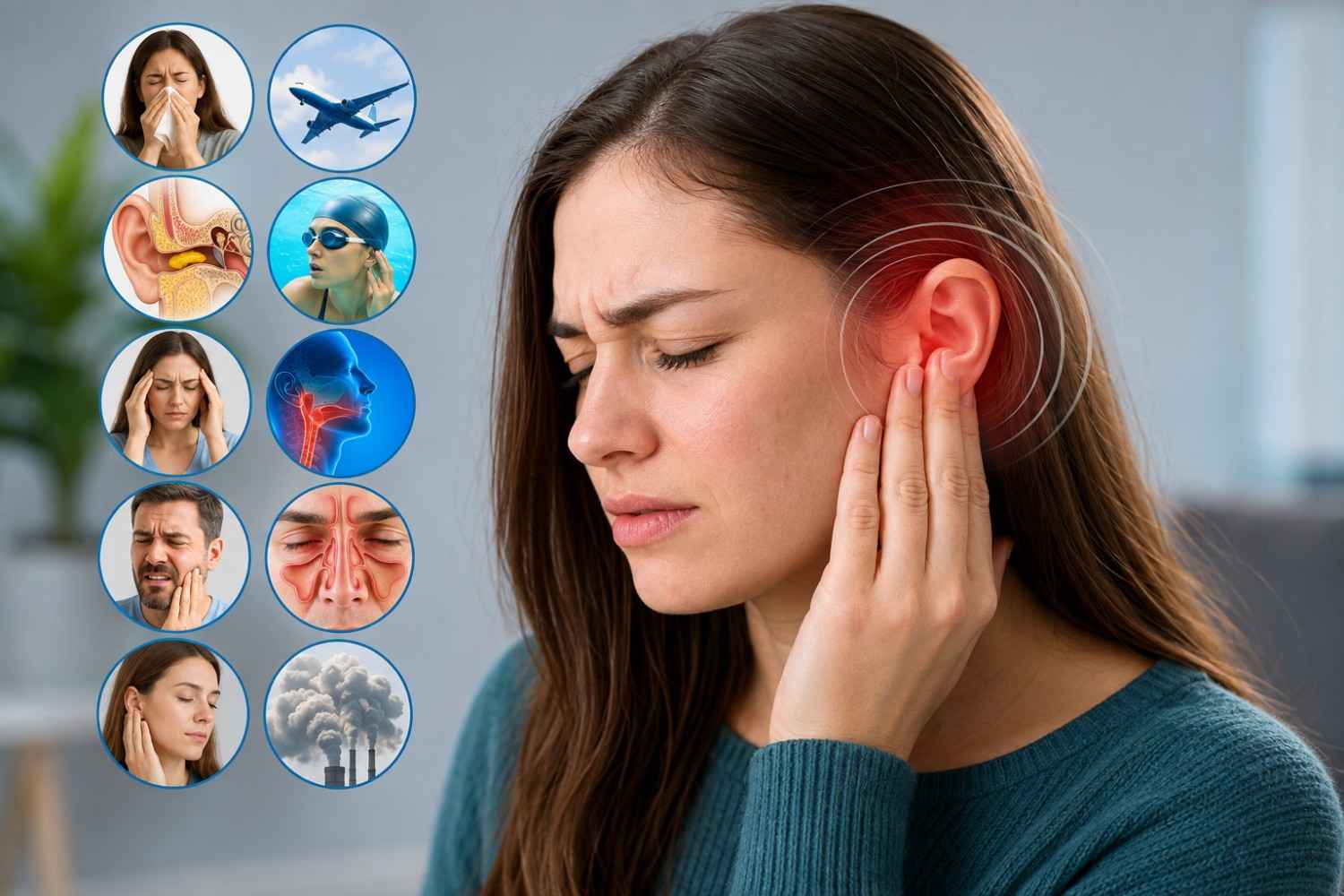
That persistent sensation of fullness in your ears, like you just got off a plane or came up from underwater, except you have done neither. Sound seems muffled. Your own voice sounds strange to you. You yawn, swallow, and try to pop your ears with no success. If you keep asking yourself why do my ears feel clogged regularly and you cannot figure out why, you are dealing with one of the most common and most frustrating ear complaints in American adults.
Ears that feel clogged can range from mildly annoying to significantly disruptive. If you keep asking why do my ears feel clogged, the causes span from something as simple as earwax to medical conditions that benefit from professional treatment. Here are ten of the most common hidden reasons your ears feel clogged and what each one means.
1. Earwax Buildup
Earwax buildup is the most common reason people ask why do my ears feel clogged, and it is also one of the most easily resolved. The ear canal naturally produces cerumen, commonly called earwax, as a protective mechanism that traps dust, debris, and microorganisms before they can reach the more delicate inner structures of the ear. In most people, this wax migrates naturally toward the outer ear and falls out on its own without any intervention needed.
But in some people, earwax production outpaces the natural migration, or the wax is drier and stickier than usual and does not move out efficiently. The result is a buildup that accumulates against the eardrum, creating the muffled hearing and sense of fullness that makes ears feel clogged. People who use cotton swabs to clean their ears are particularly prone to wax buildup because the swabs push wax deeper into the canal rather than removing it, compacting it against the eardrum over time.
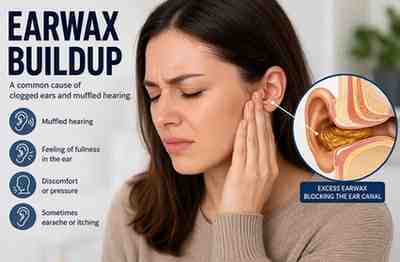
Over-the-counter ear drops designed to soften earwax, used for several days before gentle irrigation with warm water, are effective for mild to moderate buildup. A doctor or audiologist can safely remove more significant compaction in an office visit using irrigation or manual removal tools. Never use ear candles, which have no proven effectiveness and carry real risks of burns and wax dripping further into the canal.
Why Do My Legs Feel Heavy When I Wake Up? 10 Hidden Causes You Should Know
2. Eustachian Tube Dysfunction
The Eustachian tube is a narrow passage that connects the middle ear to the back of the throat and is responsible for equalizing the air pressure on both sides of the eardrum. When this tube does not open and close properly, pressure builds up in the middle ear and creates the sensation of fullness and muffled hearing that makes ears feel clogged even when there is nothing physically blocking the ear canal.
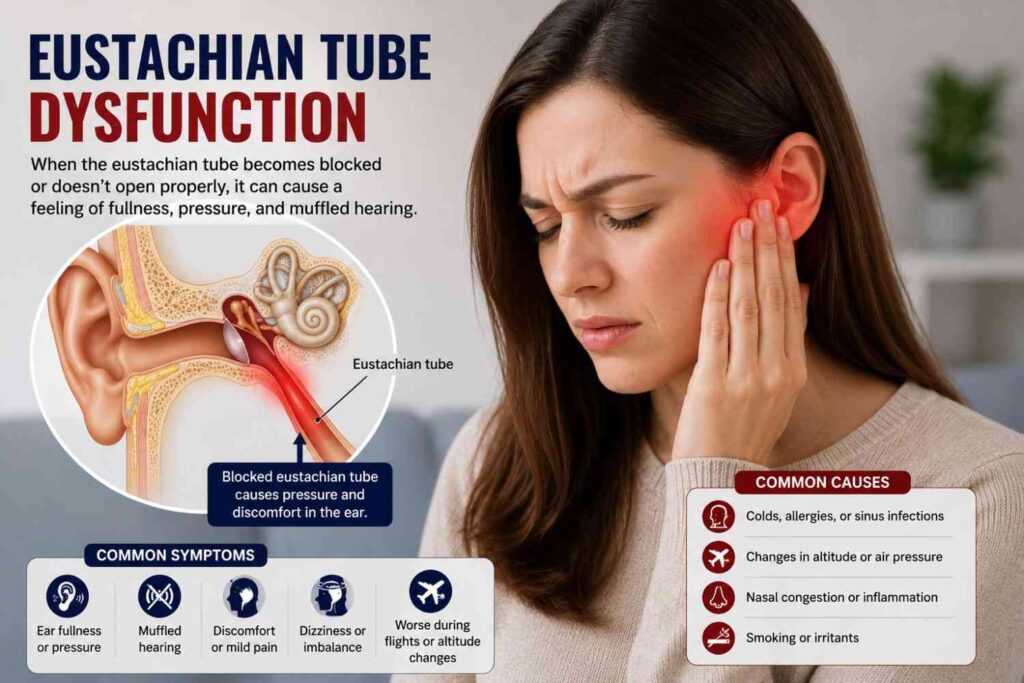
Eustachian tube dysfunction is the most common cause of why do my ears feel clogged that is not related to wax, and it occurs most frequently during and after upper respiratory infections, with allergies, during altitude changes like flying or driving through mountains, and in people with chronic inflammation of the nasal passages or sinuses. The classic experience of why do my ears feel clogged during a flight that you need to pop by yawning or swallowing is Eustachian tube dysfunction in its most benign and temporary form.
Swallowing, yawning, chewing gum, and the Valsalva maneuver where you gently blow against pinched nostrils are all techniques that can temporarily help the Eustachian tube open and equalize pressure. Nasal decongestants and steroid nasal sprays help reduce the inflammation that prevents normal tube function in allergy and congestion-related cases.
3. Allergies
Seasonal and year-round allergies are among the most common ongoing causes of ears that feel clogged, and the connection runs through the same Eustachian tube dysfunction described above. When allergens trigger inflammation in the nasal passages, sinuses, and throat, that inflammation extends to the tissue surrounding the Eustachian tube opening. Swollen tissue prevents the tube from opening and closing normally, and the resulting pressure imbalance in the middle ear creates the clogged, full sensation that many allergy sufferers recognize as a reliable indicator of their allergies acting up.
People who ask why do my ears feel clogged primarily during specific seasons, in certain environments like homes with pets or dusty spaces, or when pollen counts are high are almost certainly experiencing allergy-driven Eustachian tube dysfunction. The clogged ear sensation from allergies is often accompanied by other classic allergy symptoms including nasal congestion, sneezing, itchy eyes, and postnasal drip, which helps confirm the allergic connection.
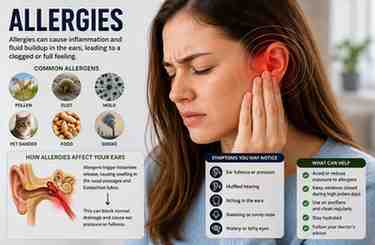
Treating the underlying allergy with antihistamines, nasal corticosteroid sprays, or allergen immunotherapy for more significant cases typically reduces the associated ear fullness alongside the other allergy symptoms over time.
4. Sinus Infections and Congestion
Sinus infections and significant nasal congestion are reliable causes of ears feeling clogged because of the anatomical proximity and functional connection between the sinuses, nasal passages, and Eustachian tube. When the sinuses are infected or significantly inflamed, the resulting congestion and swelling extend to the nasal passages and can directly block or impair the Eustachian tube opening, preventing normal pressure equalization and creating the clogged ear sensation.
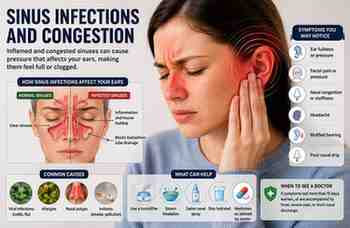
Many people keep asking why do my ears feel clogged at the same time they develop a cold or sinus infection, and the ear fullness often persists even after the nasal symptoms begin to improve because the Eustachian tube takes time to return to normal function after the inflammation resolves. Ears feeling clogged from a sinus infection may be accompanied by facial pressure or pain, thick nasal discharge, reduced sense of smell, and fever.
Treating the underlying sinus infection, whether viral or bacterial, addresses the root cause of the ear fullness. Saline nasal rinses, steam inhalation, and decongestants help reduce the congestion that impairs Eustachian tube function and can shorten the duration of clogged ear sensation from this cause.
5. Middle Ear Infection
A middle ear infection, called otitis media, is a significant and sometimes painful cause of why do my ears feel clogged, and it occurs more commonly in adults than most people realize. When bacteria or viruses infect the middle ear space, fluid and pus accumulate behind the eardrum, creating significant pressure and the sensation of fullness that makes ears feel clogged in a way that is more persistent and often more painful than simple Eustachian tube dysfunction.
Middle ear infections in adults often follow upper respiratory infections that allow bacteria to travel through the Eustachian tube into the middle ear. The clogged sensation from a middle ear infection is often accompanied by ear pain that can be significant, muffled hearing, and sometimes fever. The fluid in the middle ear may produce crackling or gurgling sounds when swallowing or yawning.
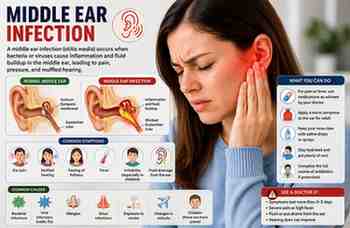
Bacterial middle ear infections are treated with antibiotics. Viral infections resolve on their own, typically within one to two weeks, with pain management during the resolution period. If fluid persists in the middle ear for more than three months after an infection, a condition called otitis media with effusion or glue ear, an ENT evaluation is warranted to assess whether drainage tubes might be appropriate.
6. Temporomandibular Joint Problems
TMJ problems are an underrecognized cause of why do my ears feel clogged, and the anatomical reason for this connection surprises most people. The temporomandibular joint, which connects the jaw to the skull, sits directly in front of the ear canal, separated from it by only a thin layer of tissue. When the TMJ is inflamed, misaligned, or subject to excessive stress from teeth grinding or jaw clenching, it can create pressure that is perceived in the ear as a sensation of fullness and clogging.
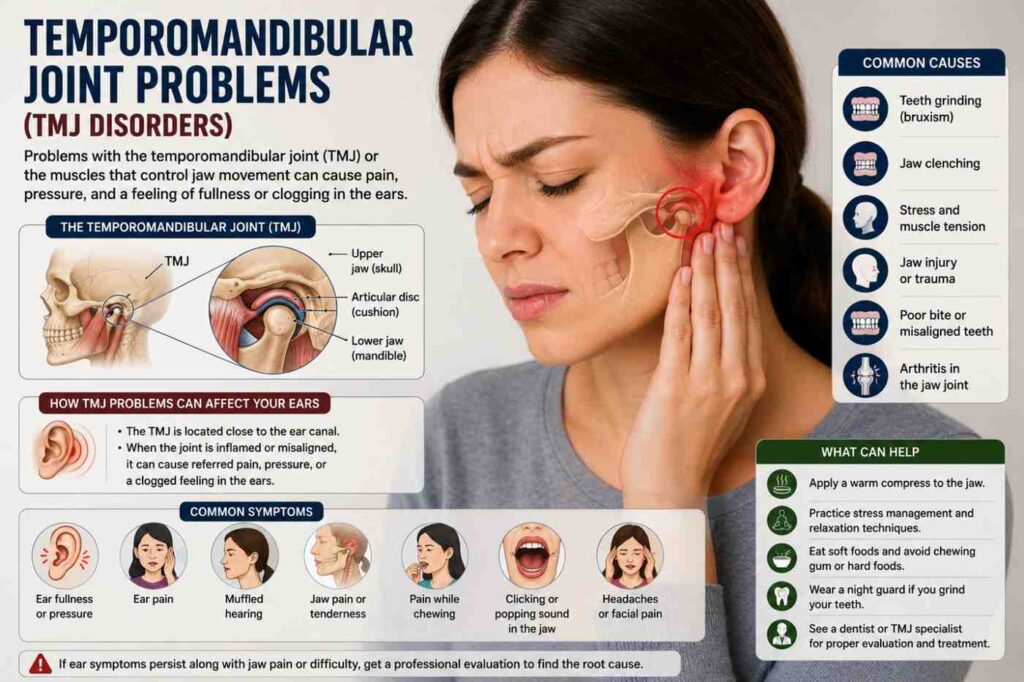
TMJ-related ear fullness often fluctuates with jaw position and can be temporarily changed by opening and closing the mouth, chewing, or pressing on the jaw joint. It is frequently accompanied by other TMJ symptoms including jaw pain or clicking, headaches at the temples, and morning jaw soreness from nighttime grinding. The fact that the ear symptoms change with jaw movement is a useful clue that the TMJ rather than the ear itself is the source.
A dentist familiar with TMJ disorders can evaluate jaw function and recommend appropriate treatment including night guards, physical therapy, or bite adjustment, which typically reduces both the jaw symptoms and the associated ear fullness.
7. Swimmer's Ear
Swimmer’s ear, medically called otitis externa, is an infection of the outer ear canal that commonly causes why do my ears feel clogged alongside pain that is typically worst when the outer ear is touched or the earlobe is pulled. The infection occurs when water trapped in the ear canal creates a moist environment that allows bacteria or fungi to proliferate on the skin of the canal.
Despite its name, swimmer’s ear does not require swimming to develop. Excessive moisture from showering, ear canal skin that is naturally prone to moisture retention, or minor abrasions from aggressive ear cleaning can all create the conditions for an outer ear infection. The clogged sensation from swimmer’s ear results from the swelling of the infected canal tissue that partially obstructs the passage of sound to the eardrum.
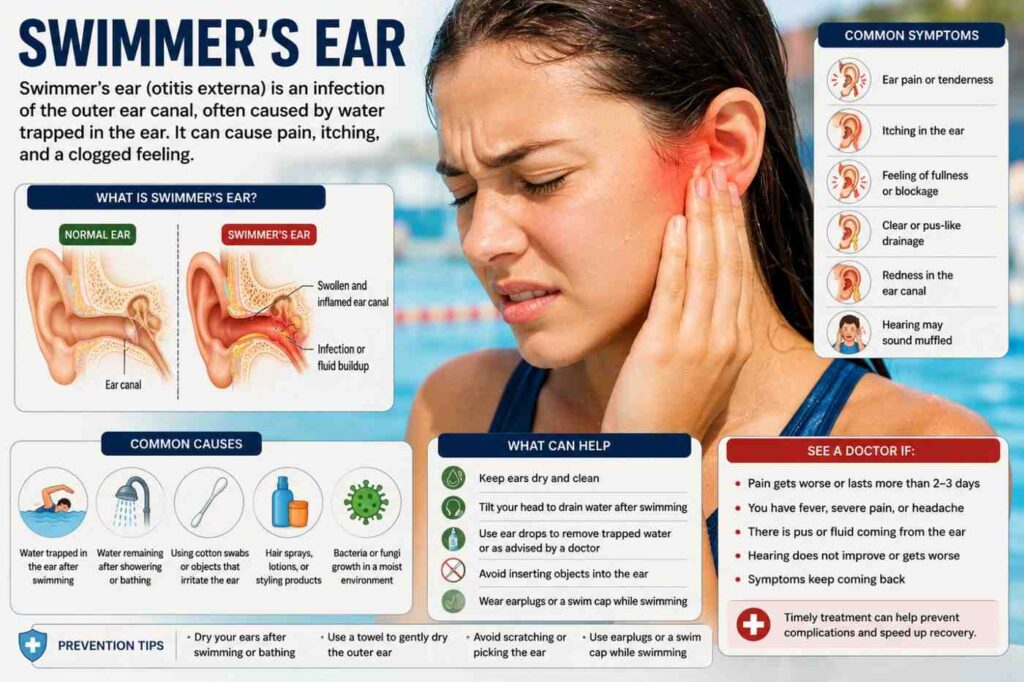
Prescription antibiotic or antifungal ear drops are the standard treatment for swimmer’s ear and typically produce significant improvement within a few days. Keeping the ear dry during treatment by using a cotton ball coated in petroleum jelly during showering helps prevent reinfection. Preventive measures include tilting the head to drain water after swimming and using drying drops after water exposure.
8. Noise-Induced Hearing Loss
Significant noise exposure can cause why do my ears feel clogged alongside a ringing sensation and temporary or permanent reduction in hearing clarity. After exposure to loud sounds, whether from a concert, gunfire, power tools, or any other intense noise source, the hair cells of the inner ear can be temporarily or permanently damaged. Temporary threshold shift, which is the technical term for the temporary hearing reduction and fullness that follows acute noise exposure, typically resolves within hours to days if the noise exposure was not severe enough to cause permanent damage.
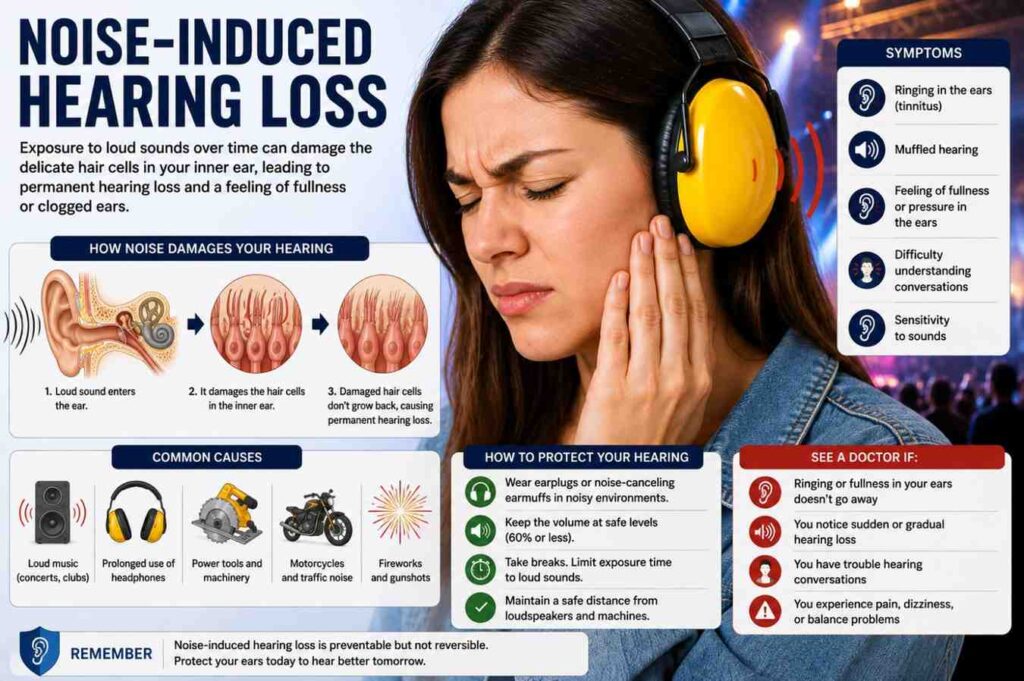
Chronic noise exposure from consistently loud work environments or regular high-volume headphone use can cause progressive hearing loss that produces a persistent sense of muffled hearing and ear fullness that does not fully resolve between exposures. The ears feeling clogged from noise damage is actually the brain’s perception of the distorted signal being sent by damaged hair cells rather than a physical blockage of the ear canal.
Protecting your ears with properly rated hearing protection in loud environments and keeping personal listening devices at or below 60 percent of maximum volume are the most effective preventive measures. If you have been exposed to significant noise and your ears feel clogged and have not cleared within 24 to 48 hours, an audiological evaluation is warranted.
Why Do My Legs Feel Heavy When I Wake Up? 10 Hidden Causes You Should Know
9. Meniere's Disease
Meniere’s disease is an inner ear disorder characterized by episodic vertigo, fluctuating hearing loss, tinnitus, and a distinctive sensation of fullness or pressure in the affected ear that is one of its most consistent early symptoms. The fullness of Meniere’s disease is caused by abnormal fluid pressure within the labyrinth of the inner ear, and it often precedes or accompanies the vertigo episodes that are the most dramatically disabling aspect of the condition.
People whose answer to why do my ears feel clogged includes the same ear consistently, accompanied by any degree of spinning dizziness, hearing changes, or a roaring sound in the ear, and that comes in episodes rather than being constant are describing a pattern quite characteristic of Meniere’s disease. The fullness in Meniere’s tends to worsen before and during a vertigo episode and improve somewhat between episodes.
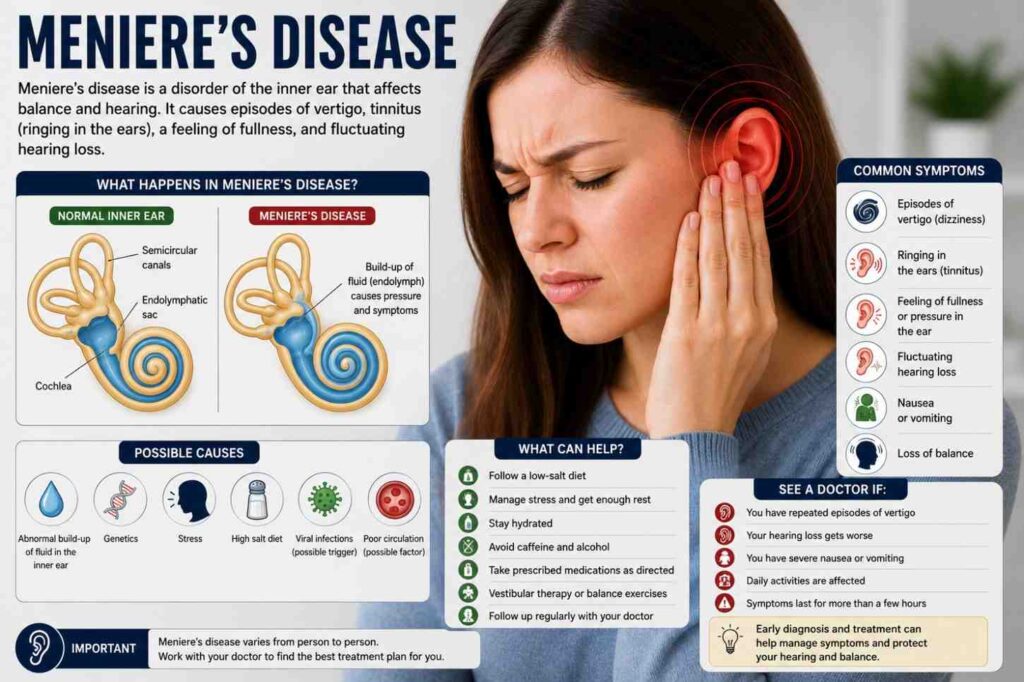
Meniere’s disease is managed through a low-sodium diet, limiting caffeine and alcohol, stress management, and medications that reduce inner ear fluid pressure or control vertigo when episodes occur. An ENT specialist or otolaryngologist can confirm the diagnosis and guide management.
10. Anxiety and Stress
The connection between anxiety and ears that feel clogged runs through the physiological changes that the stress response produces in the body. Anxiety can cause hyperventilation or altered breathing patterns that change the carbon dioxide levels in the blood, which affects the blood vessels and fluid dynamics in the inner ear. Chronic stress is associated with increased muscle tension in the jaw and neck that can affect Eustachian tube function through the same anatomical connections that link the TMJ to ear symptoms.
Some people notice that why do my ears feel clogged specifically during or after periods of intense anxiety or panic, and that the clogged sensation improves as they calm down. For others, chronic background stress produces a persistent low-grade ear fullness that they have been living with for so long they no longer connect it to their stress levels. The ear symptoms from anxiety are real and physiological, not imaginary, even though their root cause is psychological.
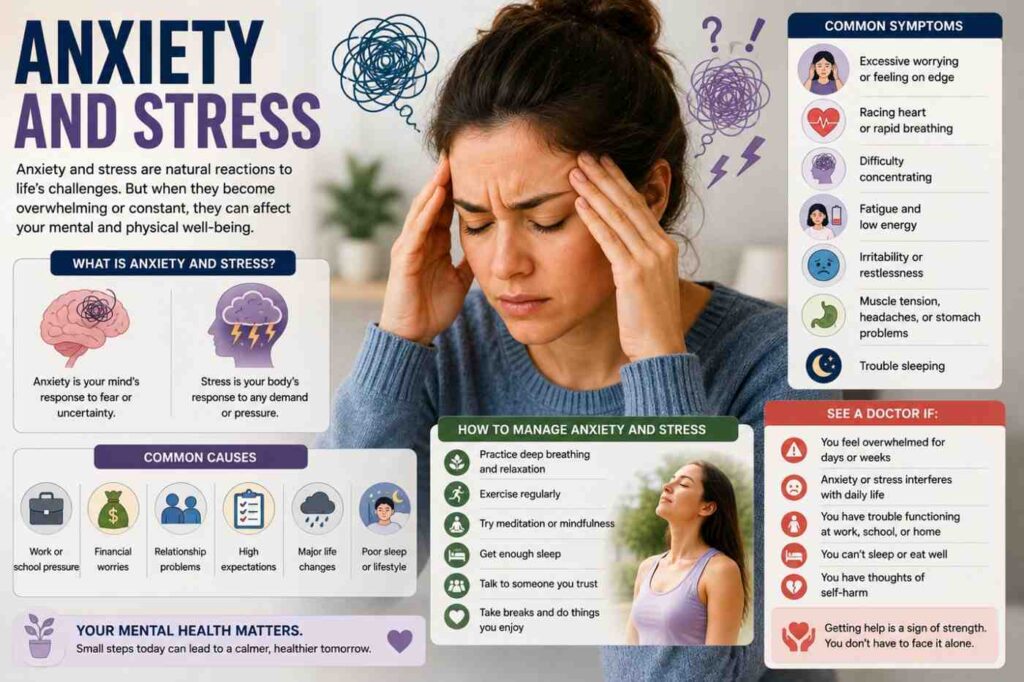
Managing anxiety effectively through therapy, regular exercise, adequate sleep, and stress reduction practices typically improves the associated physical symptoms including ears feeling clogged over time, particularly when combined with addressing any anatomical contributors like jaw tension or nasal congestion.
Why Do My Legs Feel Heavy When I Wake Up? 10 Hidden Causes You Should Know
When to See a Doctor About Clogged Ears
Temporary ear fullness that resolves on its own within a few days after a cold, flight, or loud noise exposure usually does not require medical attention. But certain patterns of ears feeling clogged warrant professional evaluation.
See a doctor if why do my ears feel clogged has been going on for more than two weeks without an obvious cause, if the fullness is accompanied by significant pain, fever, or discharge from the ear, if you notice hearing loss alongside the clogged feeling, if the fullness occurs in only one ear consistently, or if it comes with dizziness or ringing in the ear. An ENT specialist can perform a comprehensive ear examination including tympanometry to measure middle ear pressure and an audiogram to assess hearing, giving a clear picture of what is actually happening and directing you toward the most effective treatment.
Ears that feel clogged almost always have a specific and treatable cause. Finding that cause is worth the effort.