
That high-pitched ringing, buzzing, hissing, or whooshing sound that no one else can hear. If your ears ring regularly, you already know how maddening it can be. It follows you into quiet rooms. It keeps you awake at night. It sits in the background of every conversation and every moment of silence, reminding you that something in your auditory system is not quite right.
Ears ringing, medically known as tinnitus, affects an estimated 50 million Americans, making it one of the most common health complaints in the country. For some people it comes and goes. For others it is a constant companion. Either way, understanding why your ears ring is the first step toward managing it and in many cases significantly reducing it.
Here are nine of the most common causes of ears ringing and what each one means for your hearing and your health.
1. Noise-Induced Hearing Loss
This is the leading cause of ears ringing in the United States, and it affects people of all ages, not just older adults. When you expose your ears to loud sounds, whether from concerts, power tools, firearms, headphones at high volume, or a noisy work environment, the tiny hair cells inside the cochlea of your inner ear can become damaged or destroyed. These hair cells are responsible for converting sound vibrations into electrical signals your brain interprets as sound, and when they are damaged, they can send phantom signals that your brain perceives as ringing.
The ringing that occurs after a single loud noise exposure, like a concert or a sporting event, is often temporary and resolves within hours or days. But repeated or prolonged noise exposure causes cumulative damage that becomes permanent over time. The hair cells in the inner ear do not regenerate, which means noise-induced hearing loss and the ears ringing that comes with it are largely irreversible once established.
Protecting your ears with earplugs or noise-canceling headphones in loud environments and keeping personal listening devices at no more than 60 percent of maximum volume are the most effective preventive measures available.
Why Am I Always Hungry Even After Eating? 10 Real Reasons You Cannot Stop Feeling Hungry
2. Age-Related Hearing Loss
Presbycusis, the medical term for age-related hearing loss, is one of the most common reasons ears ring in adults over 50. As the structures of the inner ear naturally degrade over decades, the same phantom signal mechanism that produces noise-induced tinnitus can occur from the gradual deterioration of hair cells and auditory nerve fibers. The ringing associated with presbycusis is typically a high-pitched tone and tends to be bilateral, meaning it affects both ears roughly equally.
Age-related hearing loss and the ears ringing it causes often develop so gradually that people adapt to them over years without immediately recognizing how significantly their hearing has changed. A comprehensive hearing evaluation by an audiologist can confirm the degree of hearing loss and identify whether hearing aids or other interventions might help, since for many people with age-related hearing loss, amplifying ambient sound through hearing aids provides enough auditory input to reduce the perception of tinnitus significantly.
3. Earwax Buildup
One of the simplest and most easily reversible reasons ears ring is an accumulation of earwax, also called cerumen, that is blocking the ear canal. When earwax builds up enough to press against the eardrum or partially block the passage of sound, it can alter how sound is transmitted to the inner ear in ways that produce a ringing, buzzing, or muffled sensation. This type of tinnitus is often accompanied by a sense of fullness in the ear, some degree of hearing reduction, or mild discomfort.
People who use cotton swabs to clean their ears are particularly prone to earwax buildup because the swabs tend to push wax deeper into the canal rather than removing it, compacting it against the eardrum over time. People with naturally narrower ear canals or who produce more earwax than average are also at higher risk.
Earwax-related ears ringing is one of the most satisfying to treat because it often resolves completely once the wax is properly removed. Over-the-counter ear drops designed to soften wax, followed by gentle irrigation, can be effective for mild cases. A doctor or audiologist can safely remove more significant buildup in an office visit.
Why Am I Always Hungry Even After Eating? 10 Real Reasons You Cannot Stop Feeling Hungry
4. Medications That Cause Tinnitus
A surprisingly long list of medications can cause ears ringing as a side effect, and many people never connect their tinnitus to a drug they are taking because they do not think to look for that connection. The most commonly implicated medications include high doses of aspirin and other nonsteroidal anti-inflammatory drugs, certain antibiotics particularly in the aminoglycoside class, loop diuretics used for fluid management, quinine-based antimalarials, and certain chemotherapy drugs.
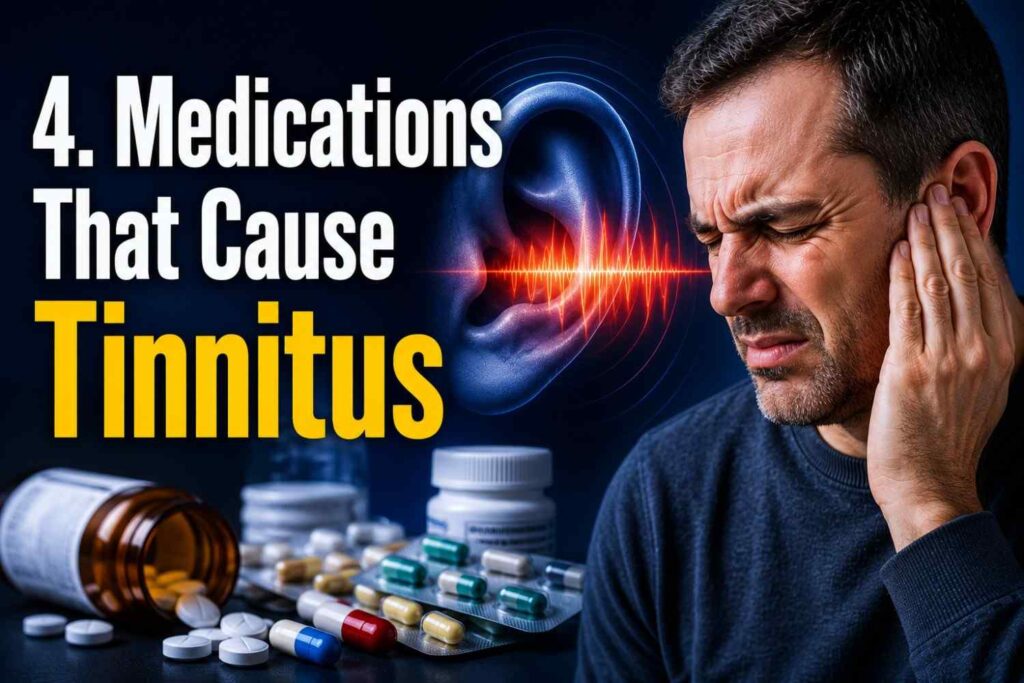
The tinnitus from medication-related causes is often dose-dependent, meaning it becomes more pronounced at higher doses and may reduce or resolve when the medication is stopped or the dose is reduced. However, some medications, particularly the aminoglycoside antibiotics and certain chemotherapy drugs, can cause permanent ears ringing even at therapeutic doses.
If your ears ring started or noticeably worsened around the time you began a new medication or had a dose increase, this timing is an important clue worth discussing with your prescribing doctor. Never stop a prescribed medication without medical guidance, but do bring the possible connection to your provider’s attention.
5. High Blood Pressure and Cardiovascular Issues
The circulatory system and the auditory system are closely connected, and conditions that affect blood flow can directly cause ears ringing in a form called pulsatile tinnitus, where the sound pulses in rhythm with the heartbeat. High blood pressure causes blood to flow through the vessels in and around the inner ear with more force than normal, and that turbulent blood flow can produce a rhythmic whooshing or pulsing sound that is distinctly different from the steady ringing of other tinnitus types.
Atherosclerosis, which is the buildup of plaque in arteries that reduces their elasticity, anemia, and certain vascular malformations near the ear can all cause pulsatile tinnitus through variations of the same turbulent blood flow mechanism. Pulsatile tinnitus deserves prompt medical evaluation because unlike most other forms of ears ringing, it sometimes points toward a vascular condition that has its own treatment implications beyond managing the sound itself.

If your ears ring in a rhythm that seems to match your heartbeat rather than as a steady tone, mentioning this specific quality to your doctor is important for directing the right diagnostic evaluation.
6. Middle Ear Infections and Fluid
Ear infections, particularly those involving the middle ear, are a frequent cause of ears ringing that is often temporary and resolves with appropriate treatment. When the middle ear becomes infected or fills with fluid from an infection or allergy, the normal transmission of sound vibrations through the tiny bones of the middle ear is disrupted, which can produce ringing, muffled hearing, and a sense of pressure or fullness.
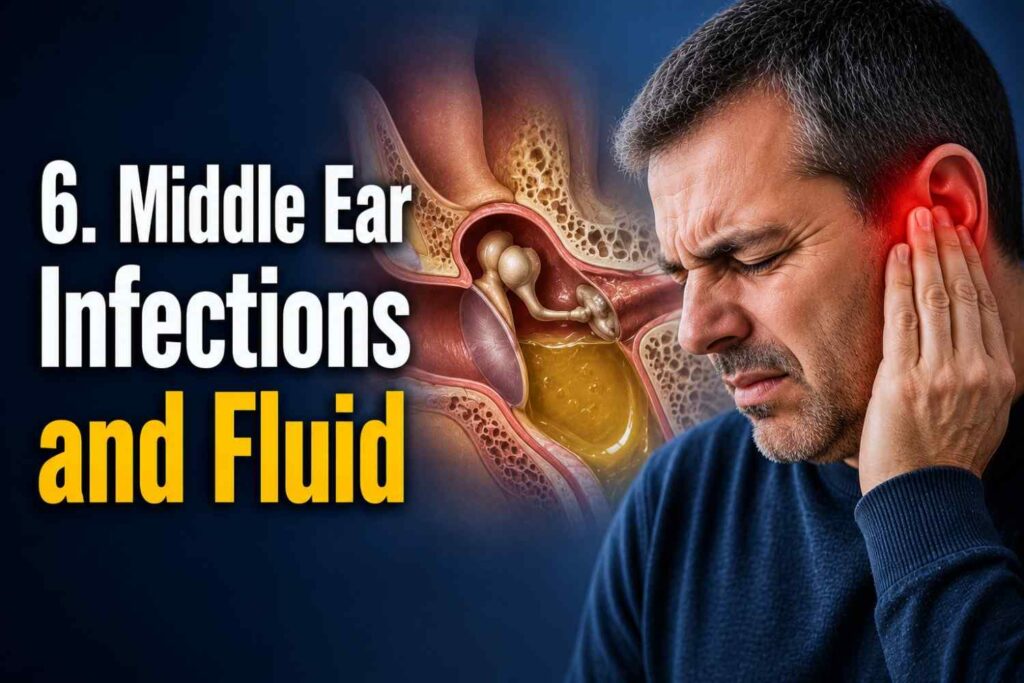
Adults who develop middle ear infections less commonly than children still experience them, particularly following upper respiratory infections, sinus infections, or allergic reactions that cause the Eustachian tube to become congested and prevent normal fluid drainage from the middle ear. The ears ringing associated with middle ear infections typically resolves as the infection clears and fluid drains, which may happen on its own or may require antibiotics or other medical treatment depending on the cause and severity.
Chronic Eustachian tube dysfunction, where the tube that connects the middle ear to the back of the throat does not open and close properly, can cause intermittent or persistent ears ringing alongside a recurring sense of fullness and fluctuating hearing that worsens during altitude changes like flying or driving through mountains.
7. Meniere's Disease
Meniere’s disease is an inner ear disorder that causes episodic vertigo, fluctuating hearing loss, a sense of fullness in the ear, and ears ringing that is one of its most consistent features. In Meniere’s disease, abnormal fluid pressure builds up in the labyrinth of the inner ear, disrupting both the hearing and balance functions that the inner ear serves. The tinnitus associated with Meniere’s is often described as a low-pitched roaring or rushing sound rather than a high-pitched ring, and it typically worsens during or before a vertigo episode.
Meniere’s disease most commonly affects one ear, at least in its early stages, and the ears ringing it causes tends to fluctuate with the condition’s activity rather than being a constant steady tone. Episodes can be triggered by high sodium intake, stress, caffeine, and alcohol, which is why dietary and lifestyle modifications are among the first-line management strategies alongside medications that help control fluid balance and vertigo frequency.
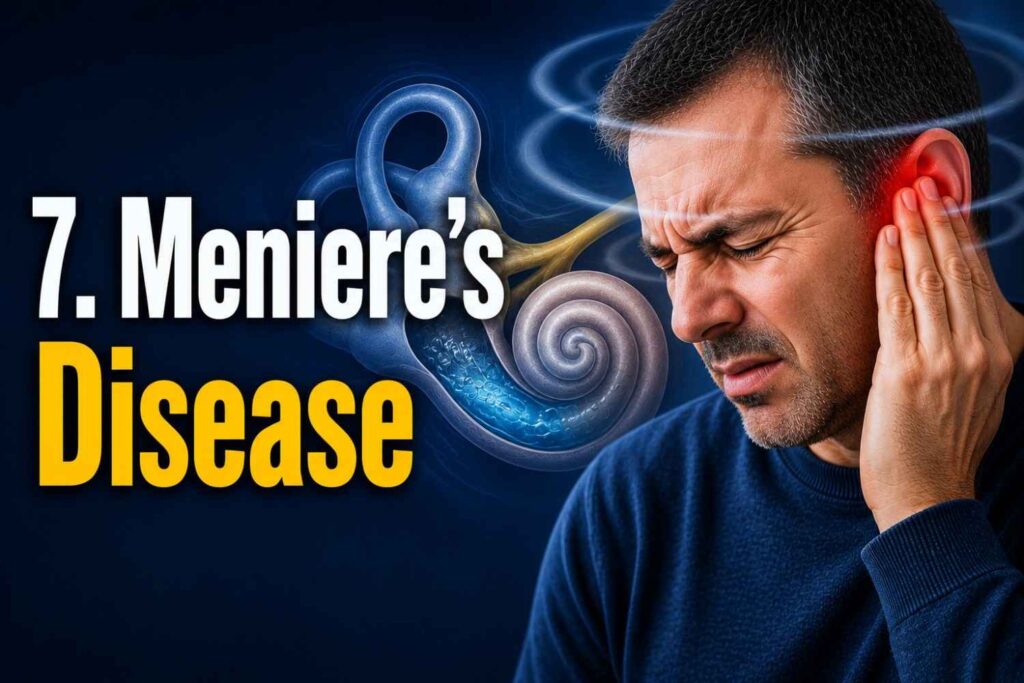
If your ears ring alongside episodes of true spinning vertigo, hearing changes, and ear fullness, Meniere’s disease is a strong enough possibility to warrant evaluation by an ENT specialist or otolaryngologist.
8. Jaw Problems and TMJ Disorders
The temporomandibular joint, which connects your jaw to your skull, sits in close anatomical proximity to the ear canal and the structures of the middle ear. When this joint is inflamed, misaligned, or subject to excessive stress from teeth grinding, jaw clenching, or bite abnormalities, it can refer pain and dysfunction into the ear in ways that produce ears ringing alongside jaw pain, clicking or popping sounds when opening the mouth, and headaches.
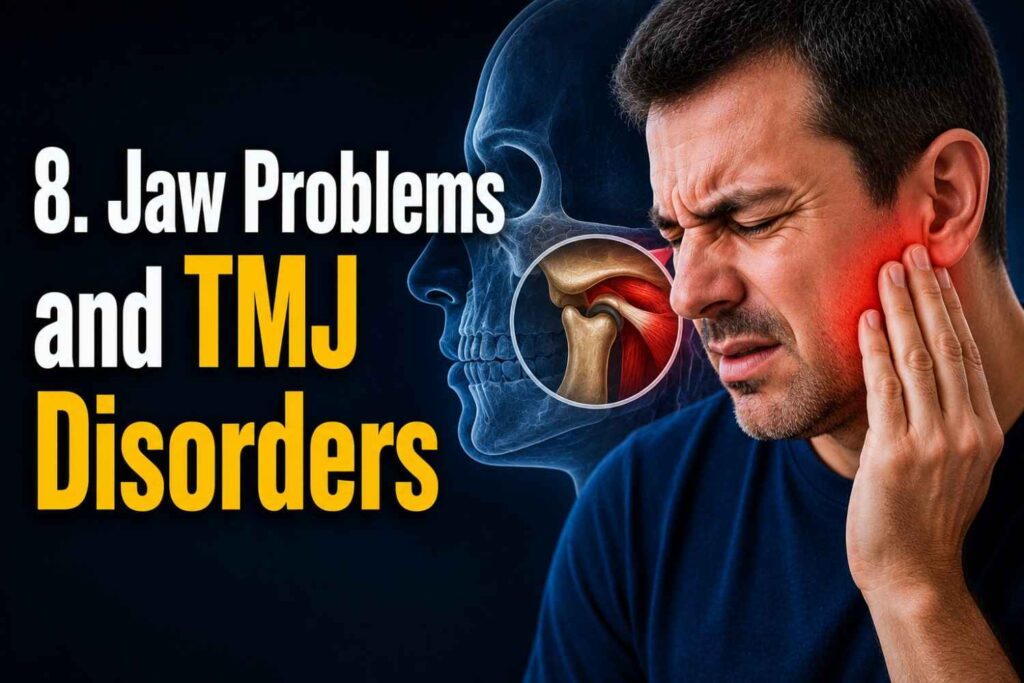
TMJ-related tinnitus often fluctuates with jaw position and can be temporarily altered by opening or closing the mouth, chewing, or pressing on the jaw joint, which is a distinctive feature that can help identify TMJ involvement as a contributing cause. People who grind their teeth at night, have a history of jaw injury, or notice that their ears ring more on one side and that it correlates with jaw tension are particularly likely to have a TMJ component to their tinnitus.
A dentist familiar with TMJ disorders or a maxillofacial specialist can evaluate jaw alignment and function. Treatments including night guards, physical therapy, and bite adjustments can reduce or resolve TMJ-related ears ringing in many cases.
9. Stress and Anxiety
The relationship between stress, anxiety, and ears ringing is bidirectional and well-documented. Stress and anxiety can directly trigger or worsen tinnitus through the effect of heightened nervous system activation on auditory processing. When you are under significant stress, your brain becomes more attentive to internal signals and more reactive to them, which means the same level of tinnitus that you could tune out during a calm period becomes much more noticeable and intrusive during periods of high anxiety.
Many people first notice their ears ring during a particularly stressful period in their life, or find that tinnitus they have had for years becomes dramatically more bothersome when stress levels increase. The ears ringing itself then becomes a source of additional anxiety, which amplifies the perception of the sound and creates a cycle that is difficult to break without addressing both the tinnitus and the anxiety together.
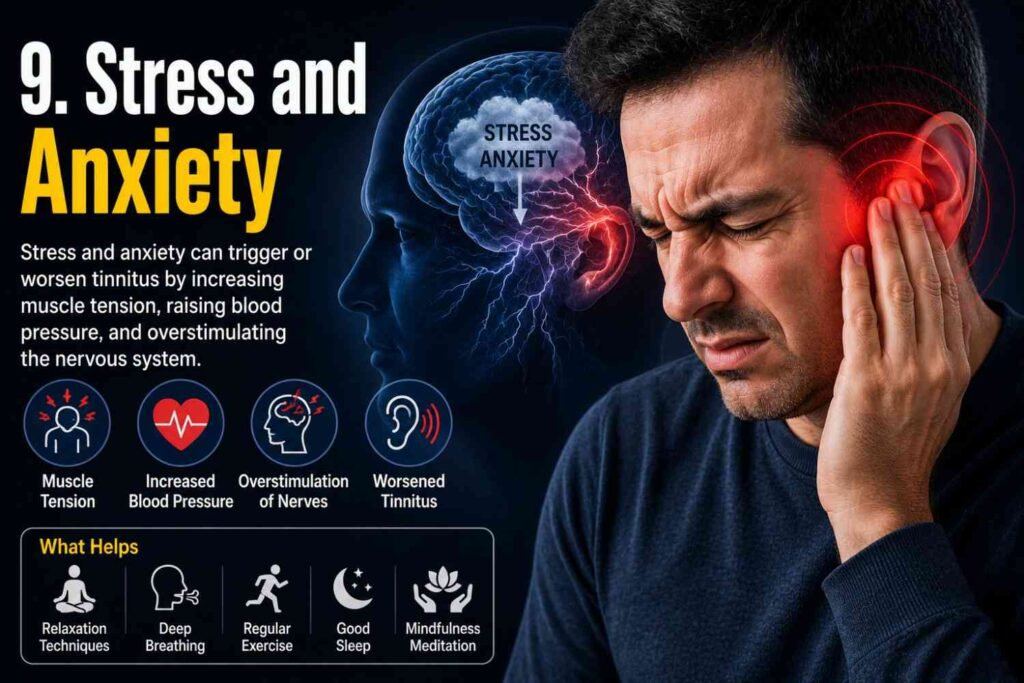
Cognitive behavioral therapy specifically adapted for tinnitus, mindfulness-based stress reduction, and sound therapy that uses background noise to reduce the contrast between tinnitus and ambient sound are among the most evidence-supported approaches for stress-related and anxiety-amplified tinnitus. Managing the stress and anxiety directly, rather than just trying to ignore the sound, produces the most durable improvement for people in this category.
When Should You See a Doctor About Ears Ringing?
Most people experience brief episodes of ears ringing at some point without needing medical attention, particularly after loud noise exposure. But certain patterns warrant evaluation by a doctor or audiologist rather than waiting to see if things improve on their own.
See a doctor if your ears ring suddenly and severely without an obvious cause, if the ringing is in only one ear and has been present for more than a week, if the ringing pulses in rhythm with your heartbeat, if it is accompanied by hearing loss or dizziness, if it began after a head injury, or if it is significantly affecting your sleep, concentration, or quality of life. These patterns can point toward conditions that benefit from proper diagnosis and in some cases prompt treatment.
Ears ringing is rarely a sign of something immediately dangerous, but it is almost always a sign of something your auditory system is trying to tell you. Taking it seriously and getting the right evaluation is always the right response.
Why Am I Always Hungry Even After Eating? 10 Real Reasons You Cannot Stop Feeling Hungry